Commercial Property Landscaping: First Impressions That Drive Business
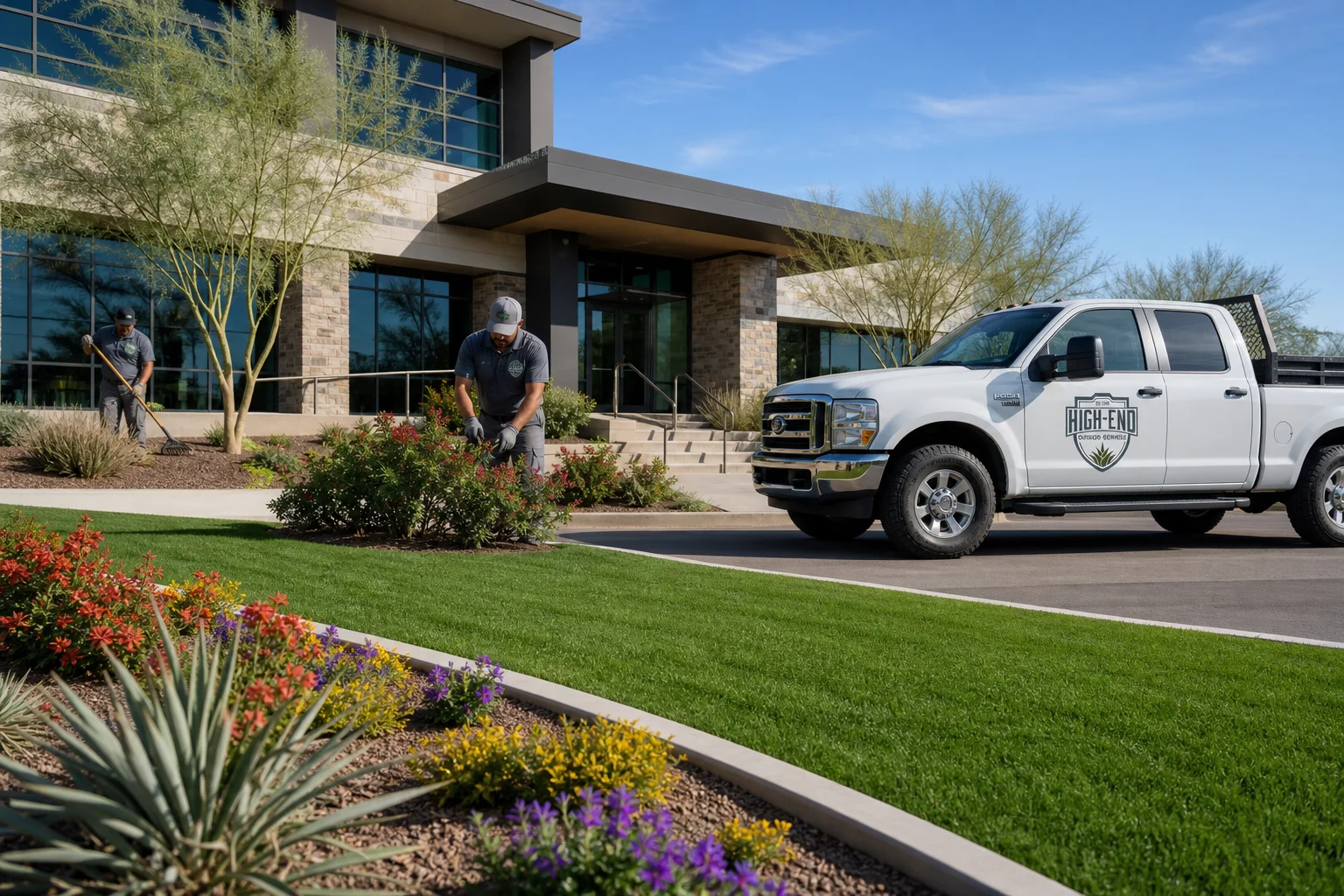
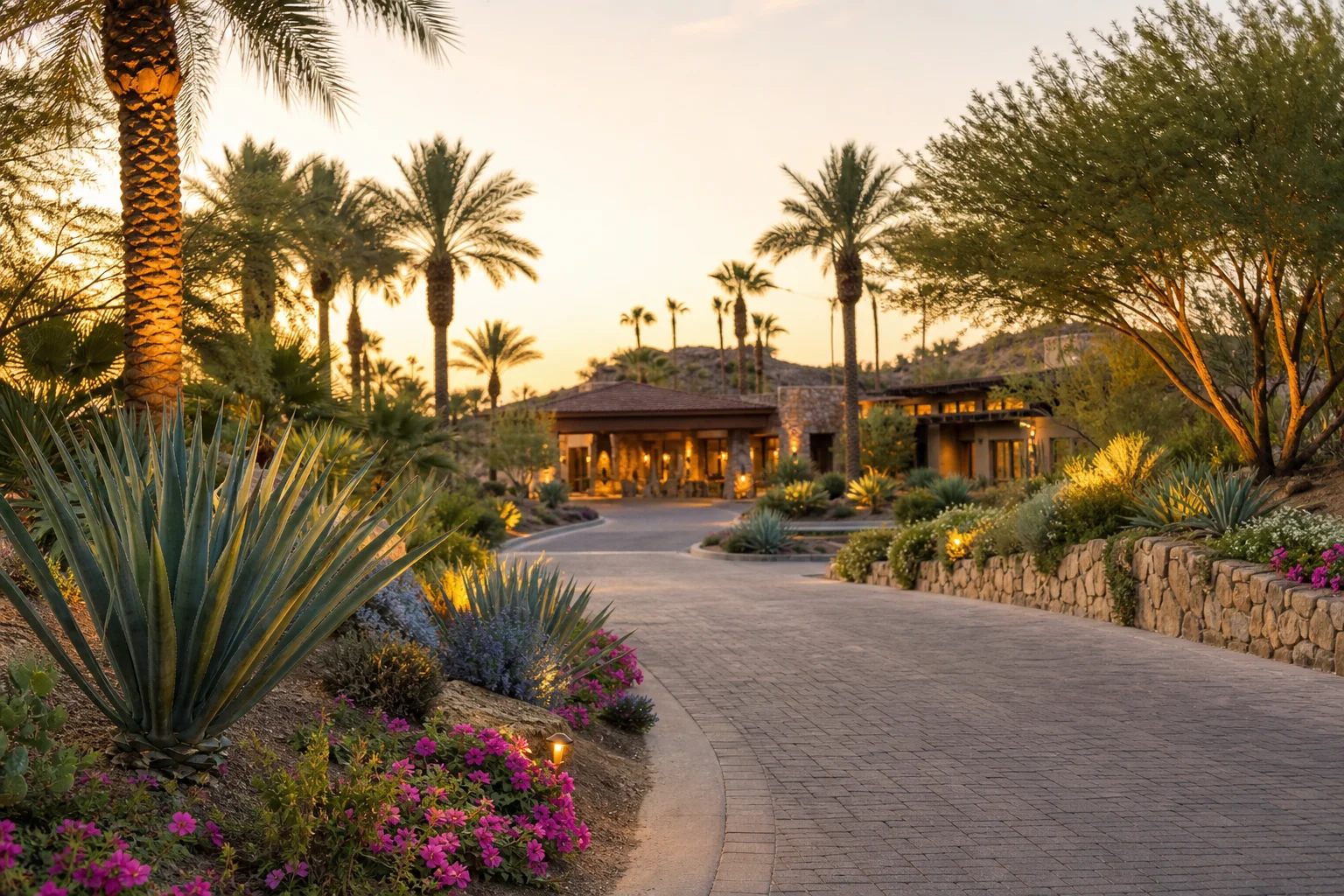
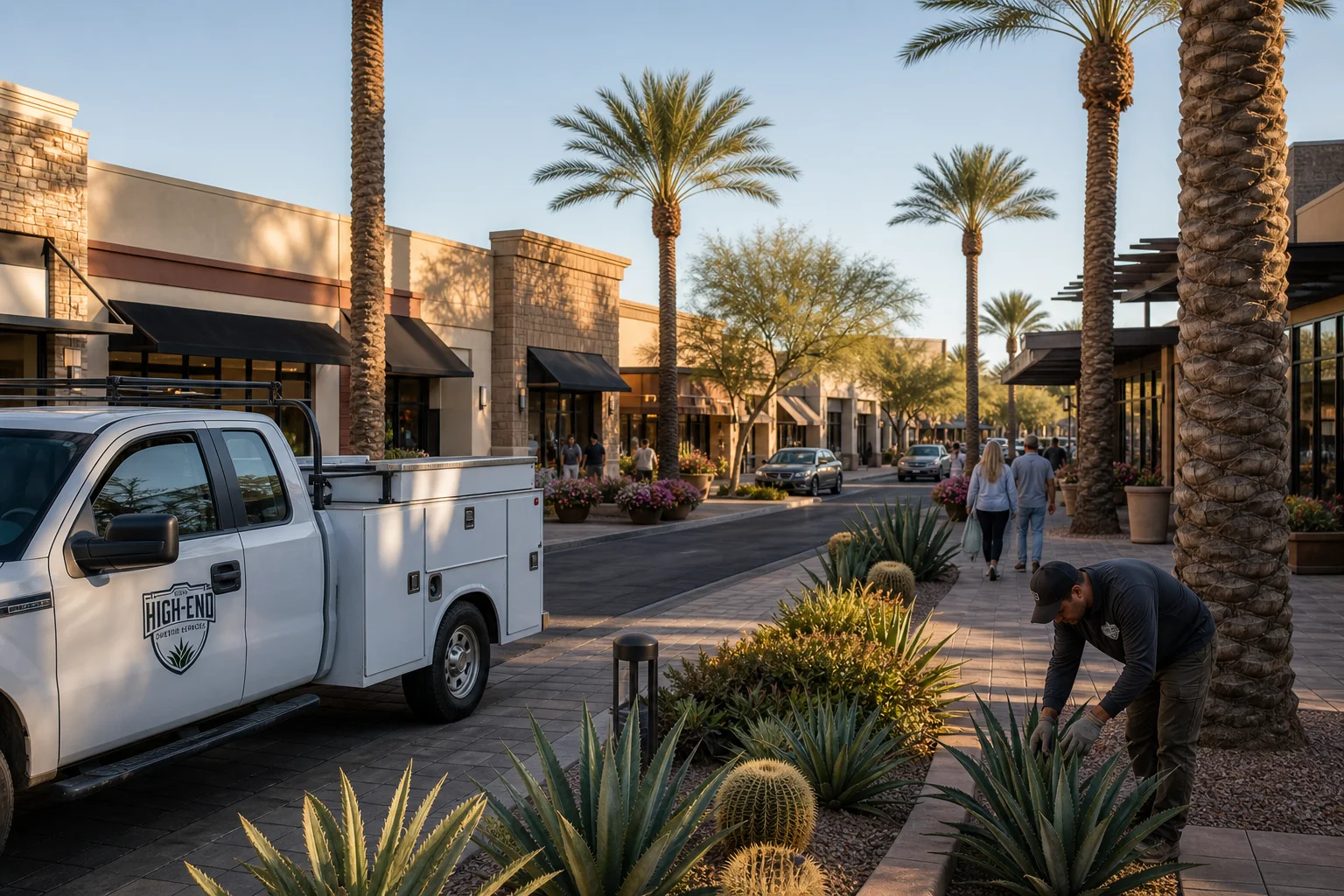
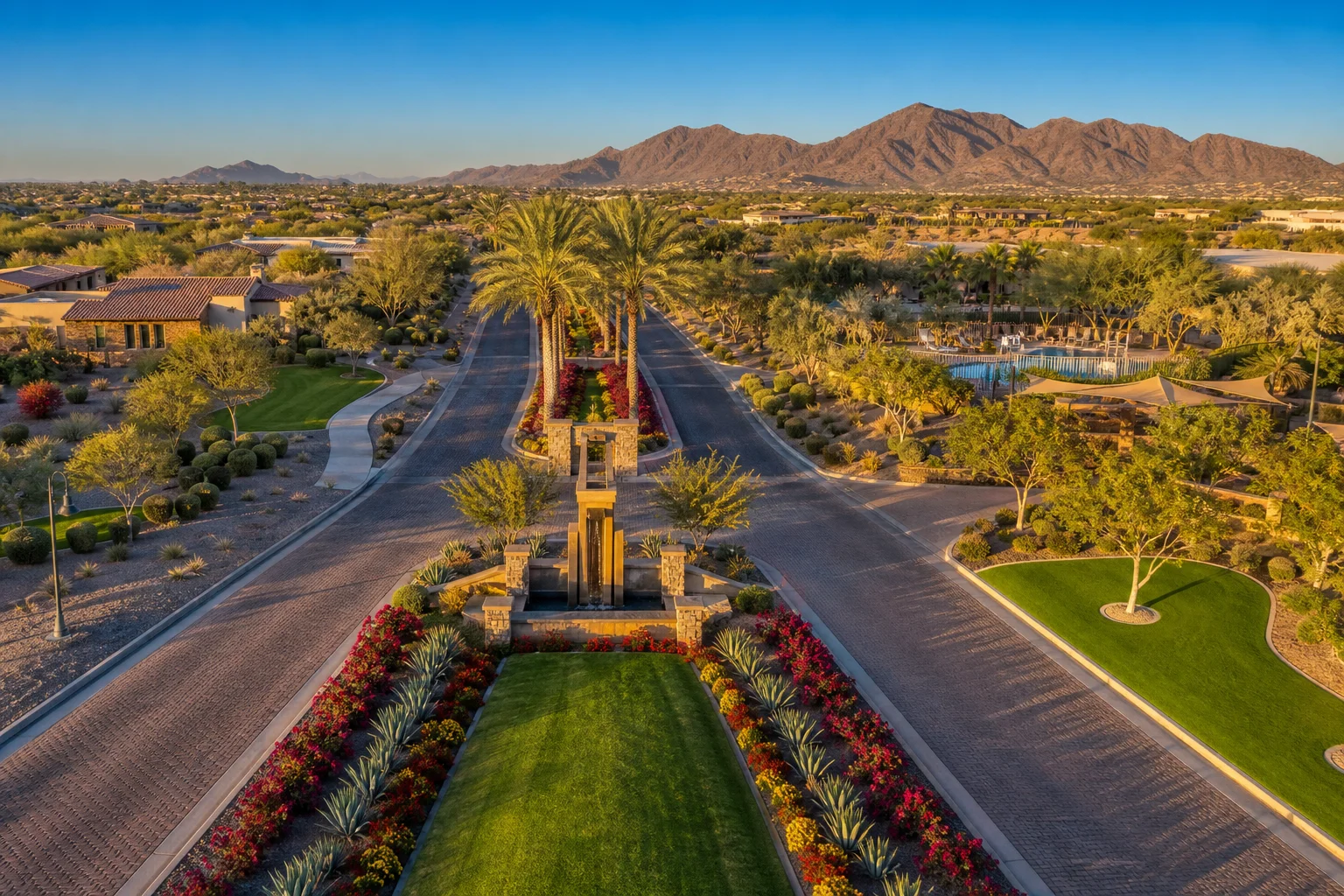
Commercial property landscaping determines the first impression every visitor, tenant, and client forms before they ever reach your entrance. Well-planned commercial landscape maintenance signals professionalism, strengthens perceived property value, and shapes occupancy decisions in ways that interior renovations simply cannot match.
By HEOS AZ Team, Outdoor Living Specialists
Why Commercial Property Landscaping Starts at the Curb
The assessment begins in the parking lot. Research published in the Journal of Environmental Psychology (Kaplan and Kaplan, 1989) established that well-maintained green spaces produce measurable increases in perceived trust and organizational competence among observers. For HOA boards and commercial property managers, those perceptions translate to real outcomes: faster lease-ups, stronger renewal rates, and tenants willing to pay a premium for space in a well-kept building.
A lot bordered by scorched turf, overgrown shrubs, and cracked mulch communicates inattention. A well-edged entrance with healthy plantings and clean hardscape communicates that ownership takes quality seriously. That signal registers in seconds and influences decisions that take months to reverse.
The Business Case for Investing in Professional Landscaping Services
Professional landscaping services are not a budget line to defer. Virginia Tech's Office of Real Estate Valuation has documented that landscape quality can add between 5.5% and 12.7% to a commercial property's appraised value, a return that frequently exceeds the cost of comparable interior upgrades.
Beyond appraised value, consider the retention side of the equation. Property managers consistently report that well-maintained exterior spaces reduce vacancy rates and correlate with longer lease terms. Retail properties with strong street presence draw measurably more foot traffic. Office tenants report higher satisfaction scores when outdoor common areas are clean and visually coherent.
In the phoenix area, summer heat makes the contrast between a maintained and neglected property especially visible. Properties investing in commercial landscaping look dramatically different from those that are not, and prospective tenants notice that difference on every site visit.
Landscape Maintenance: The Discipline That Protects the Investment
A single renovation cannot sustain a property's appearance through an Arizona year. Landscape maintenance is the ongoing discipline that protects every dollar spent on installation. A commercial landscape is a living system, and without a structured maintenance calendar, seasonal heat, monsoon erosion, and irrigation inefficiency will undo gains within a single growing season.
A comprehensive landscape maintenance program for a commercial property typically includes:
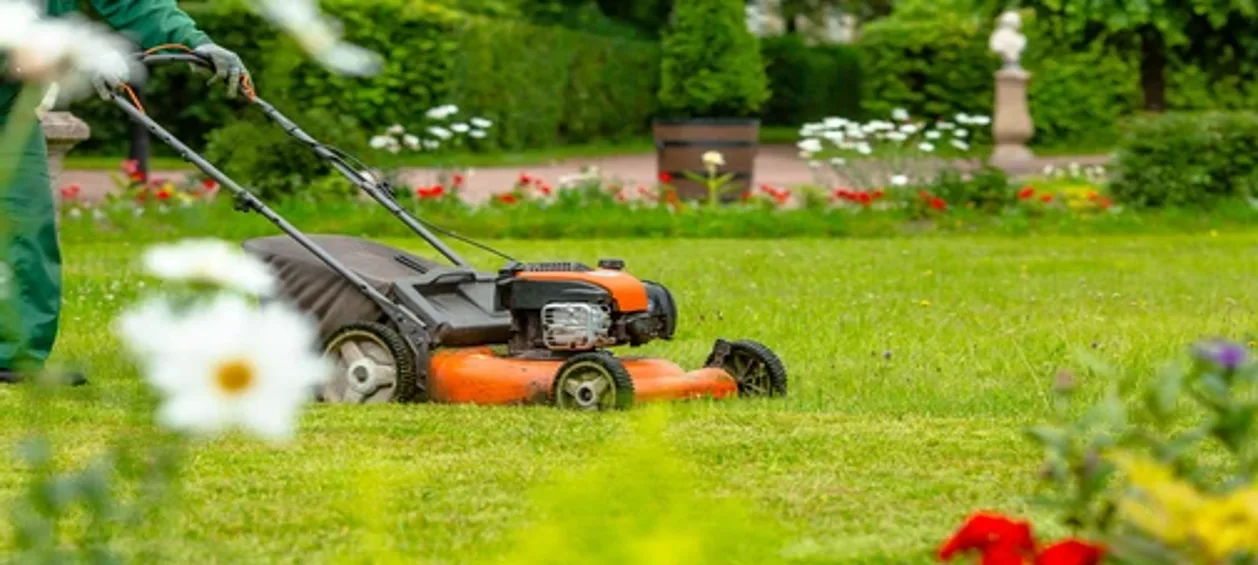
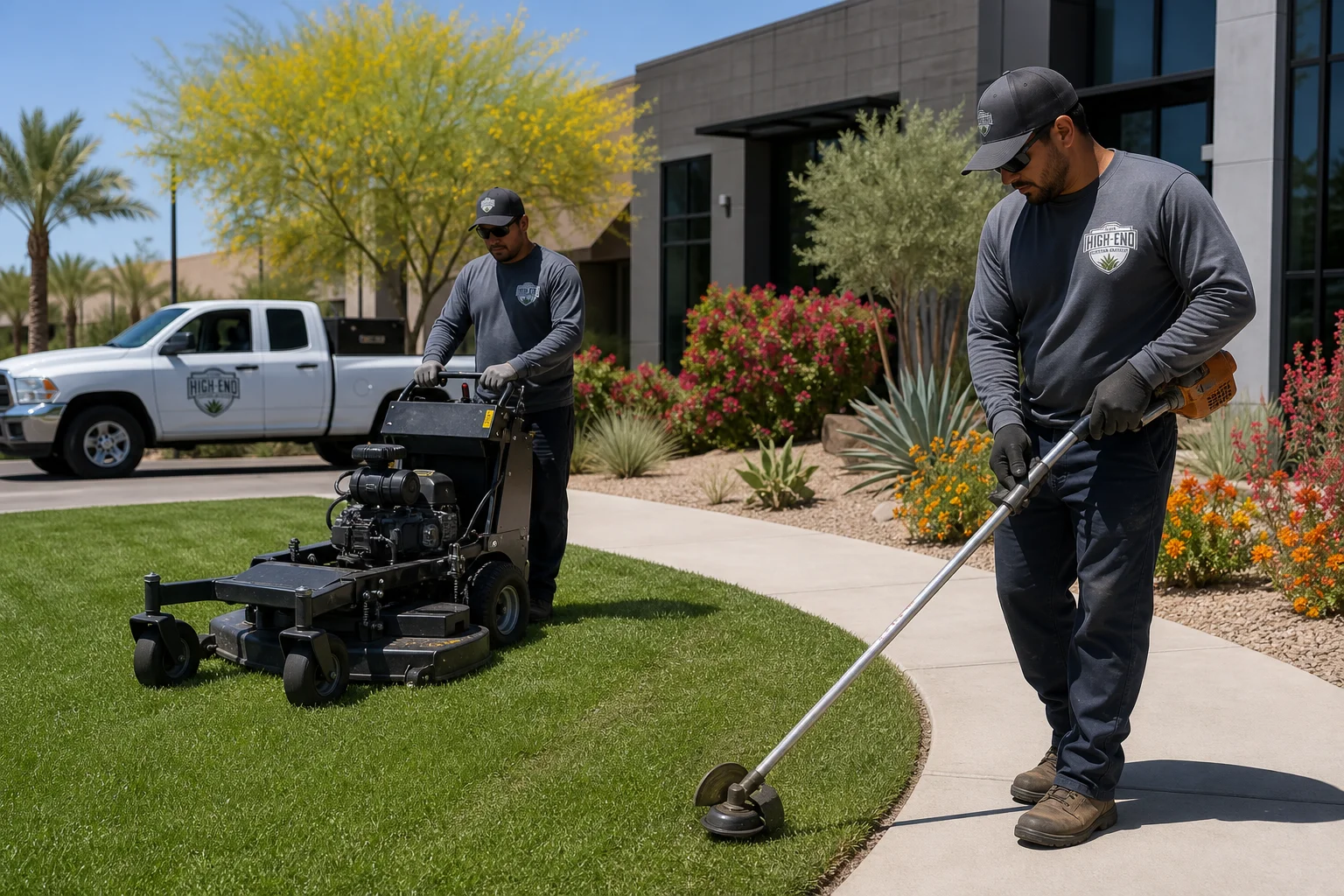
- Mowing, edging, and blowing on a weekly schedule to keep lines precise and first impressions consistent
- Irrigation monitoring and seasonal adjustments to prevent overwatering waste and drought stress
- Seasonal color rotation so beds look curated and intentional year-round
- Pre-emergent weed control and mulch replenishment to reduce labor costs and retain soil moisture
- Fertilization programs calibrated to Arizona's desert soil conditions
Routine visits also create opportunities to catch irrigation failures, pest pressure, and disease spread before they become expensive repairs that disrupt the property's appearance for weeks.
Tree Care as a Long-Term Commercial Landscape Asset
No element on a commercial property provides longer-term value than a well-placed, healthy tree. Mature canopy shade can reduce hardscape surface temperatures by 10 to 15 degrees Fahrenheit, lower adjacent cooling loads, and give a commercial landscape visual scale that younger plantings cannot replicate for years.
Responsible tree care for commercial properties involves more than cosmetic trimming. A sound program addresses:
- Structural pruning to develop strong branch architecture and reduce storm damage risk
- Root zone management to minimize competition with irrigation lines and surrounding hardscape
- Monitoring for regional threats, including bark beetle activity and fungal root disease, both common concerns across the phoenix area
- Documented removal and replacement protocols for dead or hazardous specimens
Deferred tree care is a financial trap. Removal costs for a large, structurally compromised specimen routinely exceed years of preventive maintenance investment. Insurers also consider tree condition during commercial property evaluations, and documented neglect can affect coverage. Proactive tree care is the responsible and cost-effective position for any property owner or HOA board.
Designing for Arizona's Commercial Landscape Conditions
The phoenix area demands a specific approach that accounts for extreme heat, low rainfall, expansive soils, and the dramatic intensity of monsoon season. General landscaping services that import design patterns from cooler, wetter climates will underperform here in ways that become obvious by July.
High-performing commercial landscaping programs in Arizona prioritize:
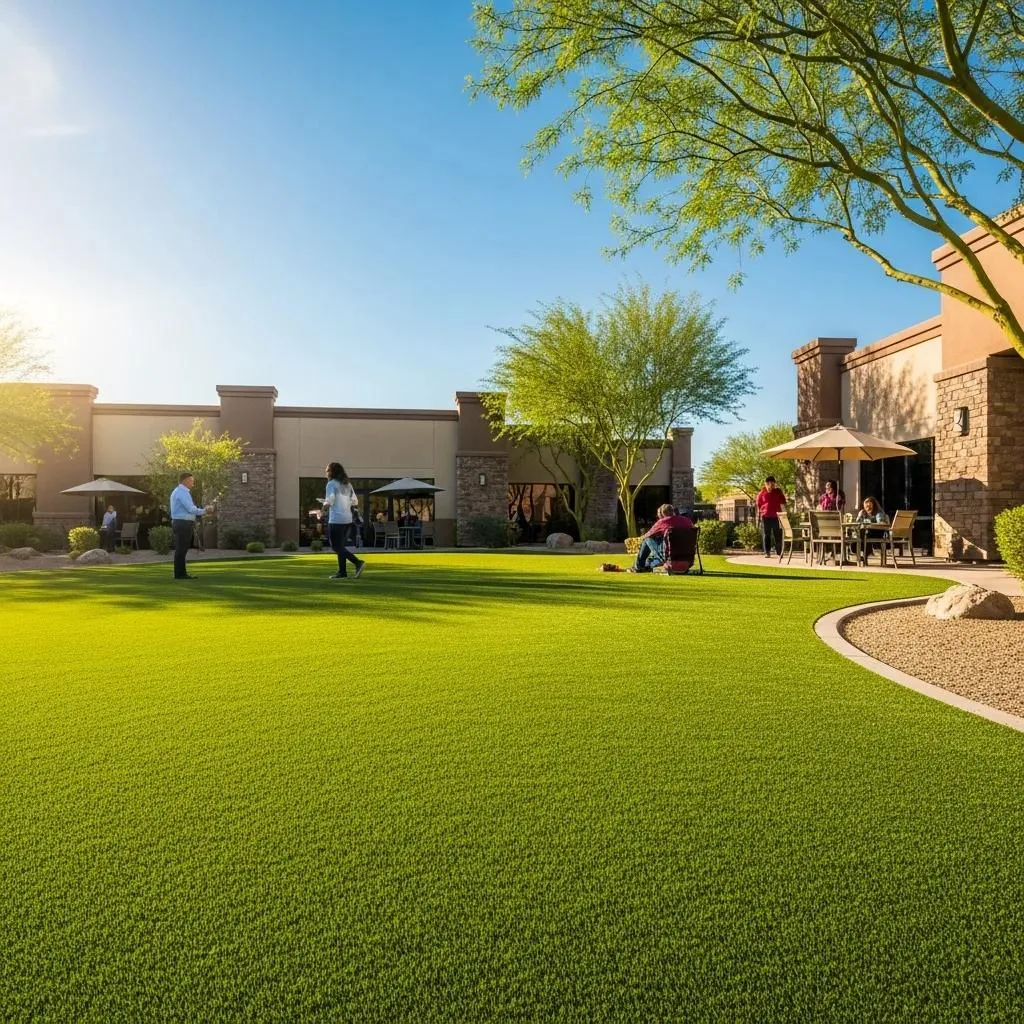
- Turf selection favoring heat-tolerant varieties such as bermudagrass and hybrid buffalo grass
- Plant palettes weighted toward native and adaptive species that hold visual interest through summer without unsustainable water use
- Shade canopy placement to protect outdoor seating areas, reduce radiant heat on building facades, and lower energy costs
- Hardscape material specifications that handle extreme surface temperatures without warping, spalling, or cracking
- Grading and drainage design that channels monsoon runoff away from building entries and planted beds
Properties designed around these realities spend significantly less on replacement plantings and irrigation repair compared to those built on assumptions drawn from other climates.
Frequently Asked Questions
How frequently should a commercial property receive landscape maintenance? Most commercial properties in Arizona require weekly service during the growing and monsoon seasons, roughly March through October, and biweekly visits during cooler months. High-visibility properties such as retail centers, medical campuses, and HOA entrances often benefit from twice-weekly visits to maintain the consistent appearance that premium commercial landscaping requires.
What does a commercial landscape maintenance contract typically include? Standard agreements cover turf mowing and edging, blowing of hardscape areas, irrigation monitoring, weeding, fertilization, and seasonal color replacement. Tree care, hardscape cleaning, and irrigation repair are often separate line items, though full-service commercial landscape contracts can bundle these for properties that want a single point of accountability.
Why does commercial landscaping cost more than residential service? Commercial properties involve larger service areas, higher insurance requirements, commercial-grade equipment, and more complex irrigation infrastructure. Providers also maintain compliance with municipal and HOA specifications that residential accounts rarely require, and service frequency is typically higher to meet the visibility standards commercial property managers expect.
How does tree care reduce commercial property risk? Structurally compromised trees near buildings, parking areas, and pedestrian walkways create insurance and liability exposure. Regular, documented tree care establishes a maintenance record that supports coverage, demonstrates due diligence, and prevents catastrophic failure events. Many insurers require proof of routine tree inspection for commercial properties above certain size thresholds.
When is the best time for a major commercial landscape renovation in Phoenix? October through February is the optimal installation window for commercial landscape renovations in the phoenix area. Cooler temperatures reduce transplant stress, allow root systems to establish before summer heat arrives, and give new color plantings the best opportunity to thrive through their first full growing season.
Partner with a Commercial Landscaping Team That Knows Arizona Properties
The right commercial property landscaping partner does more than maintain a schedule: they protect your asset, support your tenants, and position your property as the standard others are measured against. Contact HEOS AZ to build a landscaping services plan matched to your property's specific goals and the demands of the Arizona climate.