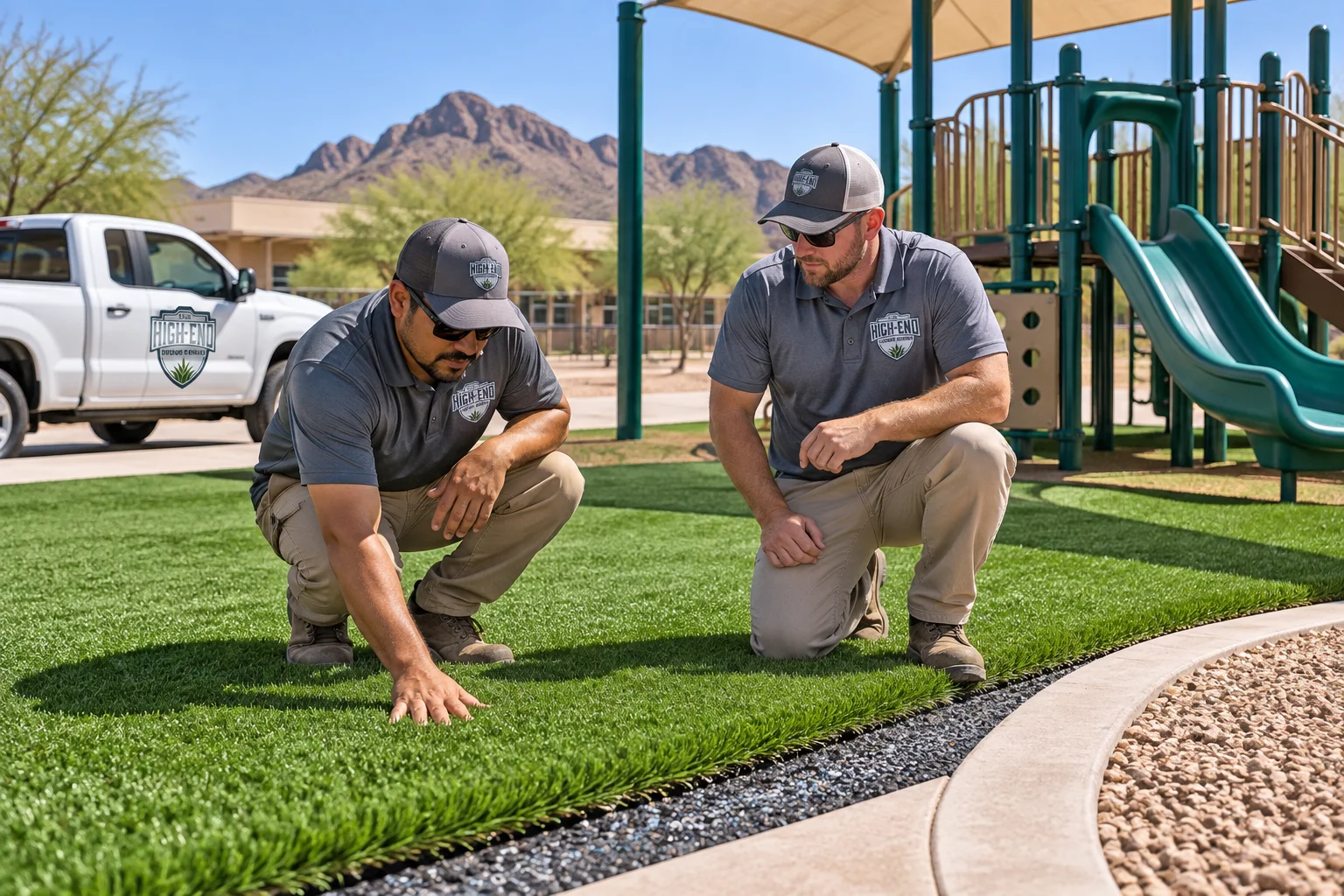
Fall Is Tree Planting Season in Phoenix: Planning Commercial Tree Replacements
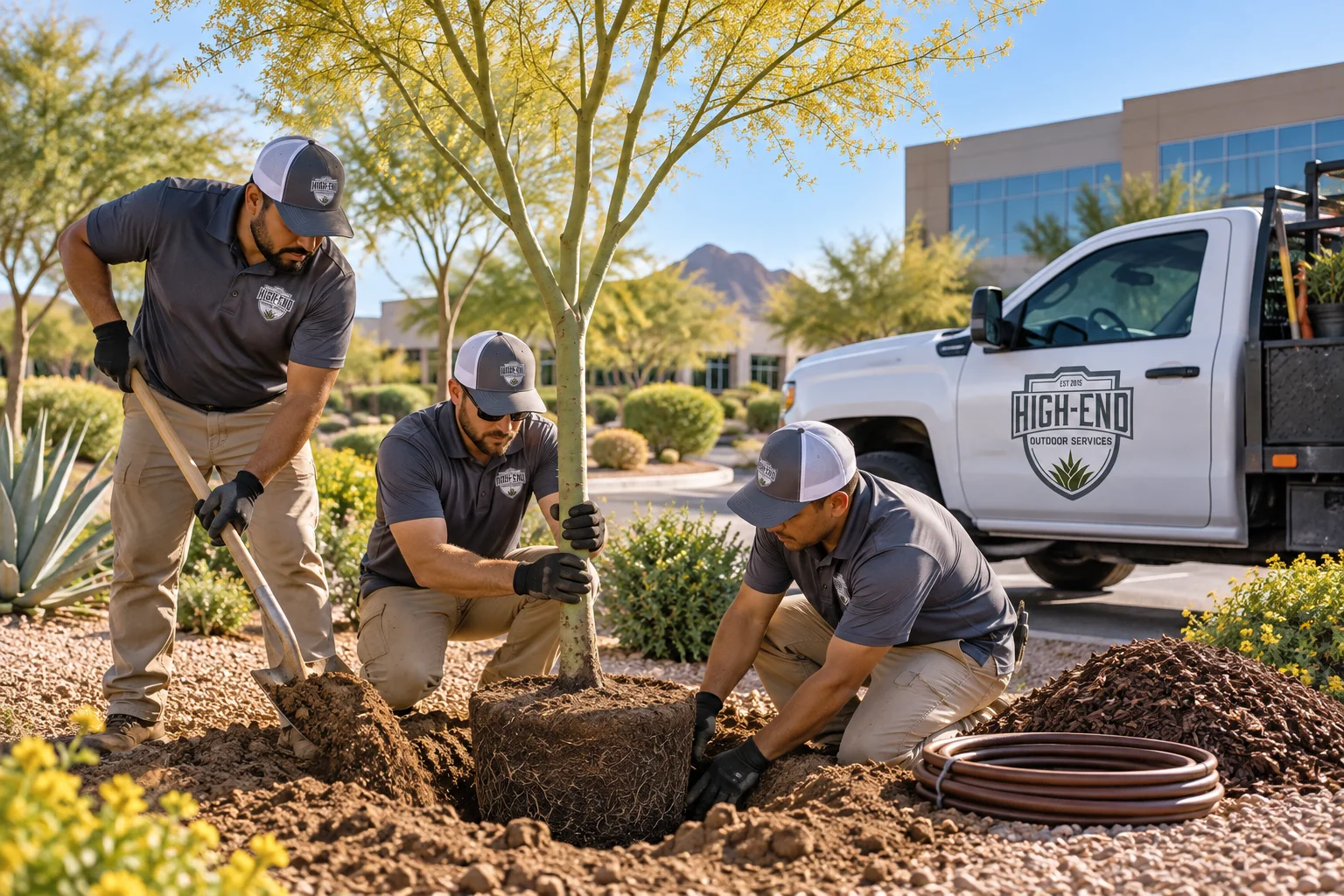
The best time to plant trees in Phoenix is fall, from October through November, when warm soil drives root growth and cooler air eases stress. That window sets the schedule for any commercial replacement plan. Below: species, sourcing, and watering for crews and properties that rely on tree services.
By HEOS AZ Team, Outdoor Living Specialists
What Is the Best Time to Plant Trees in Phoenix?
The best time to plant trees in Phoenix, for most species, runs from early October through November. Soil stays warm after summer, so root growth continues while the air cools. Begin watering the day you plant. Early spring is the second window, and April and May work with extra care. Avoid June through September when you can, because heat and monsoons stress new trees.
What Month Should You Plant Trees in Phoenix?
October is the safest single month, and November is close behind. Citrus is the exception. Plant it in spring, after frost danger passes, because young citrus trees tolerate cold poorly.
Can You Plant Trees in Phoenix in the Summer?
Yes, but it costs more. Summer plantings need extra watering, a trunk wrap that protects bark from sun, and daily checks, and monsoon winds from mid-June into September pull at small root systems.
Why Is Fall Better Than Spring for Planting Trees in Phoenix?
Fall gives new trees months of mild weather before the first triple-digit days. Root growth continues in warm winter soil, so a tree planted in October meets its first summer with established root systems. Planting trees in Phoenix in fall also cuts moisture loss from leaves, which lowers irrigation demand.
Frost is a smaller risk than heat in the low desert, though it settles in low spots, so set frost-tender varieties in sheltered areas or wait for spring. Ask about the best time to plant trees in Phoenix in winter and the answer is split: hardy species go in during December and January, but growth slows and the head start shrinks.
Which Phoenix Trees Hold Up Best on Commercial Properties?
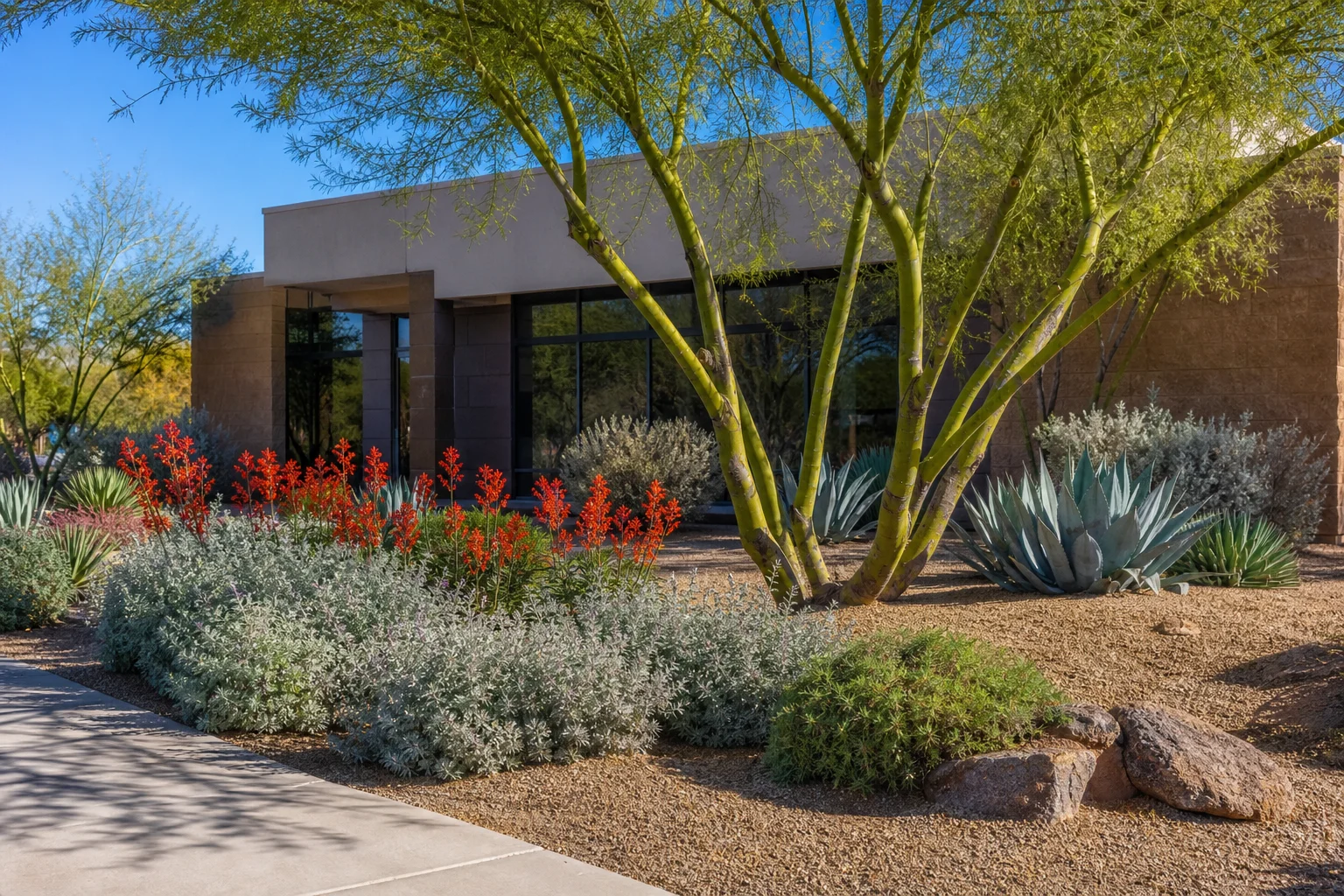
Commercial landscapes in desert valleys put trees under stress, so choose trees that handle full sun, reflected heat from parking lots, and alkaline desert soil. Native and desert-adapted Phoenix trees usually need less water once established, and a mature canopy shades walls, pavement, and residents.
| Tree type | Strength | Watch for |
|---|---|---|
| Palo verde | Green bark, spring bloom, little water once established | Seed and leaf litter near walks and pools |
| Mesquite | Wide, fast shade canopy | Toppling in monsoon winds if watered shallowly and left unpruned |
| Citrus varieties | Evergreen color and fruit for entries and curb appeal | Frost damage when young, fruit drop on walkways |
The easiest tree to grow in Arizona is usually a native such as palo verde or mesquite, since both thrive with little care once established. Urban foresters also use the 10/20/30 rule when replacing many trees at once: no more than 10 percent from one species, 20 percent from one genus, and 30 percent from one family. One pest or storm then cannot take out all the planted trees on a property.
How Do You Plan a Commercial Tree Replacement When Planting Trees in Phoenix?
The best time to plant trees in Phoenix also sets your ordering deadline, so work backward from October. Planting trees in Phoenix at commercial scale follows four steps.
Step 1: Inventory Every Tree Before You Order Any
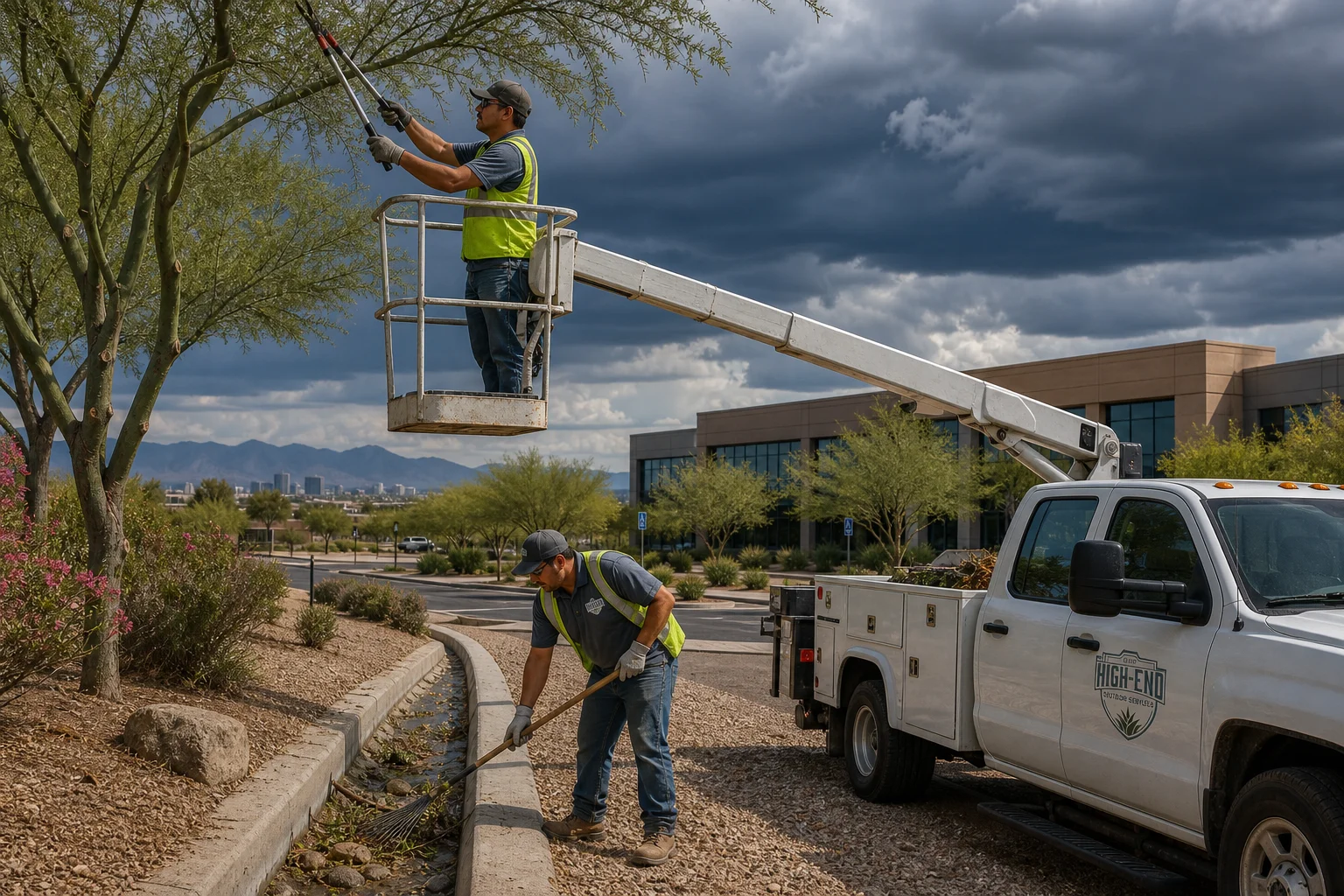
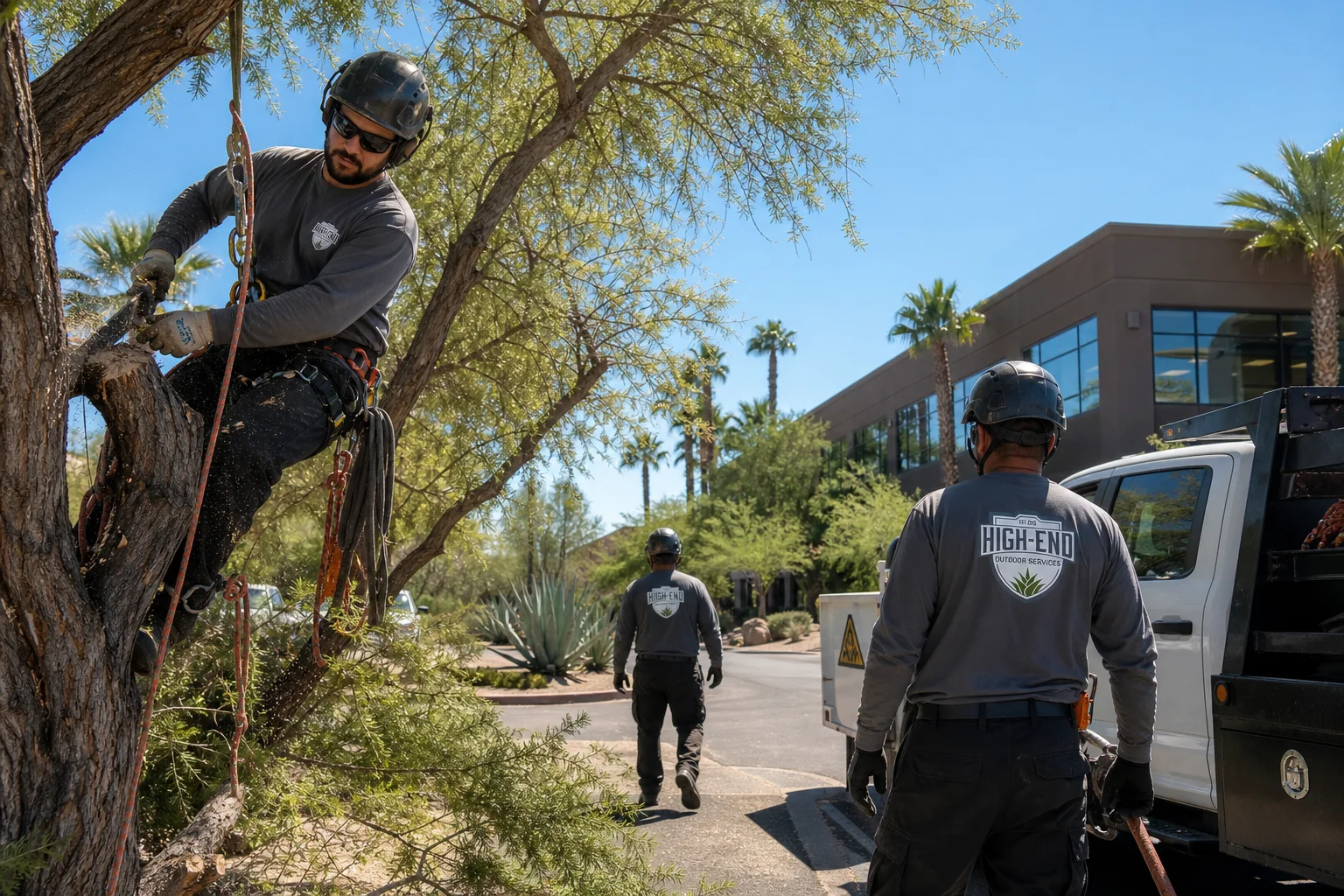
Walk the property with your landscaping contractor and tag dead, declining, and dangerous trees, plus any whose roots lift walks, curbs, or garden edging. A written inventory sets budget and order. Dangerous limbs are a liability issue, which is why commercial tree trimming cycles belong on the same calendar as replacements.
Step 2: Match Each Species to Its Spot
Check sunlight hours, overhead lines, distance from buildings, and irrigation reach, and note nearby gardens and shrubs that will share the root zone. Put full sun trees such as palo verde where heat is highest, and place shade trees where they cool walls and parking.
Step 3: Fix the Irrigation First
Confirm each new tree sits on its own drip or bubbler line, separate from turf, shrub, and garden zones. Turf schedules drown desert trees or leave young roots dry.
Step 4: Plant at the Right Depth
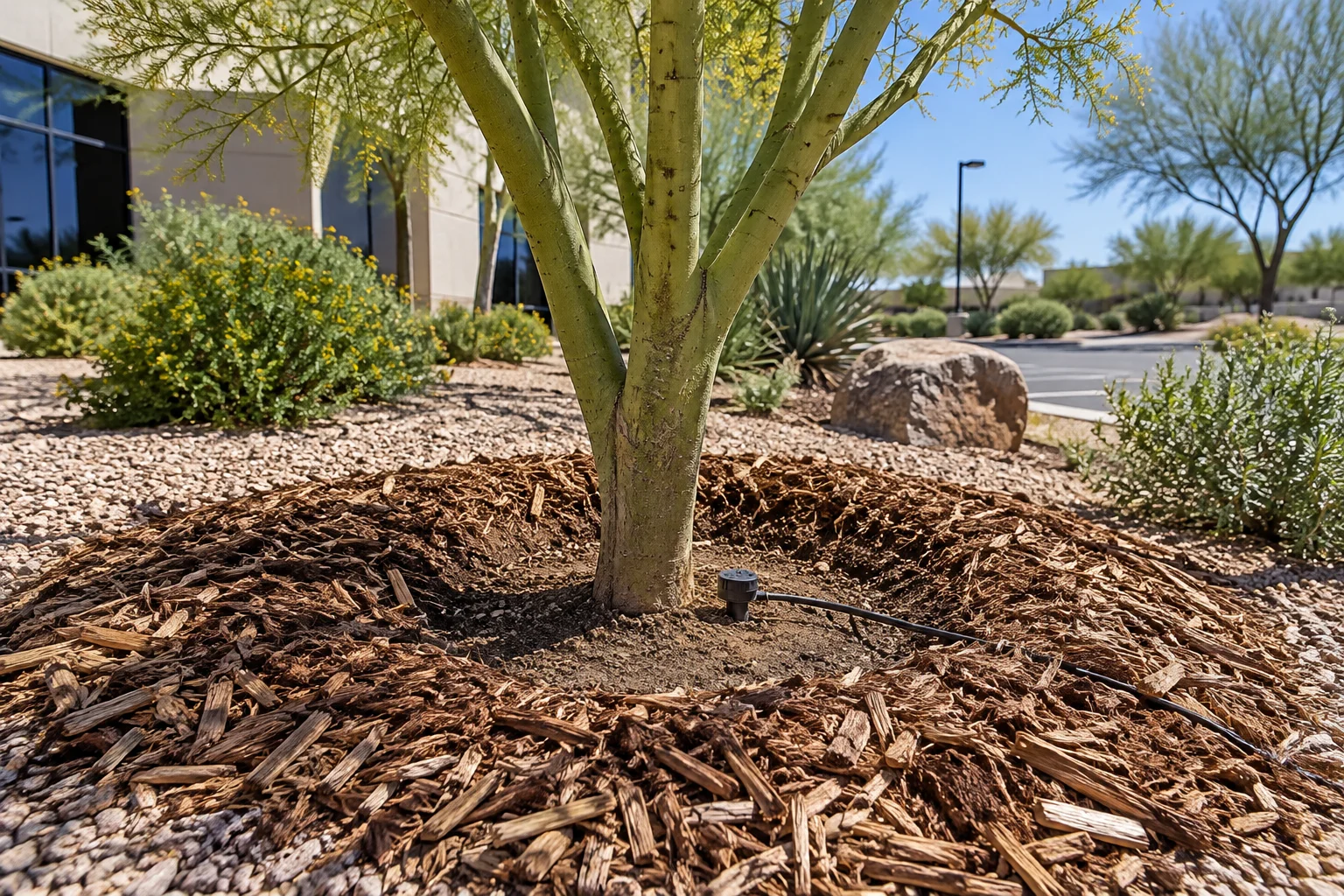
Dig the hole two to three times wider than the root ball and no deeper. Set the root flare, where the trunk widens, at or just above grade. Backfill with native soil, water deeply, and spread two to three inches of mulch, pulled back from the trunk. Skip heavy fertilizer, since new trees need roots before nutrients.
Property managers who want help matching species to each spot can talk through a replacement plan with our landscape design team before the fall window closes.
Funding Programs and Nurseries for Commercial Tree Planting
What Is the SRP Shade Tree Program?
SRP, the Salt River Project utility, has offered trees to eligible customers to cool buildings and cut energy use. Terms change from year to year and have favored residential customers, so a commercial property or HOA should confirm current terms with SRP before counting on it.
How Does the Phoenix Community Canopy Grant Work?
The City of Phoenix has funded community canopy grants that support tree planting by neighborhood groups and community organizations. Funding rounds, eligibility, and coverage change, so check with the city's heat response and mitigation office first. Treat a grant as a possible add-on, never as the budget.
Where Can Property Managers Find a Wholesale Nursery in Phoenix?
Wholesale nurseries in desert valleys like ours usually sell to the trade, so a property manager typically buys through a landscaping contractor with a trade account. Ask for tagged trees with intact root balls that were grown for the desert.
How long can a tree sit before planting? A container tree can wait a few days in a sheltered spot if you water it daily. A tree left in a black pot in full sun can cook its roots.
How Long Does a Newly Planted Tree Need Watering in Phoenix?
Newly planted trees of desert-adapted species usually need watering for one to two years, and larger boxed trees often need two to three. The goal is deep watering that encourages deep root growth, not frequent sprinkles. To check moisture, push a probe into the soil beside the root ball. If it slides in easily, the tree has water.
Planting Mistakes That Kill New Trees
The most common mistake when planting is setting the tree too deep. Others to avoid:
- Shallow, frequent watering that keeps roots near the surface.
- Tying trees to a turf, shrub, or garden irrigation schedule.
- Piling mulch against the trunk.
- Staking so tightly that the trunk cannot flex.
- Planting in July because the calendar says so.
You know it worked when the tree shows steady new growth by spring. Monsoons then test it the following summer, and monsoon storm prep means thinning the canopy and checking stakes before June.
Plan Your Fall Tree Replacements With HEOSaz
HEOSaz, founded in 2016 and based in Scottsdale, AZ, works with property managers and HOA boards across the Phoenix Metro on commercial and HOA landscapes. To talk through this fall's tree replacements, use the Contact page.