Ramada or Pergola for an HOA Pool or Common Area: How Boards Should Choose
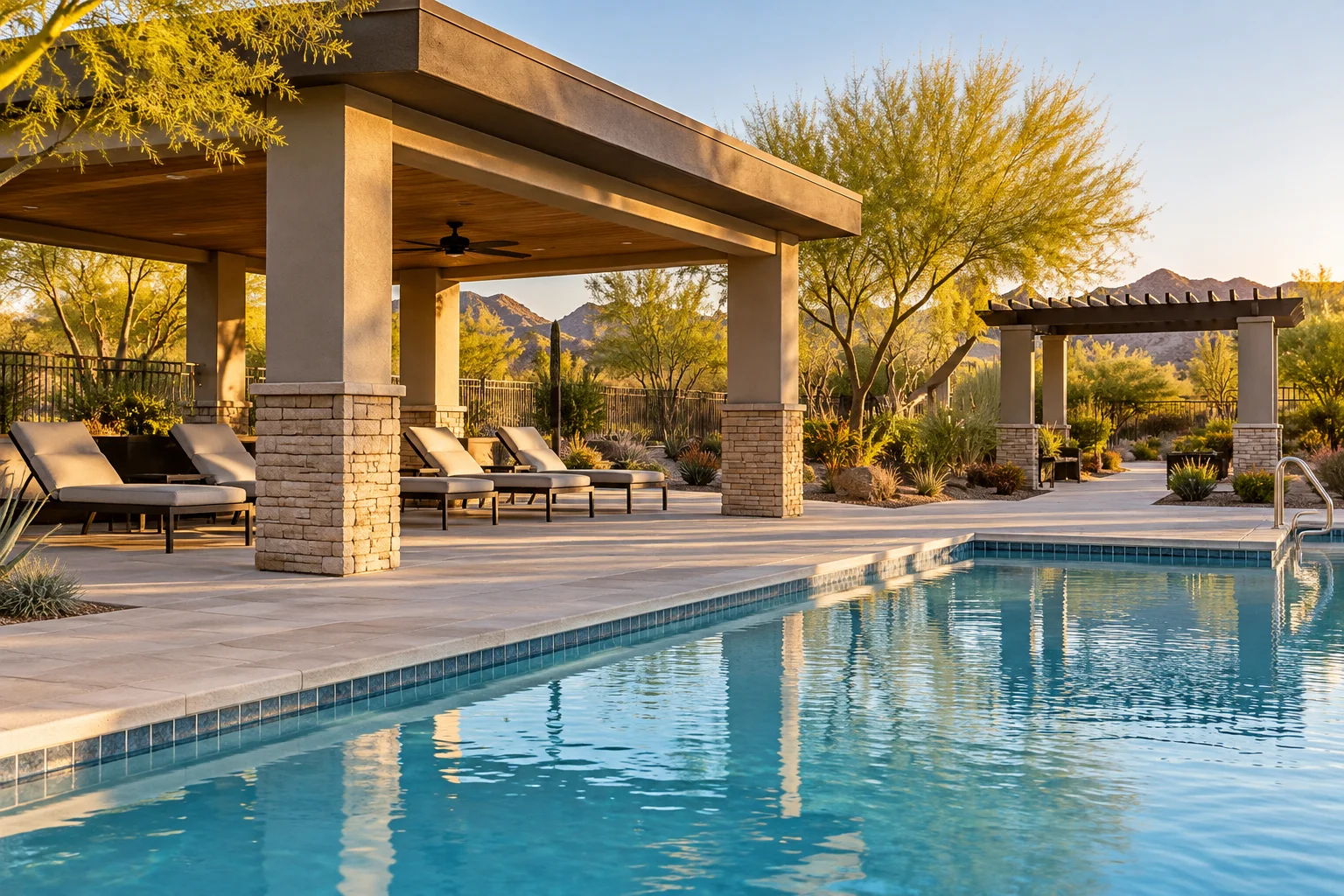
Ramada vs pergola comes down to the roof. A ramada has a solid roof that blocks sun and most rain, while a pergola uses open beams or slats that filter it. For most HOA pools and common areas, boards weigh shade, upkeep and approvals before choosing between pergola and ramada projects.
By HEOSaz Team, Outdoor Living Specialists
| What boards compare | Ramada | Pergola | Gazebo |
|---|---|---|---|
| Roof | Fully roofed on a freestanding frame | Open lattice or slats | Fully roofed, often multi-sided |
| Shade | Full shade under the roof | Partial, shifts with the sunlight angle | Full shade under the roof |
| Rain protection | Sheds most rain | Little unless louvered or covered | Sheds most rain |
| Best HOA use | Pool decks, picnic and seating areas | Entries, walkways, garden seating | Garden focal point, small groups |
| Upkeep | Roof surface and coatings | Coatings, slats and any climbing plants | Roof, trim and coatings |
| Look | Substantial and practical | Light and architectural | Traditional and decorative |
What Is a Ramada, and How Does an HOA Use One at a Pool?
A ramada is a freestanding shade structure with a full roof held up by columns or posts. In Arizona the word is the everyday term, and HOAs buy ramadas for pools and common areas where residents need dependable relief from the sun. On a single home, a ramada is the backyard version: a roofed outdoor space beside the pool or patios where the family eats and lounges.
At community scale the uses multiply. Boards put a ramada over pool deck seating, picnic tables, outdoor kitchens, playground benches, clubhouse patios and rest stops along walking paths. Each one gives homeowners a place to stay outdoors through the long hot months, and boards treat these as long-term investments in the amenities residents use most.
A pergola, by contrast, has an open roof of lattice or slats. Some people call a smaller version an arbor. Vendors sometimes blend the names into one pergola ramada label, so ask any contractor to state whether the roof is solid or open before you compare bids.
HEOSaz has served HOA boards, property managers and business owners across the Phoenix Metro since 2016, and pergolas and ramadas are now one of our service lines.
Ramada vs Pergola: Which Is Better for an HOA Pool or Common Area?
For a pool deck, the ramada usually wins. A full roof throws shade across the seating at every hour, so residents and guests stay cooler when the sun is overhead. The pergola wins on aesthetics, airflow and flexibility, which suits it to entries, walkways and garden seating.
Sunlight decides most of this in Arizona. Triple-digit summer afternoons make partial cover feel thin in desert climates like ours. A pergola breaks sunlight into stripes that move across the deck, while ramada roofs remove it. So when residents ask what is better than a pergola for dependable cover, the honest answer is a fully roofed structure. The ramada vs pergola choice then becomes a question of where each one belongs on the property.
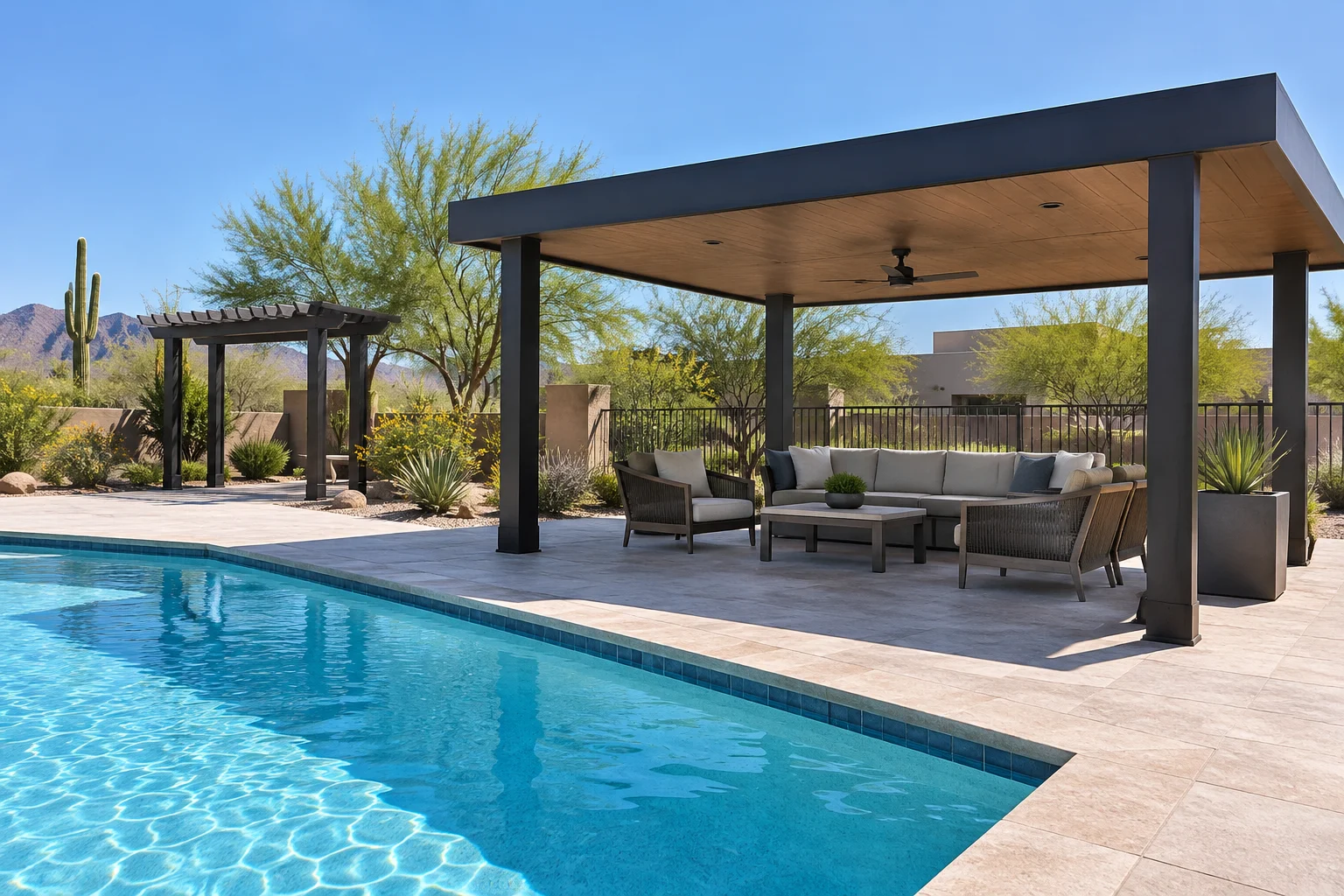
Both count as shade structures, but each does a different job. Ramadas anchor places where people sit for long stretches. Pergolas define outdoor space and patios, frame views and carry climbing plants through the gardens. A backyard pergola serves one household. A community pergola has to look right to hundreds of homeowners, so the style and proportions matter more.
Pergola vs Ramada: Which Costs Less to Build and Maintain?
Build cost depends on size, material, footings, electrical work for lighting and how easily crews reach the site. A contractor needs to see the property before quoting a number, so this article will not guess at one. What you can compare is structure. An open pergola uses less roofing, which often points to a lower build cost. A ramada needs a full roof and more framing, which usually adds to it.
Upkeep can run the other way. Open slats expose more surface to Arizona sun, so finishes need attention over time. A closed roof needs periodic cleaning of dust and debris. Material matters too, especially in hot, dry climates: aluminum and other metals resist rot and insects, while wood needs sealing or staining more often. An aluminum frame also keeps that upkeep low on a pool-side ramada. Weigh those costs against your budgets over the life of the structure, because the cheapest frame is rarely the cheapest to own.
Does a Pergola Give Enough Shade for a Pool Deck?
Sometimes, but only partly. Shade depends on how tightly the slats or lattice are spaced, which way the structure faces and how high the sun sits. Morning and late afternoon sunlight slips under an open roof at a low angle, while midday light passes through the gaps. Some pergolas use adjustable louvers to tighten coverage, though louvered roofs still differ from a fixed, closed roof. For a pool deck where residents sit for hours, plan a solid roof over the seating and let a pergola handle the edges.
Pergola vs Gazebo vs Ramada: How Do the Three Differ in Shade, Cost and Upkeep?
A gazebo is a freestanding structure with a closed roof, usually multi-sided and decorative, often with railings. A ramada is simpler and more functional, usually rectangular and sized for groups. A pergola is open overhead.
In the pergola vs gazebo vs ramada comparison, shade splits cleanly: the ramada and gazebo lead because their roofs are closed, and the pergola trails. Cost follows the same drivers for all three, which are size, materials and detailing, with ornate trim adding to the total, so boards should set budgets with all three in view. On upkeep, roofed structures need roof care and open ones need surface care. In desert climates with strong UV, ask about finishes first.
Ramada vs Gazebo: Which Works Better for HOA Residents?
For most communities, the ramada. It seats more people, sits easily over a pool deck and reads as practical shade. A gazebo suits a quiet corner of the gardens or a small gathering spot, and a backyard version can be lovely at that scale. If the structure must serve a crowd of homeowners on a hot Saturday, the ramada vs gazebo comparison favors the ramada.
Pavilion vs Pergola: Which Is Better for HOA Common Areas?
A pavilion is a large roofed structure with open sides, built for groups and events. In Arizona it often works like an oversized ramada. Choose a pavilion when the community hosts gatherings and needs a lot of covered outdoor space for tables and outdoor kitchens. Choose a pergola when the goal is a walkway, entry or garden edge where open sky and lattice add character. Pavilions and ramadas carry roofs, and pergolas carry light.
Does an HOA Need Approval or a Permit to Add a Ramada or Pergola?
Often yes, on two levels. First, the HOA's governing documents decide who approves a new common-area structure. Many associations route it through the board or an architectural committee, and some require a homeowner vote above certain project sizes. Second, the city or county building department decides on permits. Roofed structures, footings and electrical lighting commonly trigger review, and rules vary from city to city across the Phoenix Metro. Check both before anyone signs a contract, and ask the association's attorney if the documents are unclear.
How Should an HOA Board Choose Between a Ramada and a Pergola?
Match the structure to the job each spot has to do:
- If residents sit for hours at the pools, pick a ramada with a full roof.
- If the spot is an entry, walkway or the edge of the gardens, pick a pergola.
- If the board wants open views and airflow with some cover, pick a pergola with tight slat spacing.
- If budgets are tight, shade the seats you must cover first and size the ramada to that count.
- If the amenity includes outdoor kitchens or grilling stations near the pool, put them under a ramada so cooks and guests share shade.
Backyard ideas copied from single-family homes rarely scale to a community, so test each shade structure against how many homeowners will use the space at once. Boards that manage many amenities should also set one style for columns and one color palette, which keeps the look consistent across a master-planned community landscaping plan. Good outdoor living spaces feel related to each other, and shared aesthetics do that work.
Our Verdict: A Ramada for Pool Shade, a Pergola for Everything Else
For the main situation, shade at an HOA pool or common-area seating, choose a ramada. Its full roof gives the dependable cover residents expect, and it handles heat better than any open shade structure. Add a pergola where the goal is structure and beauty rather than relief, such as entries, walkways and garden edges. Together they give a community outdoor living that works from morning to evening.
Boards that want to compare both on their own property can ask our HOA Landscaping team to look at the site and talk through which structure fits each spot. HEOSaz holds a 5.0 star Google rating from 39 reviews (as of May 2026), and our focus is reliable, consistent quality across the whole property.
Plan Shade for Your HOA Pool or Common Area
Boards comparing a ramada and a pergola can reach the HEOSaz team at (480) 751-8798 Monday to Saturday, 8 AM to 5 PM, or send a request through Contact.