Implementing Effective Landscape Maintenance Programs for Commercial Properties
To implement a landscape maintenance program for a commercial property, start by auditing your current landscape condition, defining service frequencies for each task, selecting plants suited to your local climate, and establishing a management system that ensures consistent care week over week. A structured program prevents reactive spending and keeps your property compliant with HOA or municipal standards year-round.
Why Commercial Properties Need a Formal Landscape Management System
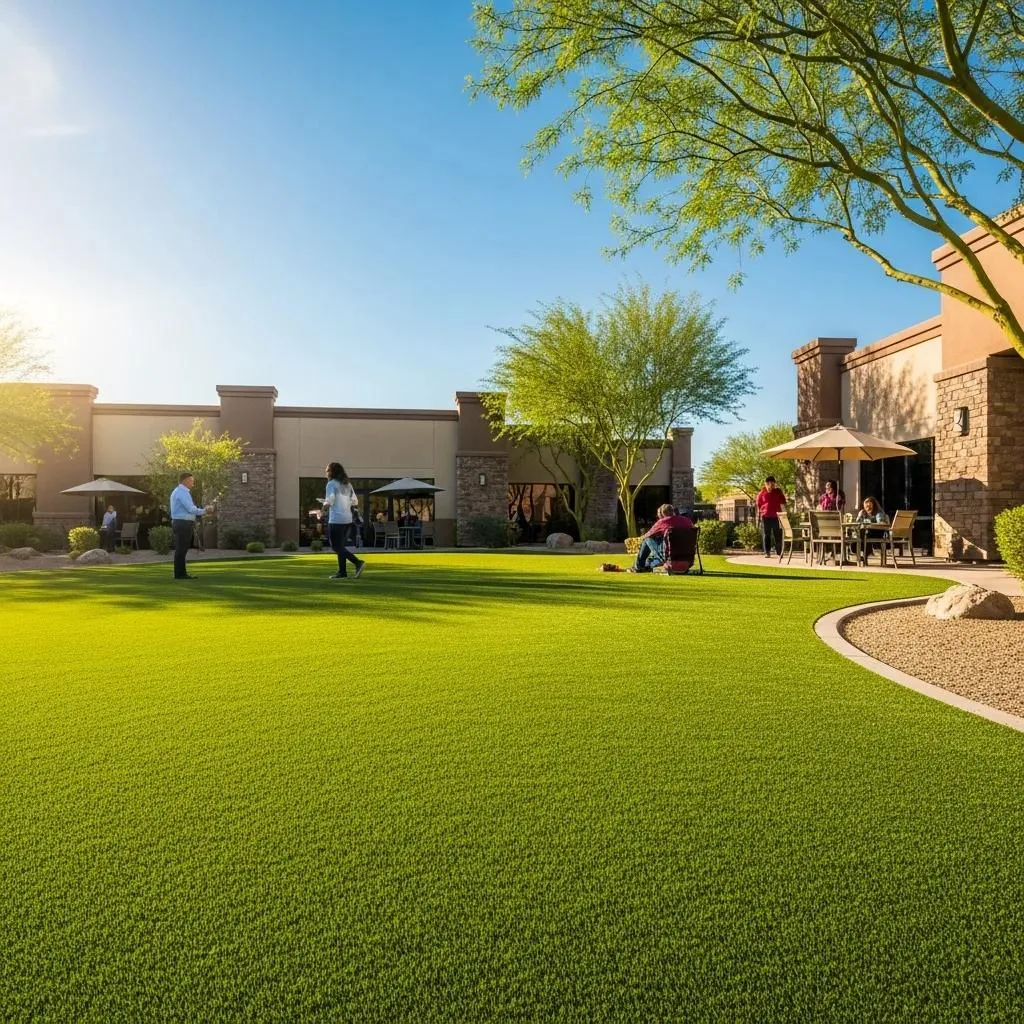
Commercial landscape maintenance is not the same as residential care. The stakes are higher. Your property's outdoor appearance communicates brand standards to every tenant, visitor, and passerby before they ever walk through the door.
Properties without a defined commercial landscape maintenance plan tend to suffer from inconsistency: crew changes produce uneven mowing patterns, irrigation schedules are adjusted without documentation, and pruning happens reactively rather than on a timed rotation. The result is visual degradation over time, even when individual service visits are completed.
A formal landscape management system in Arizona adds another layer of urgency. The desert climate does not forgive neglect. Heat stress, monsoon damage, and invasive weed pressure each create unique challenges that require proactive, scheduled responses rather than damage control after the fact.
Properties that implement a structured commercial landscape maintenance plan see more consistent curb appeal, reduced surprise costs, and fewer compliance issues with HOA boards and city code officers.
Step 1: Conduct a Full Property Assessment
Before any plan is written, walk the entire property with your landscaping team and document what exists. This assessment should capture:
- All turf areas, their square footage, and current condition
- Existing plant material, including species, health, and placement
- Irrigation infrastructure, including controller locations, zone mapping, and any known leaks or coverage gaps
- Hardscape elements: walkways, parking lot islands, retaining walls, and drainage structures
- Areas of compliance concern, including visibility triangles near entrances and height restrictions near lighting
This baseline gives your commercial landscape management system something to measure against. Without it, you are guessing at needs rather than addressing documented conditions.
In Arizona, this assessment should also flag any invasive species, document existing desert-adapted plants worth preserving, and note areas prone to monsoon erosion or drainage pooling.
Step 2: Build Your Commercial Landscape Maintenance Plan
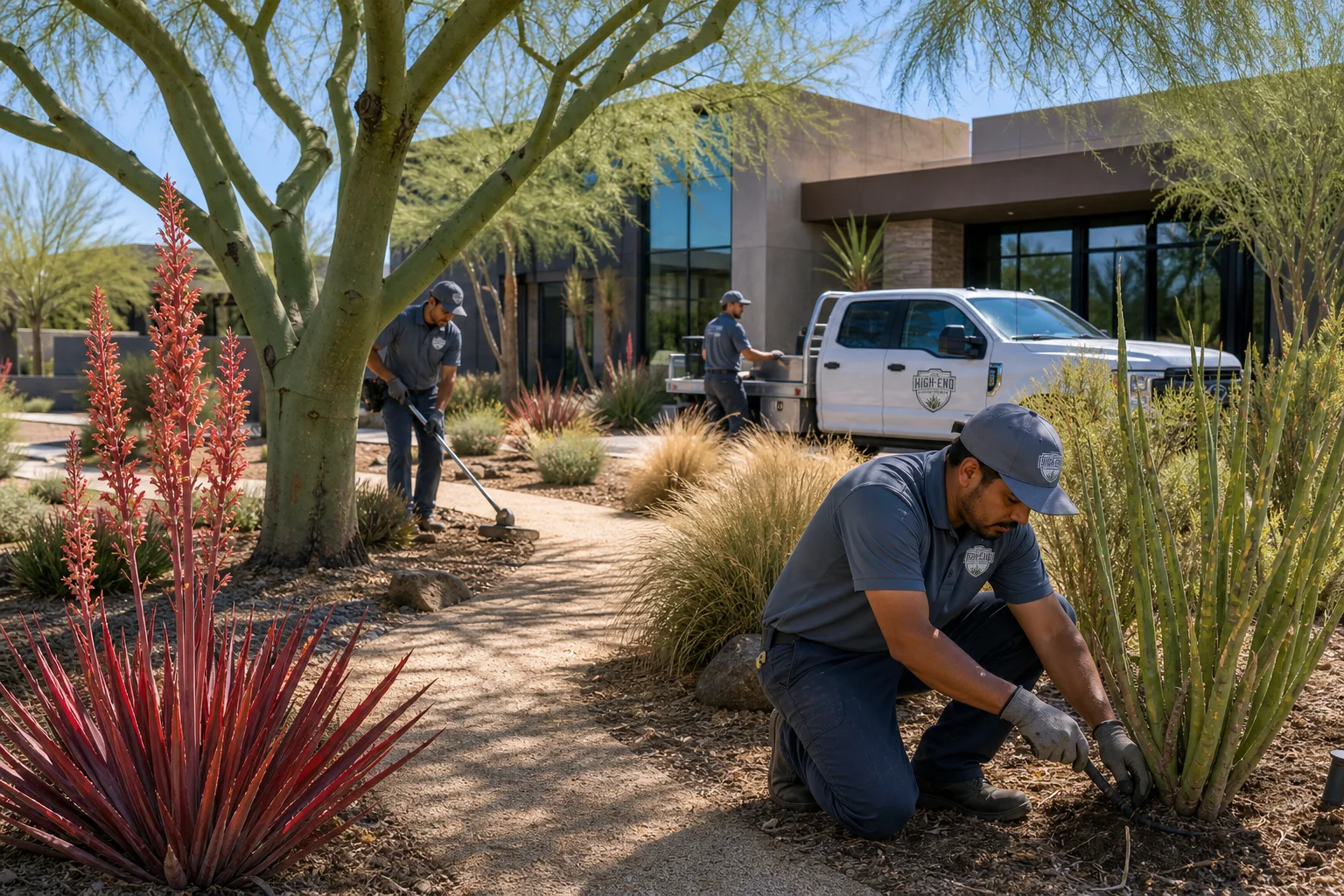
With assessment data in hand, build a maintenance plan that assigns specific tasks to specific frequencies. A well-structured commercial landscape maintenance plan typically organizes service into three tiers:
Weekly or Bi-Weekly Services:
- Mowing and edging all lawn areas
- Litter and debris removal from grounds and parking areas
- Blowing walkways and entrances clear of cuttings and debris
- Visual irrigation checks for obvious failures or dry spots
Monthly Services:
- Irrigation system audit and seasonal adjustment
- Fertilization on scheduled rotation (turf and plant material)
- Spot weed control in beds, hardscape joints, and lawn
- Shrub shaping and light pruning to maintain intended form
Seasonal or Annual Services:
- Deep pruning of trees and larger shrubs
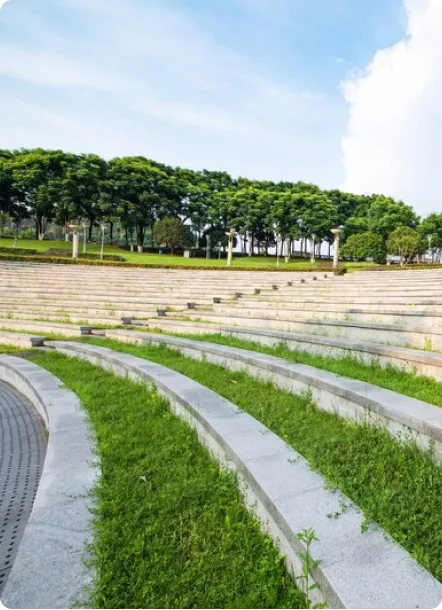
- Aeration and overseeding for turf areas (where applicable)
- Mulch replenishment in planting beds
- Full irrigation system inspection and backflow testing
- Plant replacement for dead or failing material
- Monsoon preparation and post-storm cleanup (Arizona-specific)
The goal of this structure is to provide your property with care that is proactive and predictable, not reactive and expensive.
For properties with HOA oversight or city compliance requirements, your plan should also document which tasks satisfy specific code obligations. Keeping this record protects you when disputes arise.
Step 3: Address Arizona's Unique Landscape Demands
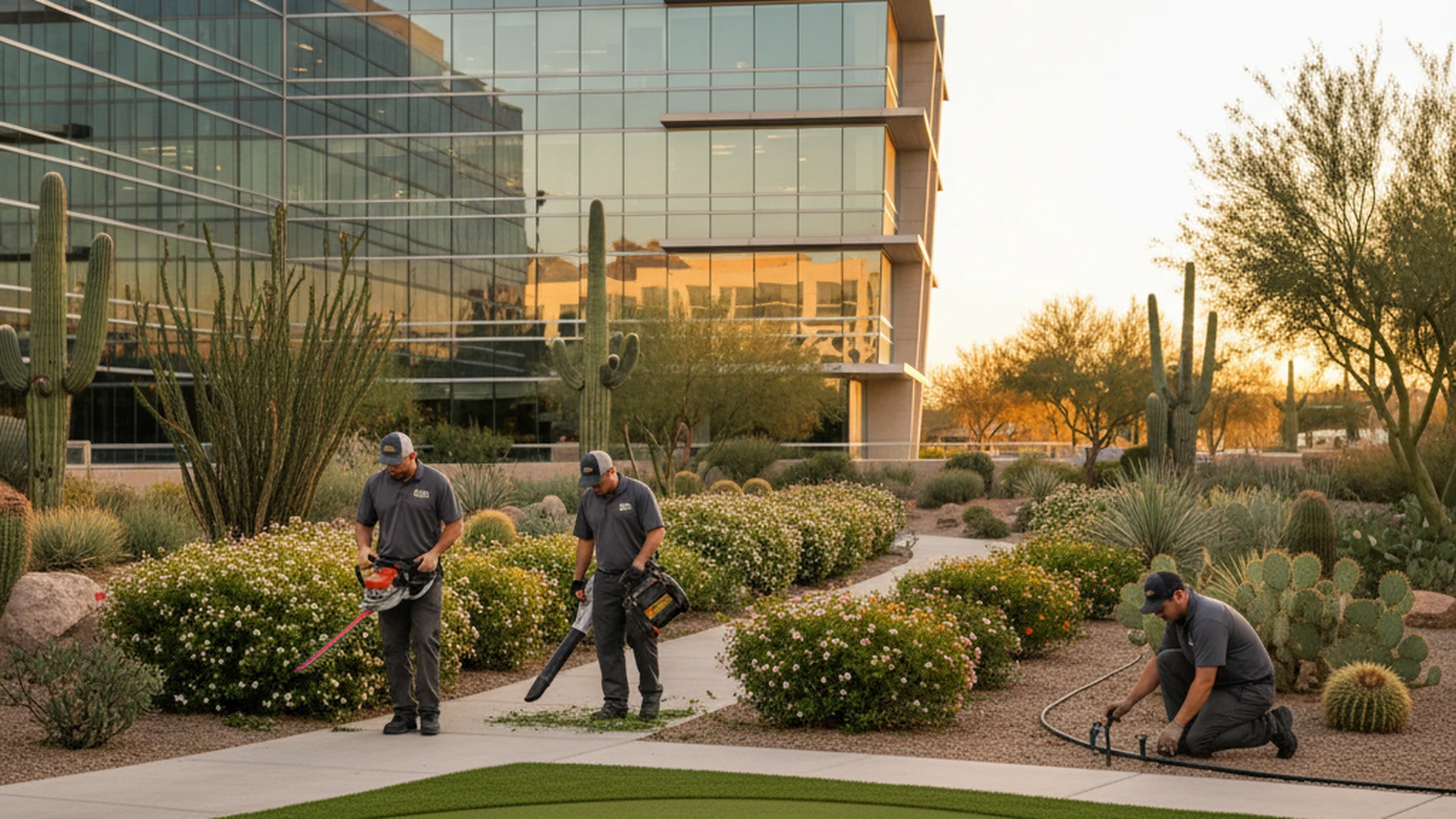
A landscape maintenance program designed for Arizona commercial properties cannot be copied from a national template. The climate creates conditions that require local expertise.
Irrigation Management: Water is the single most variable expense in Arizona commercial landscaping. An efficient irrigation plan segments zones by plant type and sun exposure, uses smart controller technology to adjust run times based on evapotranspiration data, and schedules watering during early morning hours to reduce evaporation loss. A commercial landscape management system that tracks monthly water use by zone gives property managers real data to evaluate efficiency and catch waste early.
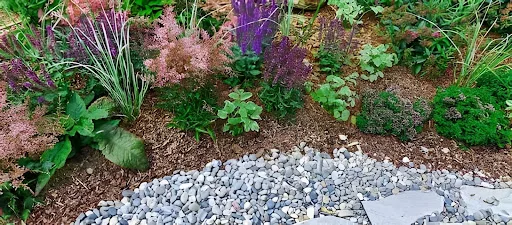
Desert-Adapted Planting: Properties that rely heavily on turf in full-sun Arizona conditions create ongoing maintenance burdens. Transitioning portions of the landscape to desert-adapted plant material reduces irrigation needs, pruning frequency, and replacement costs. Saguaro, palo verde, desert willow, and lantana are low-maintenance, high-appeal options that perform well in commercial settings without constant care.
Monsoon Season Preparation: Arizona's summer monsoon season demands specific preparation. Your maintenance program should include pre-monsoon inspections of all trees for structural weakness, clearance pruning away from buildings and overhead lines, and drainage clearing to prevent flooding. Post-monsoon cleanup visits should be scheduled in advance so response time is fast, not dependent on availability.
Seasonal Weed Pressure: Both winter annuals and summer annuals cycle through Arizona commercial properties with predictable timing. A proactive pre-emergent herbicide program, applied at the right seasonal windows, dramatically reduces the labor cost of reactive hand-pulling. This is one area where a well-documented maintenance plan delivers clear cost savings.
Step 4: Establish Accountability and Communication Standards
The best commercial landscape maintenance plan fails without clear accountability. Your maintenance services agreement should define:
- Named account manager and escalation contact on the contractor side
- Expected response time for reported issues (24 to 48 hours is standard for professional commercial contracts)
- Documentation format for completed visits (photo log, checklist, or both)
- Communication protocol for plant health concerns, irrigation failures, or damage found during a visit
For HOA-managed commercial properties, this documentation also provides evidence of compliance during board reviews or audits.
If you manage multiple properties, a centralized landscape management system with property-by-property records allows you to compare performance across sites, identify which locations need more attention, and hold contractors to consistent service standards.
Building this layer of accountability into your program from the start separates reactive property management from strategic asset management. If you are ready to get a professional commercial landscape maintenance plan in place, contact the HEOSaz team to schedule a property assessment.
Step 5: Review, Adjust, and Improve
A landscape maintenance program is not a static document. It should be reviewed at least twice per year: once before the summer heat season and once before the winter months.
At each review, evaluate:
- Which areas of the property are underperforming against your curb appeal standard
- Whether irrigation runtime data suggests efficiency gains are possible
- How plant material is performing and whether replacements are needed
- Contractor compliance with scheduled service frequencies
- Any new compliance requirements from HOA boards or municipal code updates
The review process also surfaces whether the original plan was scoped correctly. Properties that grow their tenant base or add outdoor amenities may need to scale their landscape maintenance program accordingly.
Documenting changes at each review creates a running history of your commercial landscape's evolution. That history is useful when onboarding new contractors, addressing HOA concerns, or building a case for capital landscape improvements.
What to Look for in a Commercial Landscaping Partner in Arizona
Implementing an effective landscape maintenance program requires a partner with real Arizona commercial experience. When evaluating contractors, look for:
- Demonstrated knowledge of desert plant care, irrigation management, and seasonal weed control
- Familiarity with HOA compliance requirements and the documentation those boards expect
- A structured service agreement that matches your plan's scope and frequency requirements
- Photo documentation and communication practices that keep property managers informed
- Licensed applicators for herbicide and fertilizer programs
A contractor who specializes in commercial landscape maintenance versus residential service will approach your property differently. The standards, the scale, and the compliance obligations are not comparable.
Commercial properties in Arizona face real consequences when landscape maintenance falls behind: HOA fines, tenant complaints, and eroding curb appeal that affects leasing and property value. A proactive program with documented service standards, reliable contractors, and twice-annual reviews creates outdoor spaces that perform at the level your tenants and stakeholders expect.
Ready to build a landscape maintenance program that protects your property's value and keeps your outdoor spaces performing at a high standard? Contact the HEOSaz team to discuss your commercial property's specific needs.
Frequently Asked Questions
How often should a commercial landscape be inspected?
Most commercial properties benefit from weekly or bi-weekly visits for basic service tasks, with a full site inspection conducted monthly. In Arizona, an additional inspection before and after monsoon season is strongly recommended to assess storm damage and drainage performance.
What is included in a commercial landscape maintenance plan?
A complete commercial landscape maintenance plan covers lawn mowing and edging, irrigation management and seasonal adjustments, plant pruning and shaping, weed control, fertilization, seasonal cleanups, and compliance documentation. The specific scope depends on the size of the property and any HOA or municipal requirements.
How do I choose the right plants for a low-maintenance commercial landscape in Arizona?
Focus on desert-adapted species with proven performance in Arizona's climate. Plants like palo verde, desert willow, agave, and lantana require less irrigation, less pruning, and less replacement than non-native species. A landscaping team familiar with Arizona's conditions can recommend the best options for your property's sun exposure and soil type.
What is the difference between a landscape management system and a basic maintenance contract?
A basic maintenance contract defines service tasks and frequency. A landscape management system adds accountability tracking, documentation protocols, irrigation data monitoring, and scheduled reviews to optimize performance over time. The management system approach is better suited to commercial properties where curb appeal and compliance are ongoing priorities.
How does Arizona's monsoon season affect commercial landscape maintenance programs?
Monsoon season requires specific preparation: pre-storm pruning for structural tree safety, drainage clearing to prevent flooding, and post-monsoon cleanup visits. A well-structured maintenance program schedules these steps in advance so property managers are not scrambling for contractor availability after a major storm event.
Published: April 10, 2026 | Last Updated: April 10, 2026
HEOSaz Team | Commercial Landscaping Experts