Year-Round Desert Landscape Care: The Commercial Maintenance Calendar
Year-round desert landscape care at commercial properties in Arizona requires a calendar-driven approach that accounts for extreme summer heat, mild winters, and the specific needs of native desert plants. Working with a professional Landscape Design team ensures your property presents a polished appearance every month without wasting water or resources.
By HEOS AZ Team, Outdoor Living Specialists
Understanding Arizona's Seasonal Landscape Cycles
Arizona commercial properties operate within three distinct climate phases rather than the four seasons found in other regions. The warm growing season runs from March through May, the brutal summer heat peaks from June through September, and a cooler second growing window spans October through February. Desert landscaping that accounts for each phase produces results that remain polished all year, while teams that ignore these cycles find themselves reacting to damage rather than preventing it.
Effective year-round desert landscape care requires understanding these phases and adjusting maintenance schedules accordingly. South-facing property exposures absorb intense solar radiation all year and require plants rated for full sun with exceptional heat tolerance. North-facing zones retain moisture longer and support a wider palette of species. Mapping these micro-climates before selecting plants is a foundational step that experienced commercial landscape maintenance teams complete before any installation begins.
Winter and Spring: Establishing Desert Plants and Pruning for Growth
November through March is the premier window for installing most desert plants on commercial properties. Soil temperatures remain moderate, root systems have months to establish before summer stress arrives, and water demand stays low during the initial establishment period.
Winter maintenance includes trimming ornamental grasses to clear dead foliage and encourage vigorous spring regrowth. Mexican feathergrass, blue grama, and red yucca all respond well to late-winter cuts. Red yucca, a native succulent with arching flower spikes that bloom from spring through early summer, is one of the most reliable plants in commercial desert landscapes. It handles full sun without supplemental water once established, produces dramatic structural color, and requires almost no care between trimmings all year.
Spring is the right time to prune palo verde trees before their new growth flush. The palo verde, Arizona's state tree and one of the most recognizable elements of authentic desert landscape design, benefits from canopy lifting and crossing-branch removal before monsoon-season winds arrive. Properties with mature palo verde specimens present a visual authority that younger plantings cannot replicate.
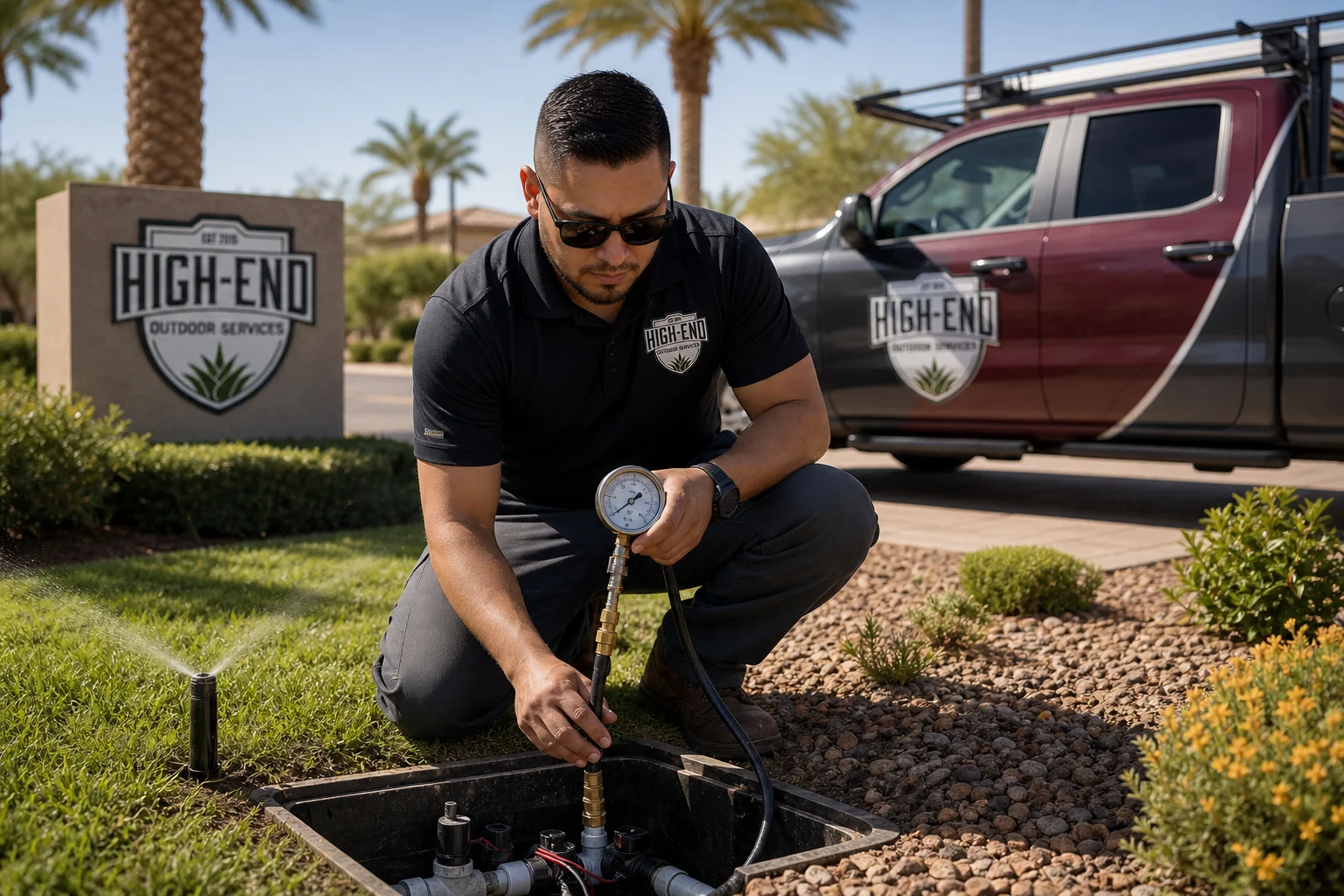
Irrigation system inspections belong in February or March. Winter temperature swings crack emitter lines and shift fittings out of alignment. Scheduling an Irrigation Repair audit ensures every drip zone delivers accurate water volume when desert plants need it most as temperatures climb. For a thorough look at what a service agreement should cover, see What a Commercial Landscape Maintenance Contract Should Include.
Summer: Protecting Desert Landscapes Through Extreme Heat
June through September tests every element of a commercial desert landscape. Air temperatures regularly exceed 110 degrees Fahrenheit across the Phoenix metro, and reflected heat from paved surfaces pushes ground-level temperatures higher. Native desert plants evolved for these conditions, but the maintenance approach must adapt.
Irrigation timing is the highest-impact summer decision. Early morning watering, completed by 6:00 AM, reduces evaporation and gives plants time to absorb moisture before peak heat. Drip systems should run longer and slightly more frequently from June through August. Applying a two to three inch layer of decomposed granite around plant bases helps retain moisture in the root zone and moderates soil temperatures.
Ornamental grasses including purple fountain grass and deer grass remain attractive through summer with consistent deep watering. They perform in full sun and add movement to desert landscapes during a season when many flowering plants go dormant. Summer is also the time to monitor for heat stress signals: leaf curl, bleaching, and premature drop. Addressing these signs early prevents permanent plant loss.
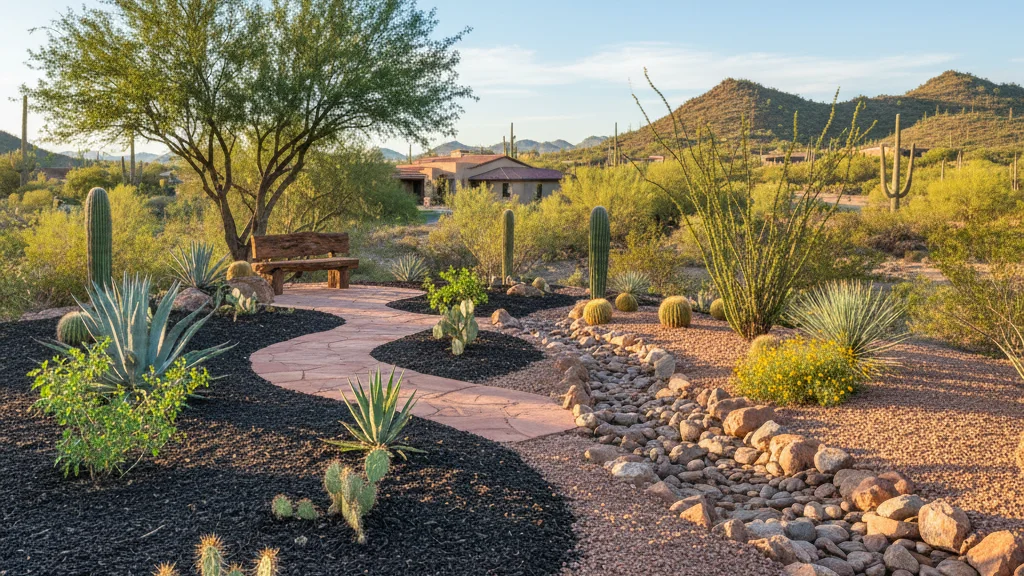
The monsoon season, typically mid-July through mid-September, delivers heavy brief rainfall that can cause root rot in poorly draining areas. A professionally designed desert landscape incorporates dry creek beds and graded drainage channels that carry storm water away from plant root zones.
Fall: Recovery, Replanting, and Preparing Desert Landscapes for Cooler Months
When temperatures drop below 100 degrees in late September and October, commercial properties enter recovery mode. Fall is the second-best installation window of the year. Desert plants installed in October and November benefit from warm soil temperatures that encourage root development while moderate air temperatures reduce moisture stress.
Fall maintenance includes replacing plants lost to summer stress, refreshing color with cool-season annuals, and overseeding turf areas with ryegrass for properties that maintain lawn zones. Native desert plants that struggled through summer should be evaluated carefully: sometimes an irrigation adjustment or soil amendment resolves the issue, and sometimes replacement with a more site-appropriate species is the right call.
How Often Should Commercial Properties Be Serviced? The Arizona Maintenance Calendar provides a month-by-month service frequency guide that Phoenix and Scottsdale property managers use to schedule crews and budget maintenance visits across every season.
The Plant Palette That Anchors Desert Landscapes All Year
A well-planned commercial property relies on a core plant palette that performs all year without intensive seasonal care. These are the species our team recommends consistently across Phoenix metro properties.
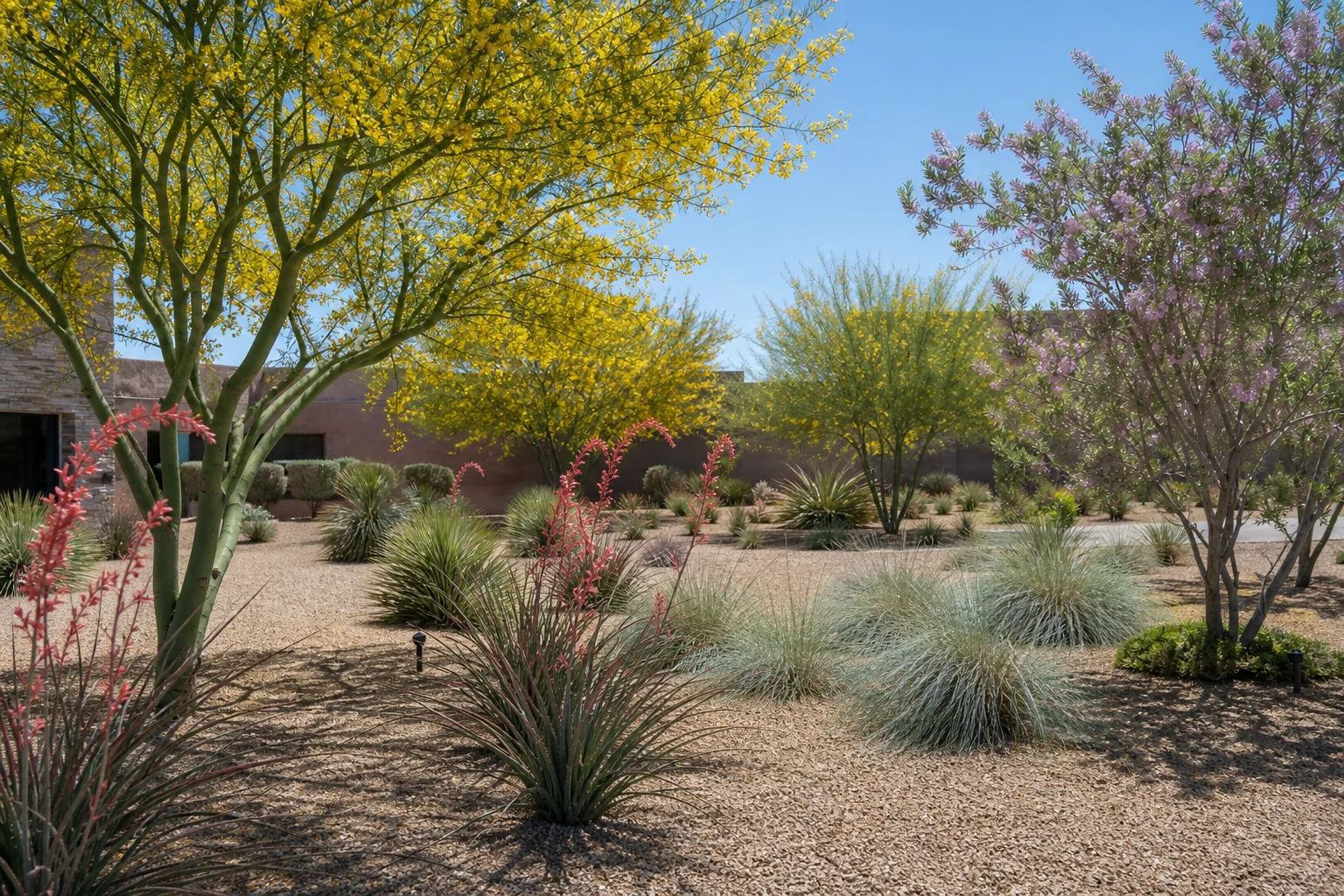
Palo verde: Arizona's state tree provides filtered canopy shade, dramatic spring blooms, and distinctive green bark all year. Mature palo verde specimens add a sense of permanence to any desert landscape that no fast-growing ornamental can match.
Red yucca: A structural accent plant that thrives in full sun and rocky desert soils. Its long flower spikes and arching strap-like foliage create bold contrast against decomposed granite and concrete hardscape. It is among the most reliable and low-maintenance desert plants available for commercial use.
Ornamental grasses: Deer grass, blue grama, and Mexican feathergrass add softness, movement, and natural texture to desert landscapes. Once established, they need minimal supplemental irrigation and return reliably all year through multiple growing seasons.
Desert willow: A small flowering tree suited to medians and parking lot islands. Its orchid-like blooms appear from spring through fall, adding seasonal color to desert landscapes without high water demand.
Selecting the right plants for each micro-climate on a property and pairing them with a calibrated drip irrigation system is how professional desert landscaping teams create outdoor spaces that look intentional and well-maintained from season to season without wasteful water use.
See The Importance Of Community Landscape Maintenance For Enhancing Neighborhood Appeal for perspective on how consistent plant care contributes to property values and resident satisfaction. Our team's work across the Scottsdale area is detailed in Local Landscape Maintenance Services That Transform Scottsdale Communities.
Frequently Asked Questions
How often should commercial properties in Arizona receive landscape service?
Most commercial landscape maintenance programs in the Phoenix and Scottsdale area schedule weekly or bi-weekly visits during the active growing season from March through October, and monthly or bi-monthly service from November through February. Properties with turf, high-traffic common areas, or HOA appearance standards typically require more frequent visits to maintain consistent presentation all year.
What is the best time to plant desert plants at a commercial property?
The two best installation windows are October through November and February through April. These periods offer moderate soil and air temperatures that allow root systems to establish before the next season of heat stress arrives. Planting from June through August risks losing plants to extreme heat before their roots anchor in the soil.
How do I retain moisture in a desert landscape without overwatering?
To retain moisture effectively, apply a two to three inch layer of decomposed granite or organic mulch around plant bases, program drip irrigation to water deeply and infrequently rather than shallowly and often, and schedule irrigation before sunrise. This approach encourages roots to grow downward toward cooler soil layers and improves long-term drought tolerance.
Are ornamental grasses low maintenance in Arizona?
Most ornamental grasses suited to Arizona desert landscapes, including deer grass, blue grama, and Mexican feathergrass, require annual trimming in late winter to remove dead foliage, consistent deep watering through summer, and division every three to five years to maintain density. They perform reliably in full sun and need no supplemental fertilization in native soils.
Does a desert landscape stay attractive all year?
A properly designed desert landscape delivers visual interest all year through layered planting: palo verde and desert willow for canopy structure, red yucca and brittlebush for seasonal bloom cycles, and ornamental grasses for year-round texture. This palette performs reliably across every season without the intensive maintenance that non-native plantings require.
Build Your Year-Round Desert Landscape Care Program with HEOS AZ
Commercial property managers and HOA boards who commit to consistent, calendar-driven maintenance see measurable improvements in curb appeal, tenant satisfaction, and long-term property value. Our team brings the horticultural expertise and field experience to keep desert landscapes performing at their best from season to season. Connect with us today through our Commercial Maintenance page to request a property consultation and get your year-round desert landscape care plan established.