Turf Repair Services: Identifying and Fixing Common Synthetic Lawn Problems
When fibers flatten, seams pull apart, or infill migrates to the perimeter, professional turf repair services restore performance and appearance before small problems become costly replacements. Paired with consistent turf maintenance, targeted repair extends the life of every outdoor space and protects the investment behind commercial and HOA installations throughout Arizona.
How Artificial Turf Degrades in Arizona Conditions
Arizona's environment puts synthetic grass under unique stress. Sustained summer temperatures regularly exceed 110 degrees, UV radiation ranks among the highest in the continental United States, and the extreme thermal cycling between summer days and desert nights works the material constantly. Add heavy foot traffic from HOA common areas, corporate campuses, and sports fields and the conditions for accelerated wear become clear.
The primary degradation patterns property managers should monitor include:
- Fiber flattening along high-traffic corridors
- Seam separation caused by adhesive breakdown under heat cycling
- Infill migration toward low points or perimeter borders
- Edge and border lifting as anchoring loosens with ground movement
- Drainage blockages from accumulated organic debris and fine sediment
Each of these issues responds well to professional repair when caught early. Left unaddressed, they compound into larger structural failures.
Diagnosing Common Artificial Turf Problems
Fiber Matting and Compaction
Repetitive foot traffic along the same paths compresses synthetic grass fibers until they lose their upright memory. A brush drag test against the grain reveals how much recovery remains. Fibers that spring back are serviceable. Fibers that stay flat have lost their structural memory and need targeted grooming or spot replacement.
Seam and Edge Failure
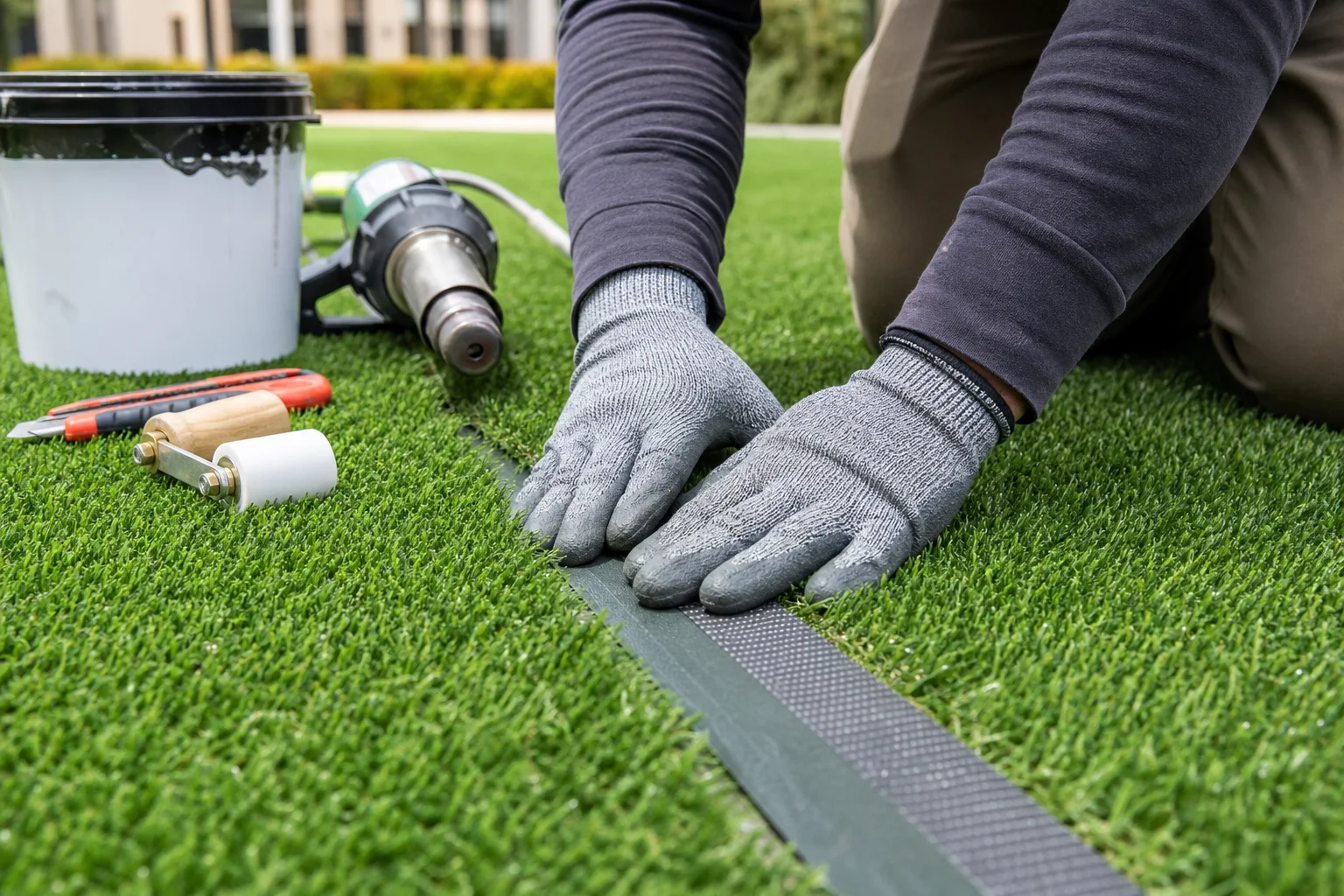
Seam failures are the most structurally serious category of artificial turf repair. When the bond between panels opens, moisture and debris penetrate the backing and accelerate deterioration. Professional repair involves re-cutting both edges to clean substrate, applying adhesive and seam tape rated for high heat, and curing the bond under weight. Edge failures follow the same process with the addition of re-securing perimeter anchoring.
Infill Loss and Redistribution
Infill anchors the artificial turf, cushions the surface, and holds fibers upright. When infill migrates or compacts, surface firmness and fiber support both decline. Replenishing and redistributing infill is a routine component of complete turf maintenance and should be inspected at minimum once per year on any commercial property.
Drainage Failures
Standing water after rain indicates that the aggregate base beneath the turf is compromised by debris, sediment, or root intrusion. Resolving a drainage failure typically requires lifting the affected panel, clearing and re-grading the base, and re-laying the surface with confirmed slope. Persistent drainage problems left unaddressed accelerate backing deterioration and void most manufacturer warranties.
Turf Cleaning as Structural Maintenance
Property managers sometimes treat artificial turf cleaning as cosmetic upkeep. It is not. It is structural maintenance. Organic debris, pollen, fine dust, and microbial contamination accumulate in the pile and degrade both fibers and infill over time, accelerating the need for repair services far ahead of schedule.
Research published by Penn State's Center for Sports Surface Research (Dr. Andrew McNitt, 2019) confirmed that consistent cleaning measurably reduces fiber abrasion rates and extends serviceable life on athletic surfaces. Those findings apply equally to commercial and HOA synthetic grass installations.
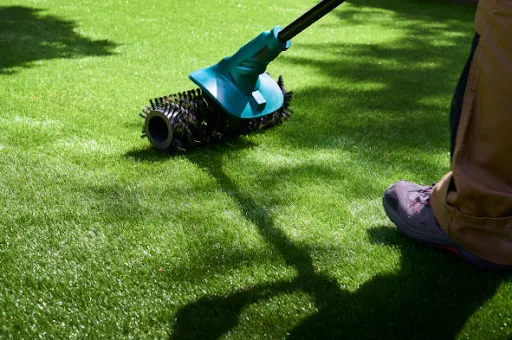
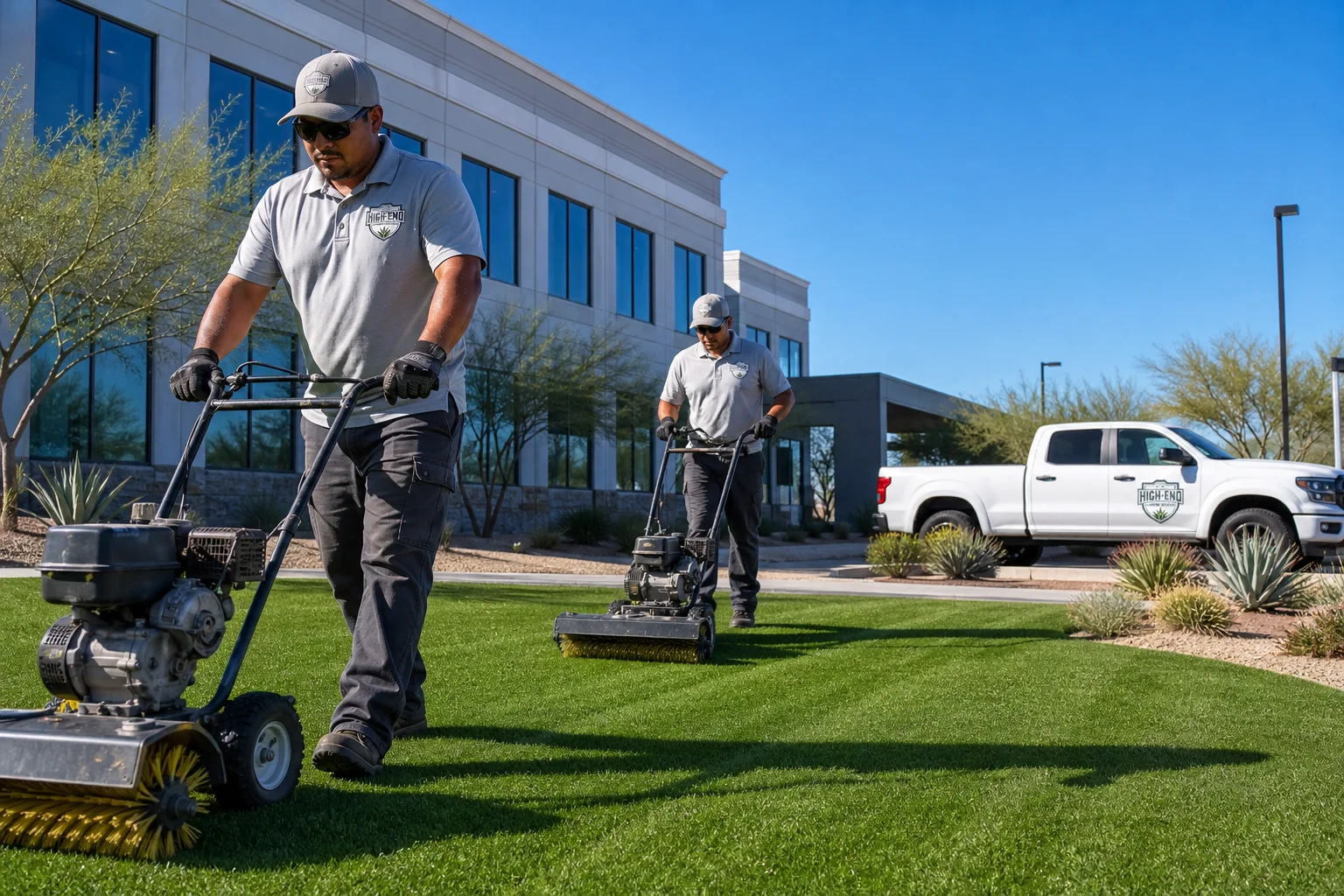
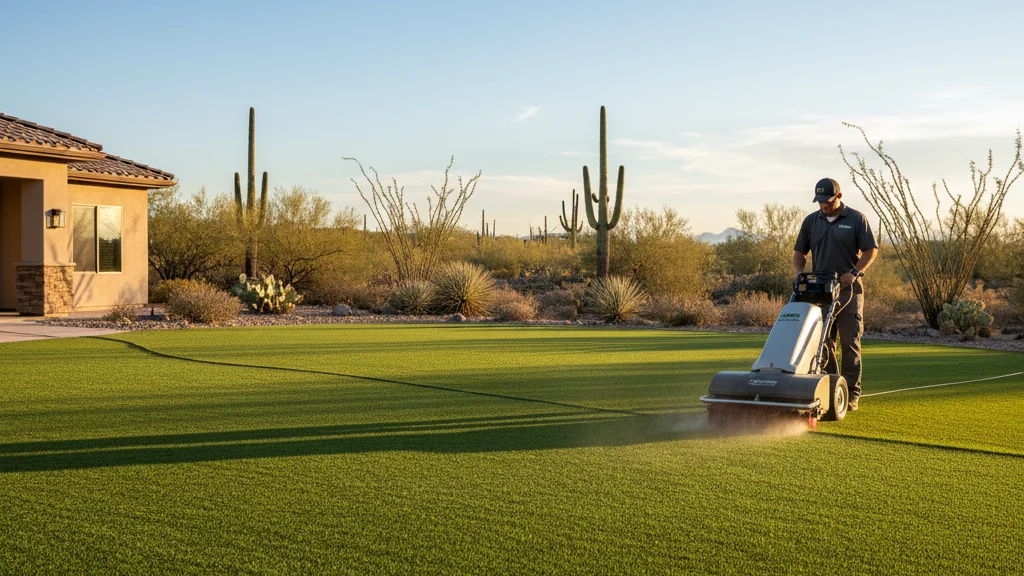
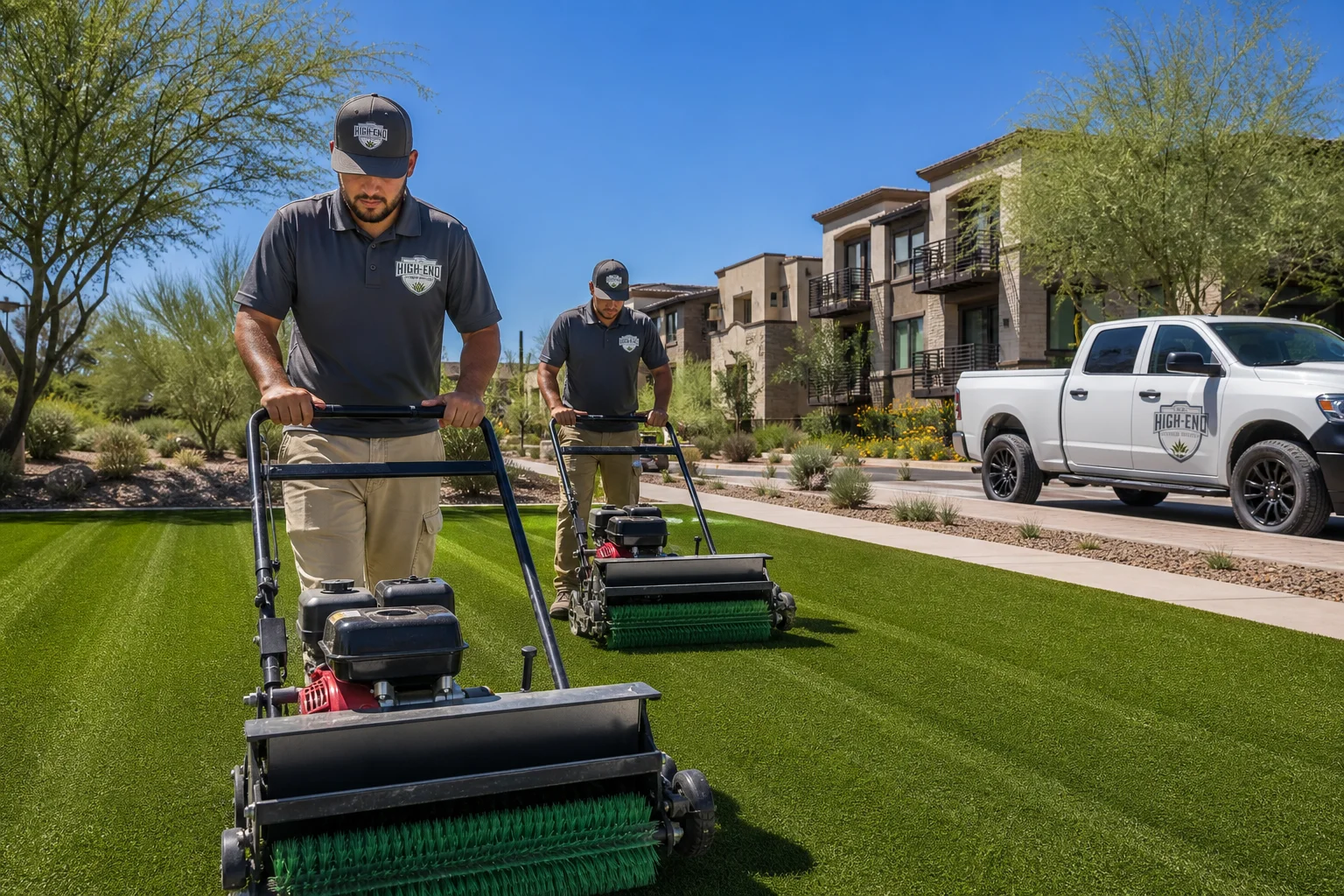
A professional cleaning service uses rotary power brushes, high-volume air blowers, and low-pressure rinse systems to clean turf without displacing infill. For Arizona commercial properties, recommended frequencies are:
- High-traffic zones (sports fields, pet runs, pool surrounds): monthly artificial turf cleaning
- Moderate-traffic areas (HOA common areas, corporate greens): quarterly cleaning service
- Decorative or low-traffic installations: semi-annual clean turf inspection combined with infill top-off
When Repair Gives Way to Replacement
There is an honest threshold at which continued repair services become less economical than full turf replacement. The indicators include:
- Backing deterioration visible through the pile across a large portion of the surface
- UV fiber degradation affecting more than 30 percent of the installation
- Recurring seam failures within 12 months of prior professional repair
- Sub-base structural failure that cannot be resolved by base clearing alone
A putting green or dedicated sports surface presents an additional consideration. These surfaces are installed to precise pile height, infill density, and surface firmness specifications. Mismatched patch materials destroy ball roll consistency and create performance liabilities on sports fields. When a putting green requires repair, the work demands matched turf from the original manufacturer run and infill matched by type and weight, not a standard patch from general landscaping inventory.
When replacement is the right decision, upgrading to a higher-quality turf system with improved sub-base preparation and premium infill extends the next lifecycle significantly and reduces long-term maintenance costs.
Building a Turf Maintenance Program That Prevents Major Repairs
The most cost-effective approach to artificial grass care is a structured maintenance plan that catches problems before they compound into emergency repairs. For commercial properties, HOA communities, and corporate campuses, a complete turf maintenance program typically includes:
- Mechanical grooming on a monthly or quarterly schedule to restore pile orientation
- Periodic infill replenishment and redistribution as core maintenance services
- Regular artificial turf cleaning to remove debris and sanitize the surface
- Annual seam and edge inspection with preventive re-bonding where adhesive shows fatigue
- Drainage performance checks following significant rain events
When these maintenance services are managed by a provider familiar with the original installation, continuity of care produces measurably better outcomes than reactive, repair-only vendor relationships. Property managers who invest in structured programs spend less on emergency repair turf work over the full service life of the installation.
To discuss a maintenance plan for your commercial property, contact the HEOS AZ team at heosaz.com/contact.
Frequently Asked Questions
How often should commercial artificial turf cleaning be scheduled?
For most Arizona commercial properties with moderate to heavy use, a professional cleaning service every one to three months is appropriate. High-traffic zones such as pet runs, sports fields, or pool surrounds benefit from monthly artificial turf cleaning to prevent organic buildup from degrading fibers and infill. Decorative or low-traffic installations can typically maintain quality with semi-annual service.
Can damaged sections of synthetic grass be patched without replacing the whole surface?
Yes. Spot repair of artificial grass is standard practice when damage is localized and the surrounding turf is structurally sound. A qualified crew will cut out the damaged section, source matched replacement material, and seam the patch using heat-bond tape rated for Arizona's climate. The repaired area typically blends visually within one full season of weathering.
What causes seams to fail on artificial turf?
Seam failures most commonly result from adhesive degradation under Arizona's extreme heat cycling, improper tape selection during original installation, or ground movement from irrigation saturation. Professional turf repair services re-cut both seam edges to clean substrate, apply fresh adhesive and seam tape, and cure the bond under weight to ensure a lasting hold.
When does artificial turf need replacement instead of repair?
Replacement becomes more cost-effective than continued repair when the backing shows widespread deterioration, UV damage affects more than 30 percent of the fiber surface, or seam failures recur within 12 months of professional repair. A qualified contractor should assess whether turf replacement or targeted repair services represent better long-term value for the specific installation.
What is infill and why does it matter for turf maintenance?
Infill is the granular material, typically silica sand or crumb rubber, distributed through the synthetic grass pile. It provides ballast to anchor the surface, cushions foot traffic, and supports fibers in an upright position. Regular turf maintenance includes inspecting infill depth and replenishing or redistributing material to maintain both surface performance and fiber longevity.
HEOS AZ delivers professional turf repair services, structured maintenance services, and complete turf installation for commercial properties, HOA communities, and corporate campuses across Arizona. Schedule your property assessment at heosaz.com/contact.