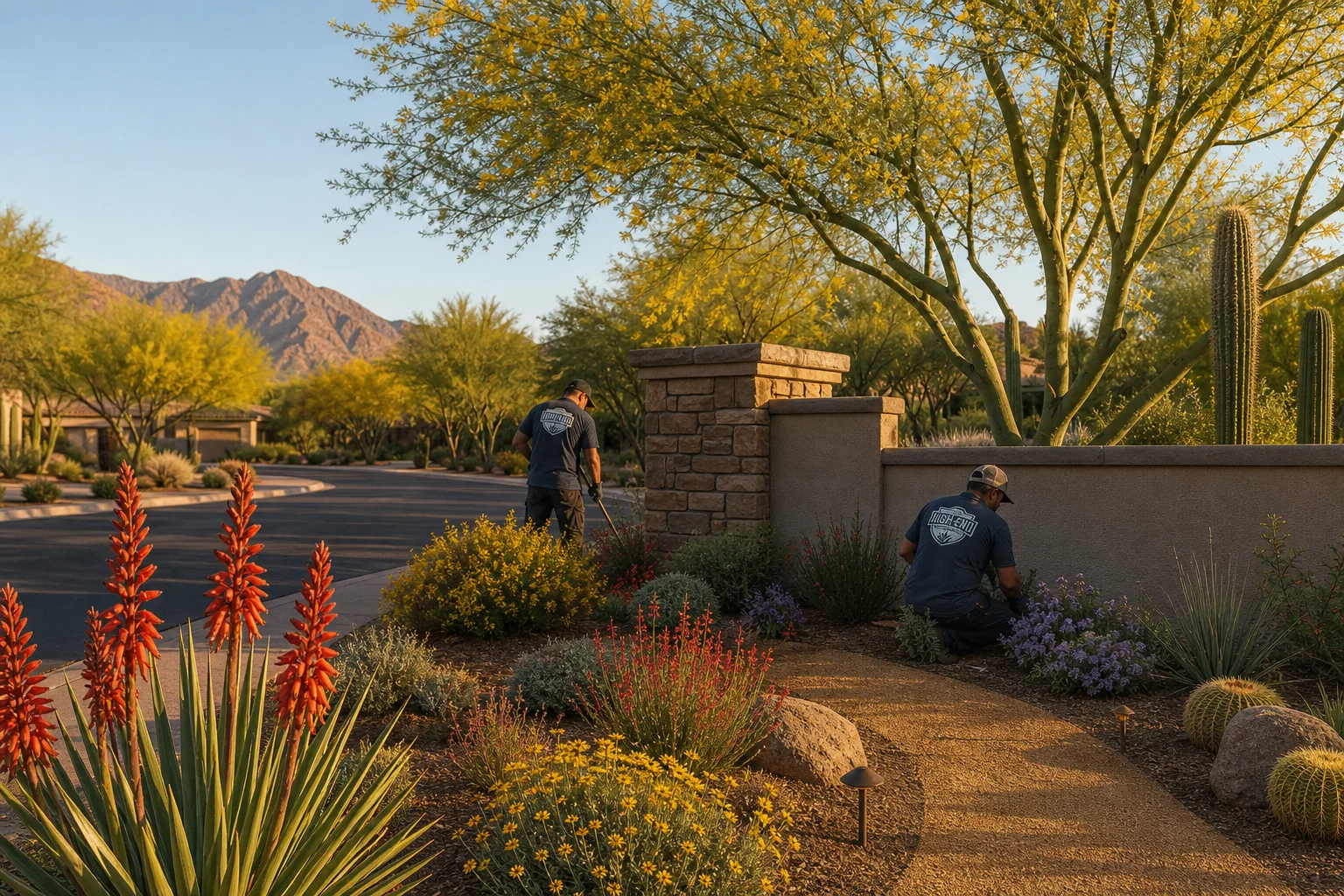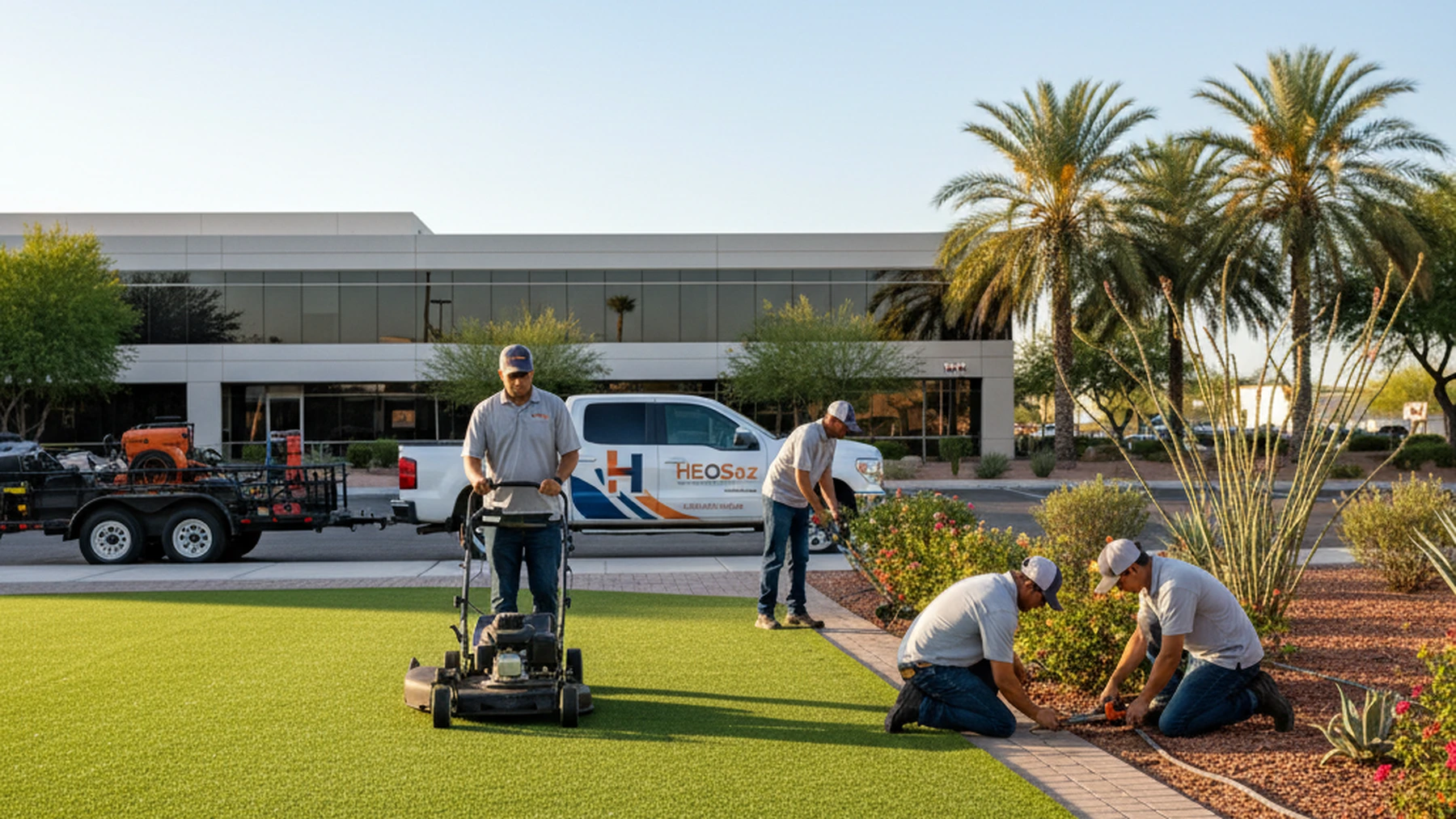
Drought-Tolerant Plant Palettes for Phoenix Commercial Landscapes
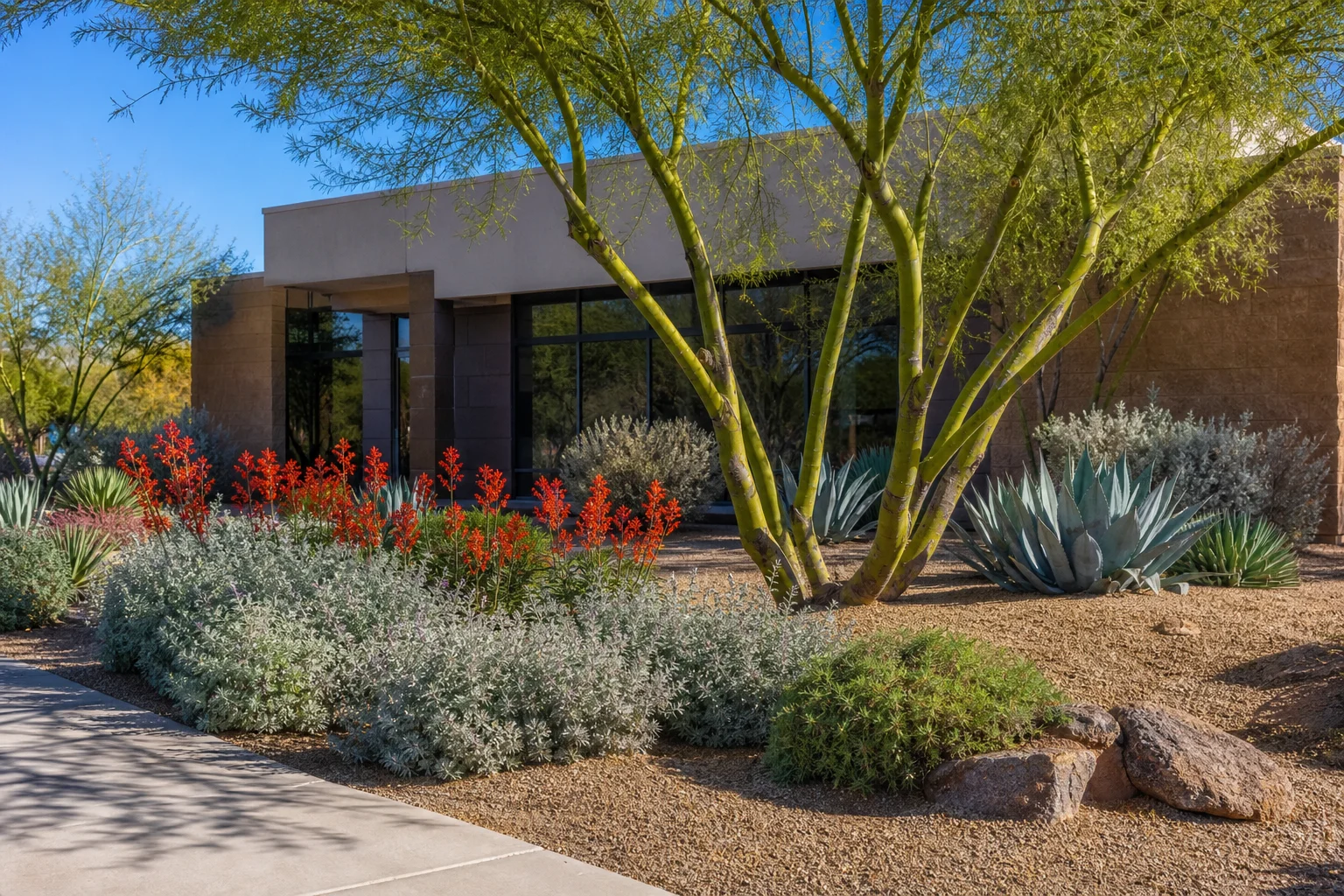
Drought-tolerant plant palettes for Phoenix commercial landscapes pair low water natives like palo verde, agave, and Texas sage with strategic irrigation and full sun placement to cut water use while keeping curb appeal high year-round. A well planned Landscape Design balances foliage, color, and long-term resilience for HOA boards and property managers alike.
By HEOS AZ Team, Outdoor Living Specialists
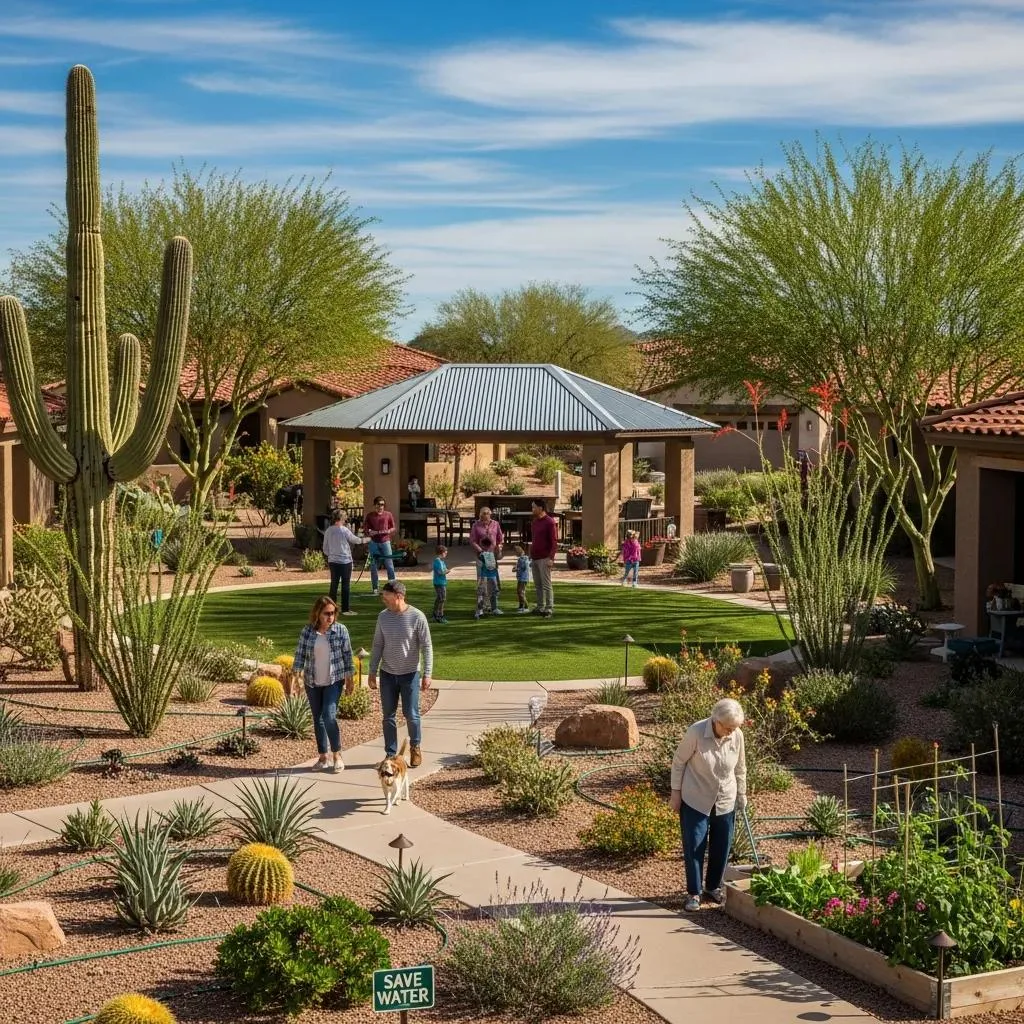
Phoenix summers push soil temperatures past what most turf and thirsty ornamentals can handle, and property managers who ignore that reality end up replacing dead beds every August. Drought-tolerant plant palettes for Phoenix commercial landscapes use species already adapted to Sonoran Desert dry heat, so foliage stays full and green through the hottest months instead of scorching. For HOA boards and business owners, that translates directly into lower water bills, fewer emergency replacements, and Phoenix commercial landscaping that still looks sharp for tenants, shareholders, and drive-by customers. The best palettes lean on native and regionally adapted plants first, then fill in with drought-tolerant ornamentals for color and texture in the areas that get the most foot traffic or visibility from the street.
Low Water Trees and Signature Shade: Palo Verde and Native Canopy
No Phoenix commercial plant palette is complete without palo verde. Its green bark photosynthesizes even when the tree drops its leaves under drought stress, and its canopy delivers shade without demanding the deep, frequent watering that non-native shade trees require. Desert willow and native mesquite pair well alongside palo verde, giving a layered, low water canopy that still reads as lush from a parking lot or clubhouse entrance. These trees also tolerate the reflected heat off asphalt and stucco that many commercial sites generate, which is exactly the kind of stress that kills less adapted species within a season or two. For HOA Landscaping communities managing shared common areas, a native tree canopy cuts long-term maintenance costs while giving residents the mature, established look that boosts property value.
Shrubs, Foliage, and Color for Full Sun Areas
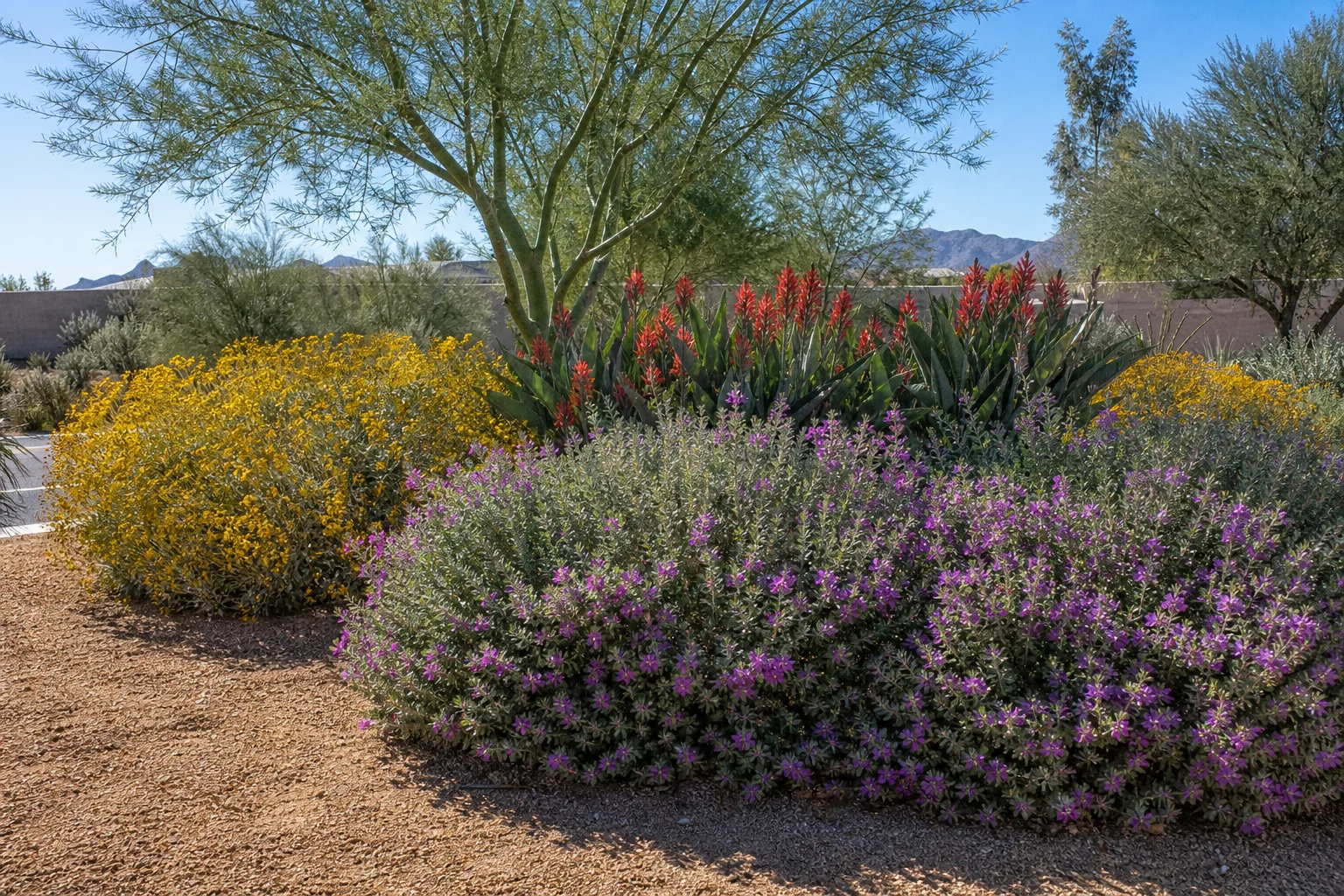
Once the canopy is set, shrubs and flowering foliage carry the color. Texas sage, also known as Texas ranger, holds up to relentless full sun and rewards a property with silvery foliage and purple blooms after summer rain. Red bird of paradise and brittlebush add bright color in garden beds that get sun most of the day, and both draw hummingbirds, giving commercial courtyards and entryways a lively feel without adding to the water budget. Trailing lantana works well in raised planters or hanging containers near entrances, spilling color over hardscape edges. These plants tolerate intense reflected light without leaf scorch and are forgiving of dry stretches between irrigation cycles, which matters on a site where a broken valve can go unnoticed for days. Which beds get priority also matters for leasing, since first impressions landscaping shapes how a prospective tenant or shareholder reads a property before they ever step inside.
Design Layering: Structure and Seasonal Interest
Strong landscape design treats drought-tolerant planting like any other palette, building from tall structural elements down to groundcovers. Agave, yucca, and columnar cactus give tall, year-round structure at entry monuments and signage. Mid-height shrubs fill the middle layer, and low, spreading groundcovers such as trailing dalea or angelita daisy hold the front edge against curbs and walkways. This layering keeps landscapes from looking sparse in winter, when many flowering natives go dormant, and it gives maintenance crews clear sightlines for irrigation checks and pruning. Property managers weighing a full renovation should treat plant selection and hardscape as one project, since shade structures, seating walls, and planting beds all compete for the same water and soil space. Explore Xeriscaping as the design framework that ties these choices together into one coherent, low water landscape.
Soil, Irrigation, and Establishment Care
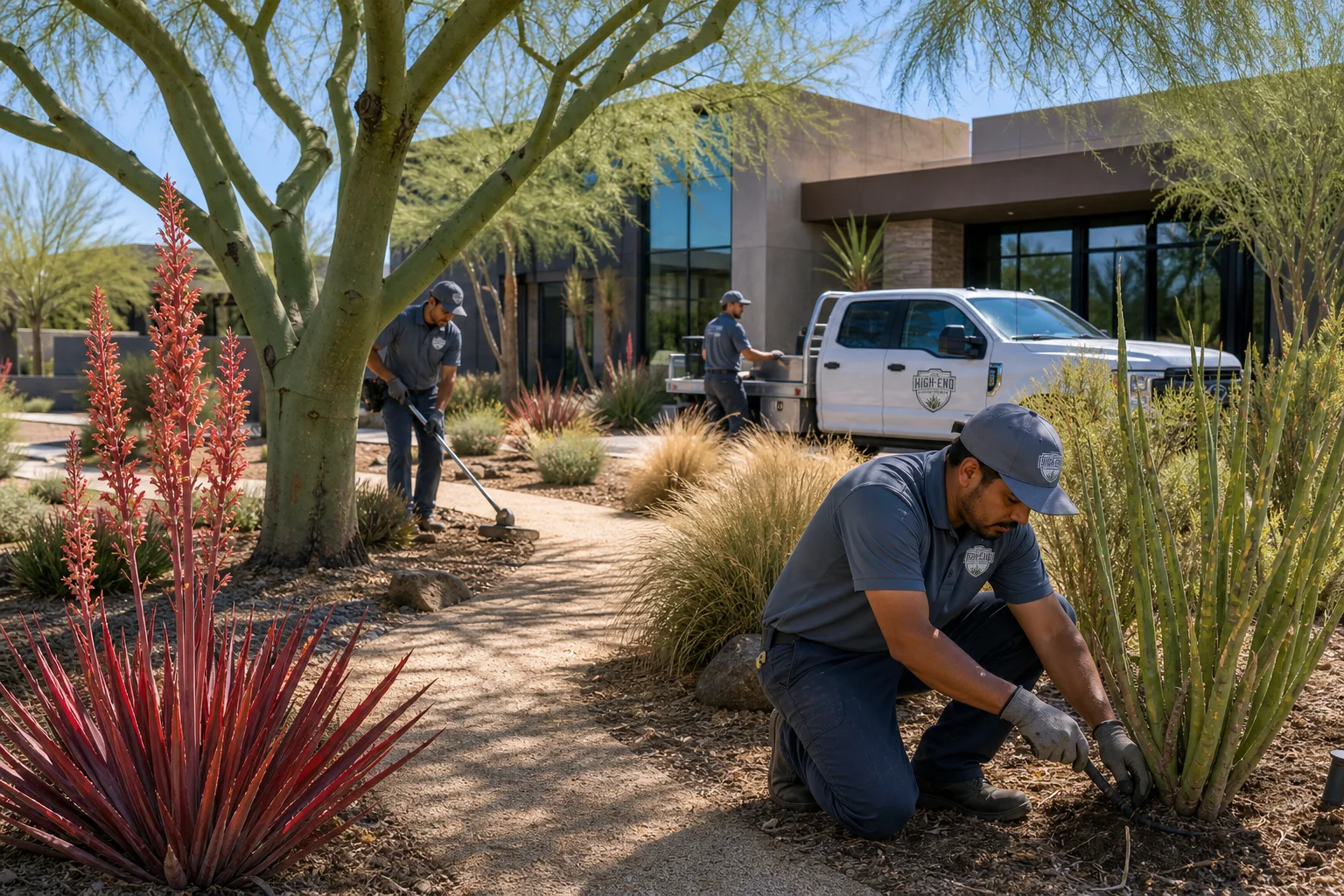
Even a native palette needs the right start. Phoenix soil tends to be shallow, alkaline, and compacted from construction, so amending planting holes and grading beds for drainage matters more than the species list itself. Drip irrigation, not overhead spray, keeps water at the root zone and reduces the fungal issues that come with wet foliage during monsoon weeks. New plantings still need regular water through their first one to two summers; "drought tolerant" describes a mature, established plant, not a newly installed one, and skipping that establishment period is the most common reason commercial palettes fail. A maintenance partner who understands both planting schedules and irrigation troubleshooting keeps a palette on track well past the first year. Year-round desert landscape care keeps irrigation, pruning, and seasonal color changes on one shared calendar for a portfolio of properties instead of treating each as a separate emergency call. How often a property actually needs a walkthrough depends on its size, plant mix, and irrigation zones, which a maintenance partner can map out during a site visit, and getting that cadence right is what catches a broken valve or drifting drip line before it shows up as a dead bed.
Frequently Asked Questions
What are the best drought-tolerant plants for Phoenix commercial landscapes? Palo verde, mesquite, and desert willow form a reliable low water canopy, while Texas sage, brittlebush, and red bird of paradise fill in shrub layers. Agave and yucca add structure. The strongest drought-tolerant plant palettes for Phoenix commercial landscapes combine native trees, full sun shrubs, and low groundcovers so beds hold color and shade year-round with minimal irrigation.
Do drought-tolerant plants still need irrigation? Yes. Drought-tolerant simply means a plant needs less water once established, not zero water. New plantings require consistent irrigation through their first one to two summers, and even mature native beds benefit from occasional deep watering during extended dry, hot stretches to keep foliage full and roots healthy.
How much water can a native plant palette save compared to traditional landscaping? Savings vary by site, irrigation zone, and current plant mix, so a property specific comparison is the only reliable way to estimate a number. In general, replacing thirsty turf and non-native ornamentals with low water natives reduces both irrigation runtime and the frequency of plant replacement across a commercial property.
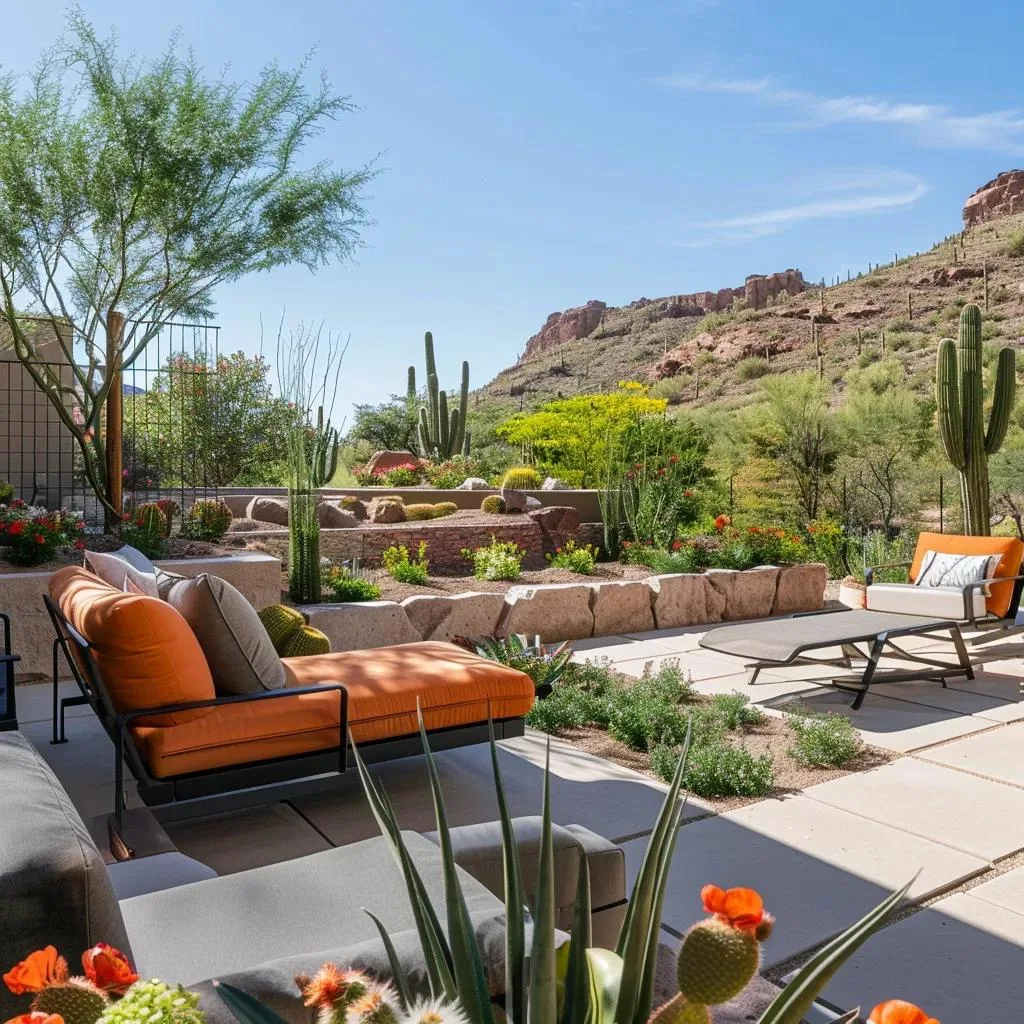
Can drought-tolerant landscapes still look colorful and inviting? Absolutely. Red bird of paradise, brittlebush, and trailing lantana bring bright bloom color, while Texas sage adds silvery foliage contrast. Layering tall accents, mid-height shrubs, and low groundcovers keeps beds visually full across seasons, and flowering natives that attract hummingbirds add movement and life to entryways and courtyards.
How long does it take for a new drought-tolerant landscape to establish? Most native and drought-tolerant plantings need one to two full growing seasons, including at least one summer, before root systems are developed enough to rely on reduced irrigation. Soil quality, planting depth, and irrigation consistency during that window all affect how quickly a bed reaches its low water maintenance stage.
Start Your Drought-Tolerant Landscape Plan With HEOS AZ
A palette that fits Phoenix heat, your property type, and your irrigation system takes site specific planning, not a generic plant list. Contact HEOS AZ to schedule a walkthrough and start building drought-tolerant plant palettes for Phoenix commercial landscapes that hold up to next summer.