HOA Landscaping Trends 2026: Sustainable Practices for Arizona Communities
HOA landscaping trends 2026 point to one clear direction for Arizona communities: sustainable design, native plants, and community-centered outdoor spaces that lower water costs while raising property appeal. Boards that plan ahead gain both financial and competitive advantages. To start your community's transformation, Contact the HEOS AZ team today.
By HEOS AZ Team, Outdoor Living Specialists
The Sustainability Shift in Arizona HOA Landscape Management
Arizona's desert setting has always demanded thoughtful land management, but 2026 marks a new level of urgency for homeowners associations across the state. Board members who once approved turf expansions now face water allocation restrictions, rising maintenance budgets, and residents who expect more from community outdoor spaces.
The American Society of Landscape Architects publishes an annual Residential Landscape Architecture Trends Survey (ASLA, 2024) that tracks shifting priorities among landscape professionals nationwide. Their findings confirm that sustainability, water efficiency, and multi-use outdoor areas now rank as top priorities for clients in residential communities, including those governed by homeowners associations. For Arizona HOAs, this is a direct call to update landscape strategy.
Communities adapting earliest are converting ornamental turf zones to desert-adapted planting beds, redesigning irrigation systems, and rethinking how outdoor spaces serve residents across every season. The payoff is lower operating costs and a community environment that residents are proud to call home.
Native Plants as the Foundation of Sustainable Outdoor Living
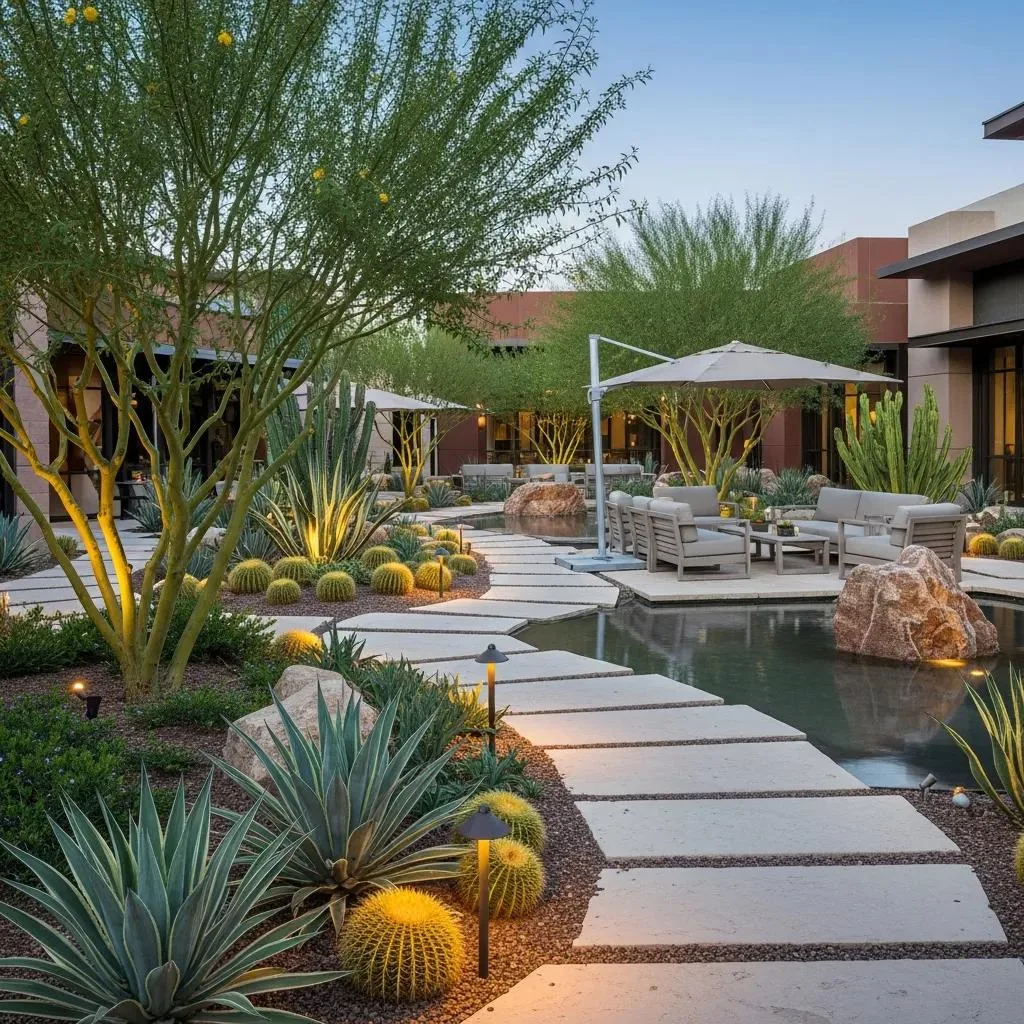
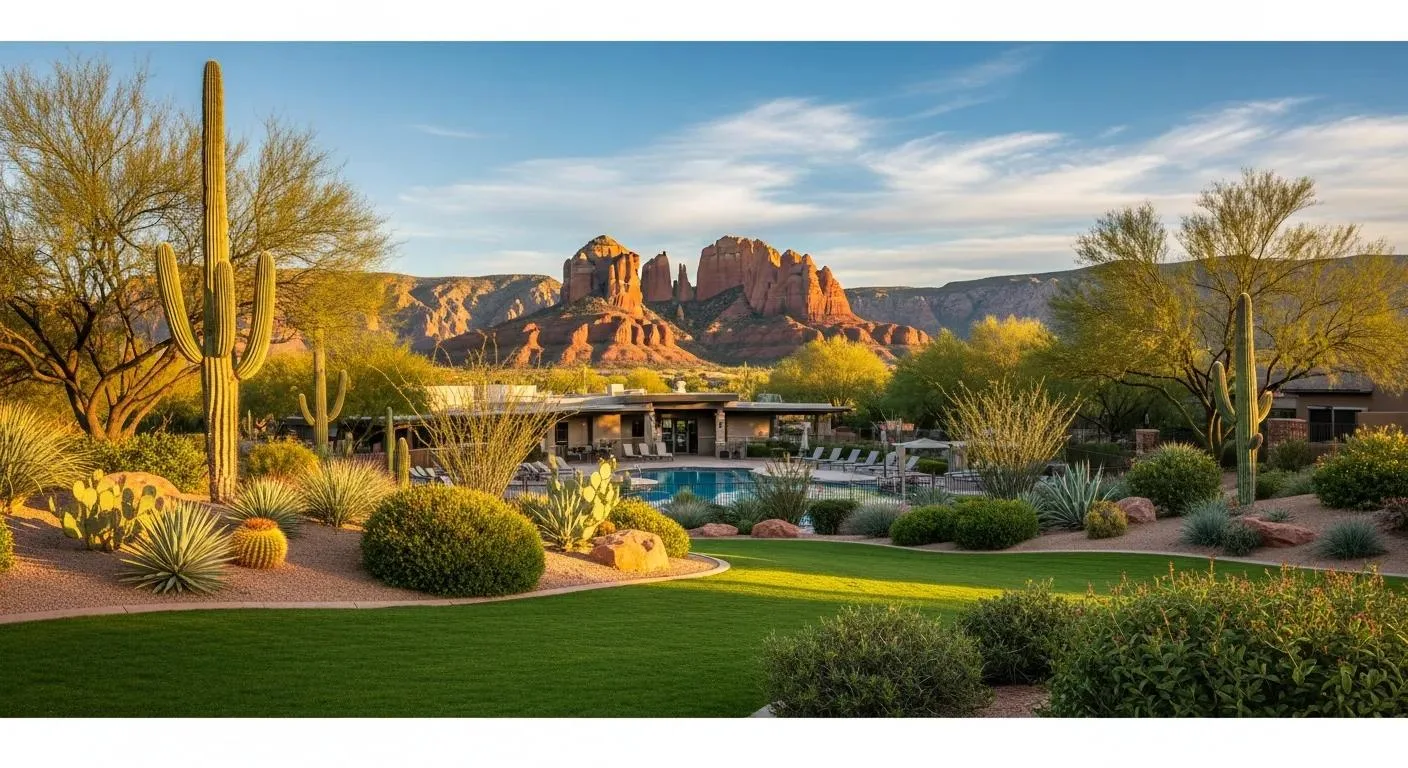
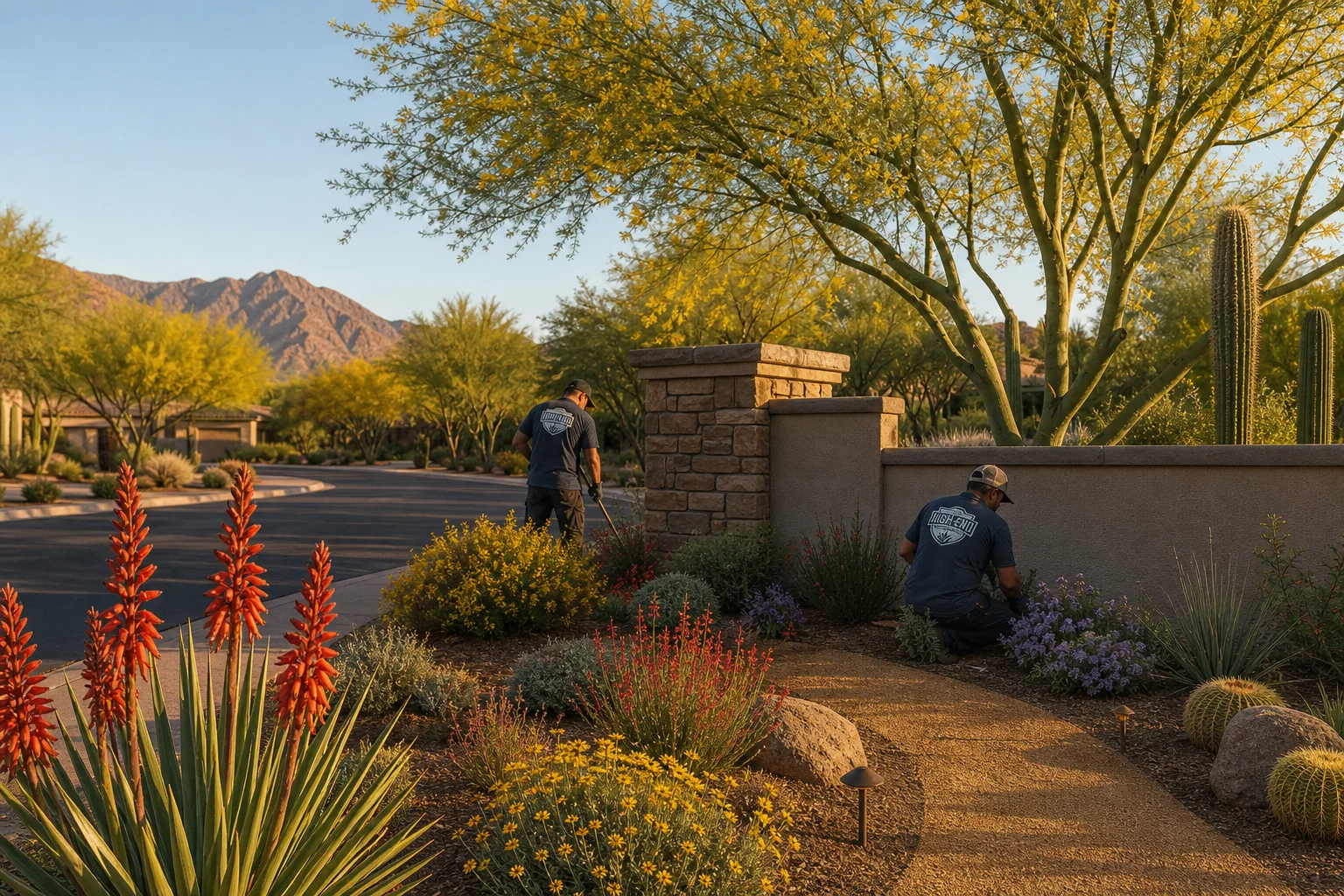
No element of current landscaping trends carries more practical weight for Arizona communities than the transition to native plants. Species like desert marigold, red yucca, palo verde, and brittlebush evolved under Arizona's exact conditions: blazing summers, cold desert winters, minimal rainfall, and alkaline soil.
For associations, native plants deliver practical advantages alongside visual appeal. Established native plantings typically require a fraction of the irrigation water that conventional turf or imported ornamentals demand. Research from the University of Arizona's Department of Ecology and Evolutionary Biology (2023) documents how native desert species support pollinator populations critical to regional ecosystem health, which resonates strongly with residents who value wildlife-friendly community design.
Board members incorporating native plants into landscape design often report positive resident responses. The visual shift from monoculture grass to layered desert planting reads as intentional and premium, and it positions the association as a thoughtful steward of shared property.
Water-Smart Landscape Design for HOA Properties
Water efficiency sits at the center of every significant hoa landscaping trends 2026 discussion for Arizona communities. Drip irrigation has become the baseline expectation for well-managed HOA properties, replacing broadcast sprinklers that lose substantial moisture to evaporation during Arizona's peak summer temperatures.
Modern landscape design goes further. Smart irrigation controllers that adjust schedules based on real-time weather and soil moisture data have become cost-effective for community-scale deployment. These systems modulate run times automatically, reducing water use across a full season without sacrificing plant health or visual quality.
Permeable paving and dry creek beds are also reshaping outdoor spaces in HOA communities throughout the Valley. Rather than routing stormwater off the property through conventional drainage, these features slow and capture precipitation, allowing it to percolate into the soil and support surrounding plantings. For associations in flood-prone areas, this approach reduces liability exposure as well.
For associations building structured care programs around these upgrades, Implementing Effective Landscape Maintenance Programs for Commercial Properties walks through how to manage ongoing maintenance at the community scale across seasons.
Outdoor Living Areas That Strengthen HOA Communities
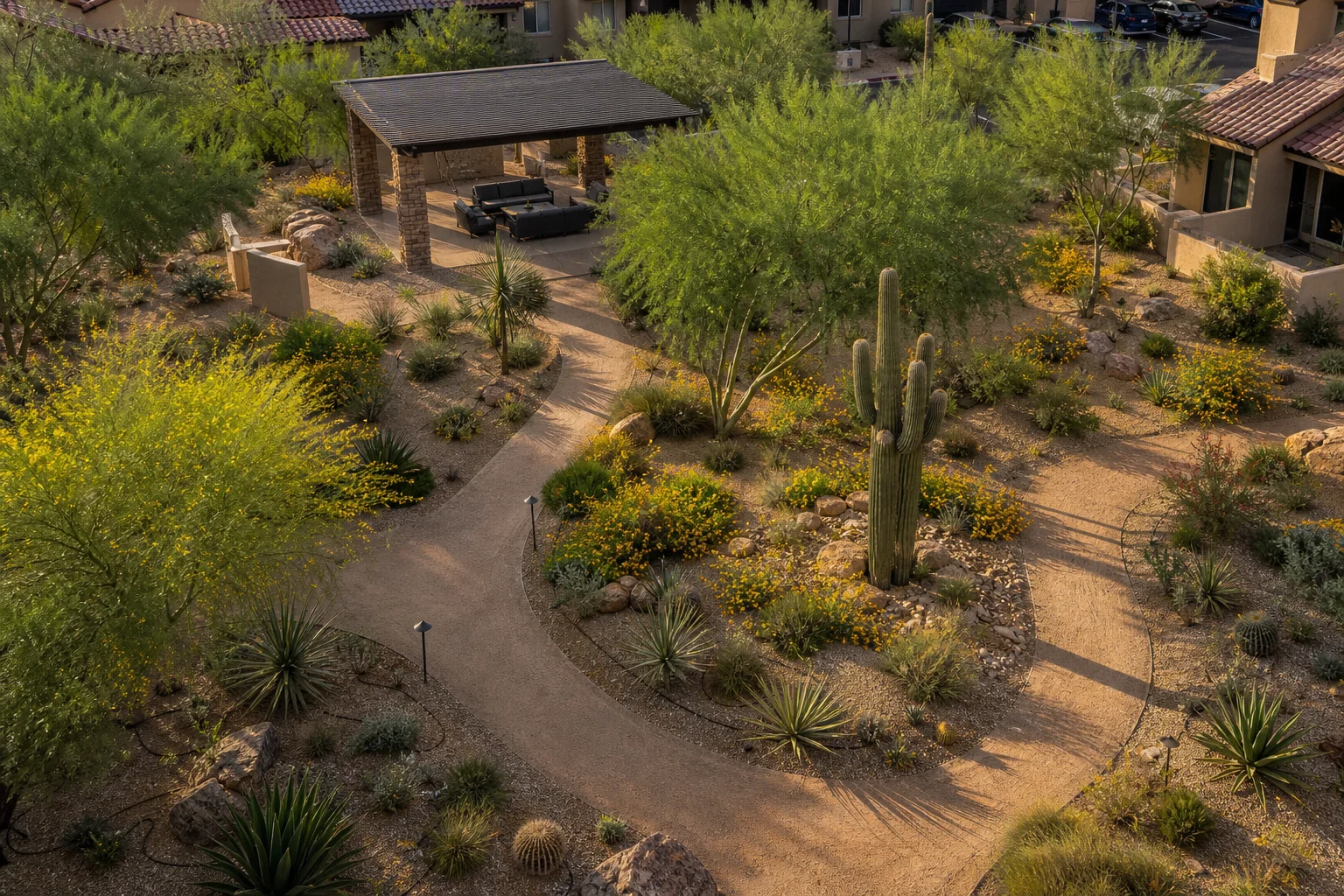
The definition of outdoor living in HOA communities has expanded well beyond irrigated grass and a mailbox. Associations in 2026 are investing in shared amenity areas that give residents real reasons to gather: shaded ramadas, decomposed granite plazas, community garden beds, and pollinator corridors that function as visual amenities throughout the year.
For larger associations, low-water recreation areas using synthetic turf, bocce courts, and putting greens provide year-round activity spaces with minimal ongoing maintenance. These features appeal broadly across resident demographics and are becoming meaningful differentiators in Arizona's competitive real estate market.
Properties with well-maintained, well-designed shared outdoor spaces consistently attract stronger resale interest and reduced vacancy rates in communities that include rental homes. For any HOA board evaluating a landscape overhaul, the outdoor living component deserves significant weight in the planning conversation.
For associations that serve healthcare or senior living populations, the principles covered in Landscaping for Medical Facilities: Designing Therapeutic Outdoor Spaces offer design guidance that translates directly into HOA amenity planning.
For communities managing tighter reserve budgets, our deep dive on Affordable Landscaping Services outlines how Phoenix-area properties access quality work without depleting reserves.
HOA Landscaping Trends 2026: Governance and Compliance for Arizona Boards
Landscape governance is an underappreciated dimension of HOA management. Associations function as de facto regulatory bodies for their communities, and the way boards write and enforce landscaping standards has direct consequences for property values, resident satisfaction, and legal exposure.
In Arizona, homeowners associations operate under the Arizona Planned Community Act and the Arizona Condominium Act, which establish baseline rights and obligations for all parties. Beyond state law, each association's governing documents, including CC&Rs and bylaws, define what residents can and cannot do with their individual outdoor spaces.
Board members reviewing their current standards against today's landscaping trends will often find that rules written a decade ago penalize exactly the water-smart, native-plant designs that current guidance supports. Updating CC&Rs to permit drought-tolerant front yards, decomposed granite installations, and xeriscape areas reduces enforcement burdens and aligns the association with Arizona water policy direction. Property managers overseeing landscape compliance benefit most from conducting this review before the next budget cycle.
Frequently Asked Questions
What are the top hoa landscaping trends 2026 for Arizona communities?
The leading trends center on native plant integration, smart irrigation systems, and expanded shared outdoor living areas. Arizona HOAs are prioritizing these changes in response to stricter water regulations, rising maintenance costs, and increasing resident demand for community spaces that are both visually appealing and environmentally responsible.
How can an HOA encourage residents to adopt drought-tolerant landscaping?
Associations can update CC&Rs to permit and reward drought-tolerant designs, distribute approved plant lists featuring native plants suited to Arizona conditions, and coordinate with utility rebate programs. Positive framing in community communications helps residents see the transition as a quality upgrade rather than a restriction.
What role does landscape design play in HOA property values?
Well-executed landscape design consistently correlates with stronger resale prices and reduced time on market in HOA communities. Shared outdoor spaces that appear intentional and professionally maintained signal to prospective buyers that the board is financially competent and attentive to community standards.
Are there funding options available for HOA landscape upgrades?
Many Arizona water utilities offer rebate programs for converting irrigated turf to desert-adapted planting. HOA reserve funds can also support landscape capital improvements when properly documented and presented to membership. Boards should work with a licensed landscape contractor and legal counsel before committing reserve funds to major projects.
How often should an HOA review its landscaping standards?
A review every three to five years is a reasonable baseline. Given the pace of change in Arizona water policy and the evolution of hoa landscaping trends 2026, associations that have not reviewed their standards since 2020 should prioritize an update now to stay aligned with current best practices.
Transform Your Community's Outdoor Spaces with HEOS AZ
Arizona HOA communities that act on 2026 landscaping trends now will be well positioned for coming water restrictions and evolving resident expectations. Whether your board is planning a phased native plant conversion or a complete outdoor living redesign, HEOS AZ brings the expertise to deliver results that communities throughout Arizona rely on. Contact our team to schedule a landscape consultation.