Multifamily and Apartment Community Landscaping: Resident Retention and NOI
Well-executed apartment community landscaping directly shapes whether a resident renews a lease, whether a tour becomes an application, and whether a property can command premium rent. For owners evaluating Commercial Maintenance, the grounds are not overhead, they are a measurable driver of occupancy, resident satisfaction, and net operating income.
By HEOS AZ Team, Outdoor Living Specialists
How Apartment Community Landscaping Affects Resident Retention
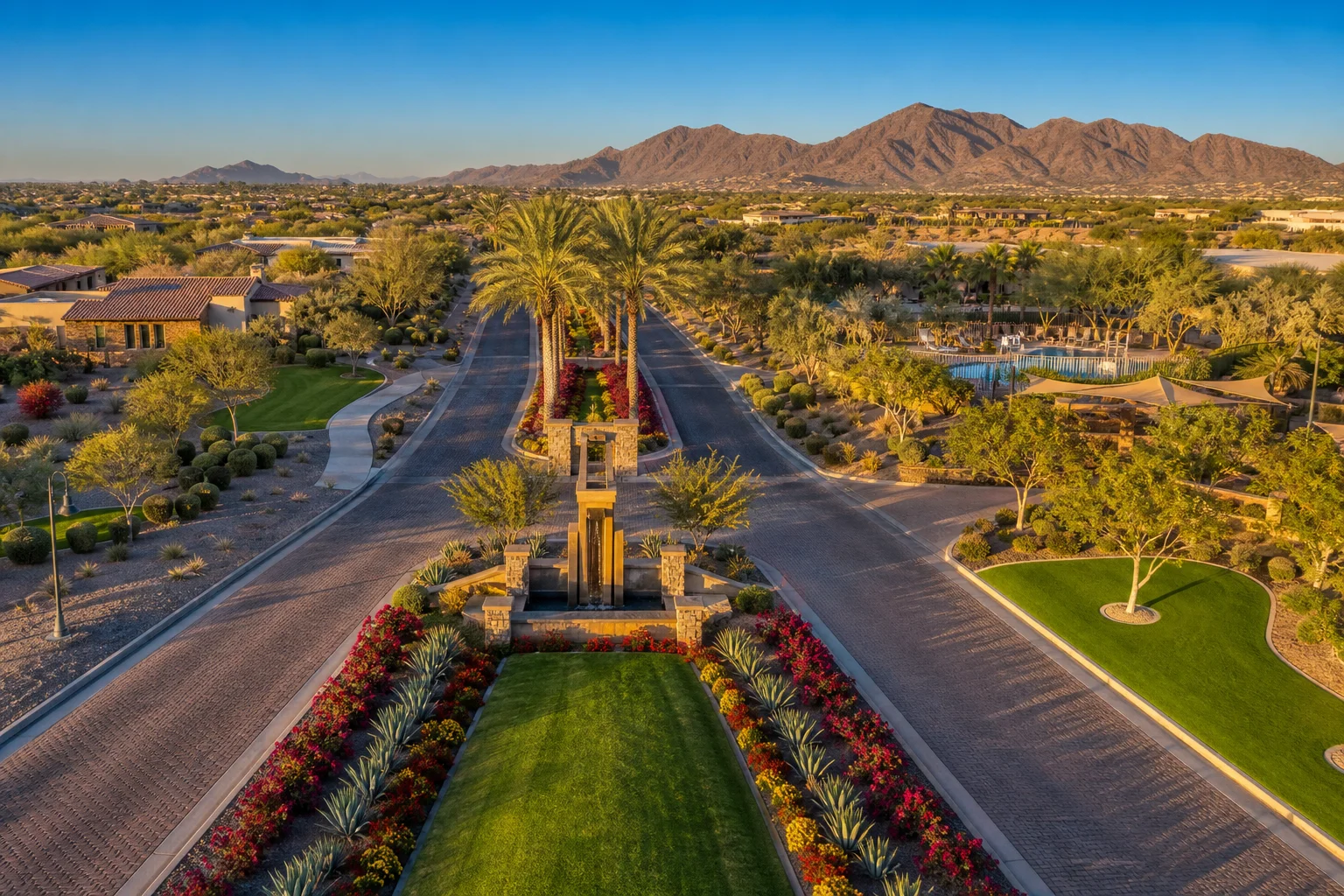
Curb appeal is the first thing a prospective resident notices before they ever step inside a unit, and it's the last thing a renewing resident evaluates before deciding whether to sign again. At an apartment complex where turf is patchy, planters sit empty, and irrigation leaves brown streaks across the entrance, residents read that neglect as a signal about how the rest of the property is managed. Consistent grounds care sends the opposite message: someone is paying attention, and that attention extends to maintenance requests, security, and community events. Property managers who track renewal conversations consistently hear landscaping mentioned alongside noise, parking, and maintenance response time as reasons residents stay or leave. A resident's daily walk from the parking area to their door is a landscaping experience, repeated hundreds of times a year, and it either reinforces or undermines every other reason they have to renew.
What Landscaping Features Apartment and Multifamily Residents Value Most
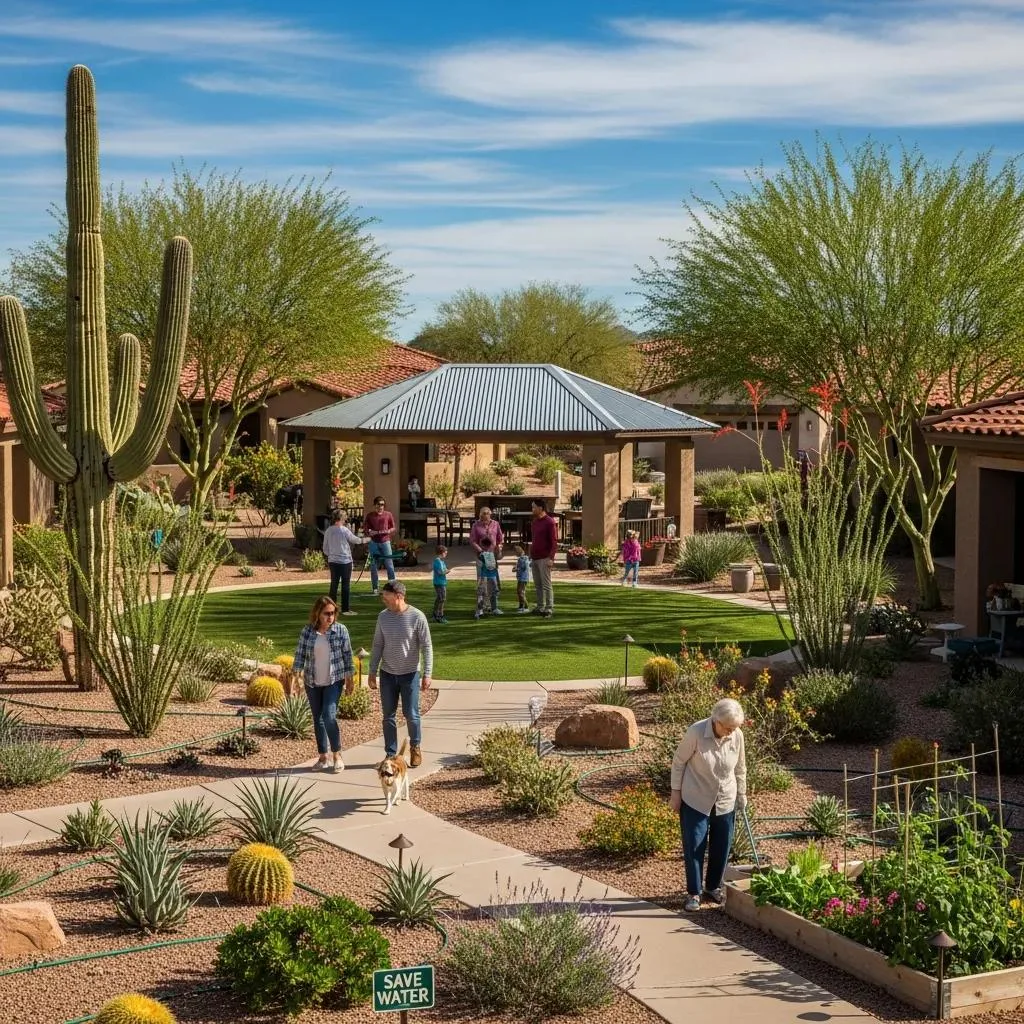
Across apartment complexes, the features residents mention most aren't exotic, they're usable. Shade matters most in Arizona's climate: mature or well-placed trees along walkways and over patio seating make outdoor space livable for more of the year. Defined pet relief areas with proper turf and waste stations reduce complaints and protect the rest of the landscape from wear. Clean, well-lit pathways and entry drives affect how safe a property feels after dark, which residents weigh heavily when renewing. Communal gathering spaces, whether a shaded courtyard, a pool deck framed with drought-tolerant planting, or a putting green residents can actually use, turn landscaping into an amenity that shows up in leasing conversations and marketing photos.
Multifamily Landscaping Maintenance Costs and Budgeting
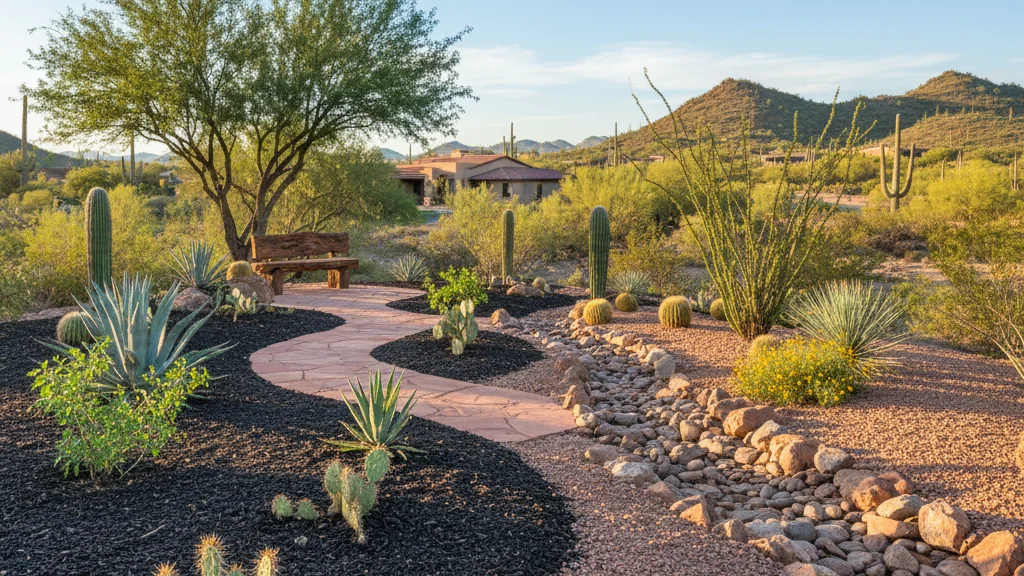
Cost per unit varies widely and depends on factors specific to each property: total turf square footage, the ratio of turf to xeriscape planting, irrigation system age and zone count, tree canopy size, and how many amenity areas need dedicated attention. A property with mature drought-tolerant landscaping and an efficient irrigation controller will generally cost less to maintain per unit than a comparable property still running a water-heavy, turf-dominant design, since water is one of the largest recurring line items in any Arizona landscape budget. Property managers building next year's budget should request a detailed scope from their vendor, weekly visits, monthly deep maintenance, seasonal color, tree trimming cadence, rather than a single flat number, since that breakdown is what makes the figure defensible to ownership and comparable across properties.
How Landscaping Investment Impacts a Property's NOI
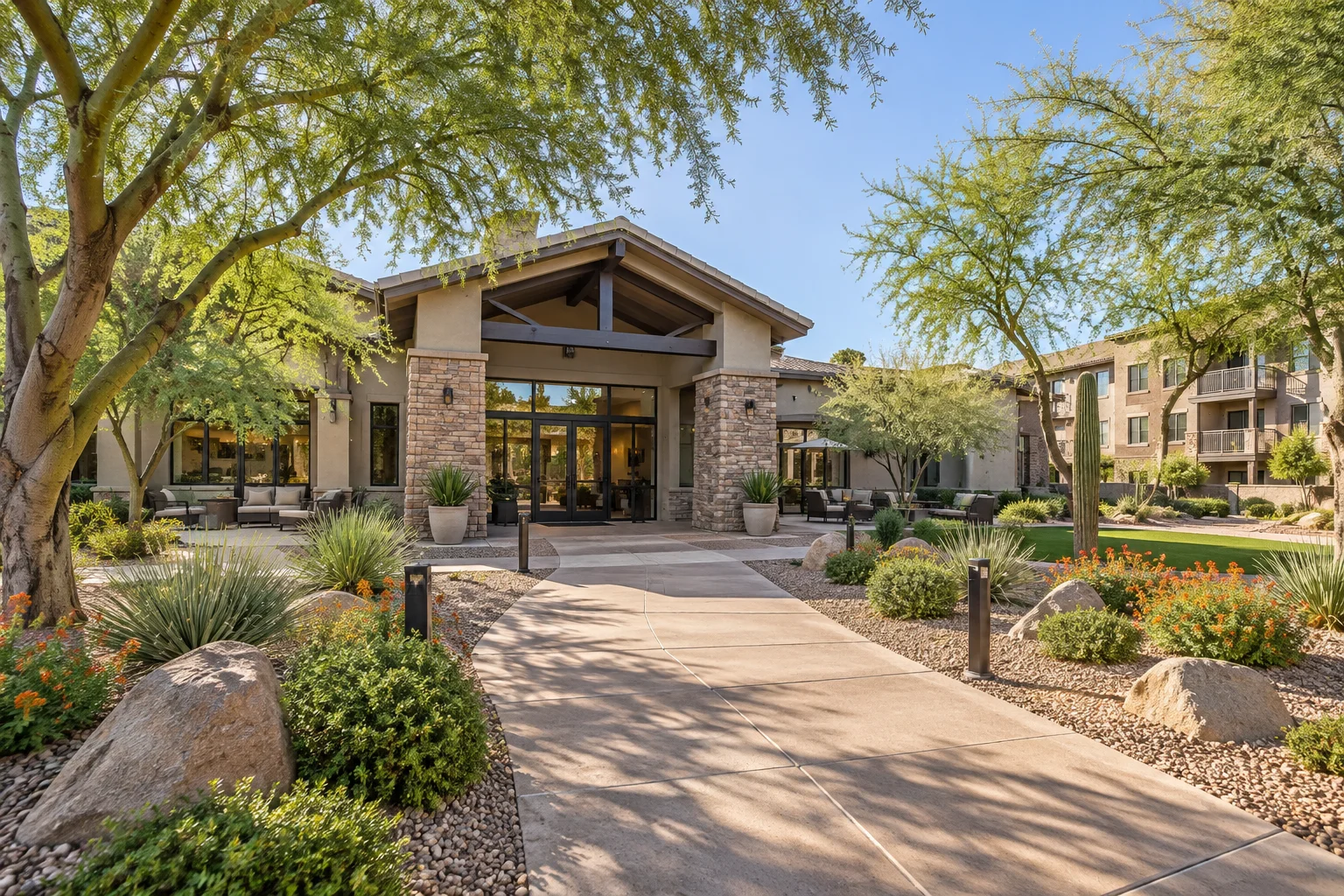
Net operating income moves on landscaping in three concrete ways. First, turnover: replacing a resident costs far more than the price of a landscaping upgrade once vacancy loss, make-ready costs, and leasing commissions are added up, so even a modest lift in renewal rate has an outsized effect on NOI. Second, achievable rent: prospective residents compare properties on sight before they compare floor plans, and a property with stronger curb appeal can support asking rents that a comparable but neglected property cannot. Consistent community landscape standards also support a property's resale and refinance value, which is part of why ownership groups increasingly treat grounds condition as a capital-planning line item rather than a discretionary expense. Third, operating cost: converting high-water turf to xeriscaping or upgrading to a smart irrigation controller lowers the water line item every month, and in the Valley that moves the expense side of the equation meaningfully.
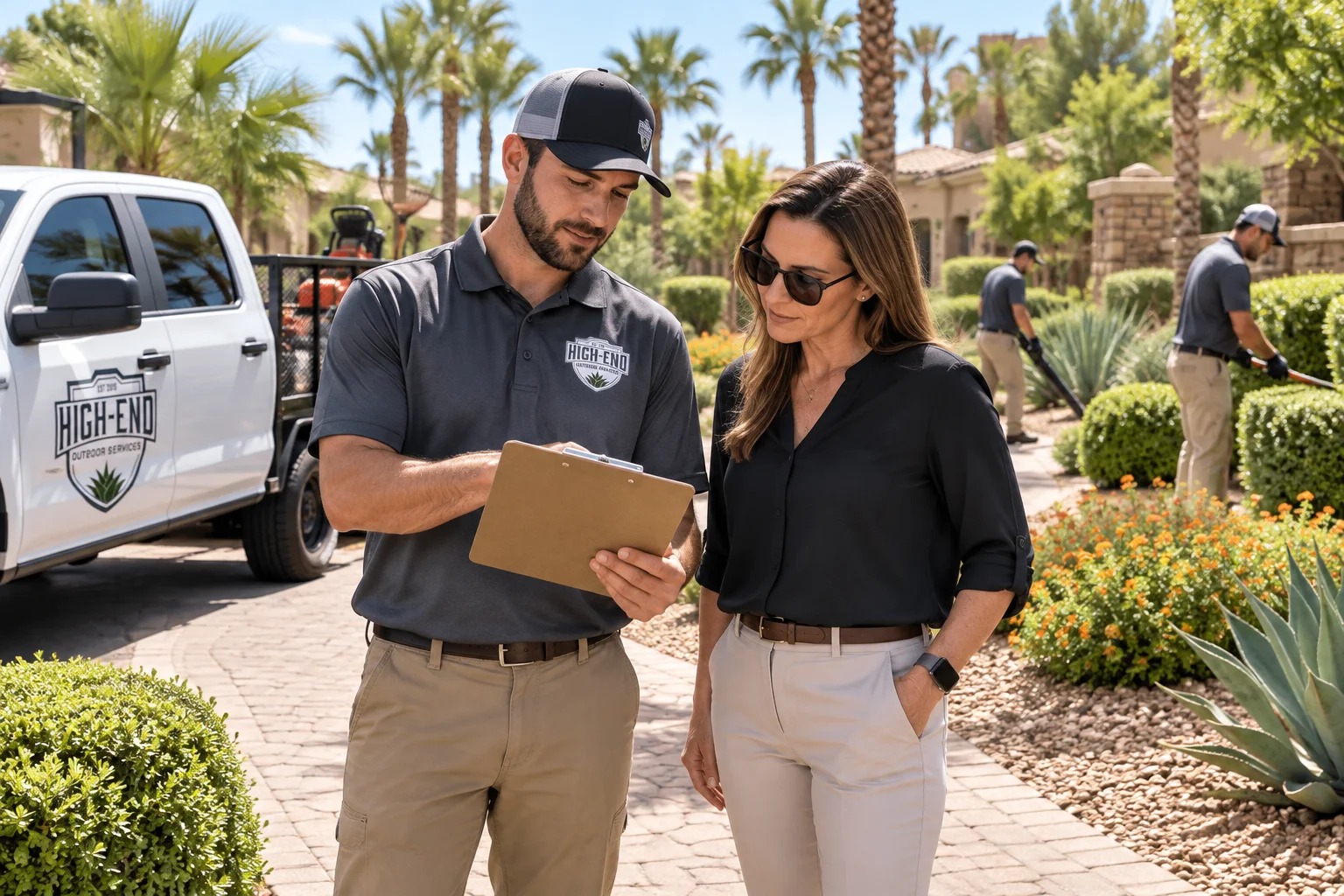
If your property's common areas haven't been reviewed for Community Landscaping opportunities in the past year, a walk-through consultation can identify which of these three levers has the most room to move before your next budget cycle.
What a Multifamily Landscape Maintenance Plan Should Include
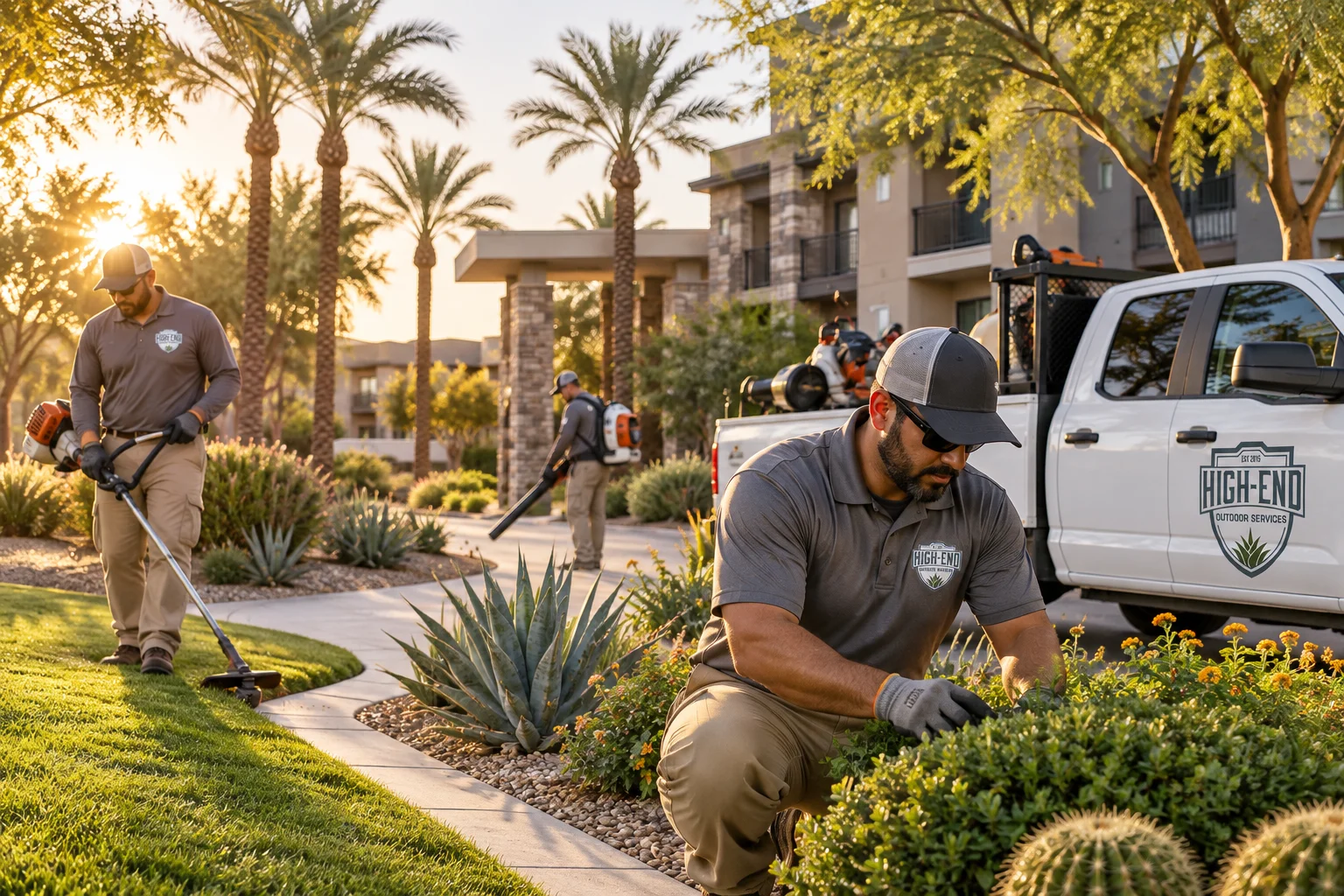
A complete landscape maintenance plan covers more than mowing. At minimum it should specify irrigation system checks and repairs, turf and plant health monitoring, seasonal color changeouts, tree and shrub trimming on a set cadence, weed and pest management, and daily or near-daily policing of trash, debris, and pet waste across common areas, since those last items are what residents notice fastest when they slip. Arizona properties budget for monsoon debris cleanup and heat-stress irrigation adjustments through the summer rather than the snow and ice management a full-scope plan would include elsewhere. Frequency depends on the season and the property's amenity load: many communities move to weekly grounds visits through the growing season and taper to a lighter biweekly schedule in cooler months, with irrigation audits run on their own separate schedule year-round.
Apartment Community Landscaping vs. Standard Commercial Landscaping
Apartment community landscaping is a different discipline than standard commercial landscaping for an office park or retail center, even though both fall under the broader commercial umbrella. An office property is landscaped to be seen, mostly from a car or a lobby window, with light daily use. A multifamily property is landscaped to be lived in: residents and their kids and pets walk through it, sit in it, and judge their home by it every day, which means turf wears faster, irrigation runs longer to keep pace with foot traffic, and trash and debris need near-daily attention rather than a weekly pass. That's also why housing operators rarely handle it entirely in-house. A property manager typically owns the relationship, sets the standard, and approves the budget, but the actual work goes to a specialized vendor providing dedicated landscape maintenance services with crews trained for multifamily's specific needs, whether that's a single site or a portfolio spread across several local submarkets.
Frequently Asked Questions
Does better landscaping actually reduce apartment vacancy and turnover? It correlates strongly with both. Grounds condition is one of the first things a prospective resident notices on a tour and one of the last things a current resident weighs before renewing, so a property that lets landscaping decline typically sees more move-outs and longer vacancy stretches between leases.
Can landscaping upgrades justify higher rent at a multifamily property? In many cases, yes, though the effect is usually indirect rather than a single line-item increase. Properties with stronger curb appeal and usable outdoor amenities tend to support higher achievable rents in lease-up and renewal, and they protect long-term property value even when market rents are flat.
How much should a property budget for apartment community landscaping? There's no single number that applies across properties, since unit count, turf-to-xeriscape ratio, amenity spaces, and irrigation system condition all change the total. The more reliable approach is requesting a detailed, itemized scope from a vendor and comparing it against similar properties in the same submarket.
Which landscaping upgrades give the best ROI for apartment communities? Xeriscape conversions that cut water use, smart irrigation controllers, and refreshed entry and amenity-area plantings tend to return the most relative to their cost, since they lower a recurring operating expense while also improving the first impression that drives leasing and renewals.
Who handles landscaping at an apartment complex, the property manager or an outside vendor? Most properties split the responsibility: the property manager sets the standard, approves the budget, and holds the relationship, while the physical work goes to a specialized landscape maintenance vendor with crews trained for multifamily's daily-use intensity. Self-performing in-house is rare above a certain unit count, since the equipment and staffing required are hard to justify for one property.
Get a Landscaping Plan Built Around Your Property's NOI
If your community's grounds haven't been evaluated against occupancy, renewal, and operating-cost goals recently, our team can walk the property and map out where the budget will move the numbers that matter. Contact us to schedule that walk-through.