Master-Planned Community Landscaping: Coordinating HOA Common Areas
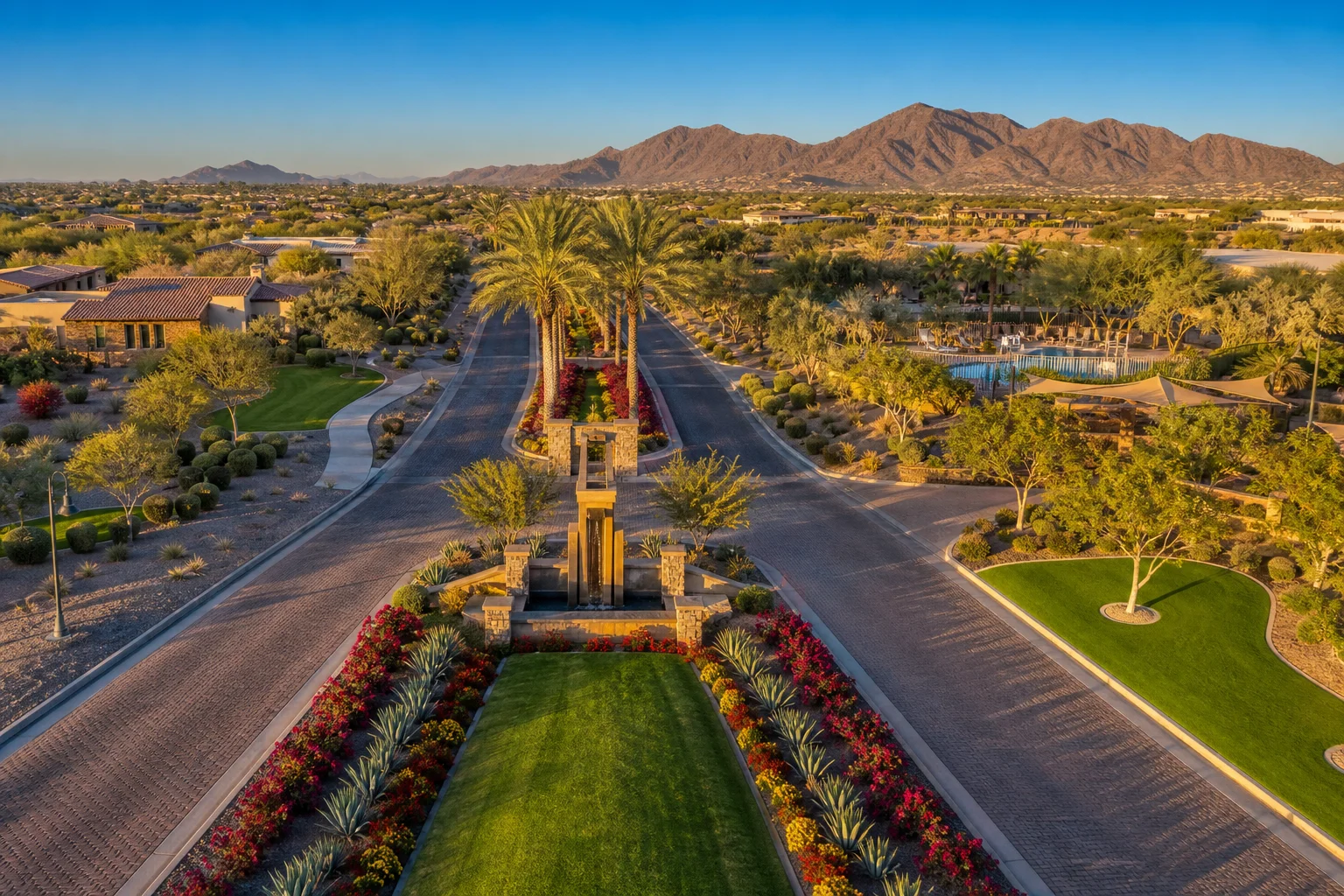
Master-planned community landscaping is one of the most complex disciplines in commercial property management, requiring a coordinated approach across entry features, park corridors, recreation areas, and shared open space. When a single Community Landscaping partner manages the full scope, HOA boards gain consistent standards, unified accountability, and outdoor environments that reflect the community's identity from the first impression.
By HEOS AZ Team, Outdoor Living Specialists
How Landscape Architecture Defines a Master-Planned Community
A master-planned community is shaped as much by its outdoor environment as by the homes and amenities within it. Landscape architecture establishes the visual tone at every scale, from monument entries and street medians to neighborhood parks and recreation corridors. The location of each feature within the development plan matters: a well-placed park or shaded gathering area transforms a functional common space into a genuine destination for residents.
Effective Landscape Design at the community scale begins with a thorough site analysis covering sun exposure, drainage patterns, soil composition, and long-term water budgets. From that foundation, designers specify plant palettes that perform in Phoenix metro heat while maintaining visual cohesion across the full range of common areas. Color, texture, and seasonal interest are sequenced to create a dynamic landscape that holds its appeal across every month of the year.
The outcomes extend beyond appearance. Research has long established the connection between natural environments and quality of life. A landmark study published in Science (Ulrich, 1984) demonstrated that exposure to natural settings measurably reduces stress and supports psychological wellbeing, a finding that underlies how quality landscape design shapes the day-to-day experience of living in a planned community.
How Master-Planned Community Landscaping Scales Across an Entire Development
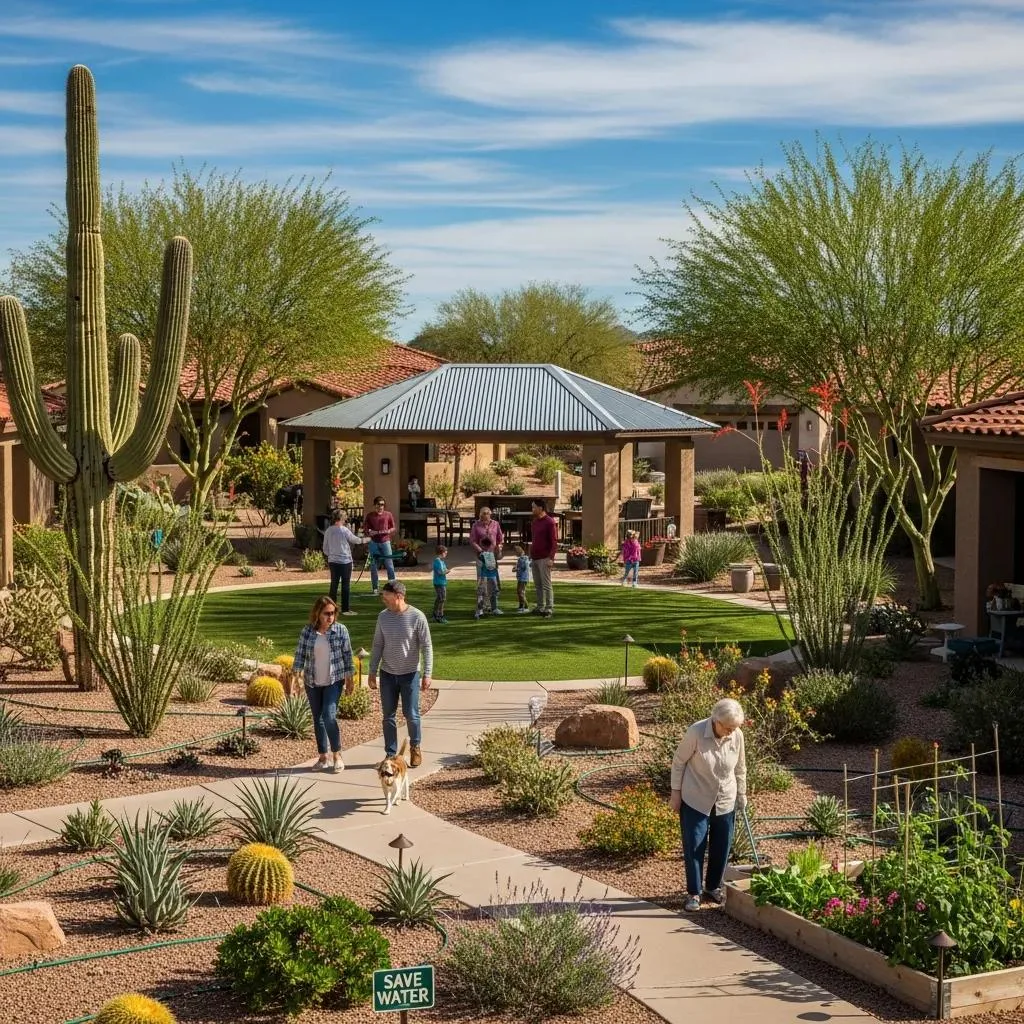
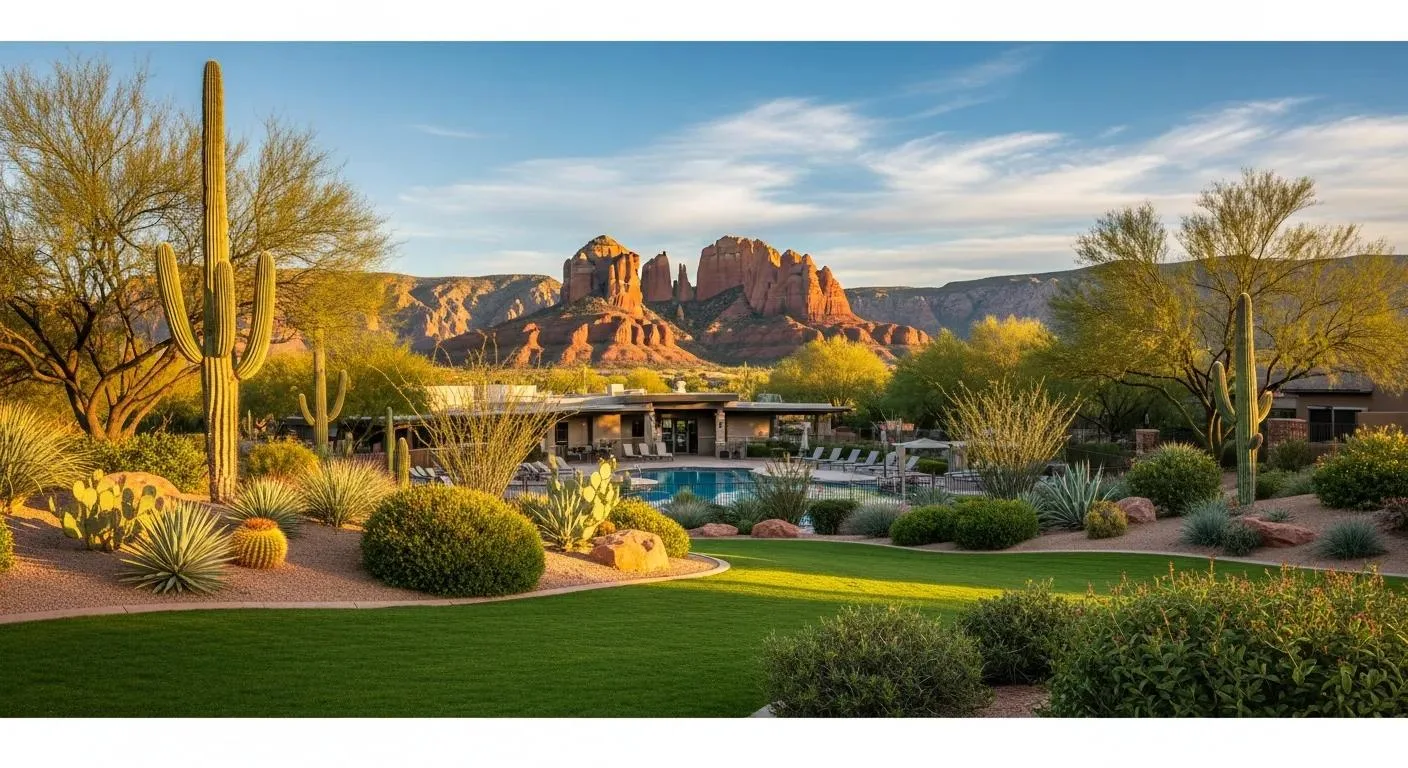
A master-planned community typically includes a broad range of common areas, each with distinct maintenance requirements. Entry monuments establish the first impression for residents and visitors. Medians and parkways define the internal road network. Pocket parks and linear greenways create gathering spaces that serve families across the development. Recreation facilities including pool surrounds, sport courts, and clubhouse gardens each carry their own landscape specifications.
Coordinating all of these spaces under one contractor creates operational advantages that fragmented services cannot replicate. A unified crew learns the property's irrigation topology, understands which plant species occupy each zone, and can adjust maintenance frequency across the entire site in response to seasonal conditions. When one area requires remediation, the same team evaluates adjacent zones for related issues, preventing isolated problems from spreading.
For HOA boards, this coordination reduces vendor management complexity and creates clear accountability for every feature in the development. A single, well-structured service agreement defines performance expectations across every common area. To understand what those agreements should cover, read our guide to What a Commercial Landscape Maintenance Contract Should Include.
Balancing Community Standards with Resident Satisfaction
HOA boards in master-planned communities carry the responsibility of maintaining landscape standards that protect property values while creating spaces residents genuinely want to use. The common areas are the most visible expression of that balance. When parks, medians, and entry features are consistently well-maintained, residents see direct evidence that their assessments are managed effectively.
Landscape programs built around documented performance standards give boards a framework for objective contractor evaluation. Standards should cover appearance benchmarks, response times for corrective work, and seasonal service adjustments aligned with Arizona's climate. Choosing a contractor with direct experience in master-planned community landscaping ensures the team understands the multi-zone coordination those standards require.
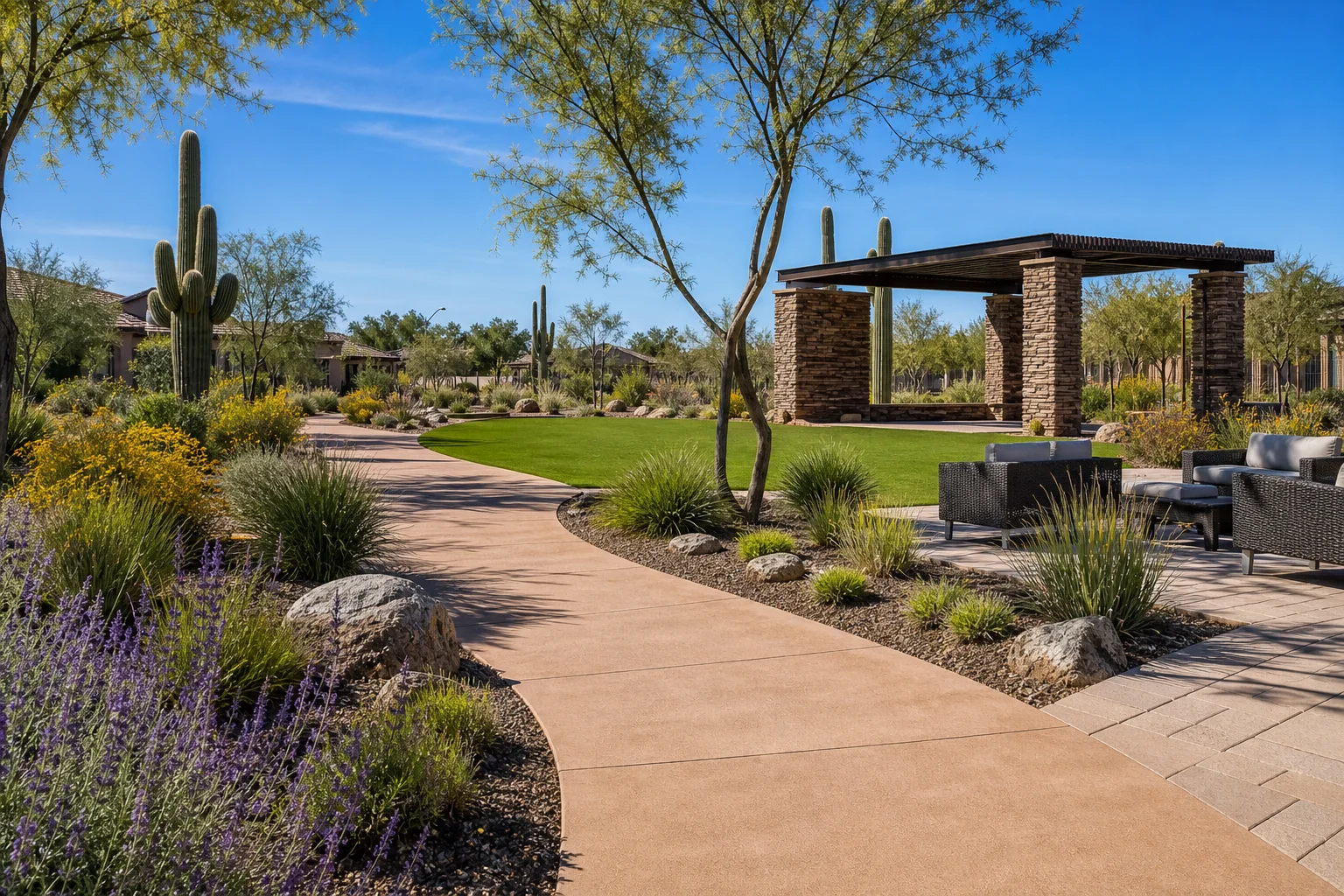
Many Arizona communities have also recognized that hardscape features add lasting value to HOA common areas. Shaded seating nodes, decorative paving at entries, and accessible pedestrian pathways improve both usability and visual quality. For current thinking on how Arizona HOAs are approaching these decisions, our guide to HOA Landscaping Trends 2026: Sustainable Practices for Arizona Communities covers the leading approaches in the region.
Sustainable Landscaping for Arizona Master-Planned Communities
Water management is the defining constraint for master-planned community landscaping in Arizona. Tightening supply conditions tied to the Colorado River system and increasing municipal demand have made water-efficient landscape design a fiscal and operational priority for HOA boards and property managers across the region.
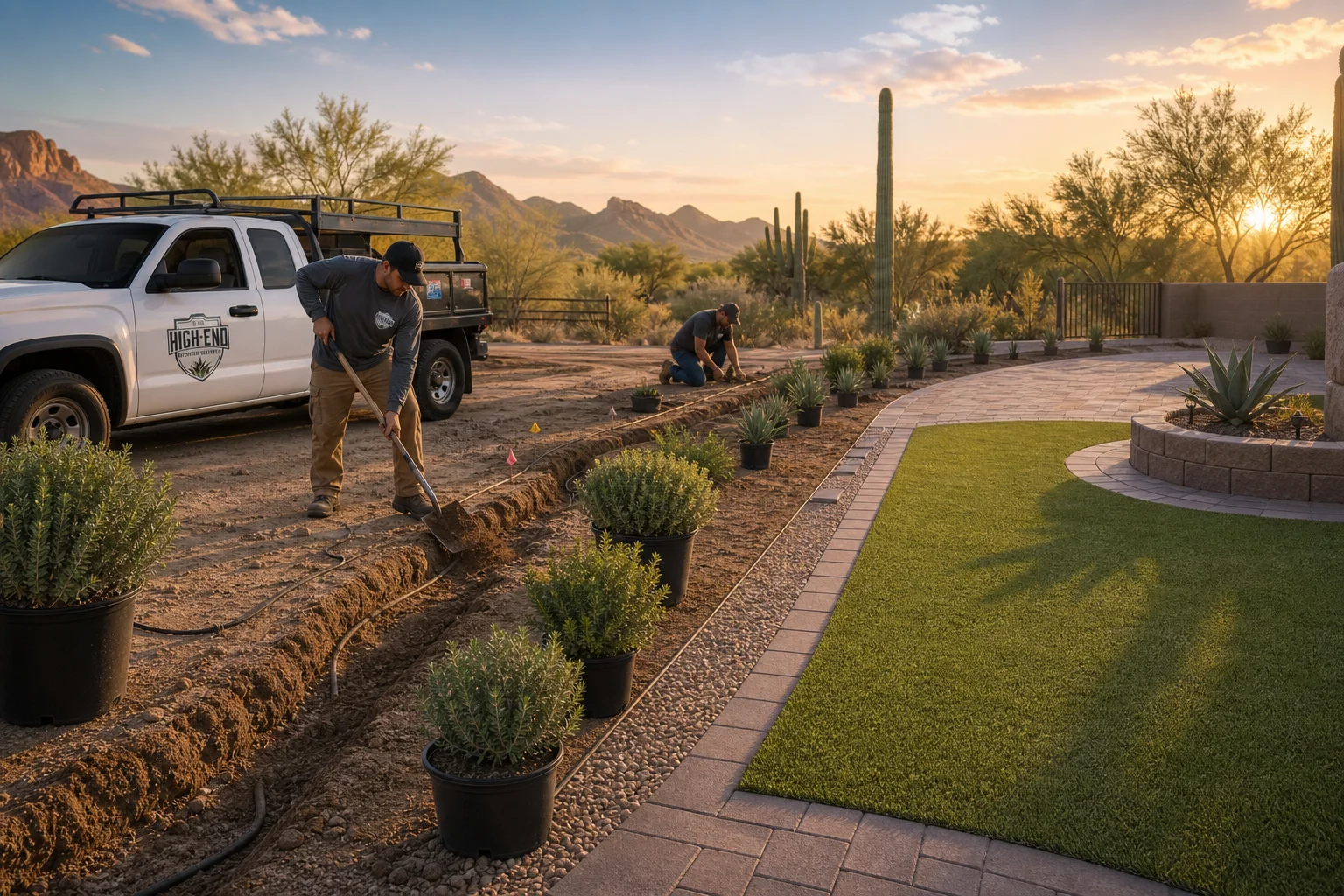
Desert-adapted plant palettes anchored by native and low-water species reduce irrigation demand without sacrificing visual quality in common areas. Paired with properly designed drip systems and smart irrigation controllers that adjust run times based on real-time weather data, these plans sustain attractive landscaping at significantly lower water volumes than conventional designs. In high-use zones such as recreation lawns and entry features, modern synthetic turf delivers the appearance and function of natural grass without ongoing irrigation, making it a strong option for properties focused on long-term water budgets.
The key is integrating water conservation into the design plan during construction rather than retrofitting it onto an existing high-water landscape. Master-planned communities that built their landscape architecture around efficiency from the start consistently outperform on long-term operating budgets and require less corrective investment as water costs rise.
Maintenance Planning That Protects the Landscape Investment
Consistent maintenance is what separates a master-planned community that holds its appeal over time from one that gradually declines. Arizona's summer heat accelerates wear on both plant material and hardscape surfaces, making service frequency a strategic decision tied directly to the community's property values.
Structured maintenance calendars that account for Arizona's distinct seasonal cycles protect the landscape investment across the year. Cool-season overseeding windows, pre-summer irrigation audits, and monsoon-season debris response are all scheduled in advance rather than addressed reactively. Our guide to How Often Should Commercial Properties Be Serviced? The Arizona Maintenance Calendar provides a detailed breakdown of service intervals appropriate for commercial and residential common areas in the Phoenix metro.
Larger planned developments often require more detailed scope documentation given the variety of spaces involved. For guidance specific to that context, see Landscape Maintenance for Gated Communities: Scope, Frequency and Standards.
Frequently Asked Questions
What makes master-planned community landscaping different from standard HOA landscaping?
A master-planned community typically involves a larger geographic footprint, a greater variety of common area types, and a more complex coordination challenge. Where a standard HOA manages a single neighborhood's shared spaces, a master-planned development often spans multiple neighborhoods, recreation amenities, and commercial zones, all requiring cohesive landscape standards and unified maintenance oversight across every area.
How do HOA boards select the right landscape contractor for a master-planned community?
Boards should evaluate contractors based on their experience managing large-scale residential and commercial properties in Arizona, their team capacity to handle multiple service areas at once, and the quality of their communication and reporting systems. Requesting references from comparable communities and reviewing sample service agreements before committing establishes clear performance expectations and protects the HOA's landscape investment.
What landscape features add the most value to master-planned community common areas?
Entry monument landscaping, shaded gathering areas with surrounding plantings, community park green space, and well-maintained pedestrian pathways consistently rank among the features residents most notice and value. In Arizona, water-efficient plant palettes and synthetic turf in high-use areas add lasting perceived value because they remain attractive year-round without visible stress from heat or drought.
How often should common areas in a master-planned community be maintained?
Most master planned community common areas benefit from weekly maintenance visits during peak growing seasons and bi-weekly visits in cooler months. Irrigation systems should receive a full audit at least twice per year, timed before summer heat and before the cool-season overseeding window. Hardscape areas should receive annual inspections for surface integrity, settlement, and drainage performance.
Can landscape design in a master-planned community support sustainability certifications?
Yes. Plans that incorporate native species, efficient drip irrigation, permeable paving in common areas, and organic soil health practices can contribute to sustainability frameworks such as LEED for Neighborhood Development. HOA boards and developers pursuing certification should engage a landscape architect during the planning phase to align the design and construction plan with specific certification criteria.
Build a Landscape Program That Performs Across Every Common Area
Coordinating outdoor spaces across an entire master-planned community requires a landscape partner with the scale, expertise, and systems to maintain consistent standards from one end of the development to the other. Contact HEOS AZ today to discuss your community's landscape scope and learn how our team builds programs that protect property values and create exceptional living environments for residents year after year.