Curb Appeal That Protects Property Values: Community Landscape Standards
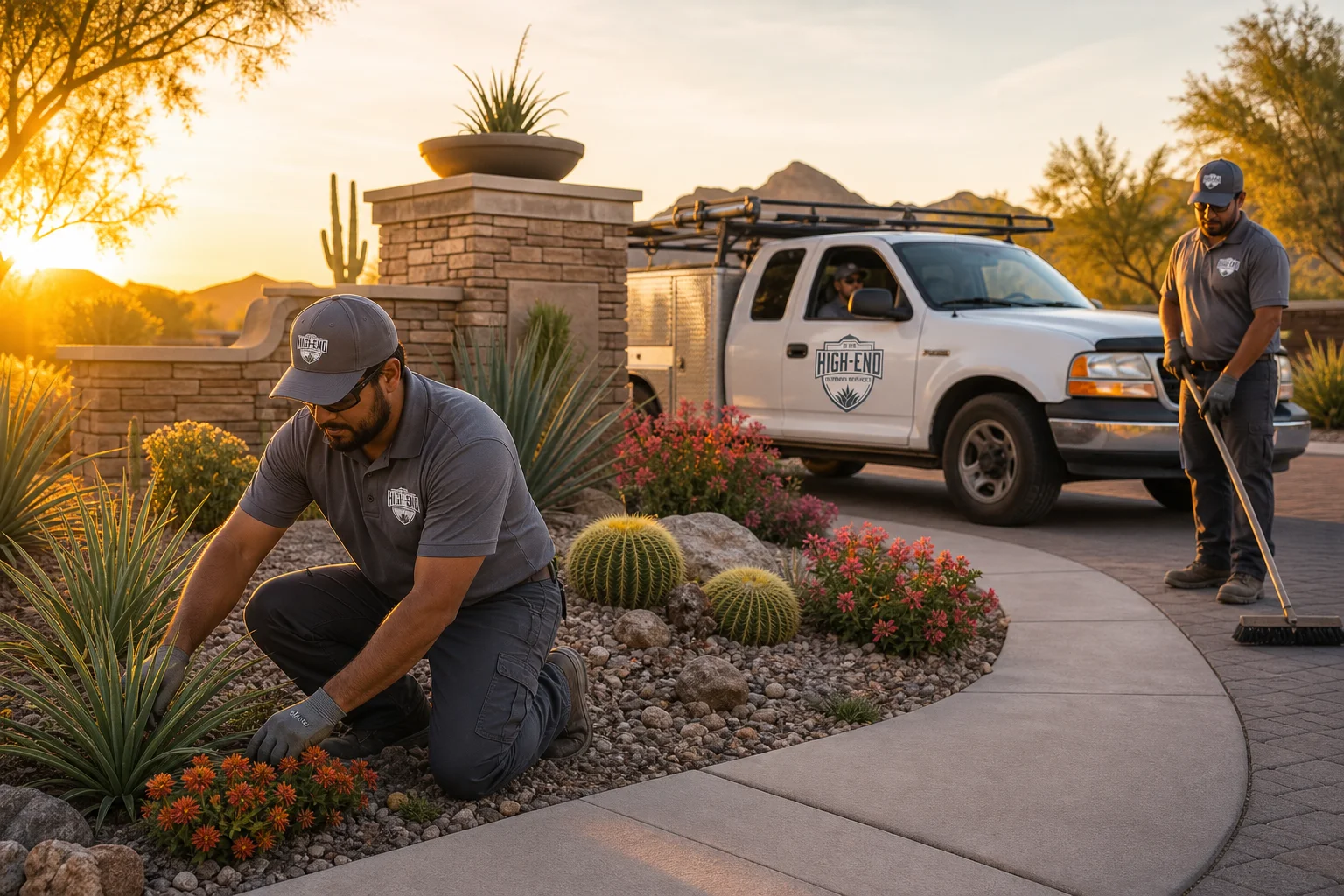
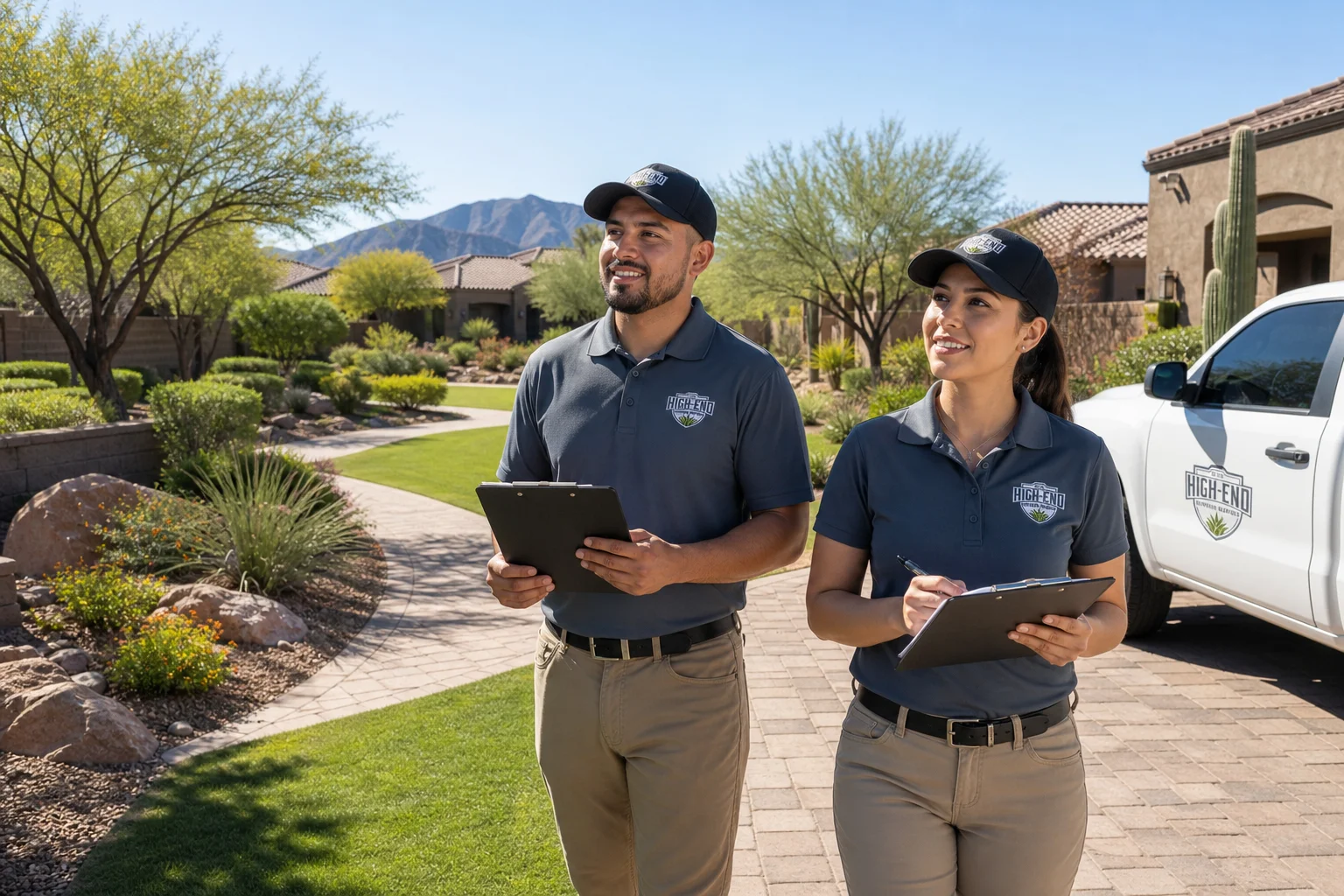
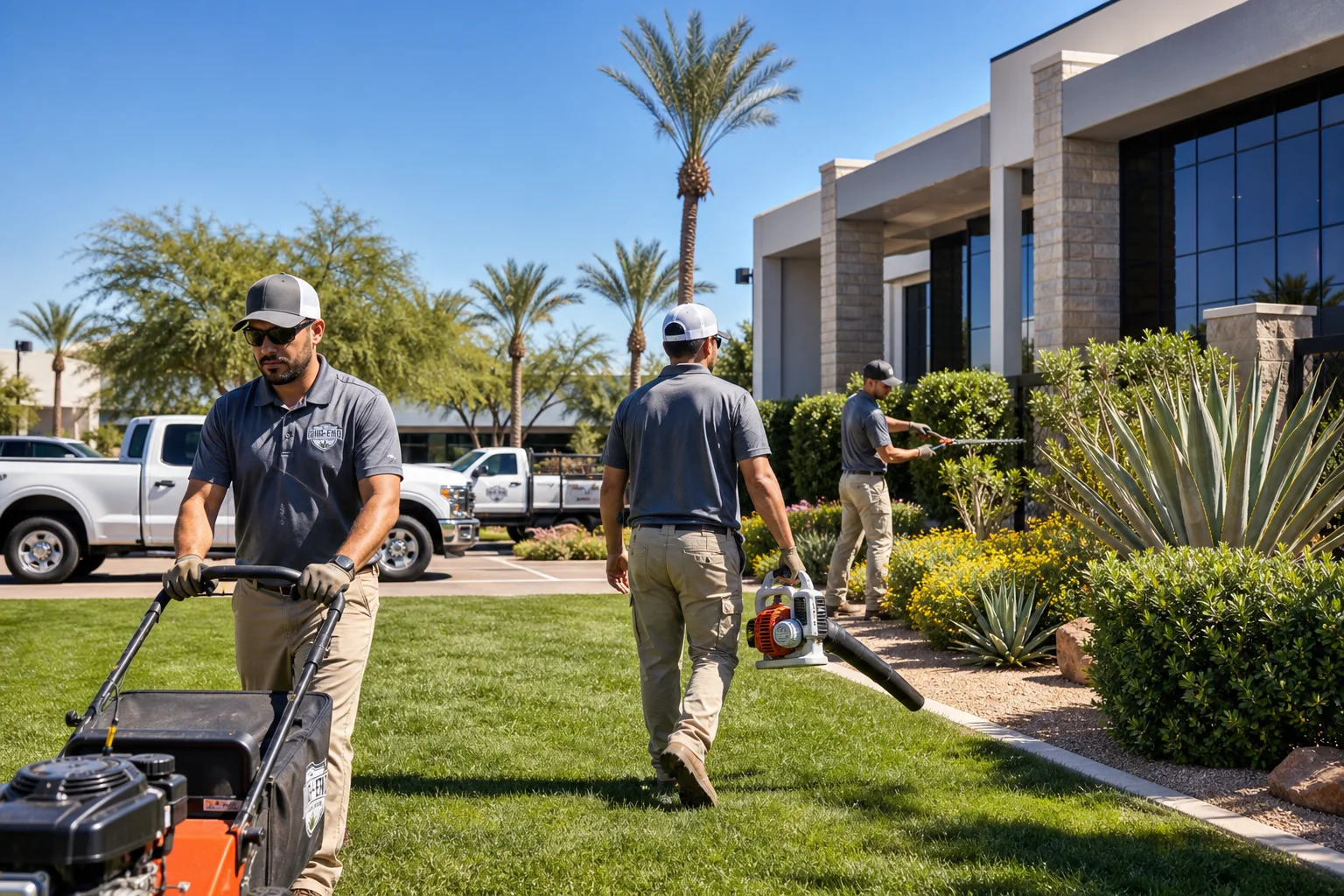
Curb appeal that protects property values starts with consistent, professional Community Landscaping standards that signal quality to every visitor, potential buyer, and resident who arrives at your property. Well-maintained grounds, clean exterior surfaces, and polished entry points create lasting first impressions that directly influence real estate valuations across HOA communities and commercial properties throughout Arizona.
By HEOS AZ Team, Outdoor Living Specialists
How Consistent Landscape Standards Shape Real Estate Performance
The relationship between maintained grounds and real estate outcomes is well documented. Research by Dr. Kathleen Wolf at the University of Washington, published through the USDA Forest Service, has established that professionally landscaped environments command measurable value premiums in residential and commercial real estate markets. For HOA communities and commercial campuses, the multiplier effect is significant: when every parcel meets a defined standard, the entire community benefits from elevated perceived value.
Potential buyers and prospective tenants make rapid judgments when approaching a property. Overgrown shrubs, cracked paving, or deteriorated common areas communicate neglect across the entire asset, regardless of interior condition. Communities that maintain consistent landscape programs report stronger pricing, faster lease-up rates, and more competitive positioning against neighboring developments. Curb appeal that protects property values is not incidental to a landscape program. It is the direct, measurable outcome of maintaining standards that leave no surface appearing overlooked.
HOA communities with active landscape programs also attract buyers who self-select for properties where neighbors share their commitment to long-term upkeep. This creates value stability that isolated property improvements cannot replicate on their own.
First Impressions at the Entry Define the Property
The front door and the approach corridor leading to it form the property's strongest visual statement. Visitors, potential buyers, and commercial tenants draw conclusions within seconds of arriving, a response consistent with research by Princeton psychologists Janine Willis and Alexander Todorov, published in Psychological Science in 2006, demonstrating that rapid environmental and social judgments form within a fraction of a second of encountering a new stimulus.
For HOA communities, the entry monument, gate corridor, and primary approach drive receive the highest traffic volume and therefore the fastest surface degradation. Professional landscape crews who maintain these zones on a defined schedule prevent the gradual decline that silently reduces first impressions over time. Keeping the front door zone free of debris, overgrowth at sightlines, and staining on approach walkways is foundational to any community standard.
Commercial campuses face the same dynamic. Trimmed plantings, clean paving, and well-lit approach corridors signal to arriving clients and partners that the organization inside operates at a comparable level of precision. Properties that rely on interior quality alone to compensate for a poor exterior presentation are statistically less likely to convert a visitor into a buyer or tenant once that initial judgment has already formed.
Exterior Surface Cleaning as a Community Standard
Surface cleaning is inseparable from a complete curb appeal program. Hardscape elements including driveways, sidewalks, retaining walls, entry plazas, and pool decks accumulate dirt, algae, and mold mildew over time. In Arizona, the monsoon season delivers brief but intense moisture that accelerates biological growth on paving and siding surfaces throughout the Valley.
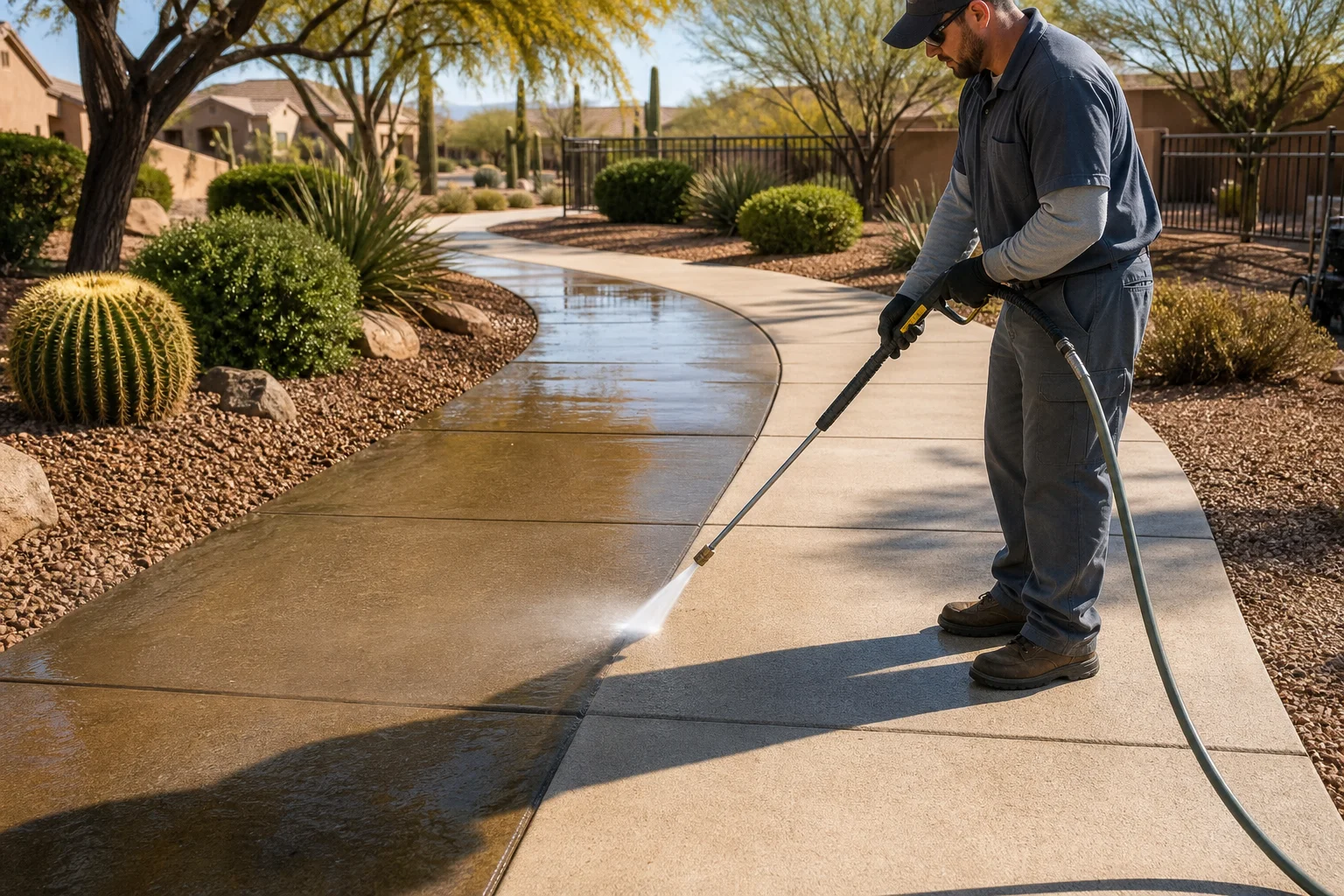
Pressure washing and soft washing restore exterior surfaces to a condition that just looks maintained rather than aged. Pressure washing delivers high-velocity water to break apart compacted grime on concrete and paver surfaces. Soft washing uses lower pressure combined with cleaning solutions to safely treat roof surfaces, window frames, and building siding where higher pressure would cause material damage. Both washing services eliminate the discoloration that registers visually as neglect from the street.
Roof cleaning deserves particular attention in Arizona communities. Algae growth appears as dark streaking across tile and shingle surfaces, reducing color uniformity and making otherwise well-kept properties look poorly maintained. Cleaning pressure washing treatments applied by professional crews arrest this growth before it spreads, protecting both curb appeal and roofing longevity. For homes businesses and commercial properties alike, regular pressure wash cycles aligned with seasonal conditions make exterior maintenance predictable rather than reactive.
Improving curb appeal through surface cleaning also protects structural investments. Mold and mildew embedded in siding can cause material damage over time if left untreated, turning an aesthetic concern into a repair cost. Window cleaning as part of a community program keeps glazing clear and completes the polished presentation that high-end communities require across every exterior surface.
How Curb Appeal That Protects Property Values Attracts Quality Tenants
Well-maintained properties influence tenant quality as directly as they influence buyer pricing. HOA Landscaping programs are most effective when they operate from written specifications rather than informal expectations. Boards who define maintenance frequencies, acceptable plant heights, turf density requirements, and surface cleaning schedules provide vendors with clear, measurable performance benchmarks.
Commercial and multifamily tenants weigh the exterior as a direct reflection of management quality. Clean surfaces near the front door, maintained planters along approach walks, and professionally serviced common areas communicate to prospective tenants that the property owner prioritizes upkeep. Tenants who bring clients to their location need confidence that the exterior presentation supports their professional image.
For broader context on how maintained landscapes support community-wide value, our resource on the importance of community landscape maintenance for enhancing neighborhood appeal examines how consistent standards make home communities more attractive to quality residents and tenants over time. Our guide to Implementing Effective Landscape Maintenance Programs for Commercial Properties outlines how to build a program framework that delivers consistent results across multiple buildings and common areas.
For gated communities with elevated access control requirements, our resource on landscape maintenance for gated communities covers how to adapt standard specifications to the unique maintenance demands of secured residential developments.
Planning a Year-Round Landscape Standard for Arizona Properties
Arizona's climate creates maintenance demands that differ significantly from national averages. Summer heat requires irrigation precision, drought-tolerant plant health monitoring, and organic debris management after monsoon storms. Cooler months require cold-sensitive plant protection, turf transition planning, and hardscape inspections after thermal cycles affect pavers and concrete joints.
A complete year-round landscape standard should address:
- Turf health: consistent mowing schedules, seasonal color transitions, and overseeding timing
- Irrigation management: weekly emitter checks to catch failures that leave dry patches visible from the street
- Surface cleaning: pressure washing and soft washing cycles aligned with monsoon season end and pre-summer preparation
- Plant trimming: defined maximum heights that maintain clearance at windows and entry sightlines
- Debris removal: post-storm protocols that restore property appearance within 24 hours
Our resource on How Often Should Commercial Properties Be Serviced? The Arizona Maintenance Calendar provides frequency guidance aligned with Arizona's seasonal demands for both high-traffic commercial sites and residential communities.
Frequently Asked Questions
How does curb appeal that protects property values work across HOA communities?
In HOA communities, curb appeal that protects property values operates through collective standards rather than individual effort. When every property maintains defined landscape and exterior cleaning standards, the entire community projects a quality signal to potential buyers and appraisers. Research from the National Association of Realtors confirms that buyers reduce offer prices on properties with neglected exteriors, and community-wide standards prevent any single parcel from lowering neighboring valuations.
What exterior cleaning services should be part of a community landscape contract?
A complete community contract should include pressure washing of driveways, sidewalks, pool decks, and entry paving; soft washing of building siding and roof surfaces to address algae and mold mildew without causing material damage; and window cleaning on accessible exterior glazing. These washing services address the surface-level discoloration that registers most immediately when potential buyers approach a property.
How often should Arizona HOA common areas receive professional service?
Most Arizona HOA communities schedule weekly landscape visits from March through October and bi-weekly service during cooler months. High-traffic entries benefit from weekly attention year-round. Pressure wash cycles for high-use paving are typically scheduled quarterly, with additional service after monsoon season when organic staining is most pronounced on concrete and paver surfaces.
Can landscape investment protect values during a soft real estate market?
Yes. During market corrections, properties with maintained grounds consistently outperform comparable properties with neglected exteriors. Potential buyers narrow their consideration sets quickly in a buyer's market, and properties that fail to create strong first impressions are removed before interior showings. Landscape and surface cleaning investment during a soft market delivers among the highest returns available to property owners and HOA boards.
What is the difference between pressure washing and soft washing for community properties?
Pressure washing uses high-velocity water to remove compacted dirt, grime, and staining from hard surfaces like concrete driveways, pavers, and pool decks. Soft washing uses lower pressure with cleaning solutions to treat porous or damage-sensitive surfaces including roof tiles, siding, and window frames. Both cleaning methods form part of a complete exterior surface maintenance program, each applied to the surface type it is suited to protect.
Build the Landscape Standards Your Community Deserves
HEOS AZ designs and manages landscape programs built around the community landscape standards that Arizona's premium HOA boards and commercial property managers require. To discuss a custom maintenance plan for your property, reach out through our Contact page.