Mulch vs Rock Landscaping: Best Ground Cover for Arizona Desert Climate
Mulch or Rock for Landscaping: What Arizona Homeowners Need to Know
The question of mulch or rock for landscaping is one of the most common decisions homeowners face when designing or refreshing an outdoor space in Arizona. Both materials serve the same fundamental purpose: covering bare soil, reducing weeds, and giving a landscape a finished appearance. But in a desert climate like Scottsdale and Paradise Valley, where summer temperatures regularly exceed 110 degrees and rainfall is scarce, the choice between them carries real consequences for plant health, water use, and long-term maintenance. Understanding the trade-offs before committing to one or the other will save you time, money, and frustration.
How Arizona's Climate Changes the Equation
In most parts of the country, the mulch versus rock debate is largely aesthetic. In Arizona, it is a functional decision. The Sonoran Desert environment is unlike almost any other residential landscape context in North America. Soils are alkaline, rainfall is concentrated in two brief monsoon windows, and the radiant heat from hardscapes and ground cover can push soil temperatures into ranges that stress even heat-tolerant plants.
This climate context matters because both mulch and rock behave differently under desert conditions than they do in more temperate zones. Organic mulch breaks down faster in intense UV exposure and heat. Gravel and rock absorb and re-radiate heat in ways that can either support or damage nearby plantings depending on placement and plant selection. Any serious comparison of landscaping ground cover in Arizona has to start here.
The Case for Organic Mulch in Desert Landscapes
Organic mulch, which includes wood chips, shredded bark, and decomposed plant matter, offers several advantages that are particularly valuable in a desert setting.
Moisture retention is the most significant benefit. A three to four inch layer of organic mulch acts as an insulating blanket over the soil, slowing evaporation and keeping root zones cooler and more consistently moist between watering cycles. In a climate where irrigation efficiency is a top priority, this matters.
Soil health improves over time. As organic mulch breaks down, it adds organic matter to Arizona's notoriously thin, alkaline soils. This gradual improvement in soil structure benefits plant root development and supports the microbial activity that makes nutrients more available to plants.
Surface temperatures stay lower. Studies comparing ground cover types in hot climates consistently show that organic mulch keeps soil surface temperatures significantly lower than bare decomposed granite or rock. This is especially important around the root zones of flowering plants, fruit trees, and any plantings that are not fully acclimated to desert extremes.
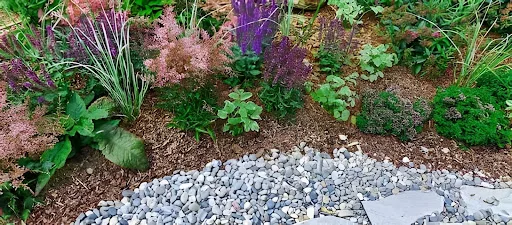
The aesthetic is naturalistic and versatile. Mulch softens a landscape visually and pairs well with lush tropical designs, cottage garden styles, and native plant installations that benefit from a less stark, more organic-feeling ground plane.
The trade-off is longevity. In Arizona's climate, wood chip mulch needs to be replenished roughly every one to two years. UV degradation, heat, and monsoon runoff all accelerate breakdown. This ongoing maintenance cost is a real consideration for large properties.
The Case for Rock and Decomposed Granite
Rock-based ground covers, including decomposed granite, crushed stone, river rock, and boulders, are deeply embedded in Southwest landscape design for practical reasons, not just visual ones.
Durability is the primary advantage. Rock does not decompose, wash away easily, or require replenishment on a regular schedule. A well-installed decomposed granite bed stabilized with a quality polymeric hardener can remain intact for many years with minimal intervention.
Low ongoing maintenance suits large properties. For estates with sprawling desert-facing frontage or expansive side yards, rock cover significantly reduces the labor and material cost associated with annual upkeep. This is a meaningful factor for luxury properties where grounds maintenance is an ongoing operating cost.
It supports a desert-native aesthetic. Decomposed granite, river cobble, and boulders are native to the Sonoran Desert visual vocabulary. When combined with saguaro, palo verde, brittlebush, and other regionally appropriate plantings, rock ground cover creates landscapes that look like they belong, not like they are fighting their environment.
Monsoon performance is more predictable. Rock does not float, shift significantly, or create debris the way organic mulch can during heavy monsoon rains. Properly graded and installed rock beds manage stormwater more predictably than organic alternatives.
The trade-offs are real as well. Rock absorbs and re-radiates heat aggressively, which can create thermal stress for plants placed too close and make outdoor living spaces uncomfortably hot in summer afternoons. Rock also does nothing to improve soil quality over time. Weeds that establish through a rock bed can be difficult to remove without disturbing the entire surface, particularly when weed fabric beneath has degraded.
Desert Landscaping: Mulch vs. Rock by Application
In practice, the most effective desert landscaping mulch vs. rock strategy is not an either-or choice. It is a question of where each material performs best within a given landscape design.
Use organic mulch around trees, shrubs, and planting beds. The root zones of actively growing plants benefit most from the moisture retention and soil improvement that organic mulch provides. A dedicated mulch ring around specimen trees, flowering shrubs, and garden beds is one of the highest-return investments in plant health a homeowner can make.
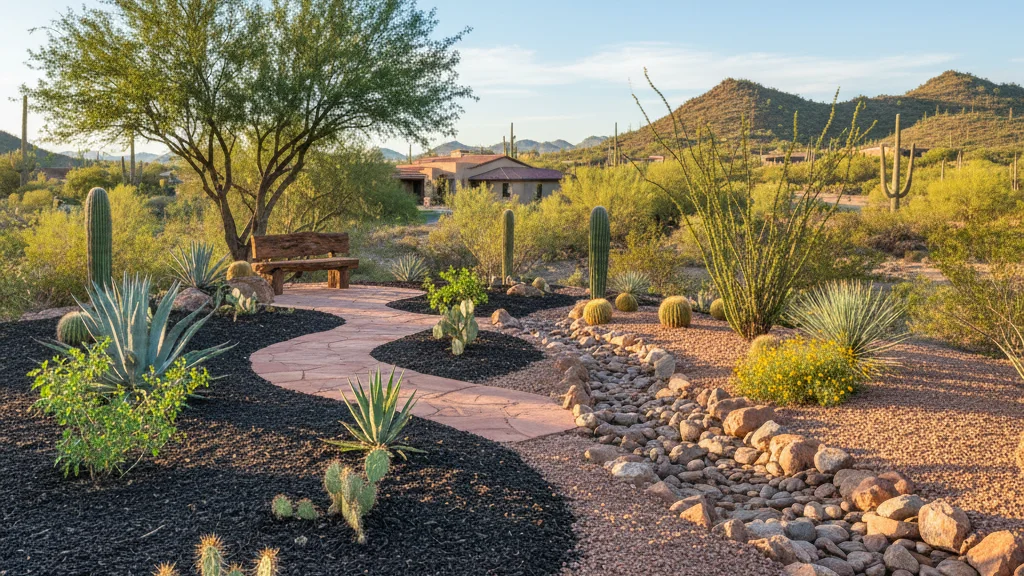
Use decomposed granite or crushed rock in open expanses and paths. Large transitional areas between planted zones, walkways, and entry courts are good candidates for rock cover. These areas do not require the soil health benefits of organic mulch, and rock's durability reduces long-term maintenance demands.
Use river rock and boulders for drainage features and focal points. Dry creek beds, drainage swales, and rock gardens serve both functional and aesthetic purposes. They direct stormwater, prevent erosion, and add natural texture and visual scale to a landscape that flat gravel alone cannot achieve.
Consider topdressing with fine organic material in planted areas. Some landscape professionals in the Phoenix metropolitan area apply a thin layer of compost beneath a mulch layer in planting beds, giving plants an immediate soil amendment alongside the surface benefits of the mulch. This approach is particularly effective during seasonal planting.
Weed Control Considerations
Neither mulch nor rock eliminates weeds on its own. Both work best when installed over a properly prepared soil surface, and both can be paired with pre-emergent herbicide applications to reduce weed pressure during peak germination seasons, which in Arizona occur in both spring and fall.
Weed fabric beneath rock is a common installation approach, but it deserves scrutiny. Fabric degrades over time, and roots from established plants can grow through it, making removal difficult. Many experienced Arizona landscape designers now prefer pre-emergent treatments over fabric, particularly in planting beds where soil access for future amendments is desirable.
Matching Ground Cover to Your Design Vision
At the luxury end of the market, ground cover selection is also a design decision. The best Scottsdale and Paradise Valley landscapes use ground cover materials intentionally, as part of a cohesive visual language that connects hardscape, plantings, water features, and lighting.
Decomposed granite in a warm amber tone can draw the palette of a home's stone cladding into the landscape plane. Dark lava rock can create contrast against bright flowering plants in a contemporary design. Chunky river cobble in a dry creek bed can reference the natural washes and arroyos of the surrounding desert while managing drainage in a refined way. Organic mulch in a garden border can soften the transition between structured hardscape and loose, naturalistic planting.
These are not afterthoughts. They are the details that separate a finished, cohesive landscape from one that simply has ground covered.
Bringing It Together with Professional Guidance
Choosing the right ground cover for an Arizona property is a decision that intersects horticulture, water management, aesthetics, and long-term maintenance planning. Getting it right from the start avoids costly corrections down the road.
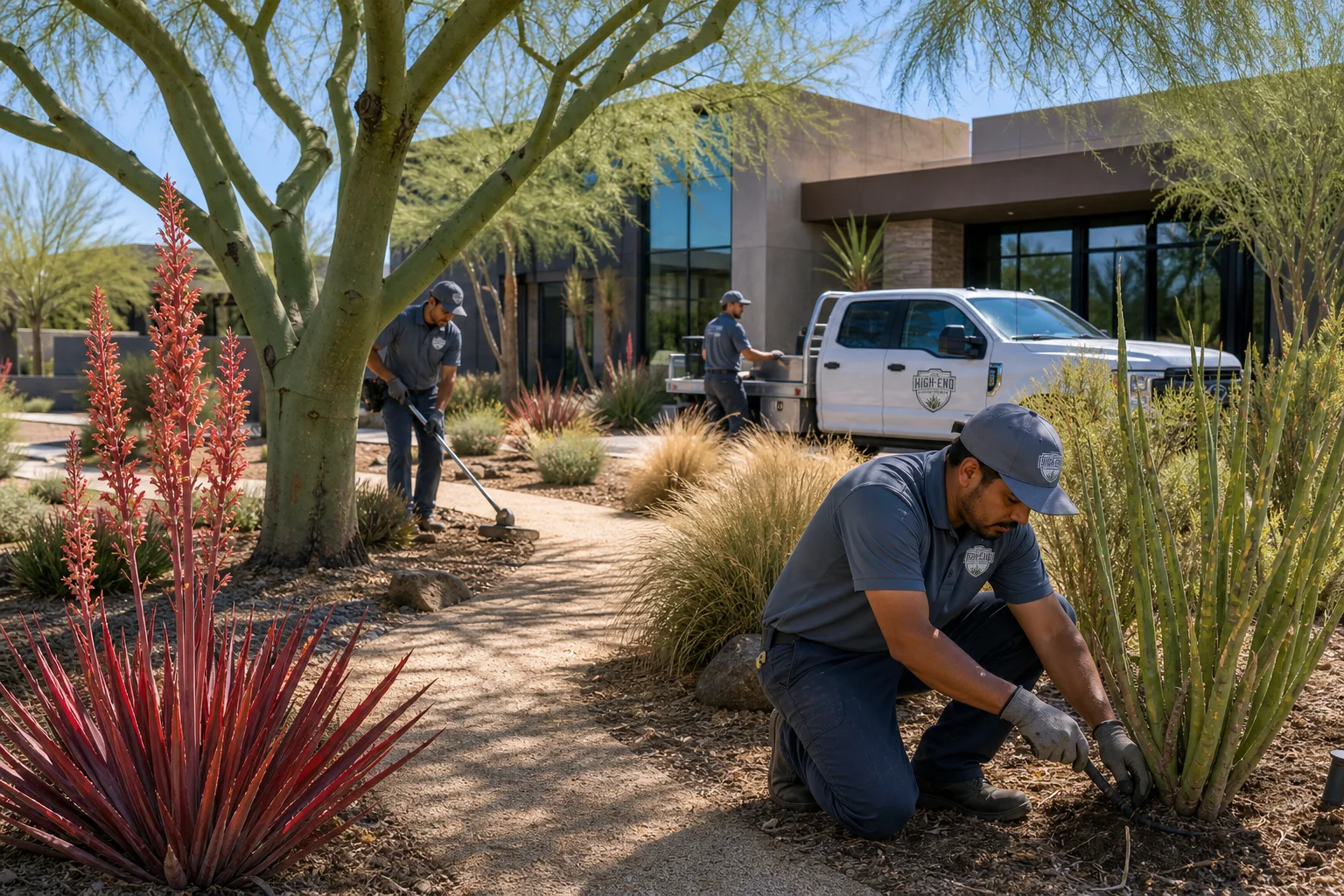
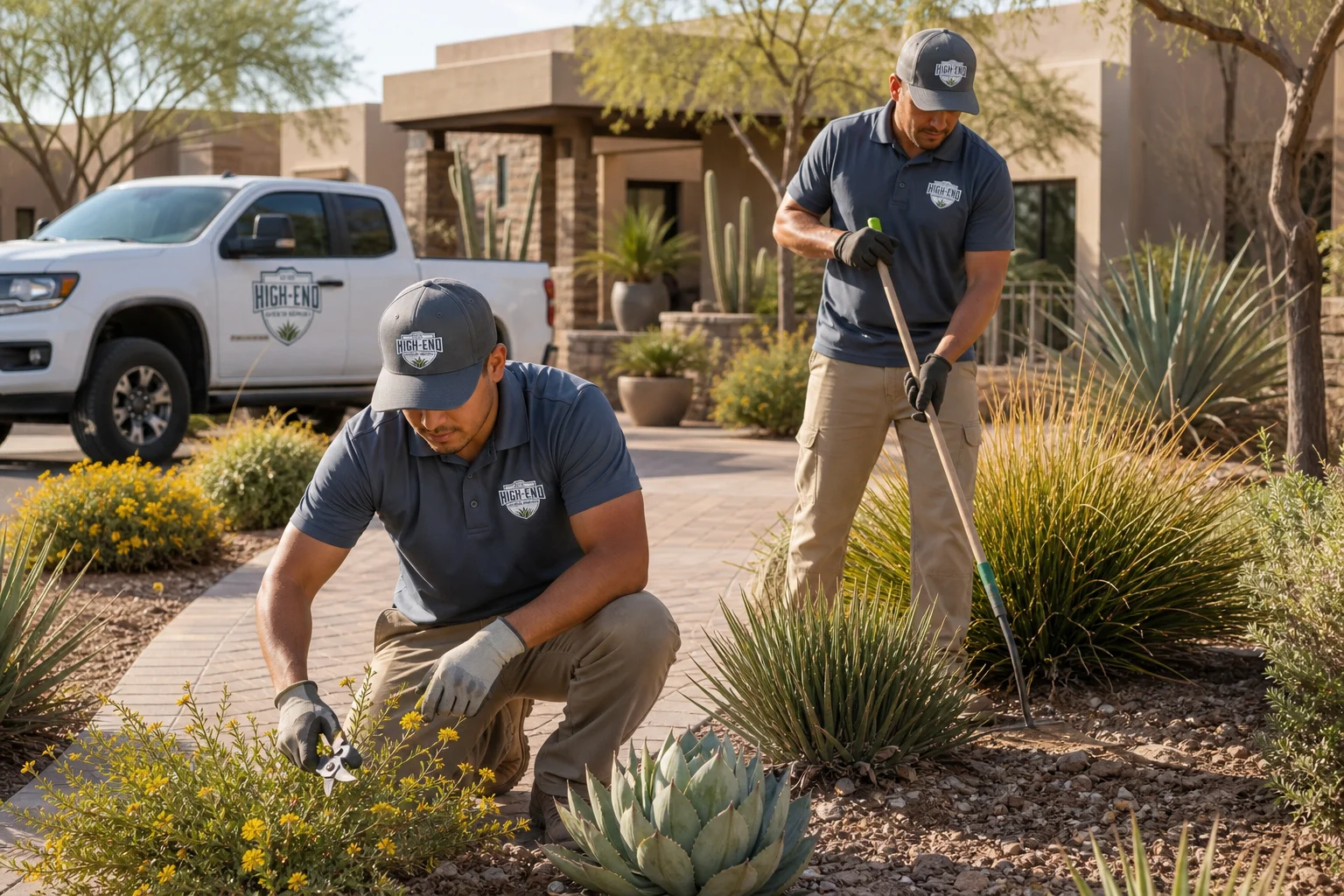
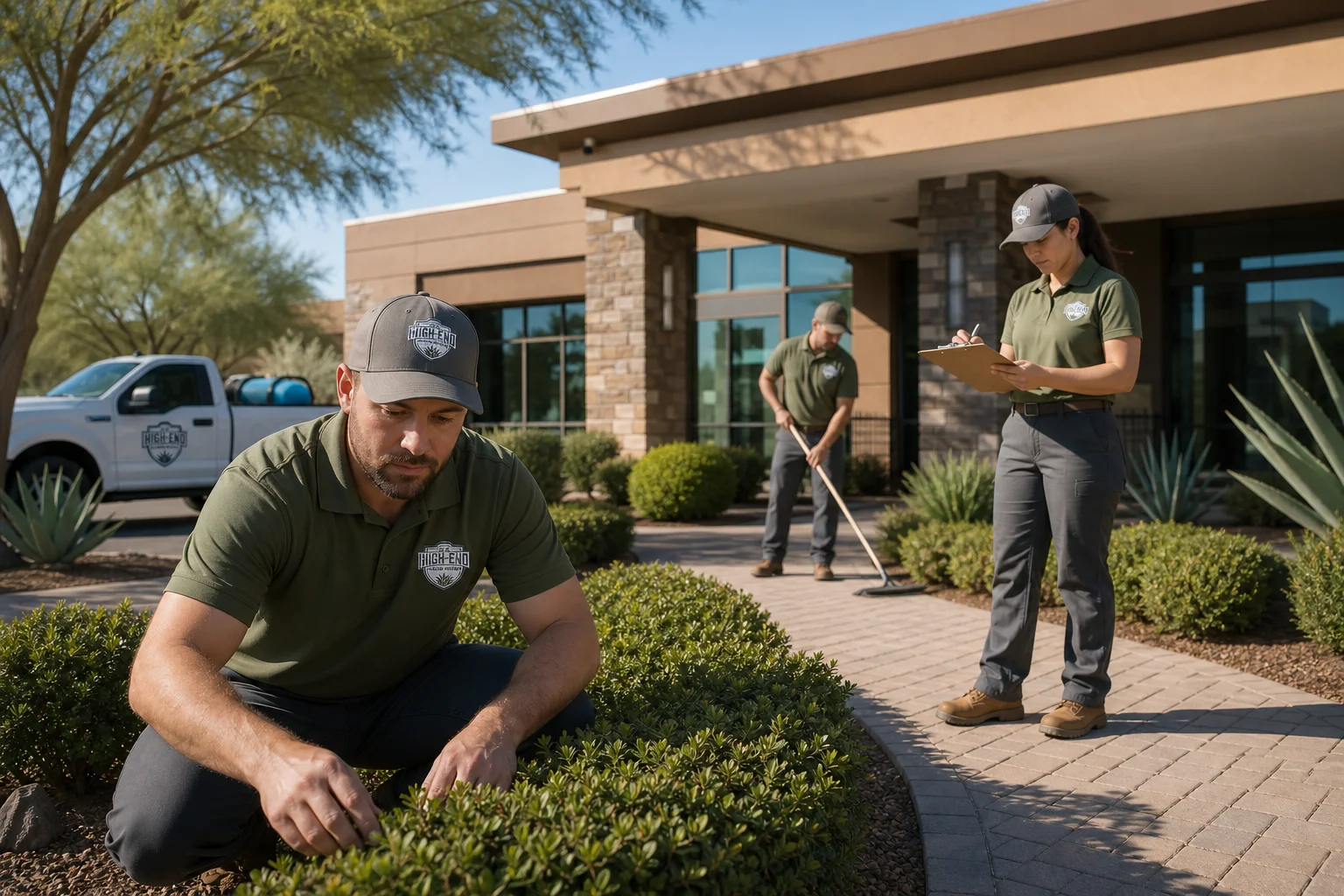
HEOS provides full-service landscape design and installation for homes across Scottsdale and Paradise Valley, with deep experience navigating the specific demands of desert outdoor environments. Whether you are designing a new landscape from scratch or reassessing an existing ground cover strategy, the team at HEOS can help you make choices that support plant health, manage water efficiently, and reflect the quality your property deserves. Reach out to schedule a consultation at heosaz.com.