Turf Rinsing vs Turf Sanitizing: What Commercial Properties Are Actually Paying For
Turf rinsing vs turf sanitizing comes down to what each process actually removes from artificial turf: rinsing flushes away surface debris, dust, and diluted urine, while sanitizing treats the blades and base with an antimicrobial product that breaks down the bacteria rinsing leaves behind. Most commercial properties across the Valley need both services, run on different schedules, as part of routine Turf Cleaning rather than a single one-time fix.
By HEOS AZ Team, Outdoor Living Specialists
What Sets Turf Rinsing Apart From Turf Sanitizing?
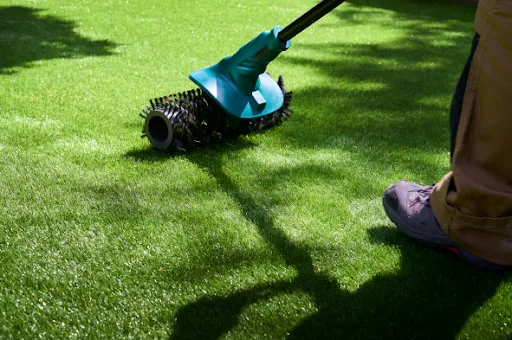
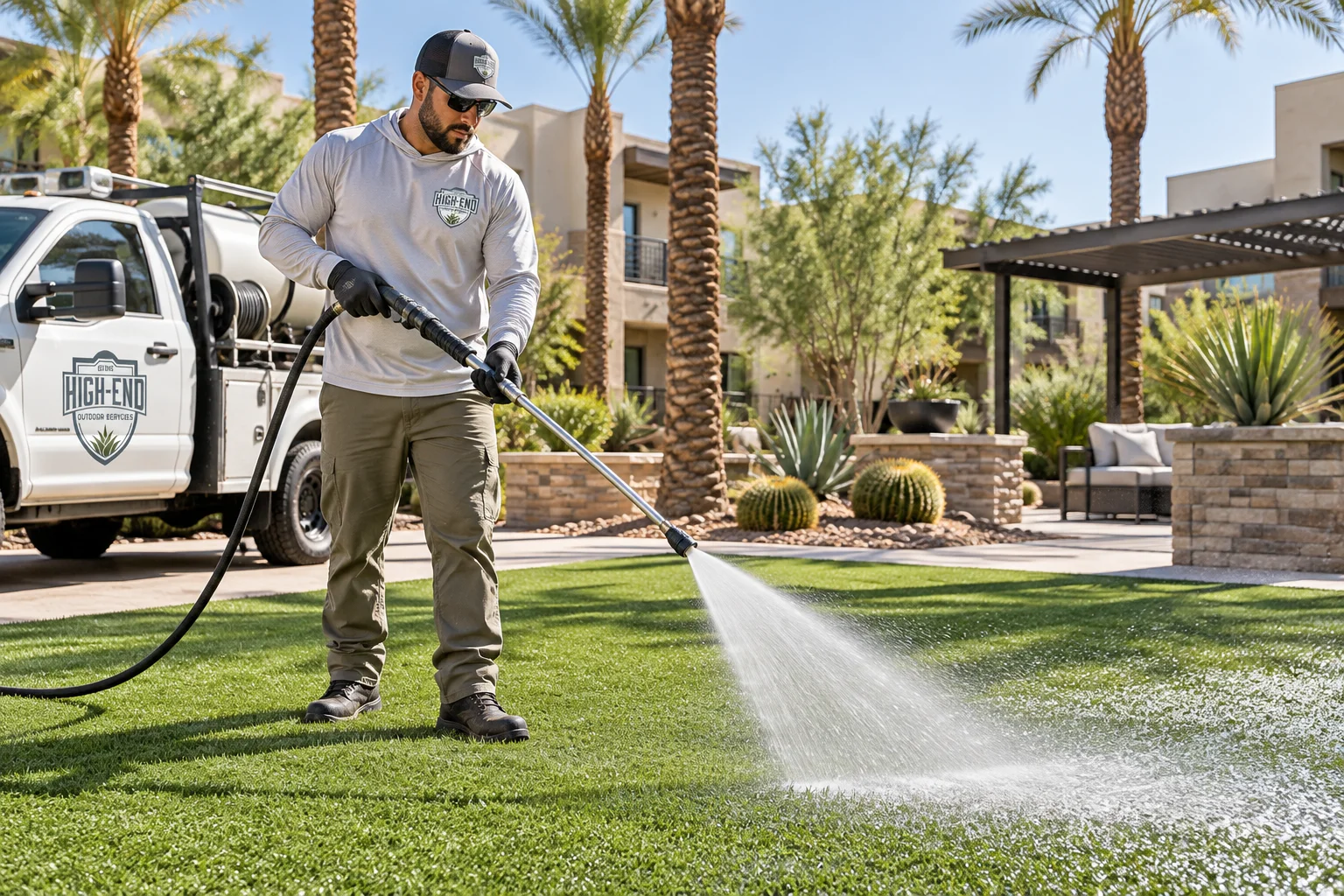
Turf rinsing is a water-based process. A technician uses a hose or a power rinsing attachment to flush loose debris, dust, dried leaves, and surface-level urine residue off the blades and out of the infill layer sitting on top of the base. It is mechanical, not chemical: rinsing cools the artificial grass, clears visible grime, and knocks down odor sitting on the surface of the turf.
Turf sanitizing is a treatment, not a wash. A sanitizing product, typically an enzyme-based or antimicrobial solution formulated specifically for artificial turf, gets applied to the blades and worked down into the base where bacteria actually live and multiply. Rinsing moves what sits on top of the turf; sanitizing changes what is growing inside the fibers and base. A property that only rinses is cleaning the surface of a problem that lives well below it.
Does Rinsing Alone Remove Bacteria and Odor-Causing Germs?
Not reliably. Water dilutes urine and carries away loose surface debris, but plain rinsing has no meaningful antimicrobial action, so bacteria colonies living in the turf backing and base survive a rinse largely intact. That is the underlying reason heavily used commercial turf can look completely clean and still smell sour on a hot Arizona afternoon: the ammonia compounds reactivating in the heat come from bacteria the rinse water never actually touched.
Guidance from bodies like the CDC on cleaning versus disinfecting porous, heavily trafficked surfaces draws the same distinction that applies here: visible cleanliness and microbial load are two different measurements. A commercial property can pass a visual walk-through with clean-looking grass and still carry a bacterial load that only a proper deep cleaning or sanitizing step actually addresses.
How Often Do Commercial Properties Need Rinsing Versus Sanitizing?
Rinsing frequency scales with foot traffic and pet use more than anything else. A dog park, an HOA common area, or a hospital courtyard with heavy daily use usually needs rinsing several times a week to stay ahead of debris and urine buildup. Office landscaping and lower-traffic areas may only need a rinse weekly. Commercial common areas see far more daily traffic than a single homeowners' yard, which is why rinsing frequency for commercial turf almost always outpaces a typical residential lawn care schedule. Sanitizing runs on a longer, entirely separate cycle: generally monthly for high-traffic pet turf areas and quarterly for lighter-use commercial areas, though the right interval still depends on climate, shade, drainage, and how many animals or people use the space every day.
Because rinsing and sanitizing solve two different problems, they should never share one schedule. A property manager who assumes a weekly rinse also covers sanitizing is unknowingly skipping half of a complete turf maintenance plan, and the gap tends to show up as odor complaints months before anyone traces it back to a missing service.
What Does a Professional Turf Sanitizing Service Include That Rinsing Doesn't?
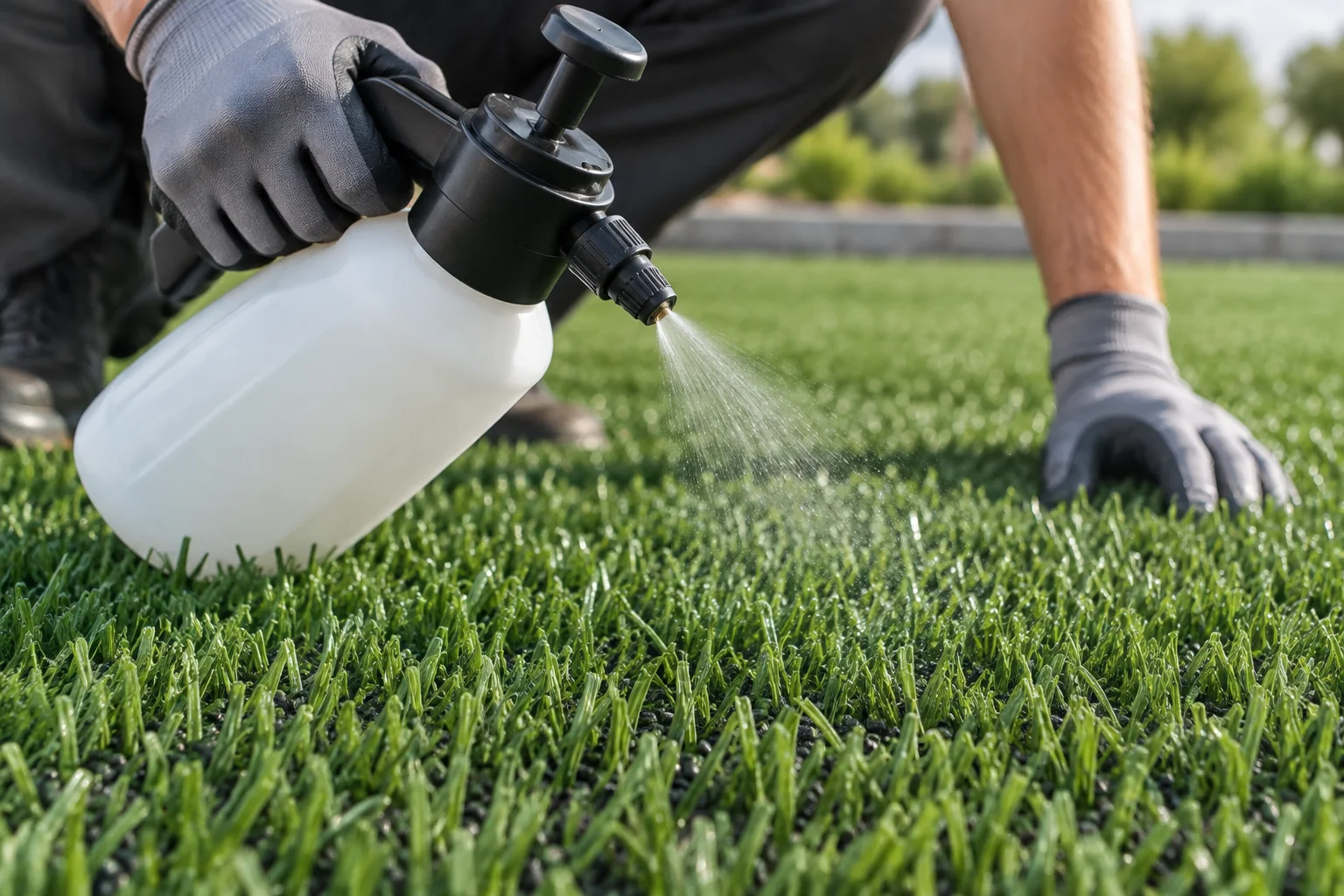
A professional turf sanitizing service starts with a rinse to clear surface debris and dust, then applies an antimicrobial or enzyme treatment formulated to break down bacteria and odor-causing compounds inside the fibers and base, not just on top of them. Most professional services also include a base-level treatment for the infill itself, since that layer is where moisture and organic material settle after repeated urine exposure over weeks or months.
DIY sanitizing attempts with consumer sprays typically only reach the top of the blades, because getting product down into the base and infill layer in an even, effective concentration takes commercial-grade equipment and dwell time that most in-house property staff are not set up to manage safely. That gap between a surface spray and an actual base treatment is exactly what a professional service exists to close, and it is the difference clients are paying for when they book sanitizing rather than an extra rinse.
Rinsing, Sanitizing, or Both: What Does Your Property Actually Need?
Most commercial properties need both services, each run on its own schedule, rather than choosing one over the other. Understanding turf rinsing vs turf sanitizing as two separate services, not one bundled visit, is the first step to building a plan that actually works. Rinsing handles day-to-day debris, dust, and surface-level odor; sanitizing handles the bacteria that rinsing physically cannot reach. A property that skips sanitizing entirely is relying on rinsing to do a job it was never designed to do, no matter how often the crew comes out.
Properties that pair rinsing with a scheduled sanitizing plan typically fold both into a Commercial Maintenance program, which bundles turf care with irrigation and grounds visits so neither service quietly falls off the calendar between site walks.
What Turf Rinsing vs Turf Sanitizing Costs for a Commercial Property
Turf rinsing vs turf sanitizing costs differ because the two services cover different scopes of work. Rinsing is generally priced by square footage and visit frequency, since it is mostly labor and water; sanitizing costs more per visit because it includes the treatment product itself plus the extra time needed to work it into the base evenly. Larger properties with multiple pet turf areas or high-traffic common areas usually see sanitizing priced as its own line item rather than folded quietly into a routine rinse.
Water use is part of that cost conversation too. Properties operating under AMWUA water use guidelines should factor rinse frequency into their overall water budget, since a courtyard rinsed daily uses meaningfully more water over a year than one rinsed on a lighter schedule with a proper sanitizing cycle running in between to keep odor down without extra water.
What Happens If a Commercial Property Only Rinses Its Turf and Skips Sanitizing?
Turf that gets rinsed but never sanitized tends to develop a persistent, low-grade odor that gets noticeably worse in the heat, because the bacteria actually causing it were diluted, not removed. Over time, untreated bacteria can also degrade the turf backing and infill, shortening the useful life of the installation and pushing a property toward premature replacement in high-traffic or pet-heavy areas well ahead of schedule.
For an HOA board or property manager, that pattern shows up as resident complaints that never fully go away no matter how often the turf gets rinsed, simply because rinsing was never the right tool for that particular problem.
Frequently Asked Questions
Is turf sanitizing the same thing as turf disinfecting? They are closely related but not identical. Sanitizing reduces bacteria to a safe, manageable level, while disinfecting aims to eliminate a broader range of pathogens, usually with a stronger product and longer contact time. Most commercial artificial turf programs use sanitizing-grade products, since they are formulated specifically for outdoor synthetic surfaces without breaking down the fibers over repeated use.
Can artificial turf be sanitized without rinsing it first? It is not recommended. Surface debris, dust, and loose organic material can block a sanitizing product from reaching the blades and base evenly, so rinsing first helps ensure the treatment actually contacts the areas where bacteria live rather than sitting on top of dirt and dried leaves.
How long does a turf sanitizing treatment last before it needs to be redone? It varies by traffic and climate, but many commercial properties see effective results for four to twelve weeks before bacteria levels build back up enough to justify another treatment. High-traffic pet turf areas typically need sanitizing on the shorter end of that range, while lower-traffic commercial areas can often stretch toward the longer end.
Is turf rinsing alone enough to get rid of pet urine odor? Rinsing removes surface-level urine and dilutes what is left behind, which helps in the short term, but it does not address the bacteria producing the ammonia smell as urine breaks down in the heat. Properties dealing with recurring urine odor in pet turf areas usually need a sanitizing treatment alongside regular rinsing, not as a replacement for it.
Are commercial properties required to sanitize artificial turf, or is it optional? There is generally no blanket legal requirement to sanitize artificial turf, though some health-sensitive properties, such as those near hospital courtyards or licensed childcare areas, may hold themselves to their own internal standards. For most commercial properties, sanitizing is a maintenance decision driven by odor control, turf longevity, and resident or tenant experience rather than a regulatory mandate.
Get a Turf Rinsing and Sanitizing Plan Built for Your Property
A property manager should not have to guess at the right rinsing and sanitizing schedule alone. Contact HEOS AZ for a maintenance plan scoped to your property's actual traffic, pet use, and turf age.