Paver Maintenance and Sealing for Commercial Properties: Protecting the Investment
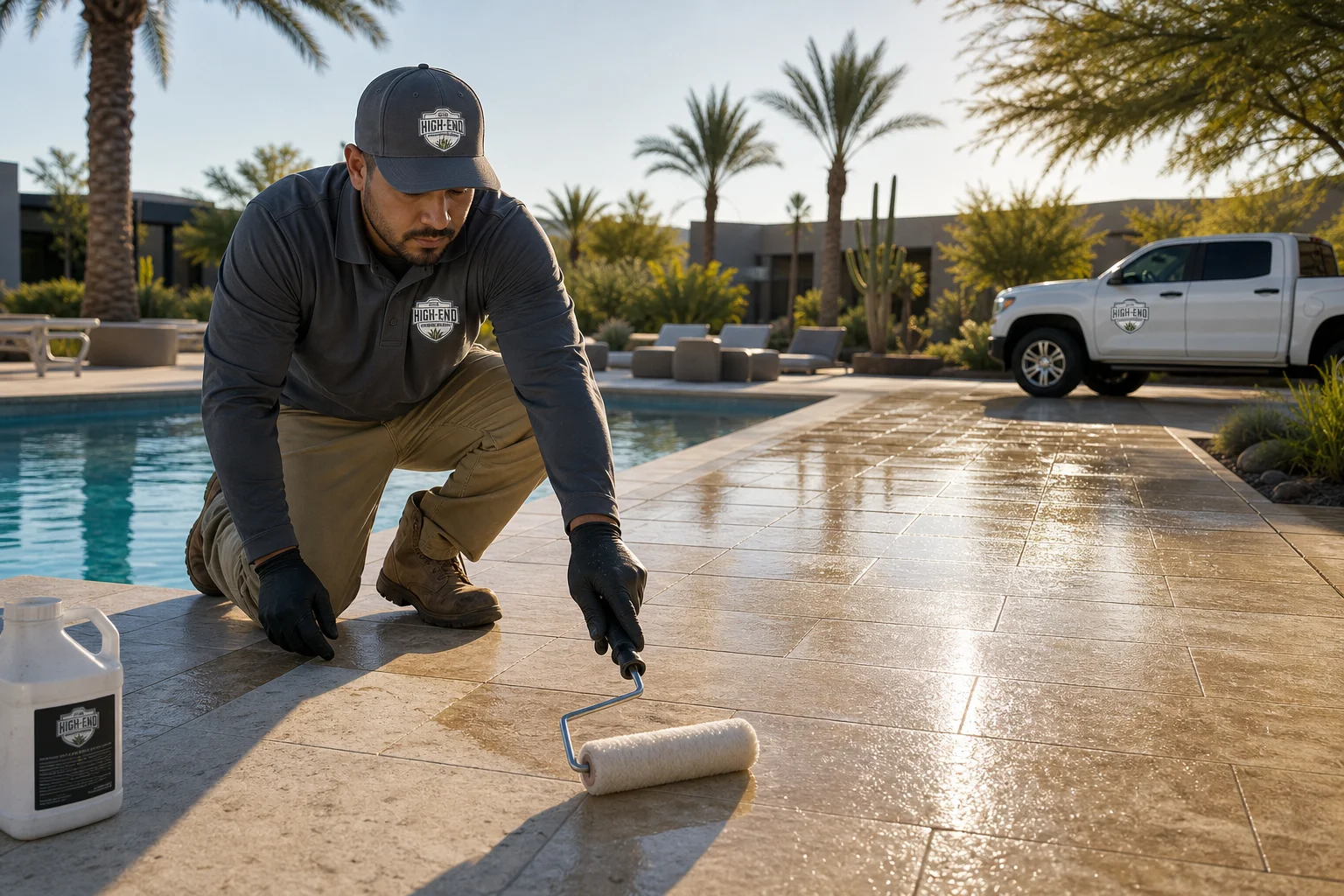
Commercial paver maintenance is the ongoing schedule of cleaning, sealing, and inspection that protects a property's Paver Installation investment from Arizona's sun, monsoon rain, and heavy foot traffic. Without it, even premium concrete pavers crack, fade, and stain within a few seasons, driving up long-term repair costs for HOA boards and property managers.
By HEOS AZ Team, Outdoor Living Specialists
How Often Should Commercial Pavers Be Sealed?
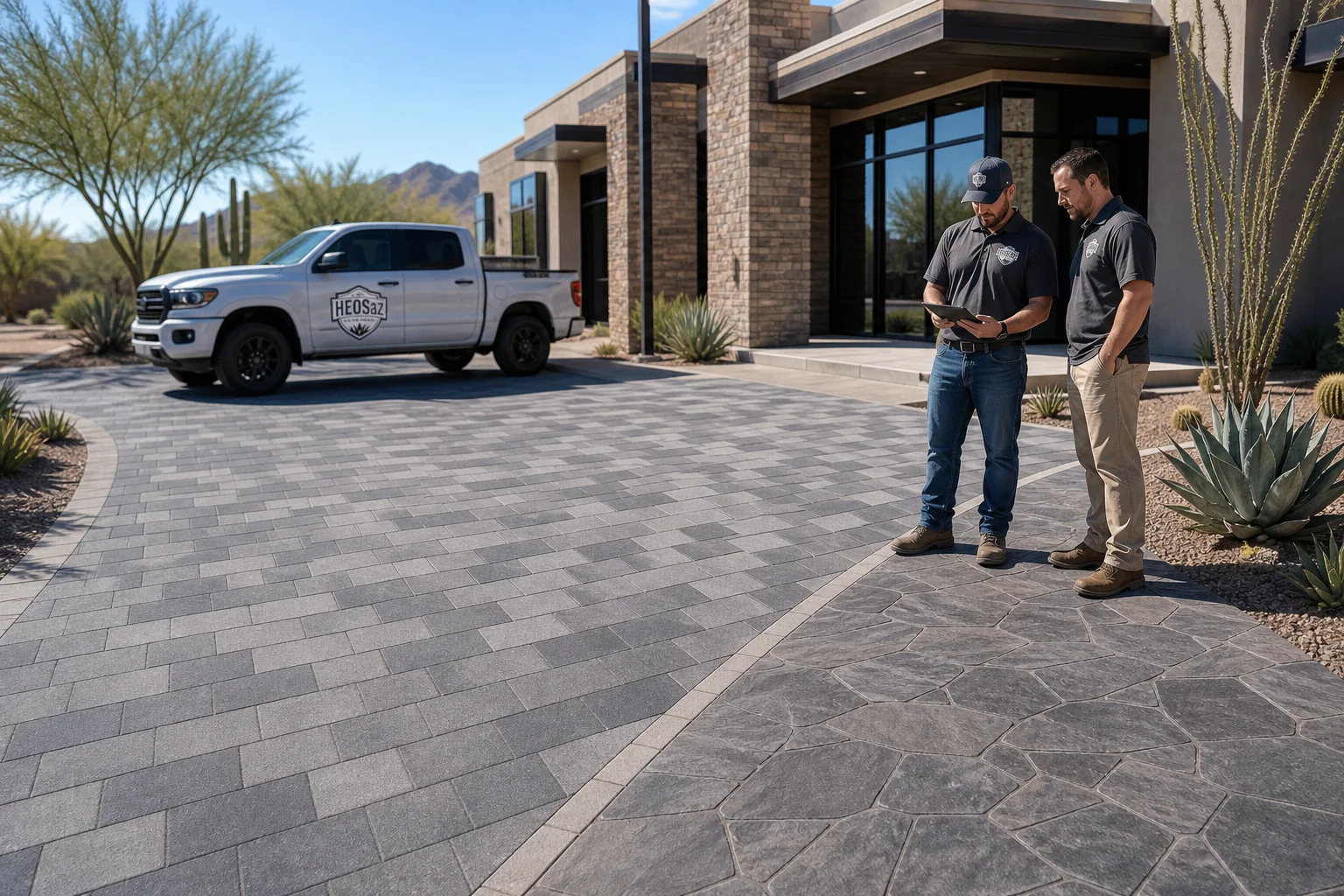
Most commercial properties in the Phoenix area need paver sealing every two to three years, though high-traffic walkways, pool decks, and drive lanes often need it closer to every eighteen months. UV exposure, monsoon moisture, and heavy traffic wear down a sealer faster than the label suggests, so the real answer usually comes from a site inspection rather than a fixed calendar date. A walkthrough that checks color fade, water absorption, and joint sand loss is the best way to set a resealing date.
How Long Does Paver Sealant Last on a Commercial Property?
A quality sealer applied correctly typically holds up for two to three years on outdoor surfaces exposed to normal Arizona sun and seasonal rain, though pool decks and other high-moisture zones may need attention sooner. Longevity depends on the product grade, the substrate's porosity, and how much direct sun and irrigation overspray the area receives. A property with sealing services on schedule rarely needs full stripping and reapplication, since maintenance coats extend the existing seal instead of starting over.
How Soon After Installation Should New Commercial Pavers Be Sealed?
Newly installed concrete pavers usually need 60 to 90 days to cure before sealing, which allows efflorescence (the white mineral residue that rises to the surface as pavers dry) to work its way out first. Sealing too early can trap that residue and moisture beneath the surface, leading to a cloudy or blotchy finish. An installer or maintenance partner can confirm the right window for the specific paver material.
What Does Commercial Paver Maintenance Actually Include?
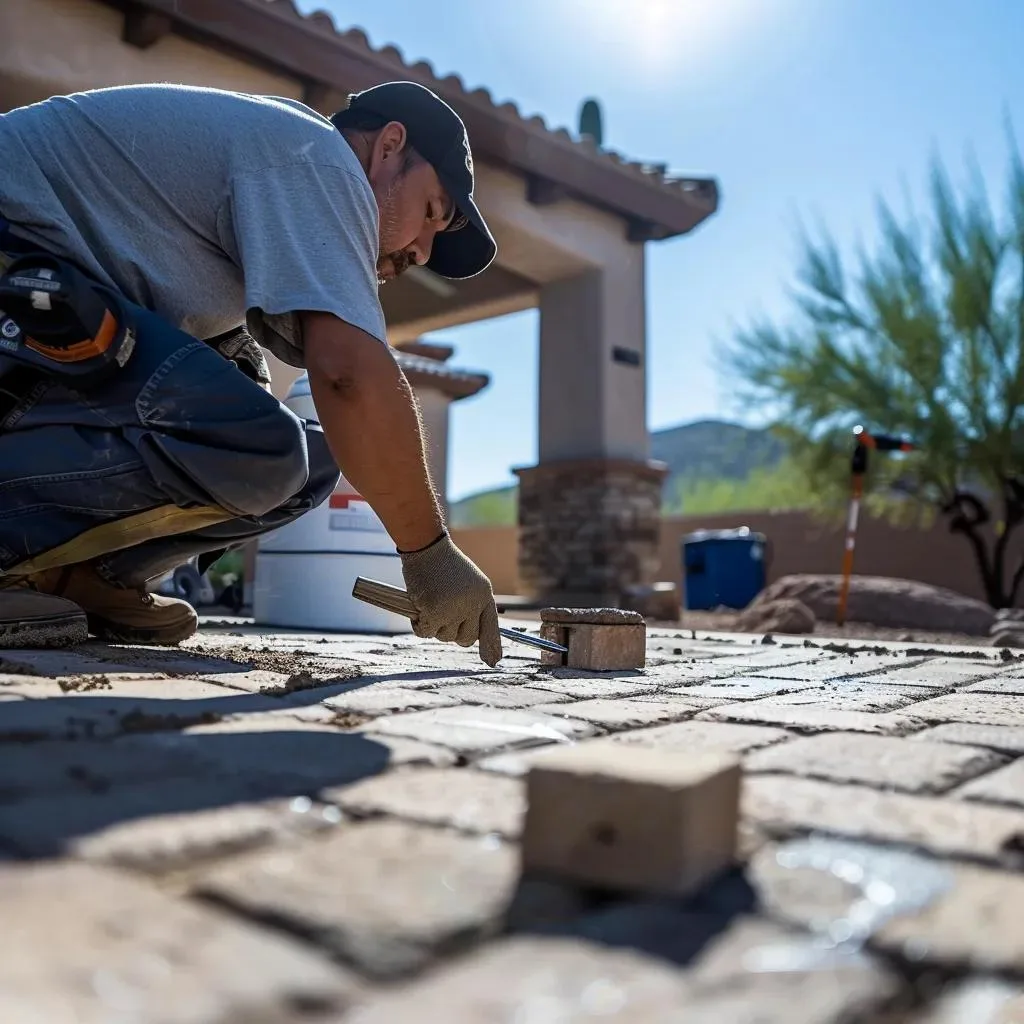
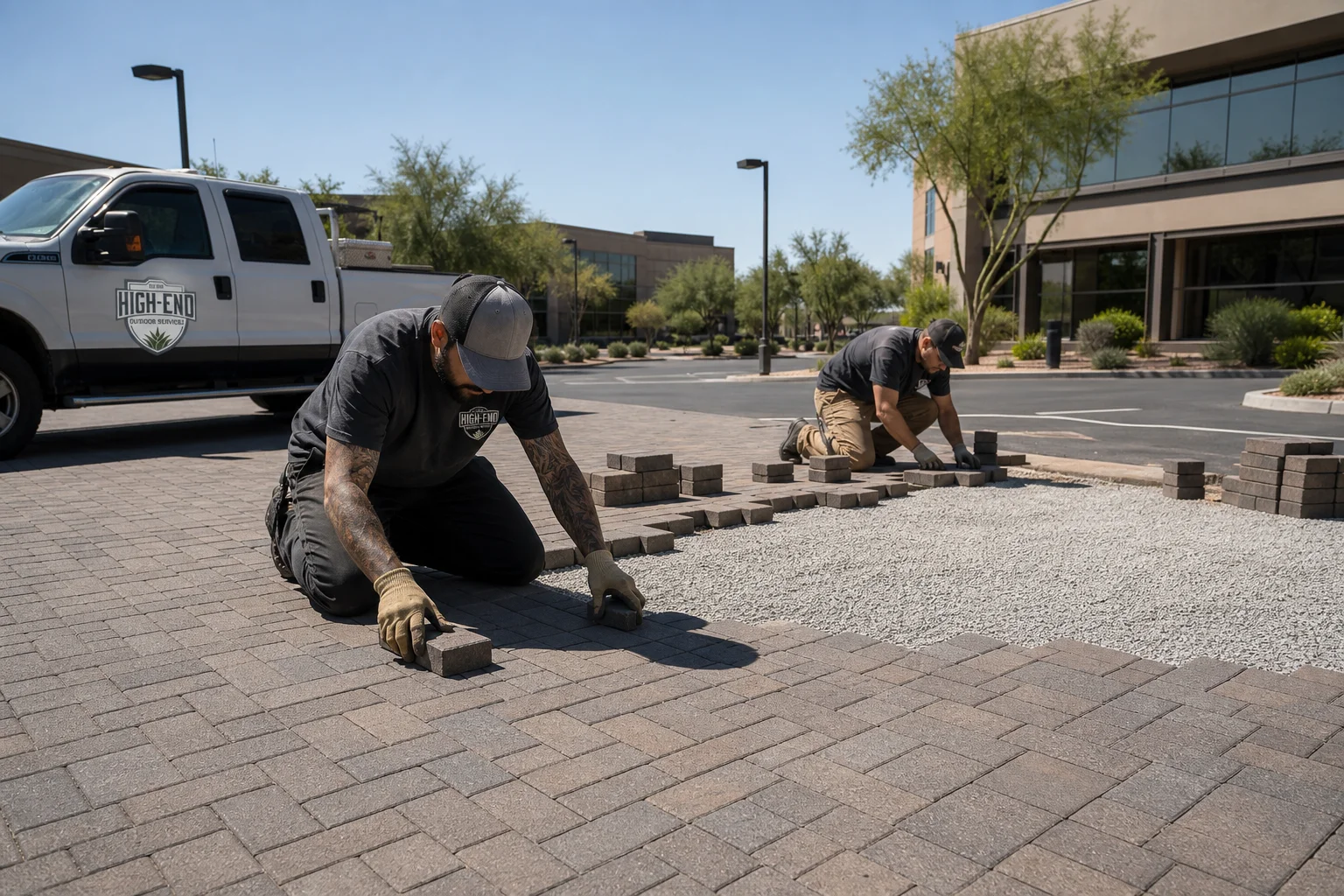
Commercial paver maintenance is more than an annual sealing appointment. A complete program typically includes routine cleaning to remove dirt, oil, and organic buildup, joint sand replenishment where polymeric sand has washed out, spot repair of cracked or shifted units, and a full cleaning and sealing pass on the schedule traffic and sun exposure call for. Properties also benefit from periodic pressure washing between full sealing services to keep pool decks, walkways, and entry plazas presentable.
Does Sealing Pavers Help Prevent Weeds and Stains?
Yes, in most cases. A properly applied sealer fills the surface pores and joint edges that weed seeds and stains would otherwise settle into, making outdoor surfaces harder for weeds to take root in and easier to wipe clean after an oil drip, leaf stain, or hard water spot. Sealing does not replace weed prevention products in the joints, but it does reduce how often a crew needs to pull weeds by hand.
How Much Does Commercial Paver Sealing Cost?
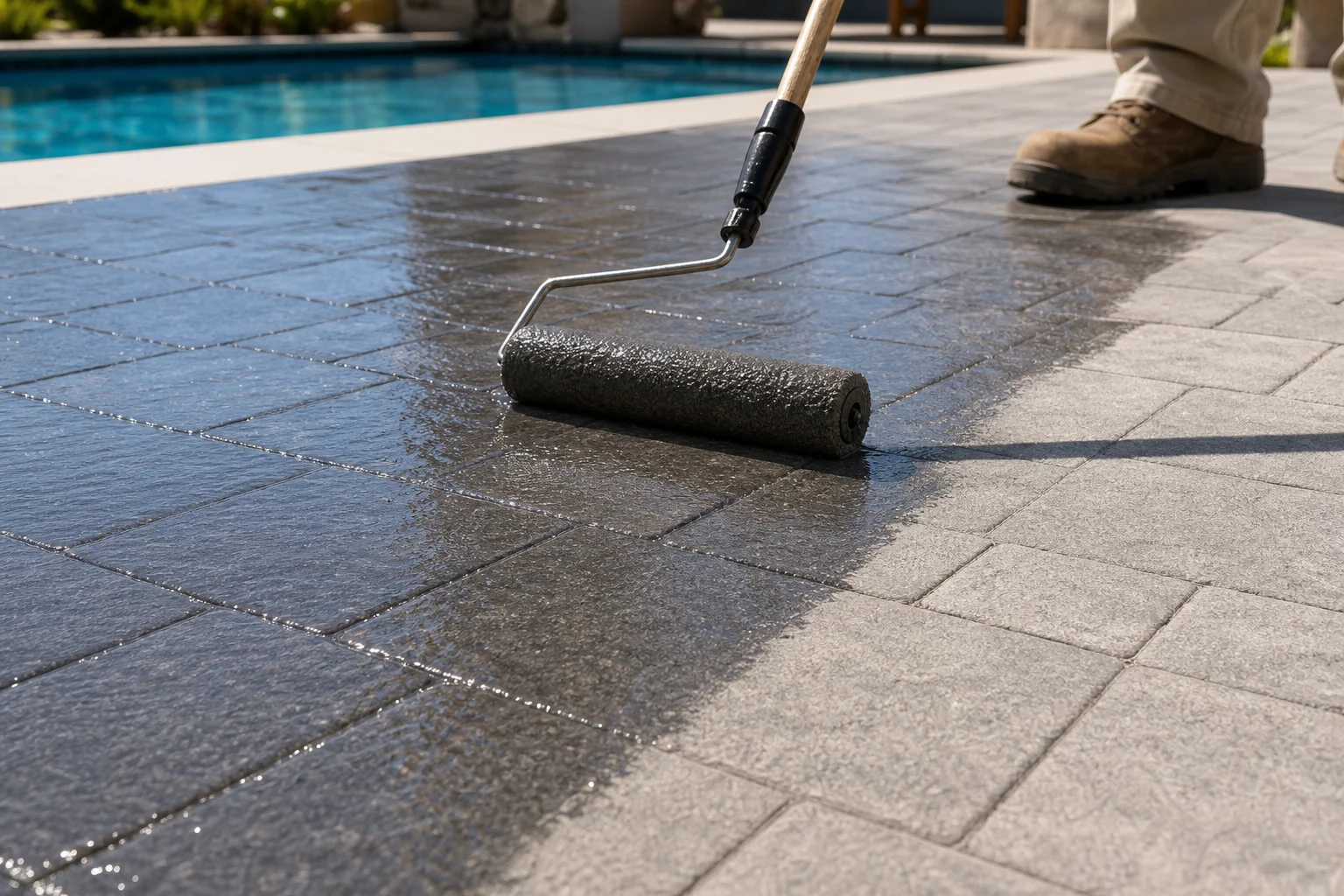
Commercial paver sealing cost varies by square footage, sealer type, the pavers' current condition, and how much surface prep (pressure washing, joint sand replacement, stain treatment) the job requires before sealant goes down. A small courtyard costs less than a full HOA community's pool decks, parking courts, and common-area walkways combined into one project. The most reliable way to get an accurate number is a free estimate based on an on-site walkthrough, since paver age and prep needs swing the price significantly.
Wet-Look vs. Matte Sealers for Commercial Pavers
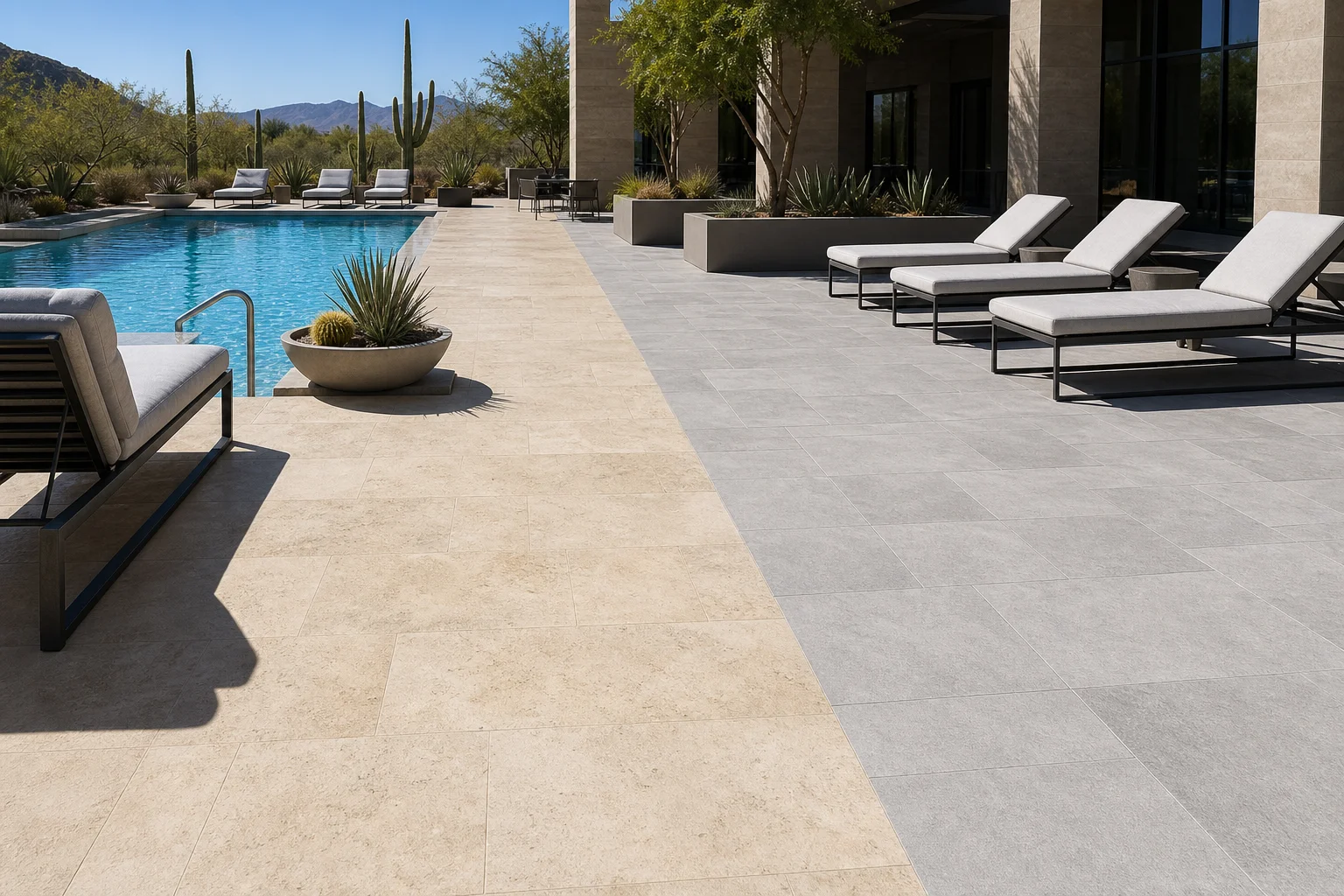
Wet-look sealers deepen paver color and add a glossy sheen that many property managers prefer for high-visibility entrances, while matte sealers preserve a more natural, low-sheen finish that shows less dust and traffic between cleanings. Both formulas protect against stains, UV fade, and moisture intrusion equally well when applied correctly. The choice comes down to the look a property wants, not a difference in protective performance.
Warning Signs a Commercial Property Needs Paver Resealing
A few visual cues tell a property manager it's time to schedule resealing before small problems become expensive ones. Water that no longer beads on the surface and instead soaks in is usually the clearest sign the sealer has worn through. Fading color, a rough or chalky texture, eroded joint sand, and stains that no longer wipe away easily are the next signals worth acting on. Catching these early keeps a full paver restoration off the table.
Why Does Paver Maintenance Matter for Protecting the Investment?
Pavers represent a real capital investment in a commercial property's curb appeal and usable outdoor space, and unsealed or poorly maintained pavers deteriorate faster under Arizona's sun and monsoon cycles than most property managers expect. Cracked, faded, or shifting pavers can also create a liability concern on walkways and pool decks where tenants, residents, or patients walk daily. A property that keeps up with sealing services protects both curb appeal and safety, which is a smaller cost over time than full replacement.
Should a Business Hire a Professional Paver Sealing Company or Handle It In-House?
Most commercial properties get better long-term results from a professional paver sealing company rather than an in-house crew. Professional crews use commercial-grade sealers, proper surface prep equipment, and application techniques that avoid streaking, puddling, or an uneven finish, common problems when sealing is attempted with consumer-grade products and no experience. A Commercial Maintenance partner can also fold paver sealing into a broader property upkeep schedule alongside irrigation checks, turf care, and seasonal cleanups.
Cost is often the deciding factor property managers weigh, and it is worth comparing against in-house maintenance costs directly rather than assuming a DIY approach is automatically cheaper once labor hours, equipment, and redo risk are factored in. A large HOA community or corporate campus typically comes out ahead financially by hiring a specialist rather than training and equipping an internal crew for a job performed only once every few years.
Frequently Asked Questions
Can commercial pavers be sealed year-round in Arizona, or only in certain weather? Sealing generally needs dry pavers and moderate temperatures, so late spring and fall tend to work best, while peak monsoon season and the hottest summer days can cause a sealer to dry too fast or trap moisture underneath.
How do I know if my property's pavers need cleaning and sealing? Look for water soaking into the surface instead of beading, faded or chalky color, eroded joint sand, and stains that no longer wipe away. Any one of these signs usually means the existing sealer has worn through.
Will sealing change the color of my pavers? It depends on the sealer type. A wet-look sealer deepens color and adds sheen, while a matte or natural-look sealer keeps the paver's original tone with minimal change. Both options protect concrete pavers equally well, so the decision comes down to the finished look a property manager wants.
How do I get a free estimate for commercial paver sealing services? A property manager can request a free estimate by describing the paver square footage, current condition, and any problem areas like pool decks or high-traffic walkways. A brief on-site walkthrough usually follows so the estimate reflects the property's actual prep needs.
Protect Your Property's Curb Appeal with HEOS AZ
Consistent commercial paver maintenance keeps a property's pavers looking sharp and protects the investment underneath them. Contact the HEOS AZ team for a free estimate on cleaning and sealing services tailored to your property's traffic, sun exposure, and layout.