Arizona Water Restrictions and AMWUA: What Commercial Properties Must Know
Arizona water restrictions and AMWUA policies now shape how commercial properties, HOAs, and businesses across the Valley plan every irrigation cycle. As Colorado River allocations tighten, property managers who invest in proactive Commercial Maintenance protect their landscapes, avoid penalties, and preserve curb appeal even as tiered rate structures take hold.
By HEOS AZ Team, Outdoor Living Specialists
AMWUA, the Arizona Municipal Water Users Association, represents ten of the state's largest cities and coordinates shared conservation benchmarks for the region. When people search for arizona water restrictions and AMWUA, they are usually trying to understand which rules apply to their property, since requirements shift slightly between AMWUA cities. In broad terms, member cities align policy so that arizona water supplies remain stable even during periods of Colorado River shortage, and they publish shared guidance on outdoor watering days, turf limits, and municipal water use for large commercial and community landscapes.
For a property manager or HOA board member, the practical takeaway is simple: rules are not uniform across the Valley, and the details matter. A landscape plan approved in one AMWUA city may need adjustments before it satisfies the ordinance next door, so any property spanning multiple jurisdictions, or preparing for a renovation, should confirm current turf percentages, irrigation standards, and reporting expectations with the specific city before breaking ground.
How Colorado River Shortages Affect Arizona's Water Supply Planning
The Colorado River supplies a significant share of the water used across central Arizona, and reservoir levels at Lake Mead have triggered successive shortage declarations in recent years. When federal water managers move the basin into a deeper shortage stage, Central Arizona Project allocations shrink, and cities lean harder on groundwater and municipal water conservation programs to stretch existing water supply. For commercial and HOA properties, that means summer irrigation schedules increasingly reflect basin-wide conditions on the Colorado River, not just local weather in Phoenix or Tucson. Properties already enrolled in ongoing HOA Landscaping programs tend to adapt faster, because irrigation adjustments are built into routine maintenance rather than treated as emergency responses.
What AMWUA Cities Expect From Commercial and HOA Properties
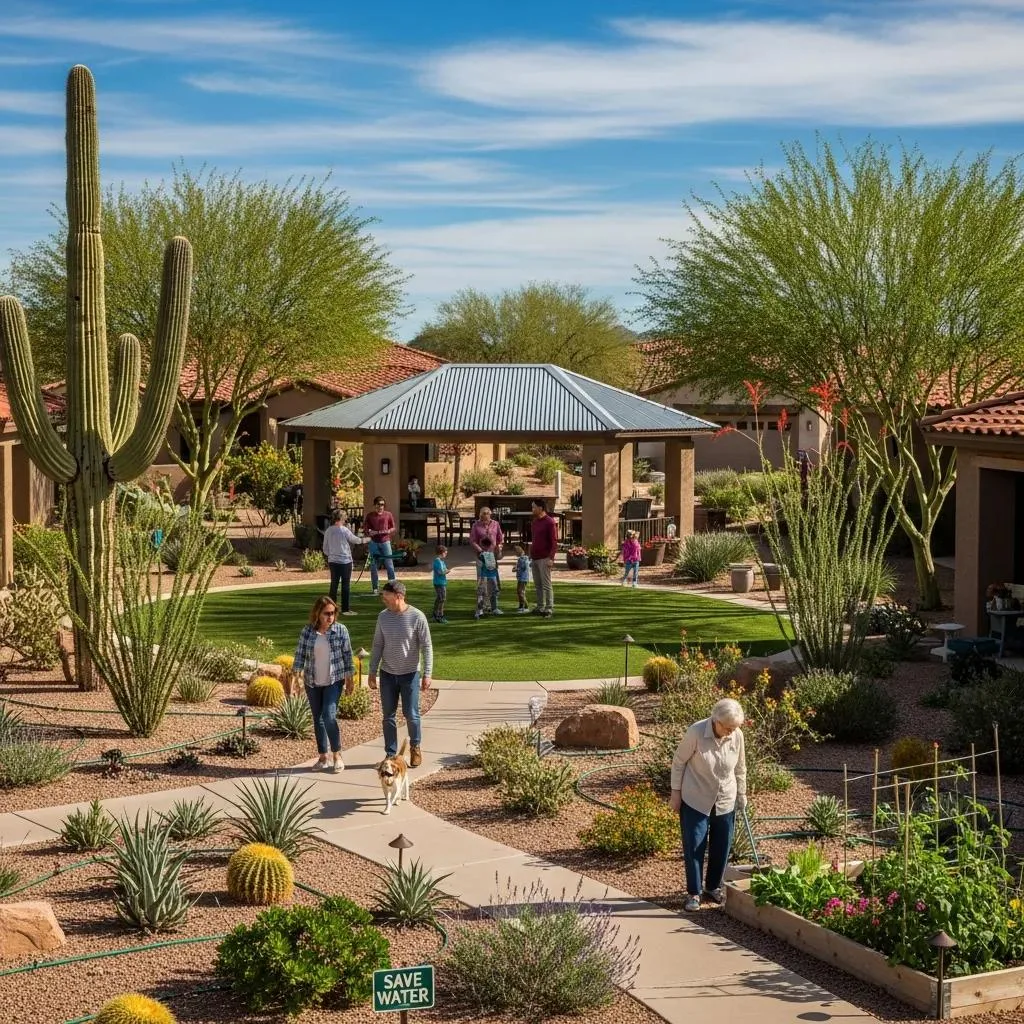
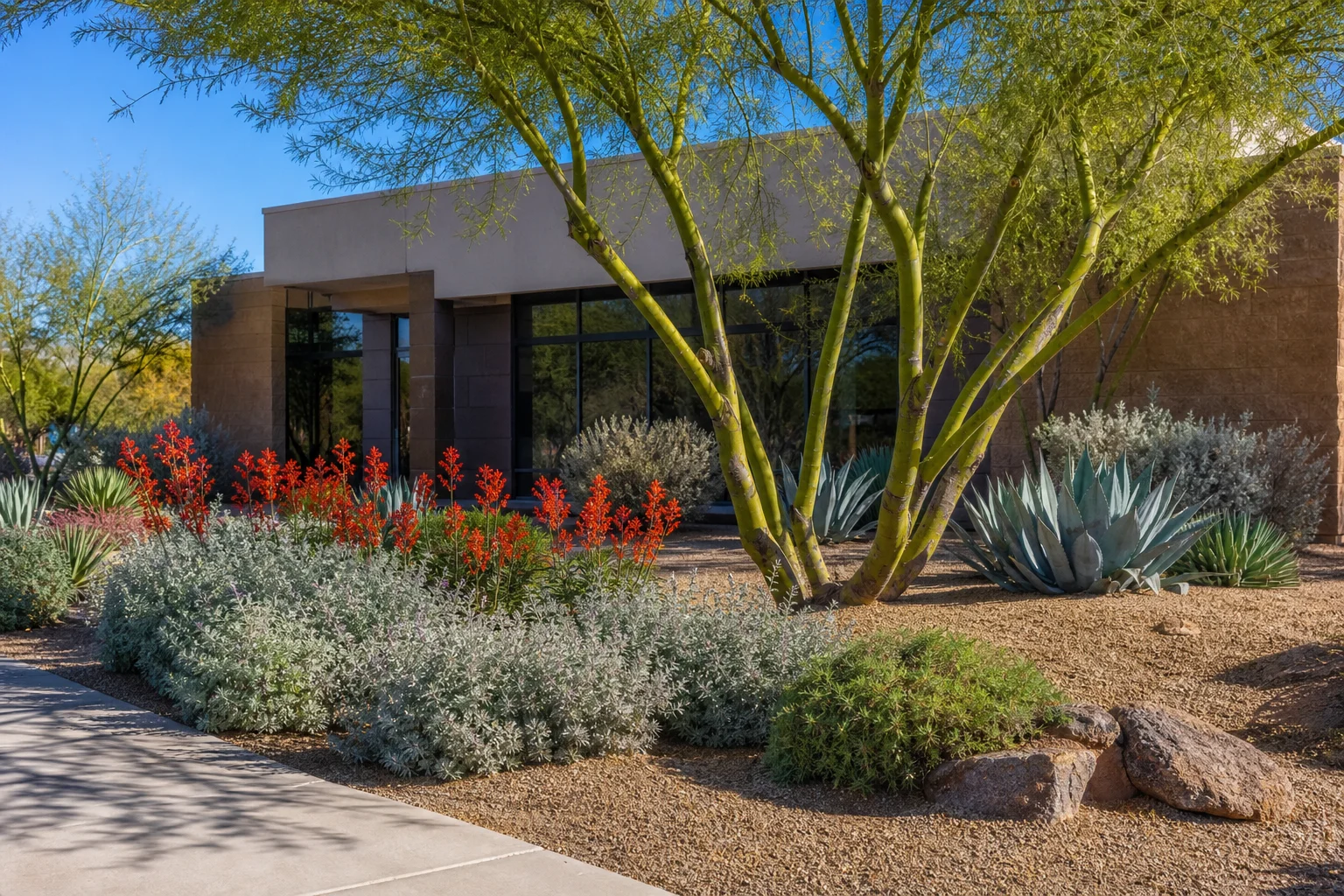
AMWUA represents ten Phoenix area cities, including Phoenix, Mesa, Scottsdale, Tempe, Chandler, Gilbert, Glendale, Peoria, Avondale, and Goodyear, and each sets its own ordinance within a shared conservation framework. Tucson manages its own water supply program outside the AMWUA structure, but faces similar drought pressure and applies comparable rules for large landscapes. Across AMWUA cities, common requirements include limits on turf area in new developments, drip irrigation over spray heads wherever practical, and defined watering days by season. Property managers and on-site grounds management teams overseeing HOA communities, hospitals, and business parks must document landscape water use and show real progress against each city's conservation targets. Because Arizona's population keeps growing even as drought conditions persist, cities face real pressure to hold water demand flat across new residential and commercial areas. Desert-adapted plants, efficient irrigation zoning, and reduced turf footprints are now standard expectations in high-visibility common areas managed by HOA boards.
Landscape Strategies That Meet Municipal Water Conservation Standards
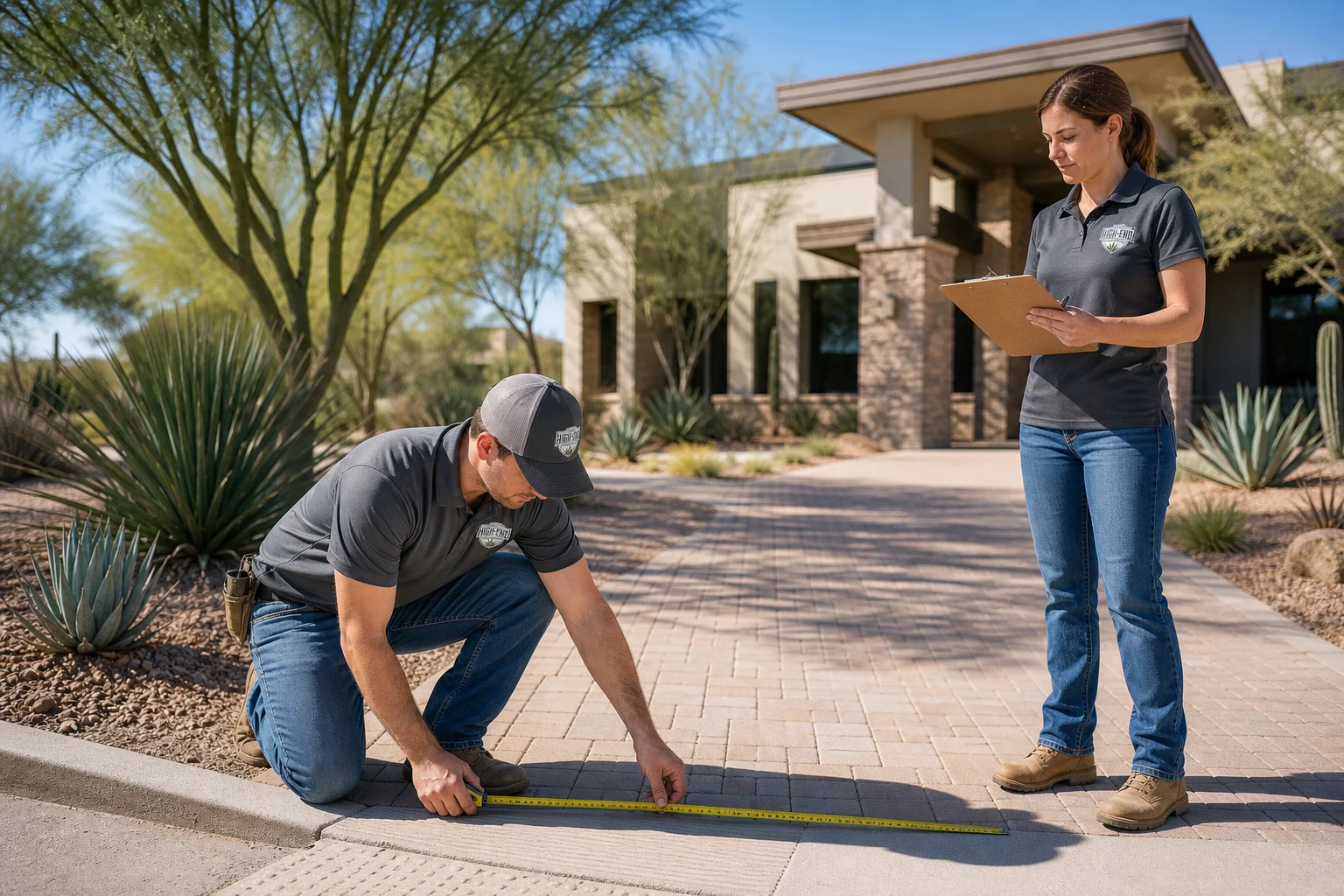
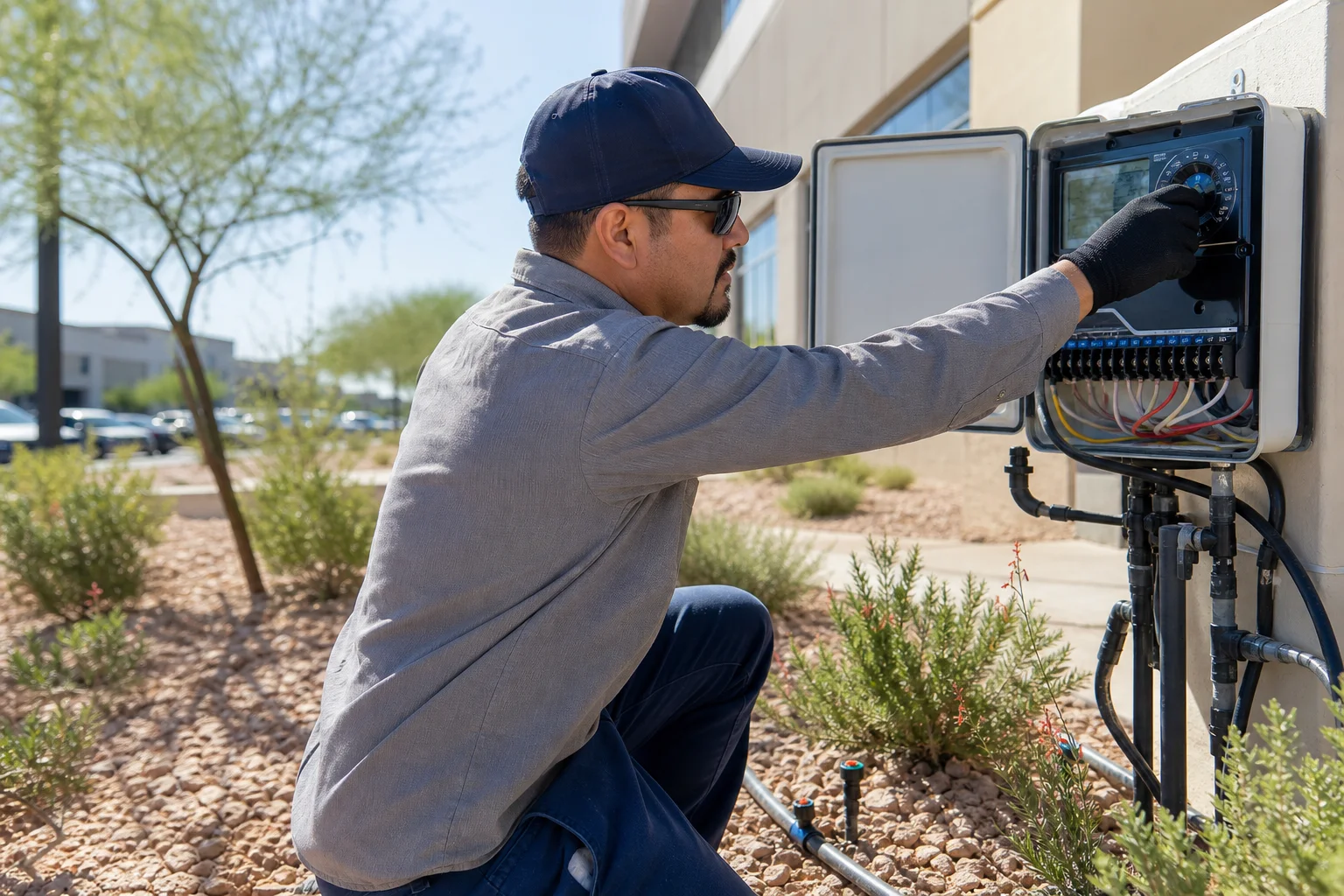
Meeting municipal water conservation standards starts with an honest irrigation audit. Many properties still run on aging spray systems that overshoot pavement and waste water supply on days when evapotranspiration rates are low. Scheduling repairs before summer heat arrives catches broken heads, pressure problems, and controller errors that quietly drive up a property's usage well past what AMWUA cities consider reasonable. Converting select high-water zones to synthetic turf is another proven lever: our guide to synthetic turf roi walks through the water savings and payback timeline in detail for commercial and HOA properties considering the switch. Smart controllers that adjust to weather data, cycle-and-soak scheduling that prevents runoff, and drip conversion in shrub beds all reduce demand without changing the way a property looks from the street. None of these upgrades require sacrificing a lush look. Layered planting beds, shade trees over parking areas, and a well-placed putting green or artificial turf accent can carry the visual weight that thirsty grass used to provide, while using a fraction of the water supply that a traditional lawn demands.
Building a Drought-Resilient Property Without Losing Curb Appeal
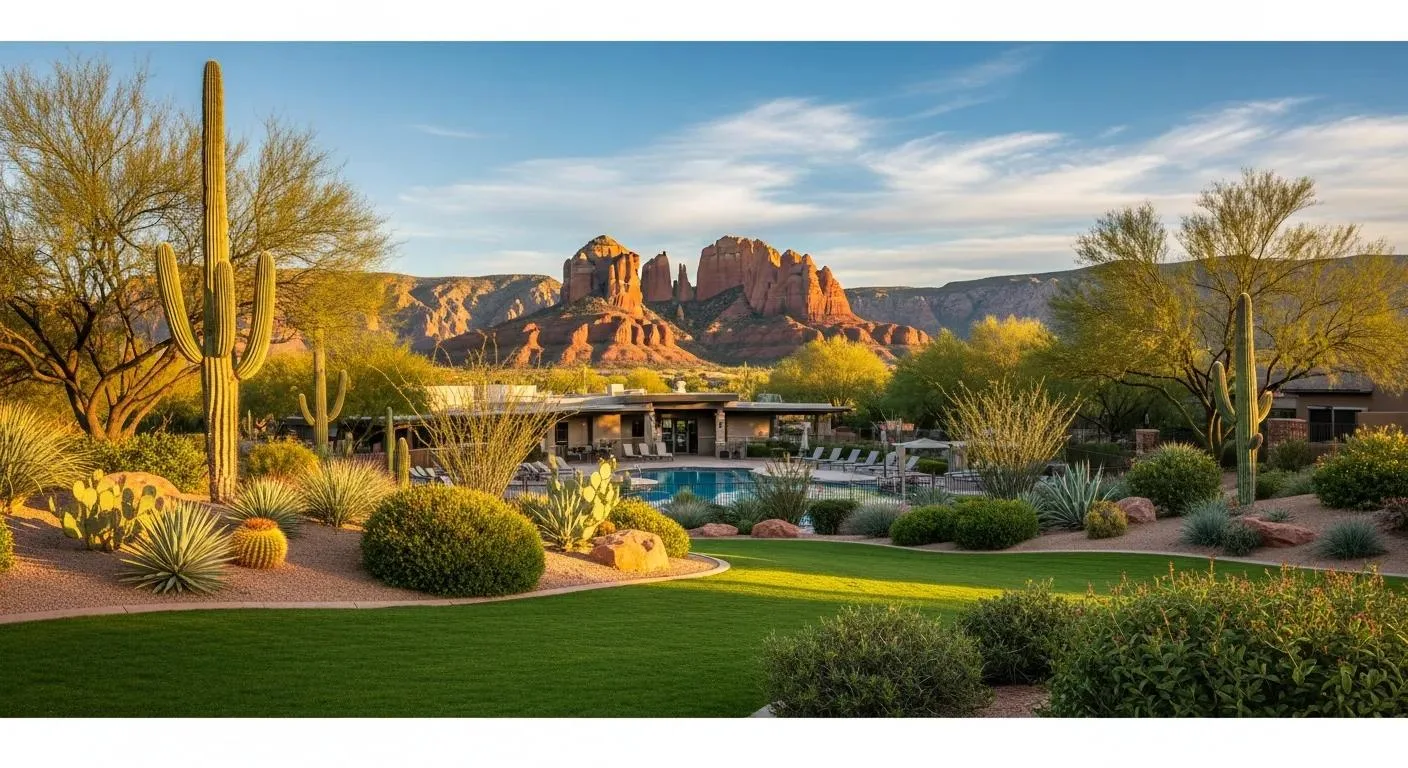
Drought is now a permanent planning variable rather than a temporary inconvenience. Lake Mead, which can hold tens of millions of acre-feet at full pool, has spent years well below capacity, and climate patterns across the desert Southwest point toward continued variability rather than a quick rebound. For HOA boards and property managers, the practical response is a maintenance calendar built around water efficiency: more on how often should commercial properties be serviced? the arizona maintenance calendar outlines seasonal service timing that keeps irrigation systems tuned before peak summer demand hits. Properties that already converted portions of their landscape to synthetic turf should also follow our guide to synthetic turf maintenance for commercial properties to protect that investment and keep it performing as designed. Staying current on regional shifts matters too: more on landscaping trends 2024 hoa commercial properties highlights how HOA and commercial landscapes are evolving to meet tighter water rules without sacrificing curb appeal.
Frequently Asked Questions
What is AMWUA and which cities are members? AMWUA, the Arizona Municipal Water Users Association, is a coalition of ten Phoenix area cities, Phoenix, Mesa, Scottsdale, Tempe, Chandler, Gilbert, Glendale, Peoria, Avondale, and Goodyear. The group coordinates shared water conservation goals and public guidance, though each city enforces its own specific ordinances for irrigation, turf limits, and outdoor watering schedules.
Do Arizona water restrictions apply to HOA common areas? Yes. Common areas, entry monuments, and amenity landscapes managed by an HOA are typically held to the same municipal water rules as any commercial property. Boards and property managers are expected to track irrigation practices and turf coverage in shared spaces just as closely as they would for a private business site.
How does a Colorado River shortage affect my property's water supply? A declared shortage reduces Central Arizona Project allocations, which pushes cities to lean more heavily on groundwater and stricter conservation programs. Properties may see updated watering-day schedules, tighter turf allowances for new landscaping, or added reporting requirements, depending on which AMWUA city or water provider serves the property.
What happens if a commercial property doesn't meet AMWUA conservation standards? Consequences vary by city but can include fines, mandatory retrofits, or restricted permits for new landscaping that doesn't meet current turf and irrigation guidelines. Beyond compliance risk, properties that ignore conservation standards often pay more over time through wasted water and higher utility costs.
Can synthetic turf help meet AMWUA water conservation goals? Synthetic turf can significantly reduce outdoor water use in high-traffic or purely aesthetic areas, which helps properties stay ahead of tightening turf and irrigation rules. Many HOA boards and commercial property managers pair synthetic turf with drip-irrigated planting beds to balance water savings with a lush, maintained appearance.
Get Ahead of Arizona Water Restrictions and AMWUA Compliance
Water rules across the Valley will only get tighter as Colorado River allocations continue to shift, and staying ahead of arizona water restrictions and AMWUA requirements protects both your budget and your property's curb appeal. Whether you manage a single HOA community or a portfolio of commercial sites across Phoenix, Scottsdale, Mesa, and beyond, a proactive water strategy is far less costly than reacting to a violation notice. Contact our team to schedule a water efficiency walkthrough before the next shortage stage takes effect.