Custom Turf Solutions vs Standard Synthetic Grass: What Commercial Buyers Should Know
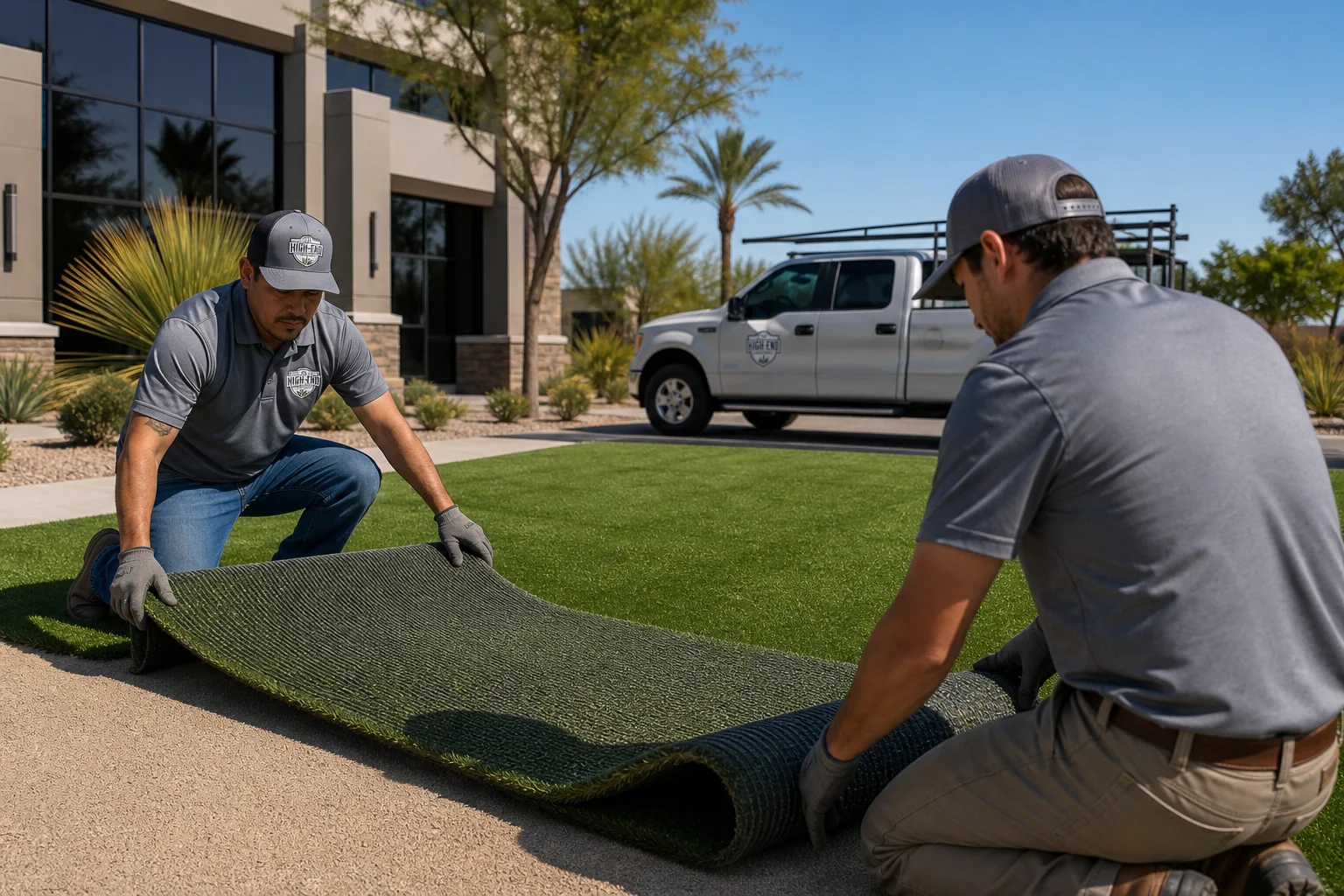
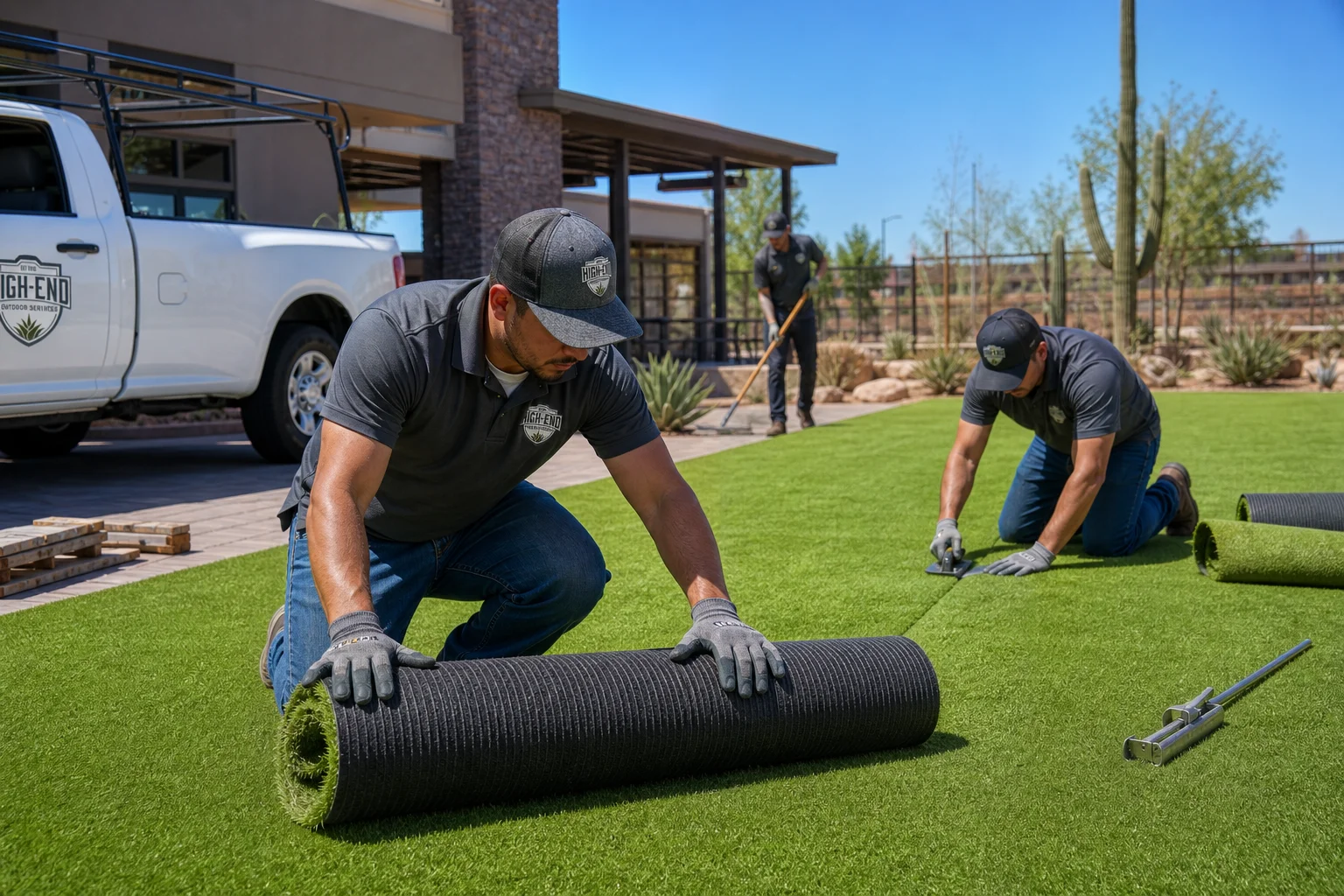
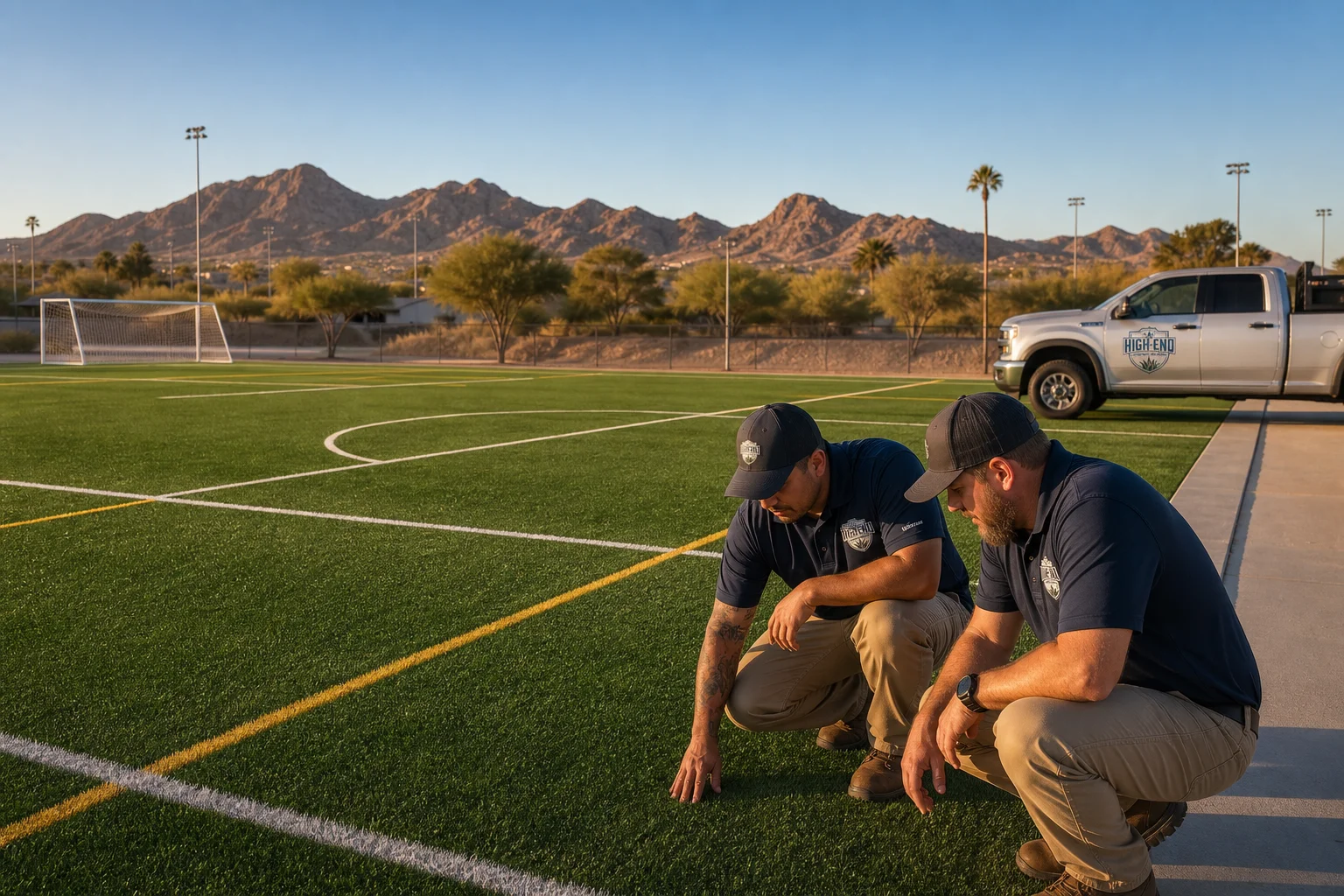
For Arizona commercial properties considering Turf Installation, the difference between custom turf solutions vs standard synthetic grass determines how well the surface performs years from now. Custom products address drainage, pile density, infill type, and heavy foot traffic demands that catalog-grade artificial grass systems are not built to handle.
By HEOS AZ Team, Outdoor Living Specialists
Custom Turf Solutions vs Standard Synthetic Grass: The Core Distinction
Off-the-shelf synthetic grass is built for general residential use. Standard products carry fixed pile heights, single infill options, and drainage rates calibrated for typical lawn activity rather than the consistent heavy foot traffic of a commercial site. When a property manager installs standard artificial turf on a high-traffic courtyard, the result is often accelerated fiber wear, infill displacement, and drainage failures after Arizona's monsoon season.
Natural grass presents different challenges in this climate. Water consumption, seasonal browning, and consistent maintenance schedules make real grass a costly and resource-intensive choice for most commercial landscapes. Standard artificial grass improves on those limitations, but custom turf solutions deliver the precision that commercial properties actually require.
What Goes Into a Custom Turf Specification
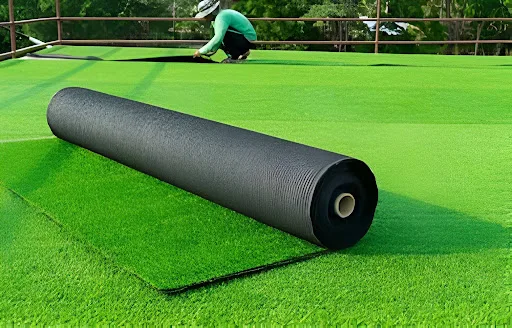
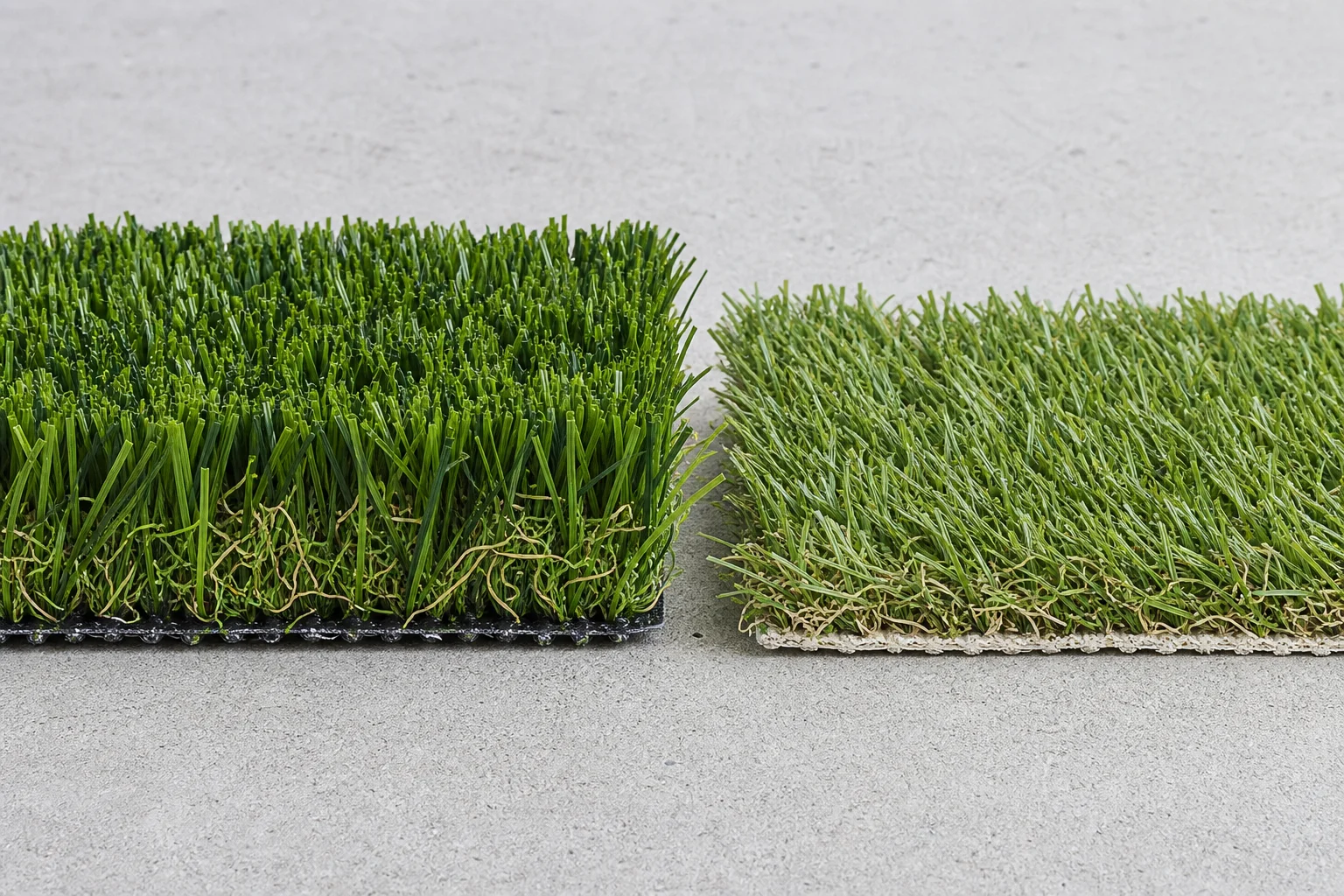
Custom synthetic turf is a system assembled from specifications rather than a product pulled from a catalog. Pile height is selected for the application. Infill type is matched to the site's drainage demands and heat dissipation requirements. Backing weight is rated for the expected load. Blade shape is chosen for both aesthetics and long-term resilience under use.
For corporate campuses or Putting Greens installations, the specification prioritizes performance, drainage consistency, and appearance under year-round use. For playground areas, shock-absorbing infill and a pile height that cushions falls without matting under heavy use becomes the priority. For HOA common areas, the focus shifts to a natural-looking surface that reduces the association's water and maintenance costs.
The custom specification process typically involves a site assessment, grade evaluation, drainage mapping, and a review of expected use patterns. That process is absent when a standard system is selected, which explains why outcomes differ so significantly over time.
Performance Under Arizona's Climate and Heavy Use
Arizona's heat adds a dimension that commercial buyers in temperate markets do not face. Surface temperatures on exposed synthetic turf can rise considerably above ambient air temperature on full-sun commercial sites. Custom turf solutions can incorporate heat-mitigating infills and lighter-tone blade blends that reduce surface temperature and extend fiber life.
Heavy foot traffic accelerates fiber fatigue on any artificial grass system, but the rate depends on pile density and backing construction. A standard grass artificial turf product designed for residential use typically carries a lower stitch count per square inch than a commercial-grade custom product. Standard backing systems may also lack the structural reinforcement needed to keep fiber roots anchored through years of sustained commercial use.
Research published in the Journal of Applied Polymer Science (Bhattacharya et al., 2018) confirmed that higher-density polyethylene fiber constructions show significantly greater resistance to UV degradation and mechanical wear than standard polypropylene blends. Commercial buyers selecting custom products have access to these advanced fiber specifications; standard catalog selections typically do not.
For playground zones, infill selection is especially consequential. Crumb rubber, sand, and organic infills each carry different safety, temperature, and drainage profiles. A correctly specified turf artificial grass system for playgrounds includes infill meeting ASTM F1292 fall-height standards rather than relying on a standard residential product's default configuration.
Long-Term Costs: Where Standard Turf Becomes Expensive
The cost differential between custom turf solutions vs standard synthetic grass is most visible over time. Standard synthetic grass carries a lower upfront material cost. That comparison shifts when maintenance, infill replacement, and early product failure are factored in. Low maintenance is a genuine advantage of quality artificial grass, but it depends entirely on the correct specification being installed from the start.
A custom turf solution built to the right drainage rate, pile density, and infill type requires far less intervention over its service life. Standard systems on commercial sites often require infill top-offs within 18 to 24 months, seam repairs as backing stretches under load, and in some cases full replacement in five to seven years rather than the fifteen-plus-year lifespan commercial-grade custom products deliver.
For a detailed breakdown of installation cost structures specific to Arizona, the Expert Guide To Commercial Turf Installation In Arizona is a useful reference for commercial buyers evaluating long-term investment.
Choosing the Right Solution by Commercial Application
HOA Communities and Shared Courtyards
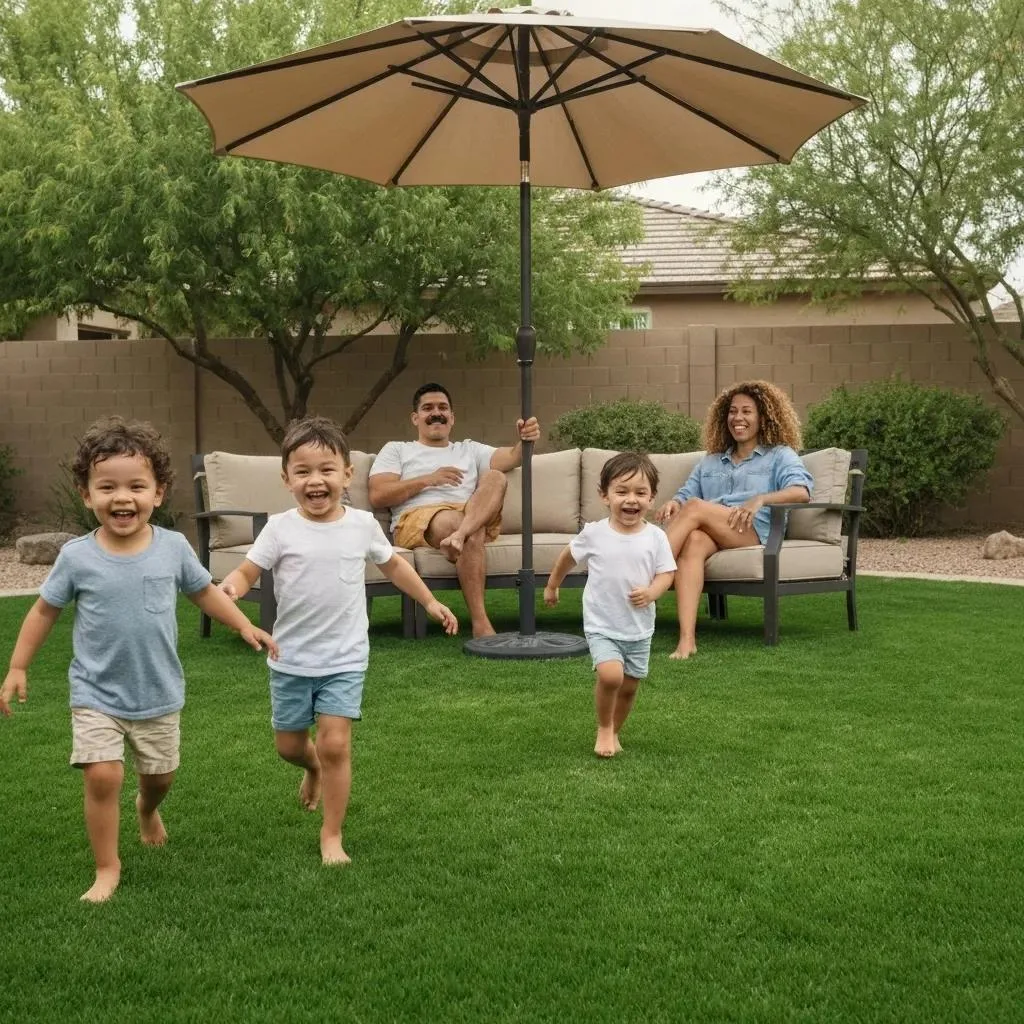
HOA common areas need artificial turf that reads as natural grass to residents, handles moderate foot traffic, and drains reliably after Arizona monsoon events. Pile heights between 1.5 and 2 inches with silica sand infill typically deliver the right balance of aesthetics and durability. HOA landscaping decisions in Arizona weigh resident satisfaction against water-use reduction as equally important outcomes.
Playgrounds and Recreation Zones
Playground applications require safety-rated infill to meet ASTM F1292 fall-height standards and a pile height calibrated for shock absorption. Custom specifications ensure the entire synthetic grass assembly meets the fall attenuation rating required for the installed equipment height, a level of precision that standard residential products do not provide.
Corporate Campuses and Commercial Entrances
Entrance areas and common spaces at corporate campuses demand a polished appearance year-round. Synthetic grass with a tight pile, consistent blade color, and minimal infill exposure delivers the clean aesthetic that premium commercial properties require. For terminology distinctions buyers encounter when sourcing these products, see The Ultimate Guide To Understanding Artificial Turf Vs Artificial Grass.
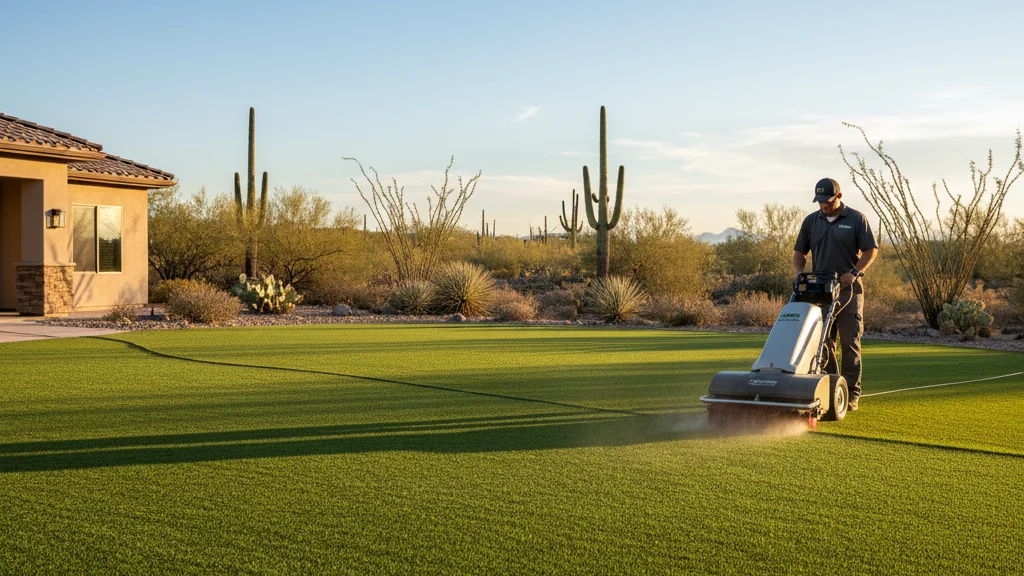
For properties with both hardscape and turf zones, integration between pavers and turf borders is part of the specification in a custom system, not a field decision made during installation. Commercial grass artificial turf systems also benefit from a scheduled maintenance program, and Implementing Effective Landscape Maintenance Programs for Commercial Properties covers the full scope of commercial landscape upkeep beyond the turf surface itself.
Frequently Asked Questions
How does custom synthetic turf differ from standard off-the-shelf artificial grass?
Custom synthetic turf is specified to the exact pile height, fiber density, infill type, and backing weight required for the commercial application. Standard products carry fixed residential specifications and cannot be adjusted for heavy foot traffic, drainage demands, or commercial aesthetics. A commercial installation benefits from a full specification process rather than a catalog selection.
Is artificial grass genuinely low maintenance compared to natural grass?
Quality artificial grass systems eliminate mowing, fertilizing, irrigation, and seasonal reseeding that natural grass requires. Low maintenance is a primary reason commercial properties choose artificial turf over real grass. The caveat is that periodic infill top-off and professional turf cleaning keep the system performing across its full lifespan.
What infill type works best for commercial synthetic grass in Arizona?
Silica sand performs well in moderate-traffic commercial settings. For playgrounds, engineered infills meeting ASTM fall-height ratings are required. For high-heat-exposure sites, coated infills with heat-mitigating properties reduce surface temperatures. A site assessment determines the right infill specification for each application.
Does custom turf artificial grass cost more than standard options?
Per square foot, custom commercial-grade turf artificial grass carries a higher material cost than standard residential products. Over a ten-year horizon, lower maintenance requirements and an extended product lifespan typically offset that premium. Lifecycle cost is the correct comparison, not the installation bid alone.
Can artificial turf coexist with natural grass areas on the same property?
Yes. Many commercial properties use natural grass in low-traffic decorative zones and synthetic turf in high-traffic or hard-to-irrigate areas. The two surfaces coexist well when proper edging, drainage, and grade transitions are planned from the design phase rather than addressed during installation.
Schedule a Commercial Turf Assessment With HEOS AZ
Every commercial property has specific turf demands that a standard catalog product cannot address. To discuss a custom specification tailored to your site, Contact the HEOS AZ team today.