Synthetic Grass Specs Decoded: Pile Height, Face Weight and Infill for Commercial Sites
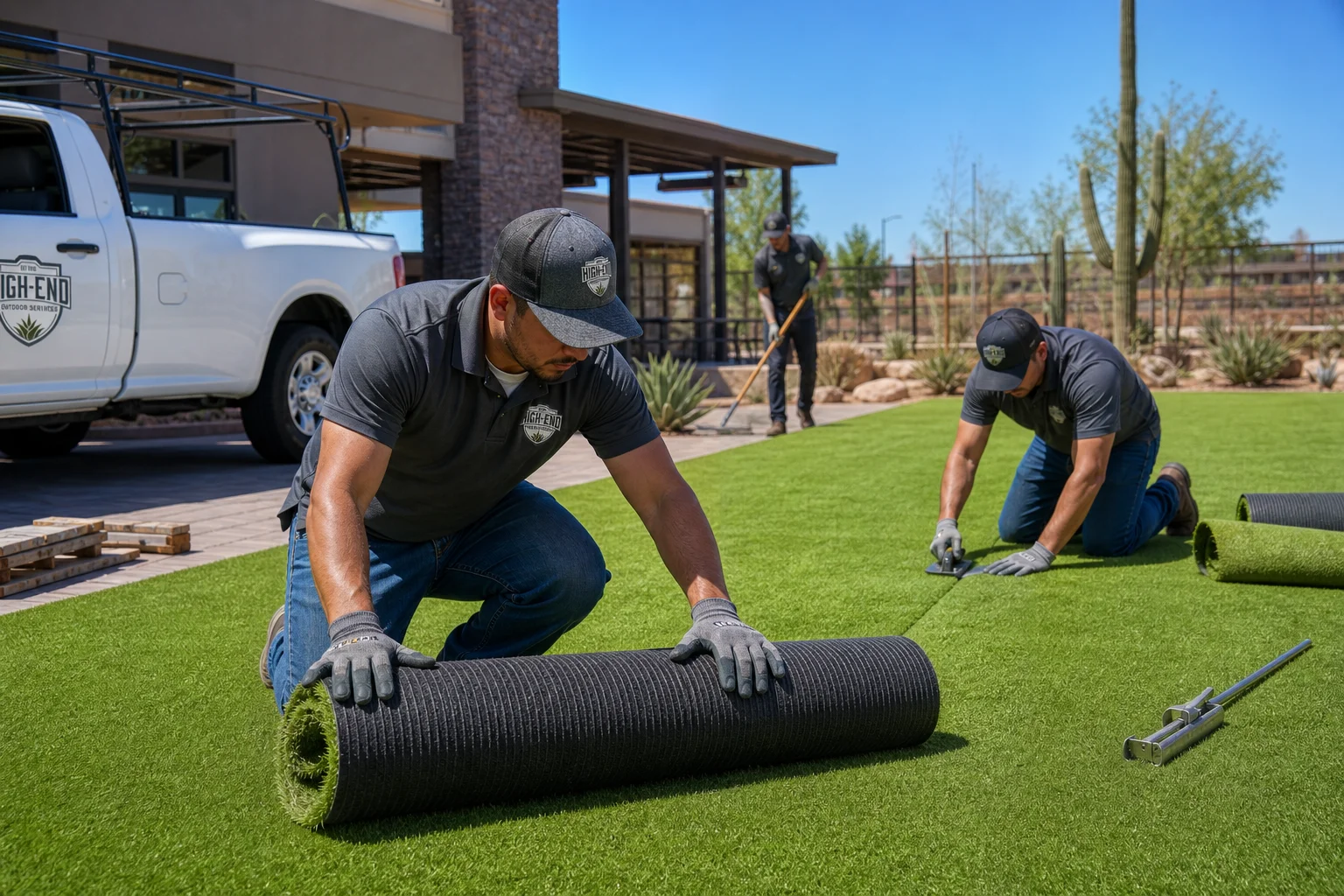
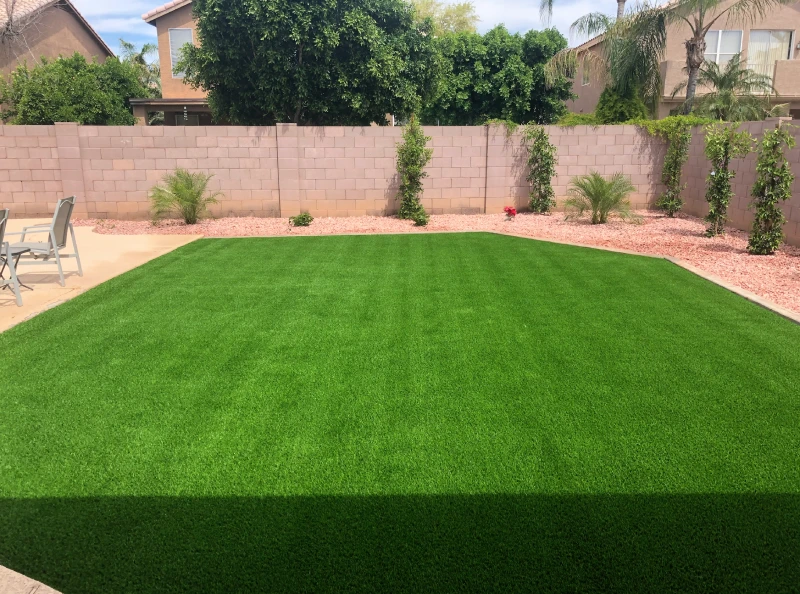
Synthetic grass specs decoded for commercial sites comes down to three variables: face weight, pile height, and infill selection. These numbers determine whether a product handles years of Arizona commercial traffic or begins matting and degrading within the first season. Explore Turf Installation options that match the right specifications to your property's actual demands.
By HEOS AZ Team, Outdoor Living Specialists
Why Commercial Properties Cannot Afford Vague Synthetic Grass Specs
Residential and commercial artificial grass projects use the same materials, but the performance thresholds are completely different. A backyard installation absorbs weekend use from one household. A commercial common area, retail entrance, or community green sees sustained daily traffic from dozens to hundreds of visitors.
That load gap means a product performing adequately at home can fail commercially within a year. Understanding the full set of synthetic grass specs decoded through a commercial lens matters to every property manager, HOA board member, and facilities director who signs off on the purchase. The spec sheet is not a formality. It is an engineering prediction of how the product behaves under real-world conditions.
Pile Height: Reading the Numbers Before You Specify
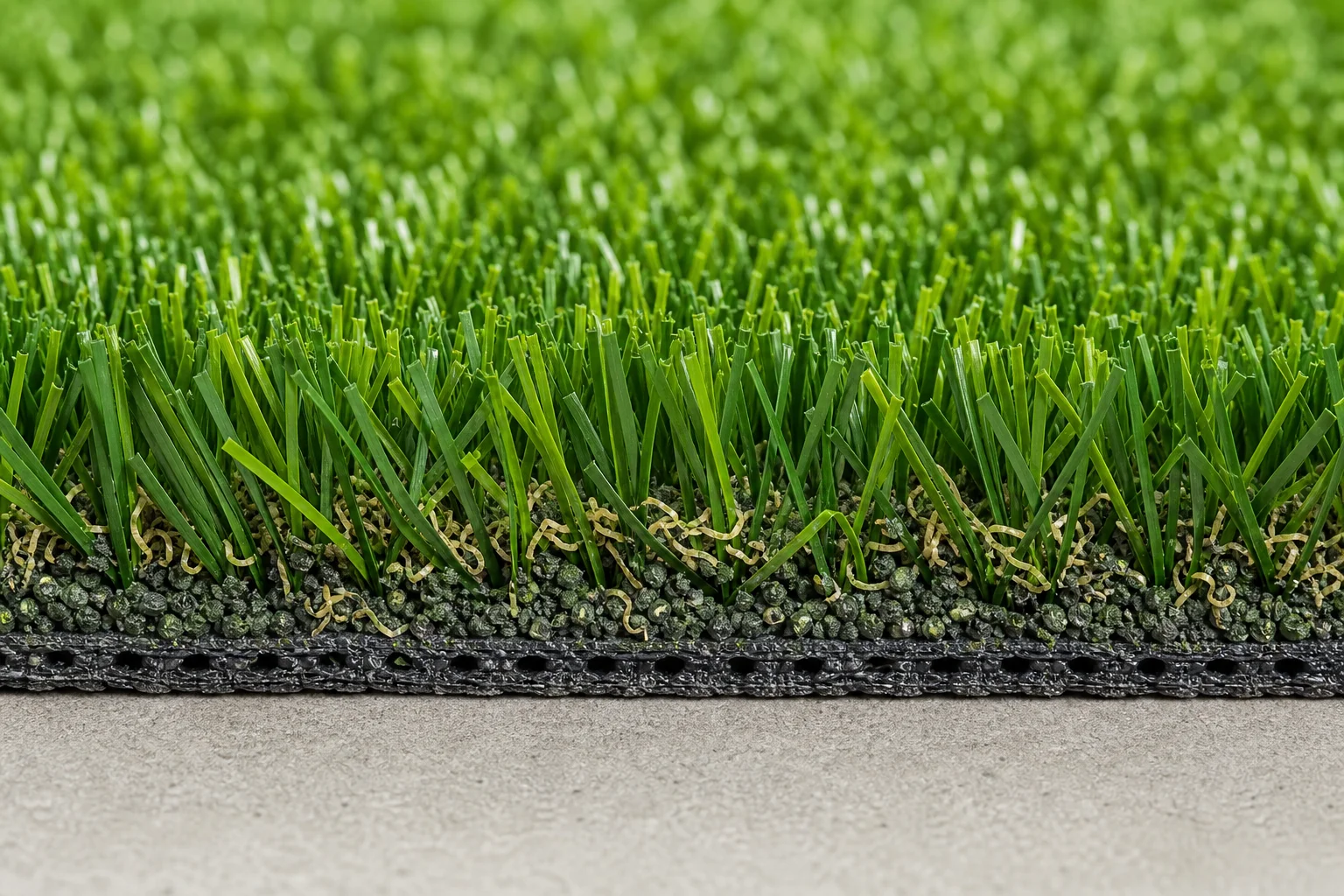
Pile height measures the length of each grass blade from the top of the backing to the tip of the fiber, expressed in millimeters. For commercial landscape products, pile height typically spans from 25mm on the shorter end to 60mm at the upper range.
The instinct to choose taller pile for a lush commercial appearance is understandable, but pile height above 50mm requires substantial infill volume to keep fibers upright under compression. Without proper support, tall synthetic grass blades mat flat under foot traffic and do not recover. For most commercial landscape applications, a pile height between 32mm and 40mm delivers a full, natural appearance while maintaining resilience under sustained use.
Specialty surfaces operate at shorter pile heights. Putting Greens and golf practice areas typically specify 10mm to 20mm of pile, where ball roll consistency and surface speed matter more than visual fullness.
When reviewing product data sheets, verify that pile height is measured from the backing surface rather than from the infill line. Some manufacturers list both numbers, and comparing them without that context leads to inaccurate product evaluations.
Face Weight: The Most Reliable Durability Indicator for Artificial Turf
Face weight is the specification that most directly predicts product durability for artificial turf. It measures the total weight of fiber content per square yard, expressed in ounces. The backing and infill are excluded. Face weight captures only the yarn itself.
Commercial installations should target a minimum face weight of 60 ounces for standard landscape areas. High-traffic zones, pet use areas, and active community spaces perform better with face weights between 70 and 100 ounces. Products below 50 ounces are engineered for light residential use and should not be specified for commercial sites.
Higher face weight means more fiber material per square yard. More material means greater resistance to compaction, UV degradation, and abrasion. In Arizona's climate, where ground-level temperatures stress synthetic materials through extended summer seasons, artificial grass with adequate face weight is the baseline requirement for a durable commercial installation.
One important distinction: face weight and pile height are independent of each other. A tall-pile product can carry a low face weight, meaning fibers are long but sparse. A high face weight product with moderate pile height will almost always outperform a low face weight product with tall pile under commercial traffic conditions.
Yarn Construction: Dtex, Fiber Blend, and Structural Integrity
Beyond pile height and face weight, yarn specification describes individual fiber construction. Two measures are most relevant to commercial buyers: dtex and the yarn blend.
Dtex measures the weight in grams of 10,000 meters of yarn. A higher dtex value indicates a thicker, heavier individual blade. For commercial artificial grass, a dtex value above 10,000 is the practical minimum because thicker fibers resist bending fatigue and retain structural memory through repeated compression cycles.
Yarn blend describes the combination of fiber types within the product. Most quality commercial turf uses a blend of polyethylene and polypropylene. Polyethylene contributes softness and UV resistance. Polypropylene adds structural memory, helping blades spring back after compression. Some premium products incorporate nylon in the thatch layer, where its superior resilience and wear resistance extend product life in high-footfall areas.
Gauge, Stitch Rate, Backing, and Infill: Completing the Specification
Gauge refers to the spacing between tufting rows across the backing width. A narrower gauge places rows closer together, increasing the density of the finished surface. Commercial synthetic grass products typically specify gauge as a fraction of an inch, with 3/8", 5/16", or finer values producing progressively denser surfaces.
Stitch rate measures the number of stitches per linear foot within each row. Together, gauge and stitch rate number determine overall turf density. A higher stitch rate produces more fiber tufts per square foot, which increases wear resistance and reduces visible gaps between blade clusters. For commercial landscape applications, stitch rates between 16 and 24 stitches per linear foot represent the standard commercial range.
The backing anchors every fiber and governs drainage performance. Most commercial artificial turf products use a dual-layer polyurethane or latex backing. Polyurethane provides better dimensional stability and drainage under load. Confirm that the backing carries full perforation at a drainage rate sufficient for Arizona's monsoon rainfall intensity, particularly for installations adjacent to structures where standing water creates risk.
Infill completes the specification picture. It holds fibers upright, cushions the surface, and regulates drainage. In Arizona commercial applications, silica sand infill runs cooler than crumb rubber under direct sun and suits most landscape areas well. Specialty infills including zeolite or acrylic-coated sand add odor control for pet-use zones. Infill depth should always match the pile height specification to maintain proper blade support.
With synthetic grass specs decoded at each layer of the product from fiber to backing to infill, commercial buyers can compare products on equal footing rather than relying on surface aesthetics alone.
For ongoing surface performance, see our guide to turf repair services and our guide to implementing effective landscape maintenance programs for commercial properties. For clients managing budget alongside quality, our guide to affordable landscaping services covers practical approaches to commercial turf selection without compromising durability.
Frequently Asked Questions
What face weight should I specify for a commercial HOA common area?
A face weight of 60 to 70 ounces suits standard HOA common areas with moderate pedestrian traffic. High-traffic entry paths, play areas, and pet zones warrant 80 ounces or above. Arizona's extended UV exposure accelerates fiber degradation, so specifying a higher face weight at the outset extends the functional lifespan of the artificial grass installation and reduces the cost of early replacement.
Does pile height affect surface temperature on Arizona commercial properties?
Yes. Taller pile height increases the surface area available for heat absorption and reduces airflow at ground level, raising surface temperatures during summer. A moderate pile height of 32mm to 40mm combined with a light-colored or heat-reflective infill is the most practical approach for commercial artificial turf installations in the Phoenix metro where summer heat is a persistent variable.
What is dtex and how does it relate to commercial turf longevity?
Dtex measures individual fiber thickness. A higher dtex value means each blade carries more material and resists bending fatigue over time. For synthetic grass on commercial sites, a dtex above 10,000 is the practical threshold because thicker blades maintain structural memory through the repeated compression from daily foot traffic that commercial properties experience throughout the year.
How do gauge and stitch rate interact to determine turf density?
Gauge sets the spacing between tufting rows. Stitch rate sets the number of stitches per linear foot within each row. A narrower gauge combined with a higher stitch rate produces the densest surface. For commercial applications, prioritize products specifying a gauge of 5/16" or narrower and a stitch rate at or above 18 stitches per linear foot for the best wear resistance and surface consistency.
What infill type performs best for Arizona commercial synthetic grass sites?
Silica sand infill is the default recommendation for Arizona commercial landscape applications because it runs cooler than crumb rubber under direct sun. For pet-use areas, zeolite or acrylic-coated sand adds odor control. Infill depth should always match the pile height specification, which for a 36mm pile typically means filling to within 10mm to 12mm of the blade tip to maintain proper fiber support.
Specify Your Commercial Turf Installation with Confidence
Getting the right artificial grass product means reviewing specifications with a clear understanding of what each number predicts under commercial load. Contact the HEOS AZ team to match synthetic grass specs to your property's specific demands and receive a recommendation built around long-term performance.