Discover the Best Choice: Artificial Turf vs Natural Grass
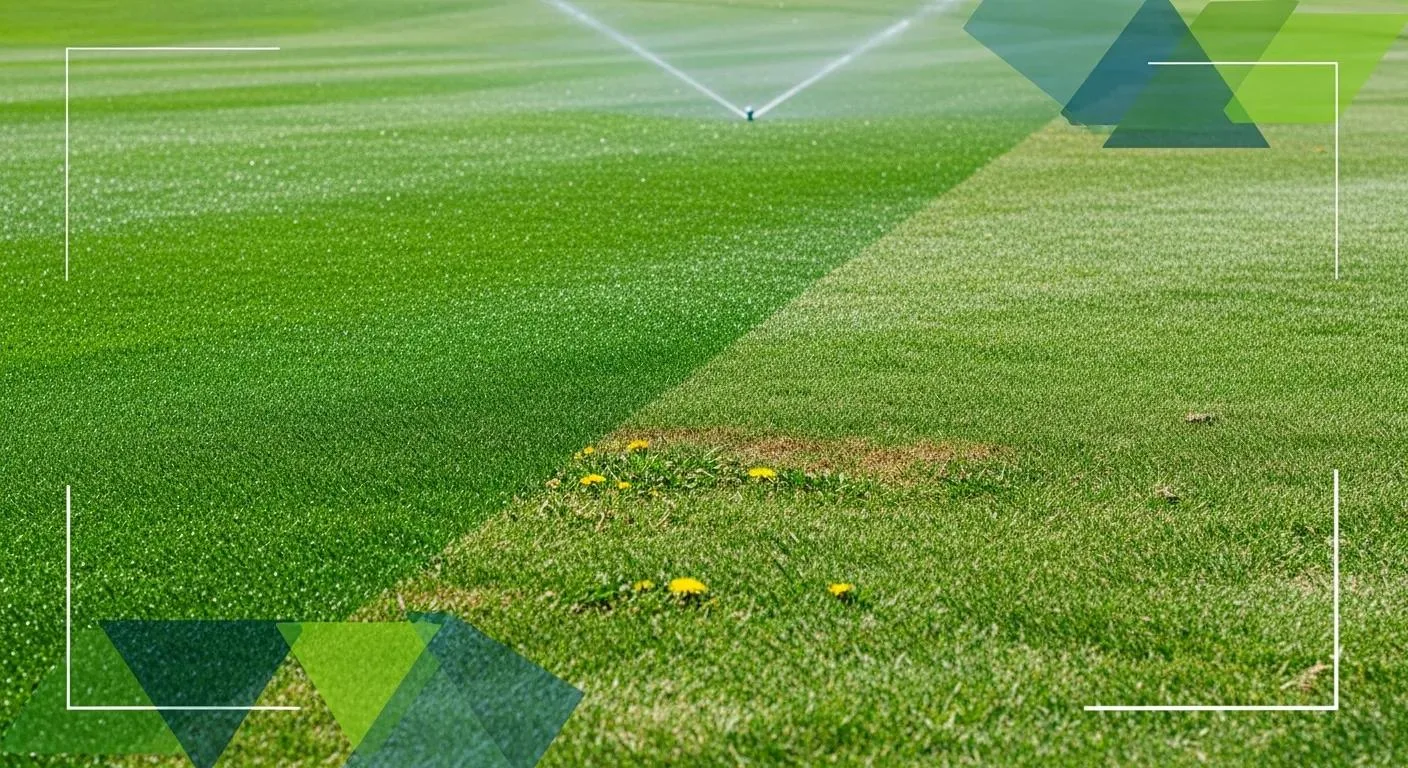
Artificial Turf vs Natural Grass: Comprehensive Cost, Maintenance, and Environmental Analysis for Cave Creek Commercial Properties
Selecting artificial turf or natural grass for commercial properties in Cave Creek requires a systematic assessment of costs, maintenance demands, and environmental effects. This article outlines the critical factors property owners should evaluate, including installation and upkeep costs, and the long-term advantages and limitations of each option. A clear understanding of these elements supports decisions that meet both budgetary goals and environmental responsibilities.
The analysis addresses installation and maintenance costs, recurring expenses, and environmental impacts for both turf and grass. It also details care practices suited to arid climates and the specific maintenance protocols for artificial turf. Property owners will leave with a practical understanding of which solution aligns with Cave Creek’s climate and landscape requirements.
What are the installation and maintenance costs of artificial turf and natural grass in Cave Creek?
Installation and maintenance costs for artificial turf and natural grass materially affect a commercial property’s landscaping budget. Artificial turf installation typically ranges from $10 to $20 per square foot, depending on material quality and installation complexity. Natural grass installation costs vary considerably with grass species and the extent of soil preparation required.
Ongoing maintenance costs differ between the two options. Artificial turf requires limited upkeep—mainly periodic cleaning and infill replenishment—which can produce meaningful long-term savings. Natural grass requires regular mowing, irrigation, and fertilisation, which accumulate over time. Evaluating these financial impacts is essential for optimising landscaping investments.
Assessing these financial implications commonly relies on structured cost–benefit analyses documented in landscape research.
Landscape Design Cost-Benefit Analysis
These advantages are grounded in cost–benefit analyses that evaluate landscape performance and support considered design decisions.
Economic benefits: Metrics and methods for landscape performance assessment, S Li, 2016
How does artificial turf installation cost compare to natural grass for commercial properties?
When comparing installation costs, several variables influence the outcome. Artificial turf often requires a higher initial investment but can deliver lower lifecycle costs due to reduced maintenance and irrigation. Natural grass may be less expensive up front, but ongoing upkeep can make it more costly over the property lifecycle.
Key cost drivers include project area, chosen turf product or grass species, and required site preparation. Property owners should perform a detailed cost comparison tailored to their site conditions and objectives.
What are the ongoing maintenance expenses for artificial turf versus natural grass?
Ongoing maintenance for artificial turf is substantially lower than for natural grass. Artificial turf removes the need for routine mowing, regular irrigation, and routine fertilisation, translating into ongoing operational savings. Typical maintenance items for turf include occasional cleaning and periodic infill top-ups.
Natural grass requires continuous care to preserve its appearance and health. Regular mowing can cost between $30 and $60 per visit, depending on lawn size, in addition to expenses for fertilisers, pest control, and irrigation. Over time, these costs can be significant for commercial properties.
How do maintenance requirements differ between artificial turf and natural grass in arid climates?
In arid climates such as Cave Creek, maintenance needs diverge markedly. Artificial turf is engineered to endure harsh conditions with minimal watering or chemical treatment, which reduces water consumption and associated environmental impacts.
Natural grass in arid regions requires consistent irrigation to remain viable, increasing water bills and environmental load. The routine application of fertilisers and pesticides can also affect soil quality and contribute to runoff. These contrasts are central to responsible landscaping decisions in drought-prone areas.
The high water demands of traditional landscaping in desert regions highlight the need to balance visual preferences with measurable conservation objectives.
Desert Landscape Water Conservation & Choices
Landscape irrigation accounts for roughly 40% of residential water use. Research examines how homeowners reconcile landscape choices with water conservation in desert communities.
Balancing landscape preferences and water conservation in a desert community, D VanLeeuwen, 2004
What are the recommended care practices for natural grass in Cave Creek commercial landscapes?
Maintaining natural grass in Cave Creek commercial settings requires targeted practices to preserve turf health and appearance. Key recommendations include:
- Regular Mowing: Maintain appropriate grass height to encourage strong growth and suppress weeds.
- Irrigation Management: Use efficient irrigation, such as drip or timed systems, to conserve water while delivering necessary moisture.
- Seasonal Clean-Up: Remove debris and dead material in spring and fall to support healthy seasonal growth.
Adherence to these practices improves turf condition and visual appeal, though they demand ongoing commitment and resources.
How is artificial turf maintained to ensure longevity and appearance?
Artificial turf maintenance is straightforward and less intensive than natural grass. Recommended practices include:
- Regular Brushing: Restore upright fibres and prevent matting to retain a natural appearance.
- Cleaning: Remove debris and organic matter with a hose or approved cleaners to maintain hygiene.
- Infill Maintenance: Replace or top up infill materials, such as sand or rubber, to preserve cushioning and stability.
Consistent application of these procedures helps artificial turf remain attractive and functional for many years, reducing ongoing labour and resource demands.
What are the environmental impacts and sustainability benefits of artificial turf and natural grass?
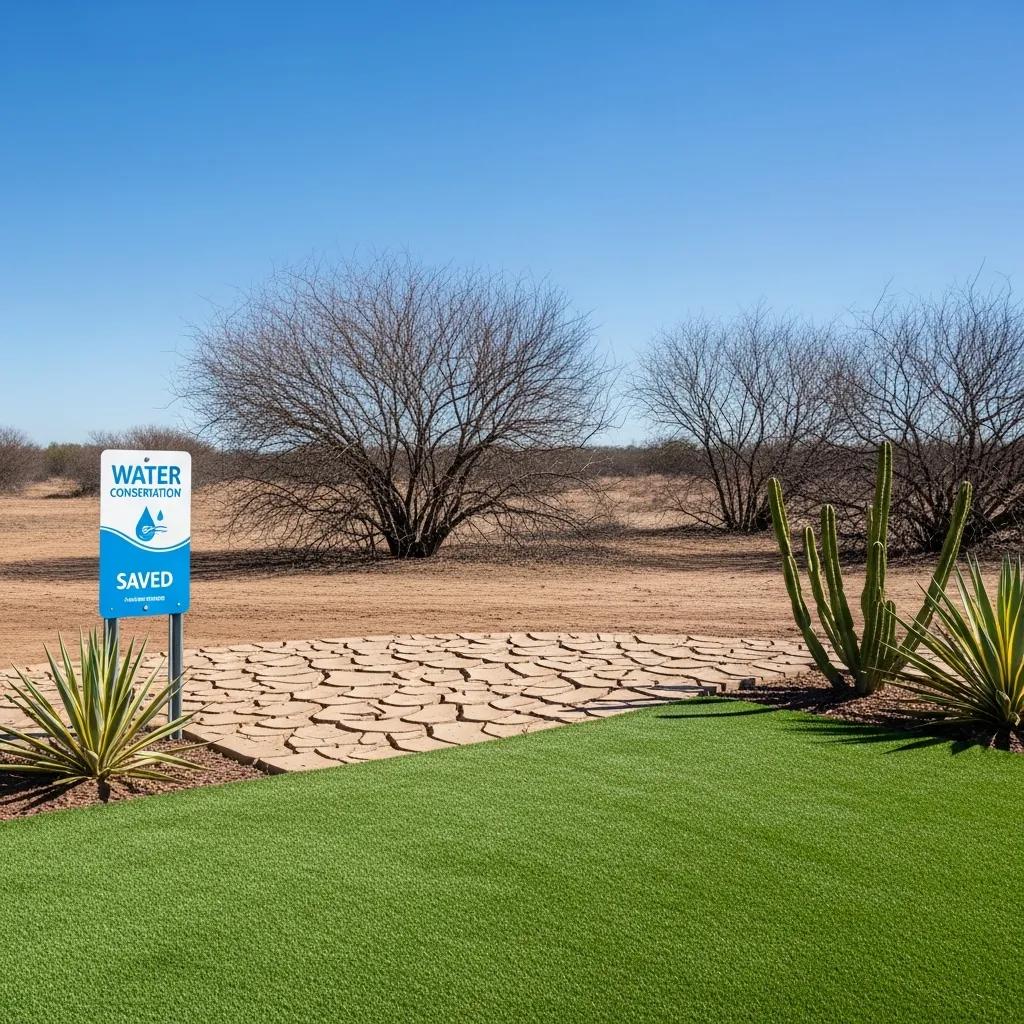
The environmental profiles of artificial turf and natural grass differ substantially. Artificial turf provides notable sustainability benefits in water conservation by removing the need for irrigation. It also reduces reliance on chemical fertilisers and pesticides, which can benefit local ecosystems.
Natural grass, however, supports biodiversity and offers habitat for insects, birds, and other small species. It contributes to carbon sequestration and can improve air quality. Yet the environmental costs of maintaining natural grass—especially water use and chemical runoff—can offset some of these benefits. Property owners must weigh these trade-offs when selecting a landscaping solution.
How does artificial turf contribute to water conservation in drought-prone areas?
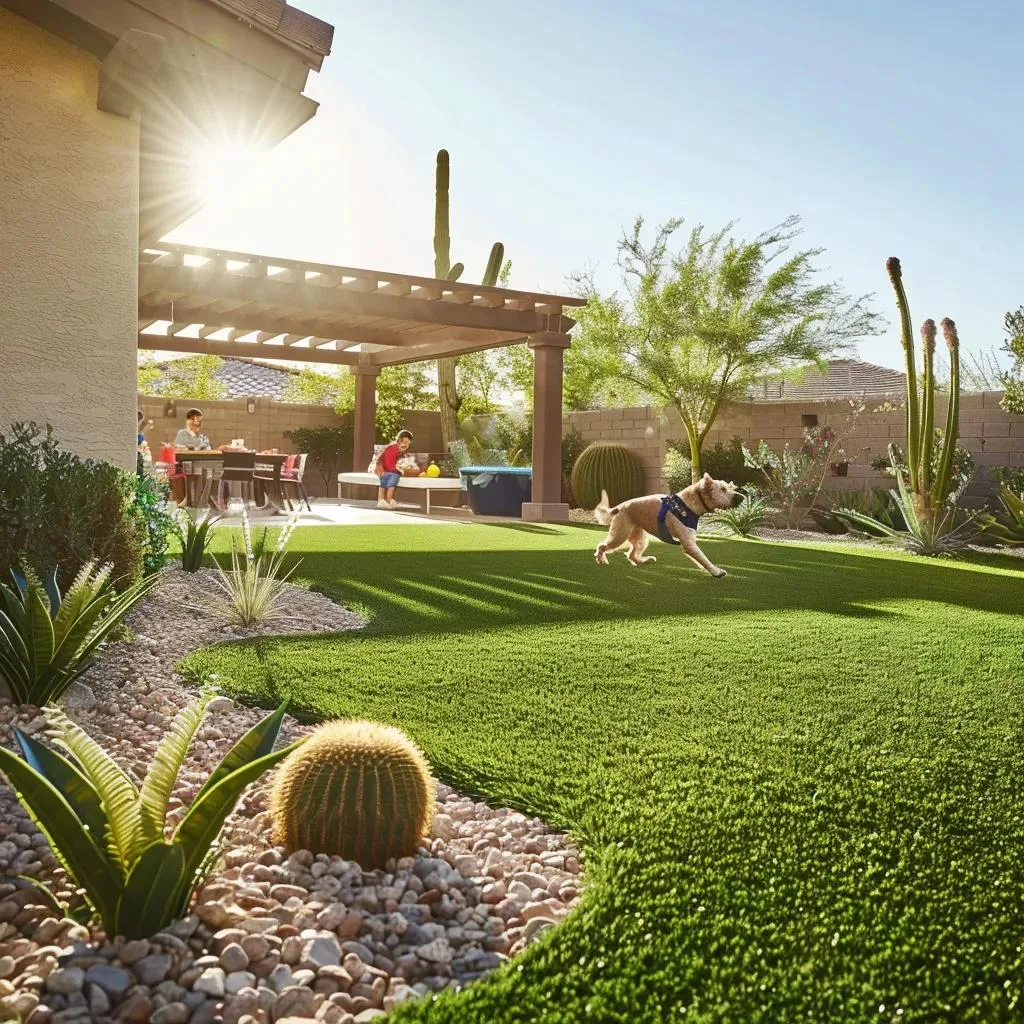
Artificial turf contributes directly to water conservation in drought-prone locations like Cave Creek by eliminating the need for routine irrigation. This reduction in landscape watering lowers water bills and helps preserve municipal and groundwater resources during shortages.
Moreover, artificial turf does not require routine chemical treatments that can leach into groundwater. Choosing turf can therefore support local water conservation objectives while maintaining a consistent landscape appearance.
What are the ecological advantages of maintaining natural grass in commercial properties?
Natural grass offers several ecological advantages for commercial sites. It enhances biodiversity by providing habitat and foraging areas for insects, birds, and small mammals, supporting a more balanced local ecosystem.
Natural turf also aids carbon sequestration by absorbing atmospheric CO2, and it can improve air quality through pollutant filtration and oxygen production. These ecological services make natural grass a valuable option when maintenance practices align with sustainability goals.
What is the installation process and timeline for artificial turf and natural grass in Cave Creek?
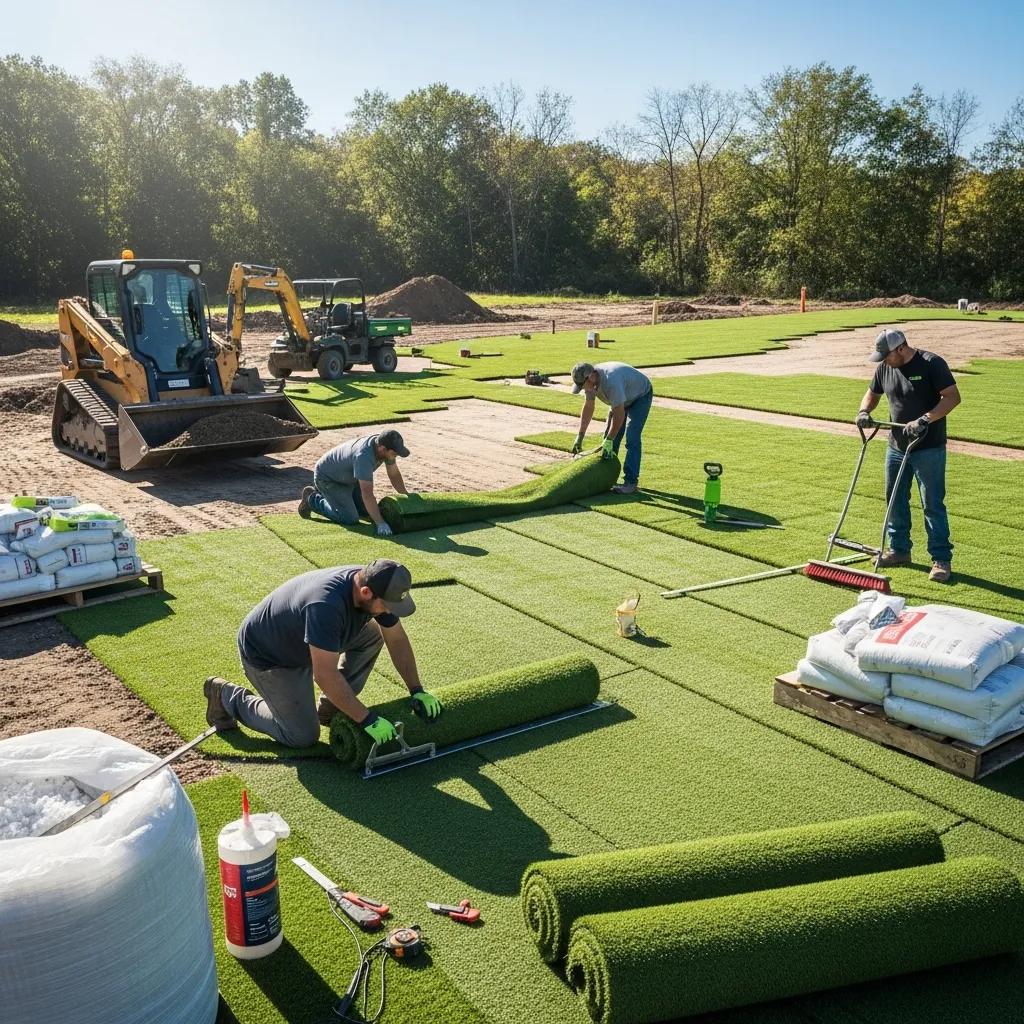
Installation processes for both artificial turf and natural grass include defined stages and distinct timelines. Artificial turf installation generally involves site preparation, base construction, turf placement, and infill distribution. Depending on area size and project complexity, this process can take from several days to a couple of weeks.
Natural grass installation requires soil preparation, seeding or sodding, and attentive care during establishment. Full establishment may take several weeks to months as the turf roots and matures. Project planning should account for these differing timelines.
What steps are involved in installing artificial turf for commercial properties?
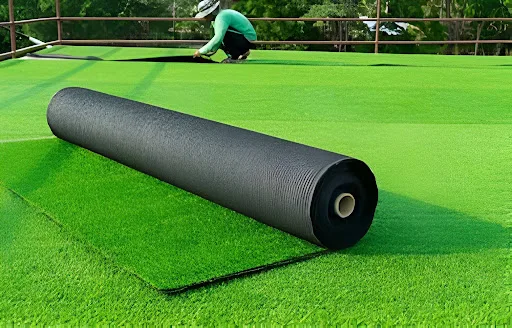
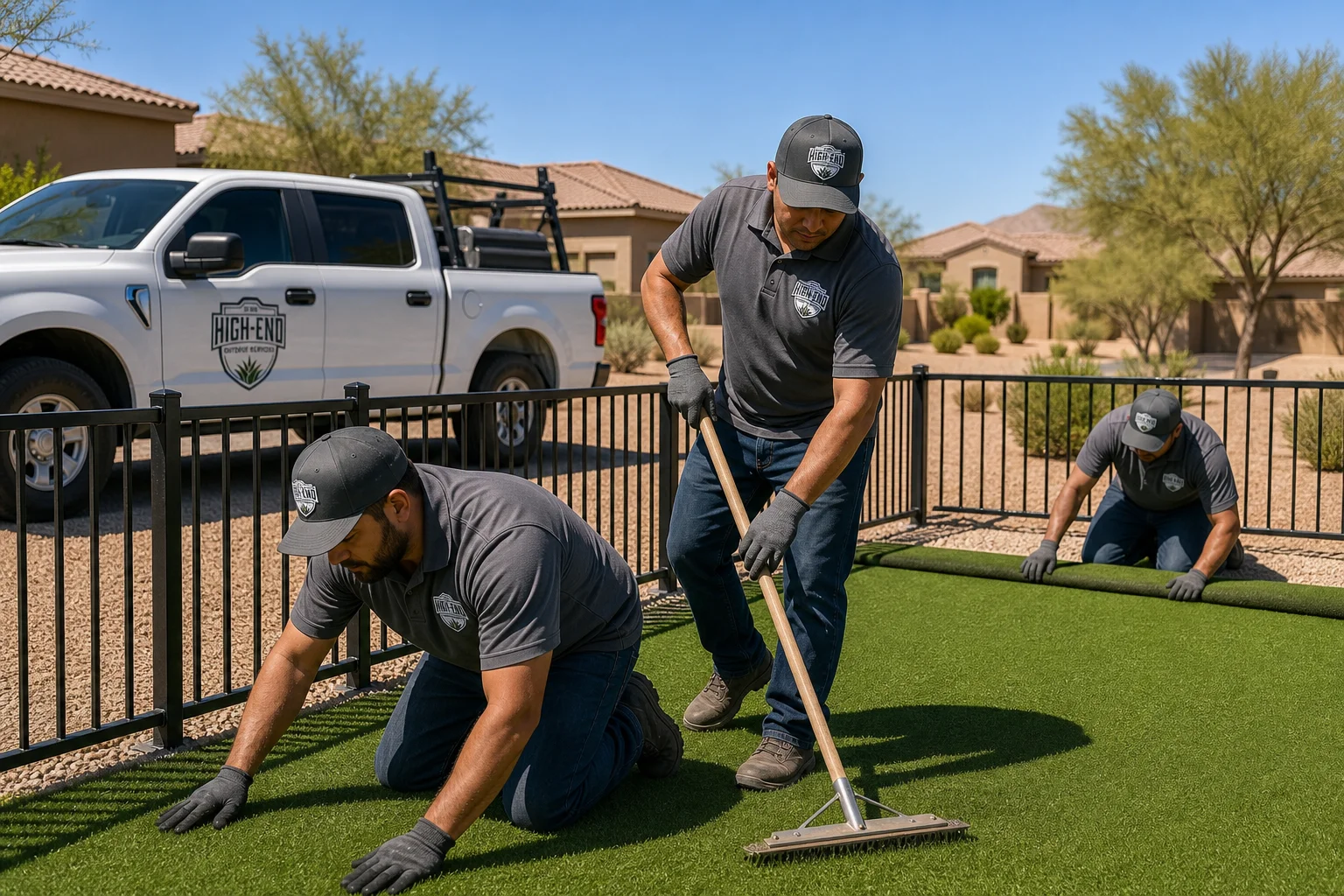
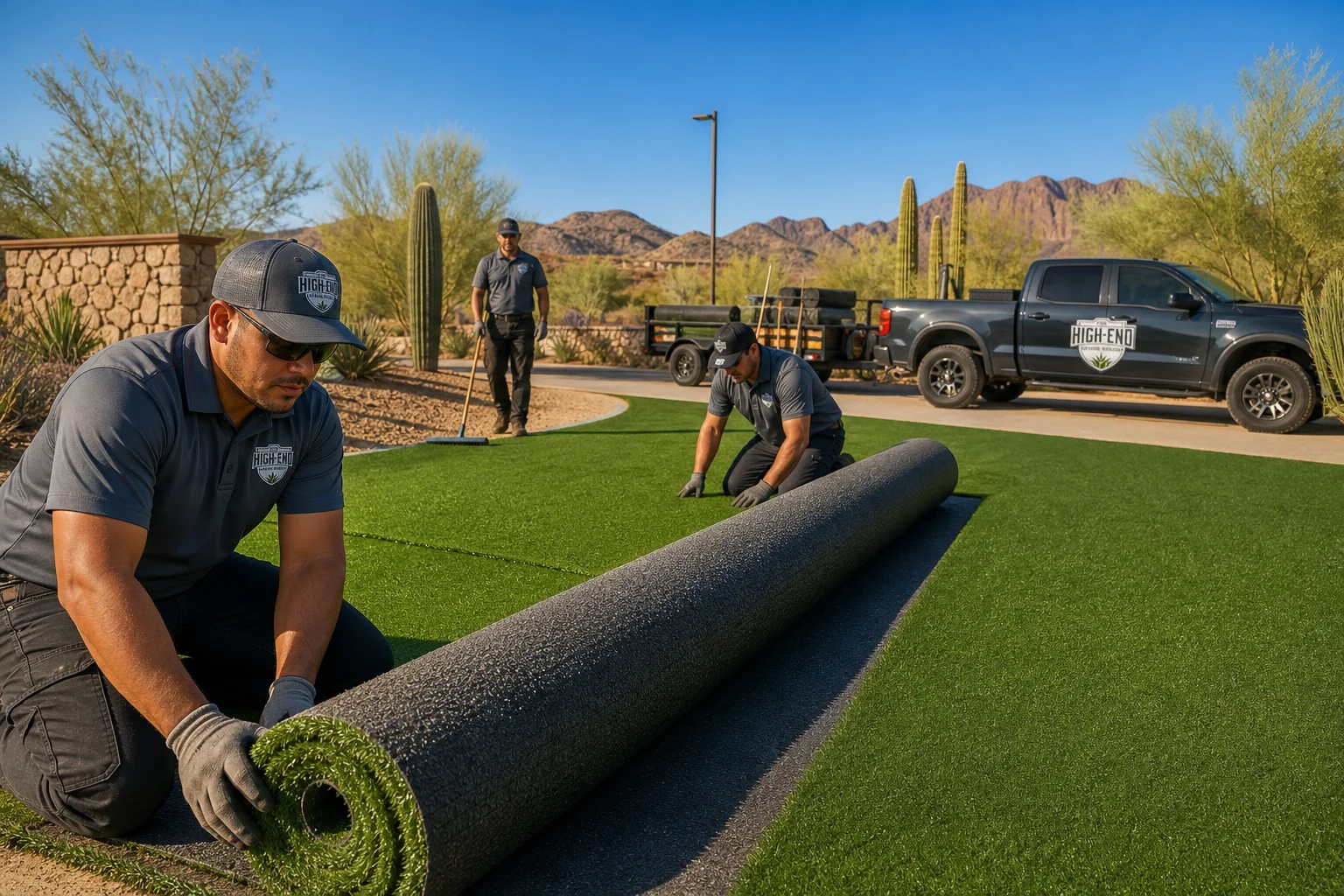
Installing artificial turf for commercial applications follows several essential steps:
- Site Preparation: Remove existing vegetation and debris, then grade the site to ensure effective drainage.
- Base Installation: Install a compacted base of crushed rock or gravel to provide stability and drainage.
- Turf Laying: Unroll and position the turf, secure seams, and ensure correct alignment.
- Infill Application: Distribute infill materials such as sand or rubber to enhance performance and appearance.
Completing these stages to specification ensures a durable installation that meets commercial performance requirements.
How long does natural grass establishment and installation take?
Natural grass establishment varies by installation method and species. Sodding typically establishes faster, often within 2–3 weeks. Seeding can require several weeks to months to achieve full coverage, depending on climate and care. Weather and maintenance practices significantly affect the timeline.
Property owners should incorporate these timelines into project schedules and plan for active maintenance during the establishment period to ensure successful growth.
What do local case studies reveal about choosing artificial turf or natural grass for commercial properties?
Local case studies offer practical evidence of the trade-offs between artificial turf and natural grass for commercial properties in Cave Creek. Many organisations report measurable cost savings and lower water consumption after installing artificial turf, particularly where water restrictions previously limited viable grass maintenance.
Conversely, some properties have sustained natural grass successfully and benefited from its ecological and aesthetic qualities. These case studies emphasise the need to match landscape choices to site-specific needs and environmental conditions.
How have HOA and hospital properties in Cave Creek benefited from artificial turf installation?
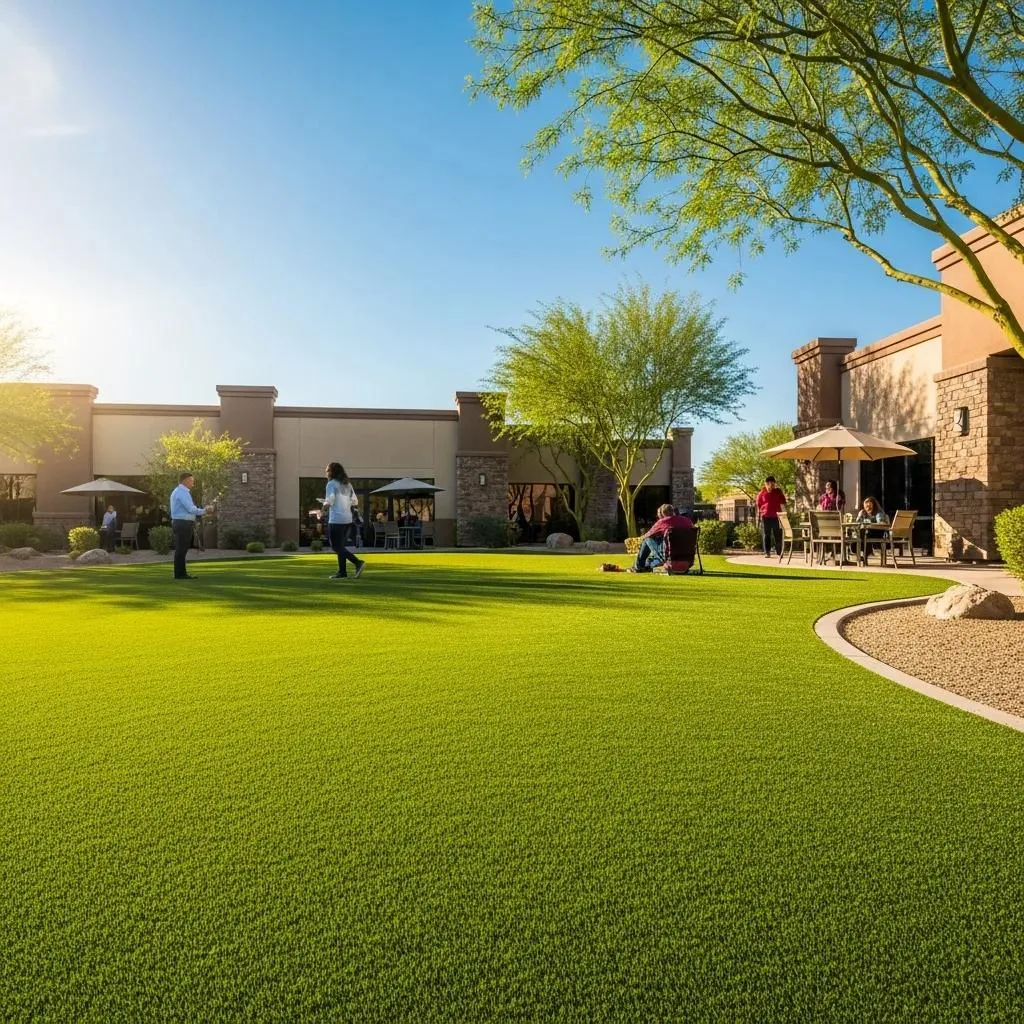
Homeowners' associations and hospital properties in Cave Creek have reported several benefits following artificial turf installation. These include reduced maintenance budgets and lower water use, enabling reallocation of resources to other priorities. Improved and consistent landscape appearance has also enhanced on-site environments for residents and patients.
Artificial turf’s durability allows these properties to maintain green, functional exterior spaces year-round, independent of seasonal or drought-related fluctuations. This reliability is particularly advantageous for healthcare facilities seeking restorative outdoor areas.
What successes have been observed with natural grass landscaping in Scottsdale commercial sites?
Natural grass landscaping in Scottsdale commercial locations has delivered notable aesthetic benefits. Businesses that invest in high-quality turf and disciplined maintenance often receive positive feedback from customers, reinforcing a welcoming atmosphere.
Well-maintained natural grass areas can increase pedestrian activity and engagement by providing attractive outdoor spaces for employees and visitors. These outcomes underscore the value of investing in proper maintenance where natural turf is the preferred option.
For more information on maintaining commercial landscapes, contact us today.
Additionally, HOAs in Cave Creek have identified artificial turf as a cost-effective option for communal areas.
Furthermore, hospital properties have benefited from the reduced maintenance demands of artificial turf, allowing operational focus to remain on patient care.
For questions or to schedule a consultation, please reach out to us.