Synthetic Turf ROI: Water Savings and Payback for Commercial Properties
Synthetic turf roi for commercial properties in Arizona comes down to a measurable equation: upfront Turf Installation costs offset by years of water savings and near-zero maintenance. Properties across the Phoenix metro consistently recover their investment within three to seven years, with savings growing as water rates continue to climb.
By HEOS AZ Team, Outdoor Living Specialists
Why Arizona Commercial Properties Are Moving Away from Natural Grass
Commercial property managers in the Phoenix metro face a structural challenge with natural grass: the climate demands constant irrigation to keep it alive, and Arizona's rising water costs turn that demand into a significant, recurring operating expense. For HOA communities and business campuses maintaining thousands of square feet of turf, irrigation alone can represent one of the largest controllable line items in the annual budget.
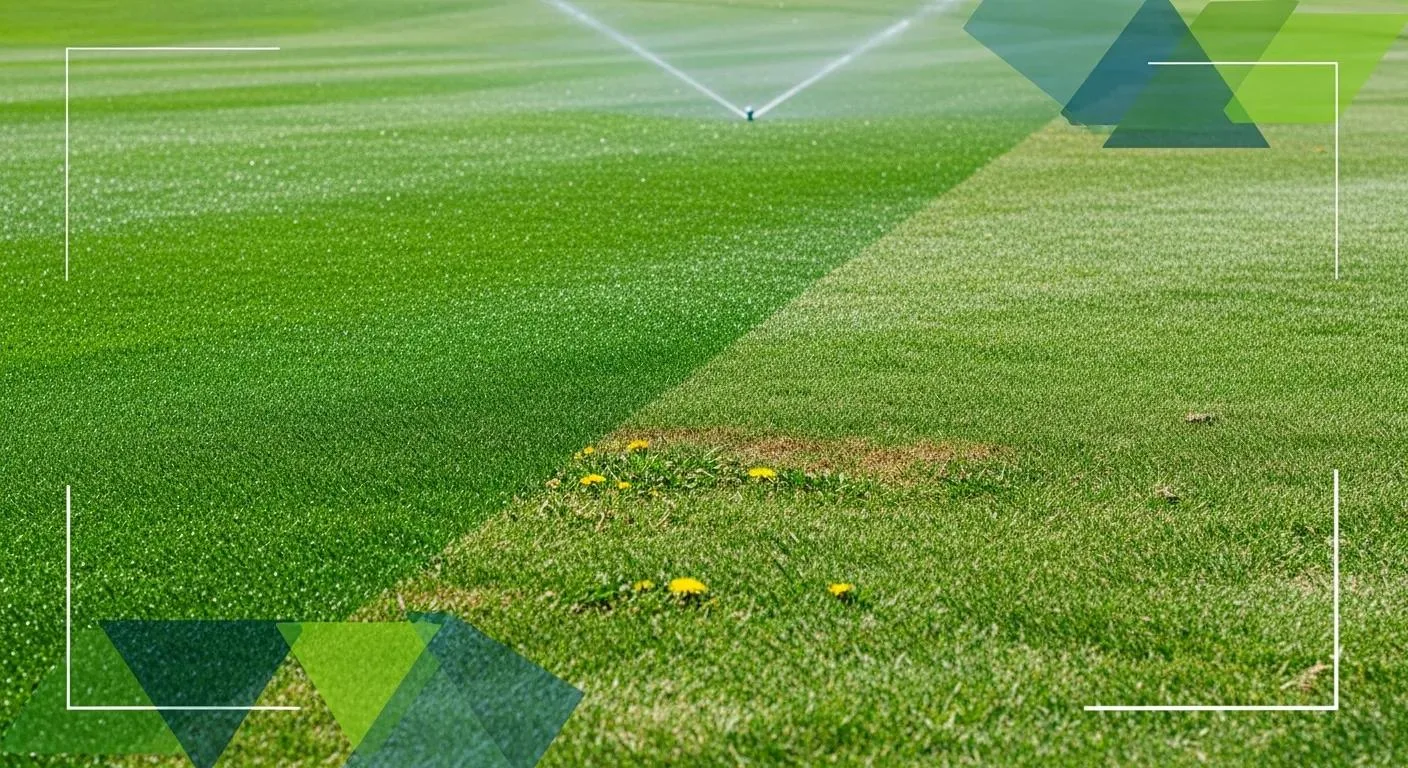
Natural grass also requires a full roster of recurring services: mowing, fertilization, pest control, chemical herbicide applications, reseeding for worn areas, and ongoing irrigation system maintenance. These maintenance costs accumulate year after year without contributing to the asset value of the property. When the full annual spend is tallied honestly, the case for switching to artificial turf becomes compelling well before water savings are even factored in.
Understanding Installation Costs for Commercial Synthetic Turf
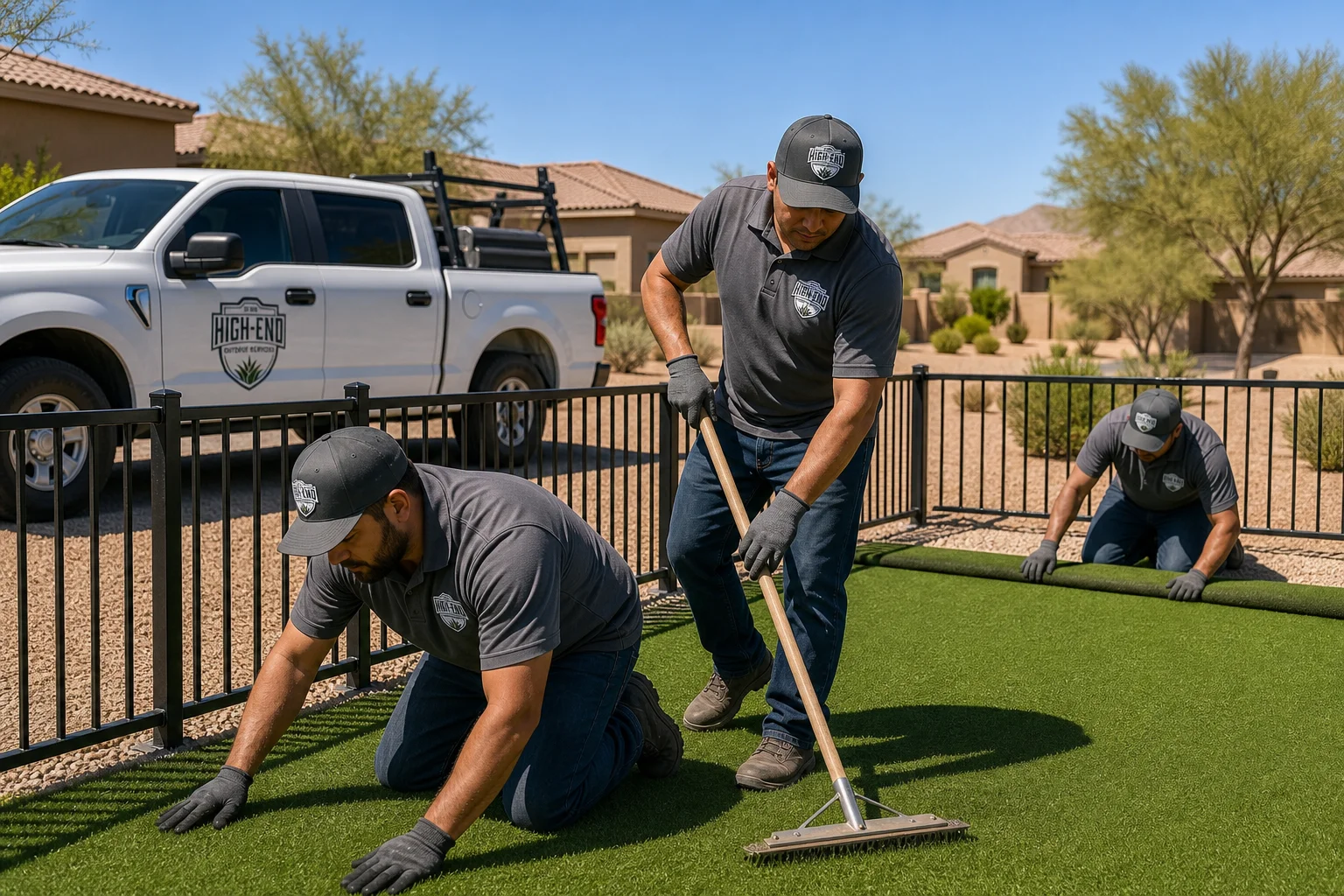
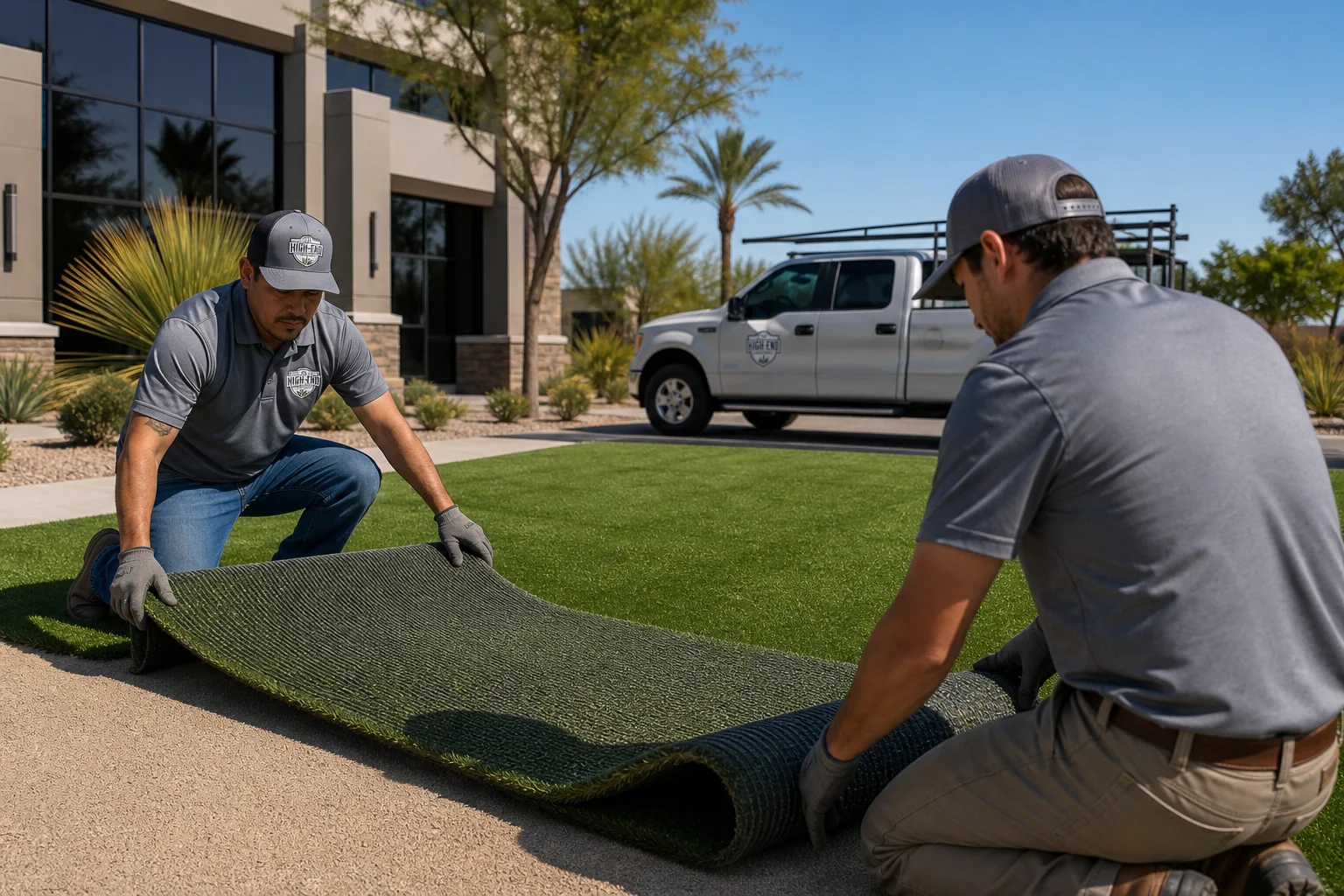
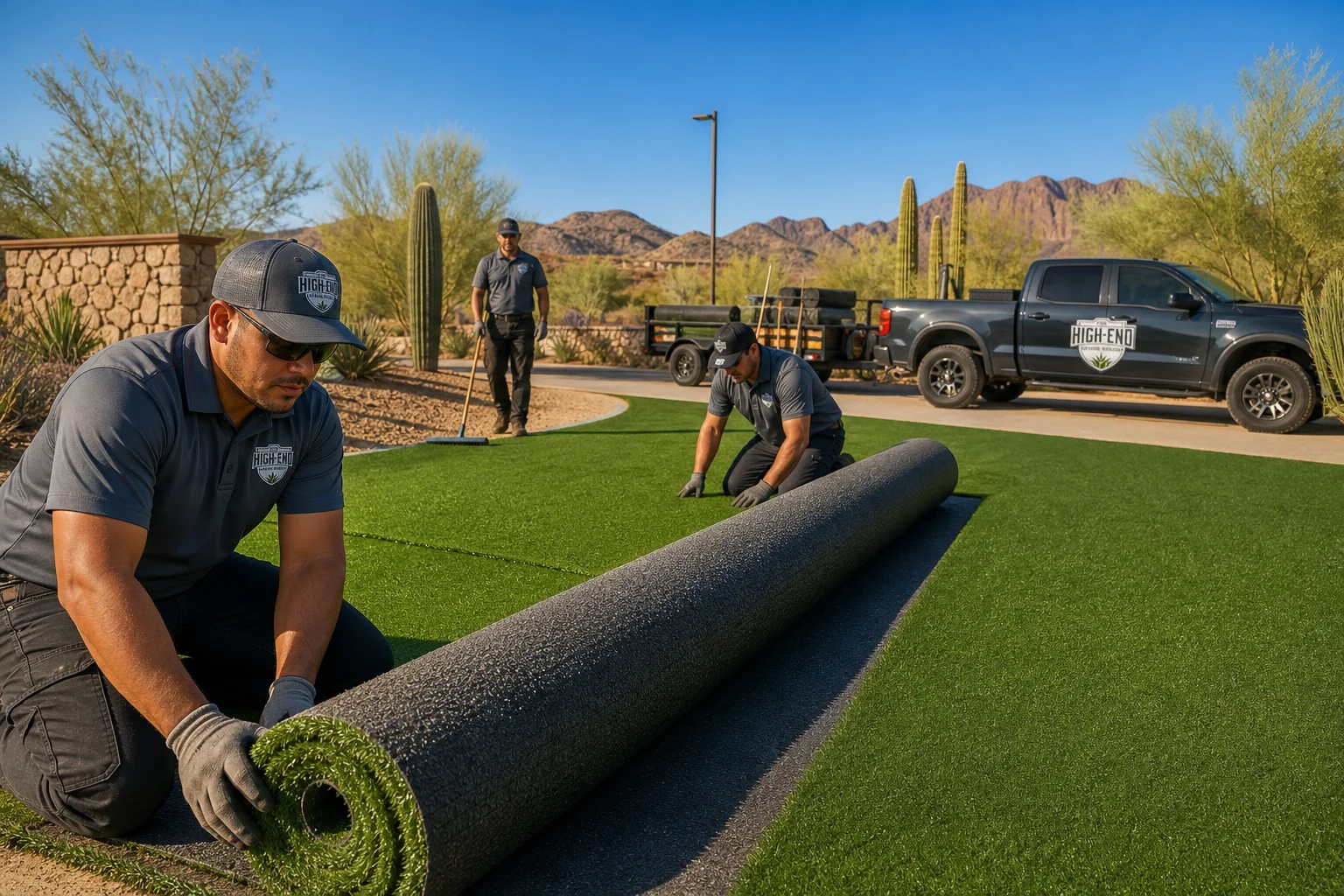
Any accurate synthetic turf roi analysis starts with a clear look at installation costs. Professional commercial-grade artificial turf installation includes site preparation, sub-base grading, drainage layer construction, weed barrier, infill materials, and the turf product itself. Commercial-grade synthetic turf commands higher per-square-foot costs than residential products because it is engineered for heavy foot traffic, continuous UV exposure, and multi-decade performance.
For most commercial properties, the installation scope also includes removal and disposal of existing natural grass, precise grading for drainage compliance, and coordination with existing irrigation infrastructure. Properties with larger irrigated footprints benefit from economies of scale, and HOA communities converting common-area natural grass often achieve favorable per-square-foot costs due to project volume.
Our Expert Guide To Commercial Turf Installation In Arizona covers product specifications, infill selection, and base preparation requirements in detail.
Water Savings: The Primary Driver of Synthetic Turf ROI
Water savings represent the dominant financial driver in synthetic turf roi for Arizona commercial properties. Research published by the Water Research Foundation (DeOreo et al., 2016, "Residential End Uses of Water, Version 2") documented that outdoor landscape irrigation accounts for a substantial portion of total water consumption at commercial and multi-family properties in arid Western climates, with turf areas consuming the majority of that water budget.
Artificial grass requires zero irrigation once installed. A commercial property maintaining several thousand square feet of natural grass in the Phoenix metro can eliminate a significant share of annual outdoor water consumption by converting to artificial turf. At current commercial water rates in the greater Phoenix area, those savings translate to meaningful annual reductions in operating costs. Arizona's tiered commercial pricing structures mean water savings compound over time as rates continue rising in response to regional scarcity conditions.
Synthetic turf also eliminates fertilizers and pesticides, removing another cost category entirely and reducing liability exposure for properties serving children, patients, or sensitive populations.
Maintenance Costs: Artificial Turf vs. Natural Grass Over Time
The ongoing maintenance costs comparison is where synthetic turf roi becomes most visible across a property's ownership horizon. Natural grass commercial maintenance involves mowing (weekly to bi-weekly during growing season), irrigation system repair, fertilization, chemical herbicide and pesticide treatments, and labor for all of the above.
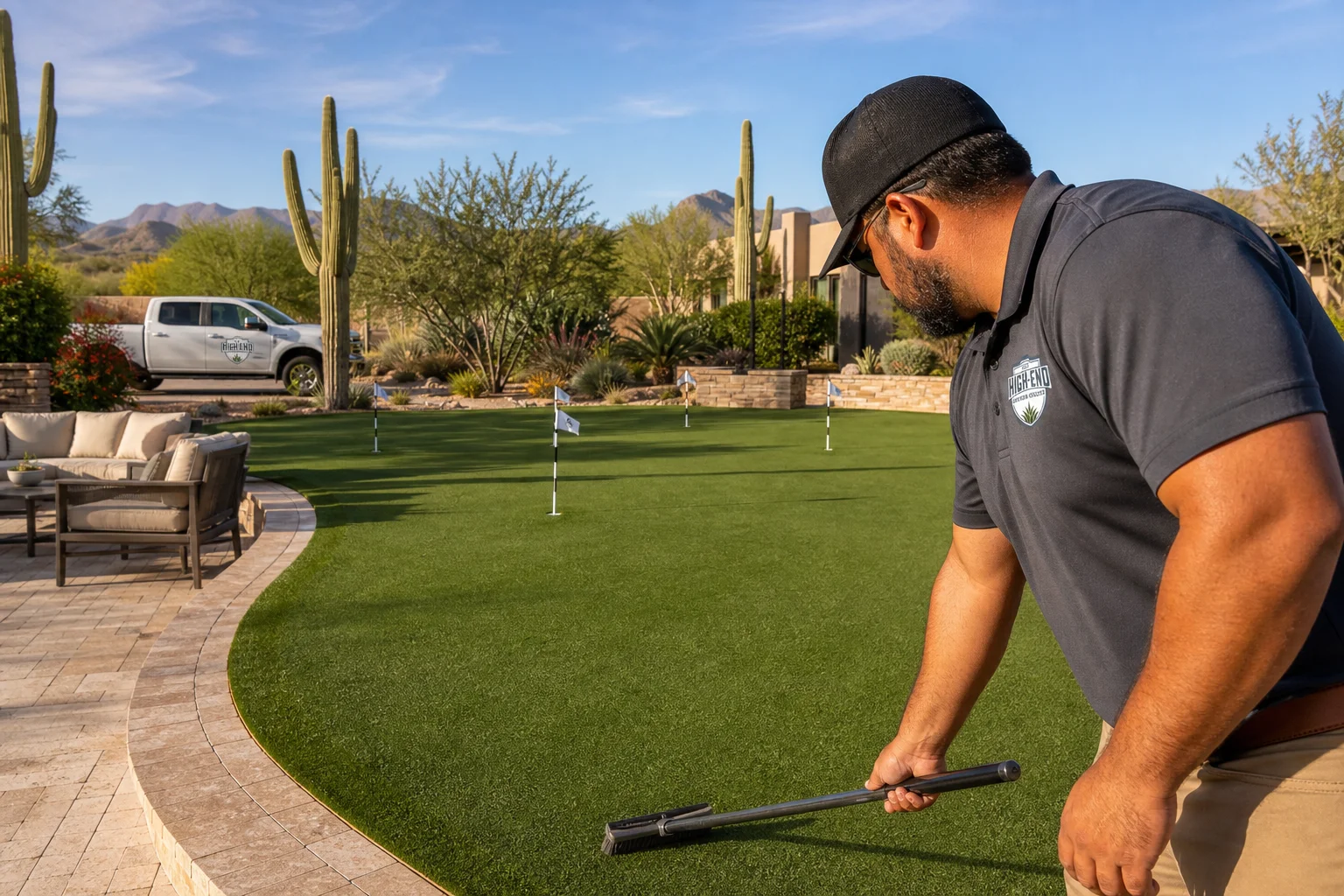
Artificial turf eliminates mowing, chemical treatments, and irrigation repairs entirely. Ongoing costs are limited to periodic brushing to keep fibers upright and professional Turf Cleaning services to remove debris, sanitize the surface, and maintain infill distribution. These costs represent a small fraction of what natural grass demands annually.
Commercial-grade synthetic turf products carry manufacturer warranties of 15 to 20 years for UV resistance and fiber performance, meaning the low-maintenance cost profile holds for the long run, well past the payback period.
Calculating the Payback Period for Your Property
A practical synthetic turf roi framework for commercial decision-makers:
Step 1: Document annual natural grass costs. Pull water billing data attributable to turf irrigation, mowing and maintenance labor, chemical treatment invoices, and irrigation repair history.
Step 2: Obtain professional installation cost estimates. Accurate quotes require site measurement and base assessment. Budget for removal of existing natural grass in addition to the installation itself.
Step 3: Calculate the payback period. Divide total installation costs by annual savings from water and maintenance. Most Phoenix-area commercial properties achieve payback within three to seven years when all cost categories are included.
Step 4: Project long run value. With a 15-to-20-year product life and rising water rates, total lifetime savings extend well beyond the payback date. Properties that convert today lock in current installation costs while benefiting from rising water rates for decades.
For HOA communities considering a full-grounds transition, see Implementing Effective Landscape Maintenance Programs for Commercial Properties for guidance on structuring ongoing grounds programs after conversion.
Additional Performance Benefits That Strengthen the Case
Beyond direct financial returns, several performance factors reinforce the synthetic turf roi case for Arizona commercial properties.
Artificial grass maintains a consistent, attractive appearance year-round, eliminating the brown-out cycles, patchy recovery, and seasonal dormancy that affect natural grass under extreme heat. For HOA communities and corporate campuses where curb appeal affects property values and resident satisfaction, that consistency carries real value.
Medical and healthcare-adjacent properties benefit from the chemical-free maintenance profile of synthetic turf. As discussed in Landscaping for Medical Facilities: Designing Therapeutic Outdoor Spaces, eliminating herbicide and pesticide use from grounds programs is a growing priority for properties serving vulnerable populations.
Synthetic turf also removes drought compliance risk. Arizona municipalities have implemented mandatory irrigation restrictions during drought declarations, and properties maintaining natural grass face potential fines and forced cutbacks. Artificial turf converts a compliance liability into a resolved issue.
High-traffic areas where natural grass struggles to recover benefit from artificial turf's consistent performance under heavy use, making it well suited for play areas, event lawns, and walkway borders at commercial properties.
Frequently Asked Questions
How long does commercial synthetic turf last?
Commercial-grade artificial turf products carry manufacturer warranties of 15 to 20 years for UV resistance and fiber integrity. With professional installation and routine maintenance, many installations perform reliably beyond that window. The long-run service life is central to the roi calculation, as water and maintenance savings accumulate for well over a decade after the payback period is reached.
Does artificial grass require any water at all?
Artificial turf requires no irrigation. Occasional rinsing is optional and may be used to cool the surface on extreme heat days or as part of professional cleaning services. Water use for these purposes is minimal compared to the irrigation demands of natural grass in an Arizona commercial setting.
What types of commercial properties see the strongest synthetic turf roi?
Properties with large irrigated turf areas and high annual water costs see the most compressed payback periods. HOA common areas, corporate campus amenity zones, medical facility grounds, and multi-tenant commercial properties with shared outdoor spaces consistently show the strongest returns. The higher the current annual natural grass spend, the faster installation costs are recovered.
How does Arizona's heat affect synthetic turf performance?
Commercial synthetic turf is engineered for high-UV environments and holds up reliably under Arizona desert conditions. Surface temperatures can run higher than natural grass during peak afternoon hours, which is a known characteristic manageable with heat-reducing infill materials or shade structures. Overall, artificial turf performs more reliably than natural grass in extreme heat conditions.
What is the first step to getting a real roi estimate?
A professional site assessment is the most reliable starting point. An experienced commercial turf contractor measures your irrigated areas, reviews your water billing history, and provides installation cost estimates that feed directly into a payback calculation specific to your property and water rate structure.
See What Synthetic Turf ROI Looks Like for Your Property
Every commercial property has a different cost profile, irrigated area, and water rate history, which means the most useful roi estimate is a custom one built around your actual numbers. Contact the HEOS AZ team to schedule a professional assessment and find out exactly what artificial turf conversion means for your property's bottom line.