Smart Irrigation Audits: Cutting Commercial Water Waste in the Desert
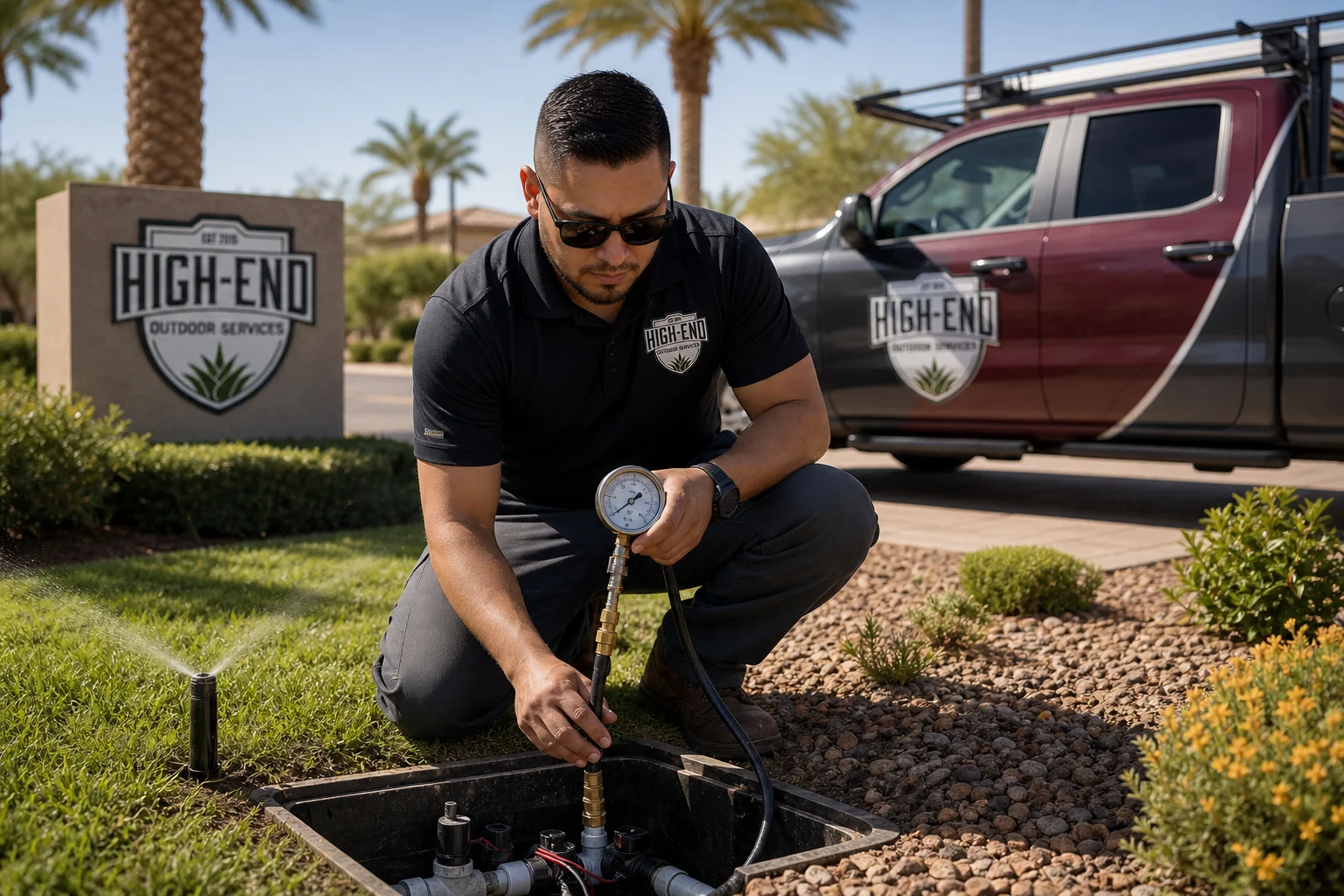
Commercial properties across the Valley lose thousands of gallons a month to irrigation systems nobody has checked in years. Smart irrigation audits catch that waste before it hits the water bill, testing every zone, controller, and head for the coverage gaps and pressure problems that drive up cost. An Irrigation Repair evaluation is often the fastest way to start.
By HEOS AZ Team, Outdoor Living Specialists
Why Smart Irrigation Audits Start With a Full Property Walkthrough
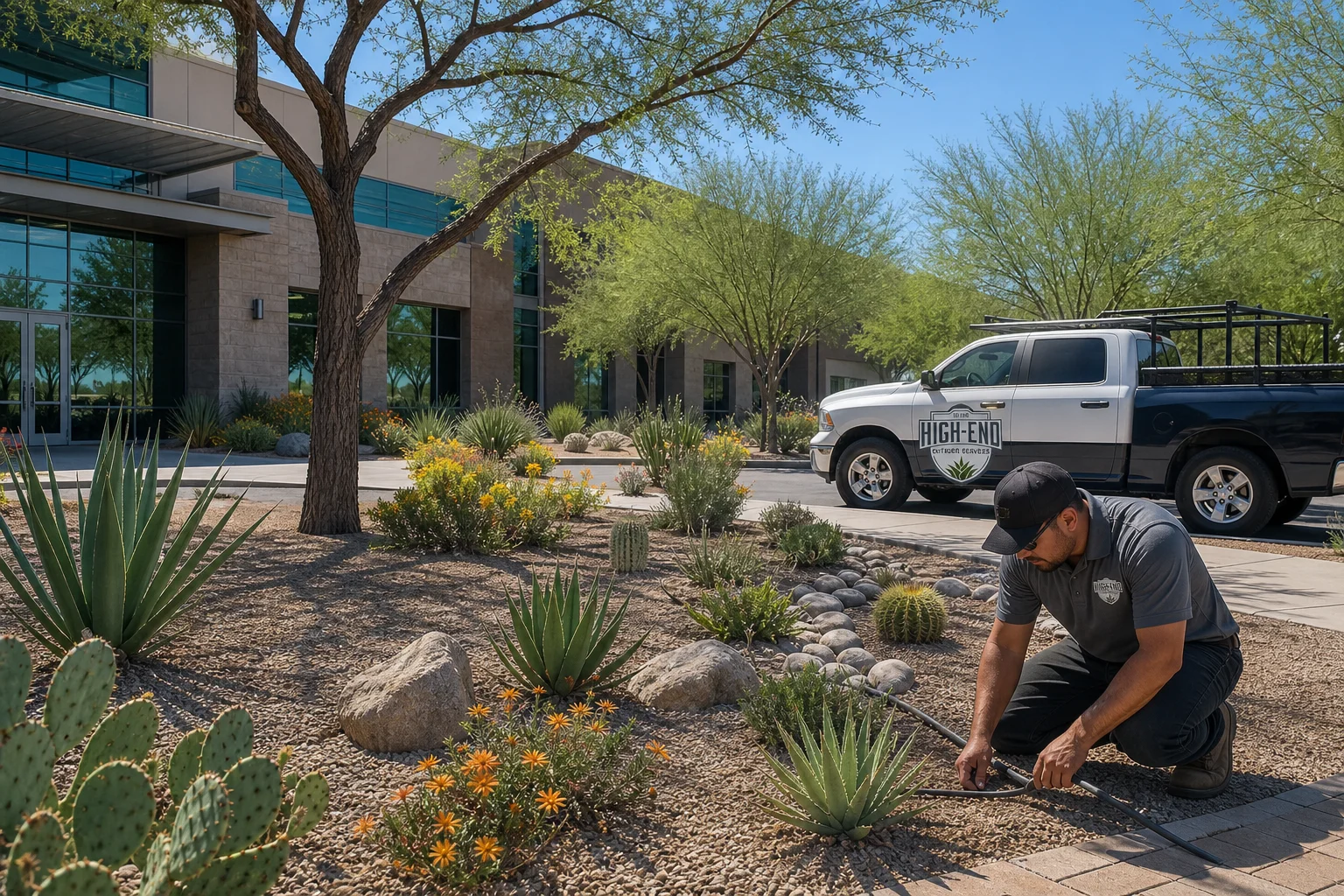
A certified irrigation audit starts long before anyone touches a valve. HEOS AZ technicians map every zone on the property, then run each irrigation system through a full cycle to catch clogged heads, mismatched nozzles, and pressure loss that waste water without anyone noticing. The main content of every irrigation audit report covers three areas: distribution uniformity, controller programming, and system pressure, so property managers get a clear picture of where water use is falling short instead of a vague pass or fail grade.
Catch basins placed throughout each zone measure exactly how evenly water reaches the plant material, a step most commercial maintenance crews skip because it takes real time. That data becomes the backbone of the irrigation audit, turning guesswork about landscape irrigation performance into hard numbers a board or ownership group can act on.
Signs Your Commercial Property Needs an Irrigation Audit
Some properties don't wait for a water bill to reveal a problem. Soggy turf next to bone dry planting beds, algae forming on hardscape near sprinkler heads, and brown patches that return no matter how often crews adjust run times are all signs an irrigation system has drifted out of tune. HOA boards overseeing shared common areas usually notice these signs first, since residents complain quickly when HOA Landscaping starts looking uneven.
Older controllers are another red flag. A system still running fixed schedules regardless of weather is rarely delivering efficient irrigation, and it is almost always using more water than the plant material actually needs. Reviewing water usage trends month over month, alongside a physical walk of the property, is often enough to justify scheduling an audit before the next rate increase hits.
How Smart Irrigation Controllers Reduce Water Waste
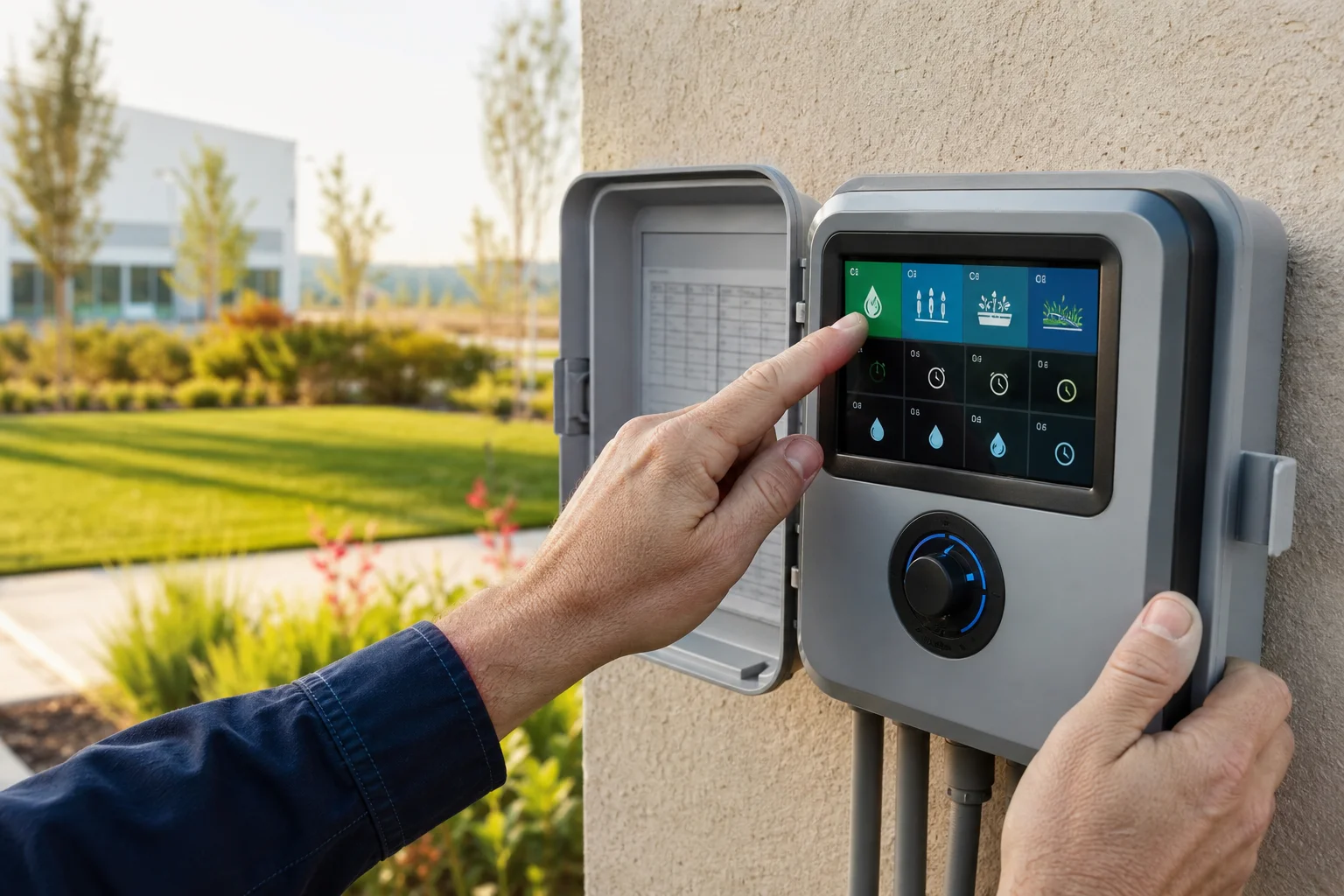
Smart irrigation controllers are the single biggest upgrade most commercial properties can make after an audit identifies the problem zones. Instead of running a fixed schedule, these controllers pull local weather data and soil moisture readings to adjust run times automatically, cutting water use on cool or rainy days and improving overall efficiency without anyone touching a dial. HEOS AZ installs and programs smart irrigation controllers as part of our audit follow-up, matching each zone's settings to the plant material it actually supports.
The technology behind modern controllers has matured well beyond simple timers. Flow sensors can flag a broken main line within minutes instead of weeks, and central management platforms let one property manager oversee irrigation across several sites from a phone. Properties that paired controller upgrades with synthetic turf in high traffic zones saw similar water conservation results, a pattern explored further in our synthetic turf ROI guide.
Reading Your Irrigation Audit Report
Once field data is collected, HEOS AZ delivers a full irrigation audit report broken down zone by zone, with specific solutions ranked by cost and water savings. Reports are based on real flow, pressure, and distribution uniformity numbers rather than estimates, so a property manager can hand the document straight to ownership or an HOA board as part of a clear water management plan, without translating jargon first.
Each report closes with a prioritized needs list: which valves need replacing this quarter, which zones can wait until next season, and which controller settings can be changed today at no cost. Consulting with our team before acting on the report often saves a second site visit, since some fixes overlap with routine commercial maintenance already scheduled for the property. Whether those fixes are better handled by an internal crew or a specialty vendor usually comes down to scope: minor adjustments and routine head replacements are easy for an in-house team to manage, while valve work, controller reprogramming, and anything tied to the audit's larger findings often move faster with a specialist who already knows the system.
The Cost of Skipping Regular Irrigation Audits
This is precisely the gap smart irrigation audits are designed to close. Properties that skip main irrigation audits year after year rarely see the cost show up in one place. It shows up as a slightly higher water bill every month, a landscape crew replacing the same dead plant material twice a year, and hardscape that stains and cracks from runoff nobody caught early. None of those line items look dramatic alone, but added together they usually cost more than the audit itself would have.
Municipal water providers across the Valley have also tightened tiered pricing, so the properties with the highest water use pay a steeper rate per gallon on top of the base cost. Staying on a regular audit schedule, similar to the cadence outlined in our year-round desert landscape care guide, keeps a property ahead of both problems instead of reacting to a surprise bill.
Frequently Asked Questions
How often should a commercial property schedule an irrigation audit? Most commercial properties in Arizona benefit from a full irrigation audit once a year, ideally before the summer heat pushes run times to their peak. Properties with older systems or a history of water waste often benefit from a second check in early fall to catch any drift before winter dormancy.
What does an irrigation audit actually measure? An irrigation audit measures distribution uniformity, system pressure, controller programming accuracy, and flow rate across every zone. The goal is to identify exactly where an irrigation system is applying too much or too little water relative to what the plant material needs, then document it in a report property managers can act on.
Can smart irrigation controllers really lower a water bill? Yes. Smart irrigation controllers adjust watering based on real weather and soil data instead of a fixed schedule, which typically reduces water use compared to a standard timer, especially during Arizona's mild winter months when static schedules tend to overwater.
Is an irrigation audit worth it for a small commercial property? Even smaller sites benefit, since the same broken heads, pressure problems, and overwatered zones that waste water on large campuses show up on small properties too, just at a smaller dollar amount. An audit still catches issues before they compound into bigger repairs.
Does HEOS AZ handle the repairs identified in an audit? Yes. HEOS AZ performs the audit and the follow-up repair work, so findings turn into fixed valves, reprogrammed controllers, and corrected zones without bringing in a second vendor to interpret the report.
Talk to HEOS AZ About Your Property's Water Use
Every irrigation audit HEOS AZ performs comes with a documented report and a team ready to fix what it finds. HEOS AZ provides irrigation services built around Arizona's climate, so Contact our specialists to schedule an audit before the next billing cycle.