HOA Landscape Maintenance: A Board Member's Complete Decision Guide
HOA landscape maintenance shapes property values, resident satisfaction, and long-term operating costs for every community association. Board members responsible for common areas in Arizona need a clear framework for selecting the right HOA Landscaping provider, scoping a maintenance contract, and building a seasonal plan that performs through extreme desert heat.
By HEOS AZ Team, Outdoor Living Specialists
What HOA Landscape Maintenance Actually Covers
HOA landscape maintenance is broader than most board members initially expect. A comprehensive program covers routine lawn care including mowing, edging, and fertilizing across all common areas, as well as shrub and tree trimming, seasonal color rotations, and irrigation system inspections. Depending on the size of the community, the scope may also include weed control, pest management, hardscape cleaning, and storm response protocols.
Boards that define scope precisely before sending an RFP avoid the most common contract dispute: ambiguity over what is included versus what triggers additional charges. Before the next contract cycle, document every maintained zone, from entry monument gardens to perimeter fencing lines, and specify service frequencies for each.
Understanding this scope is also essential for budgeting. HOA landscaping costs scale directly with acreage, plant variety, and service frequency. Communities that track maintained square footage and asset counts tend to negotiate better contract terms and avoid surprise invoices mid-year. For a detailed look at what a professional agreement should contain, see What a Commercial Landscape Maintenance Contract Should Include.
Curb Appeal and Why Every Board Should Treat It as a Priority
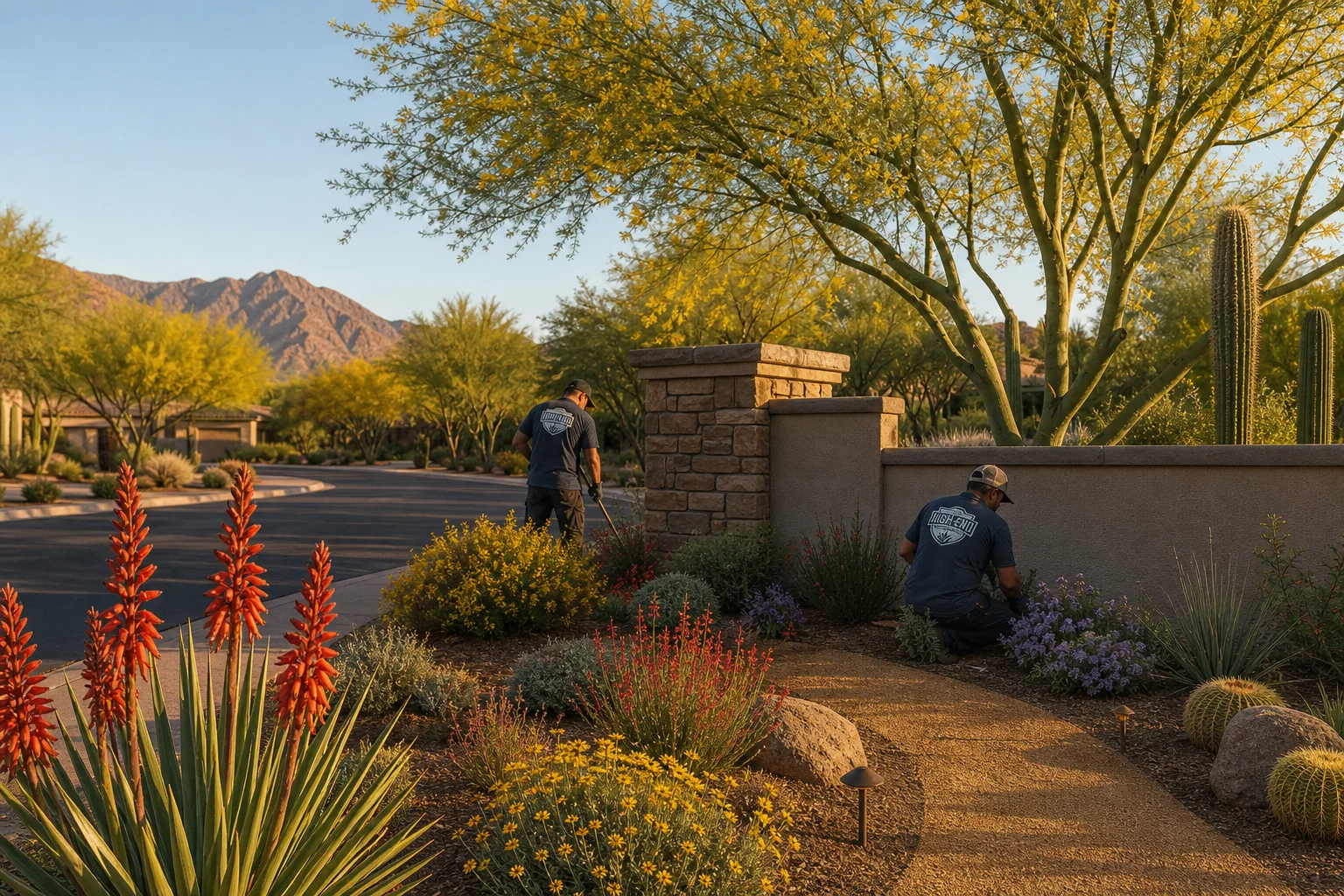
The connection between curb appeal and property values is supported by real estate research. Luttik, writing in Landscape and Urban Planning (2000), found that maintained green spaces and open areas added measurable premiums to adjacent residential property values. In Arizona HOA communities, where homeowners pay a premium to live in a manicured environment, deteriorating common areas signal poor governance as much as poor aesthetics.
Curb appeal affects more than resale value. It shapes how prospective residents evaluate the community during a walk-through, how current homeowners rate board performance at annual meetings, and how property managers position the association to prospective tenants. A landscaping company that consistently delivers polished common areas is not purely an expense line; it is a reputation investment.
Arizona HOA boards face a specific challenge: the desert climate demands a different approach to curb appeal than temperate states. Turf grass that looks lush in March can look stressed by August without the right irrigation programming and lawn care adjustments. Choosing a provider with genuine Arizona experience is the most important qualification to verify during the selection process.
Choosing a Landscaping Company: What HOA Boards Should Look For
Selecting the right landscaping company is a structured process, not a price comparison. Boards that achieve the best long-term outcomes treat the RFP as a performance specification document, not simply a request for numbers.
Define Scope Before Sending the RFP
Every RFP should include property maps with zone designations, plant asset inventories, required service frequencies, and measurable performance standards. Vague RFPs produce vague bids and make meaningful comparison impossible.
Evaluate Beyond the Bid Price
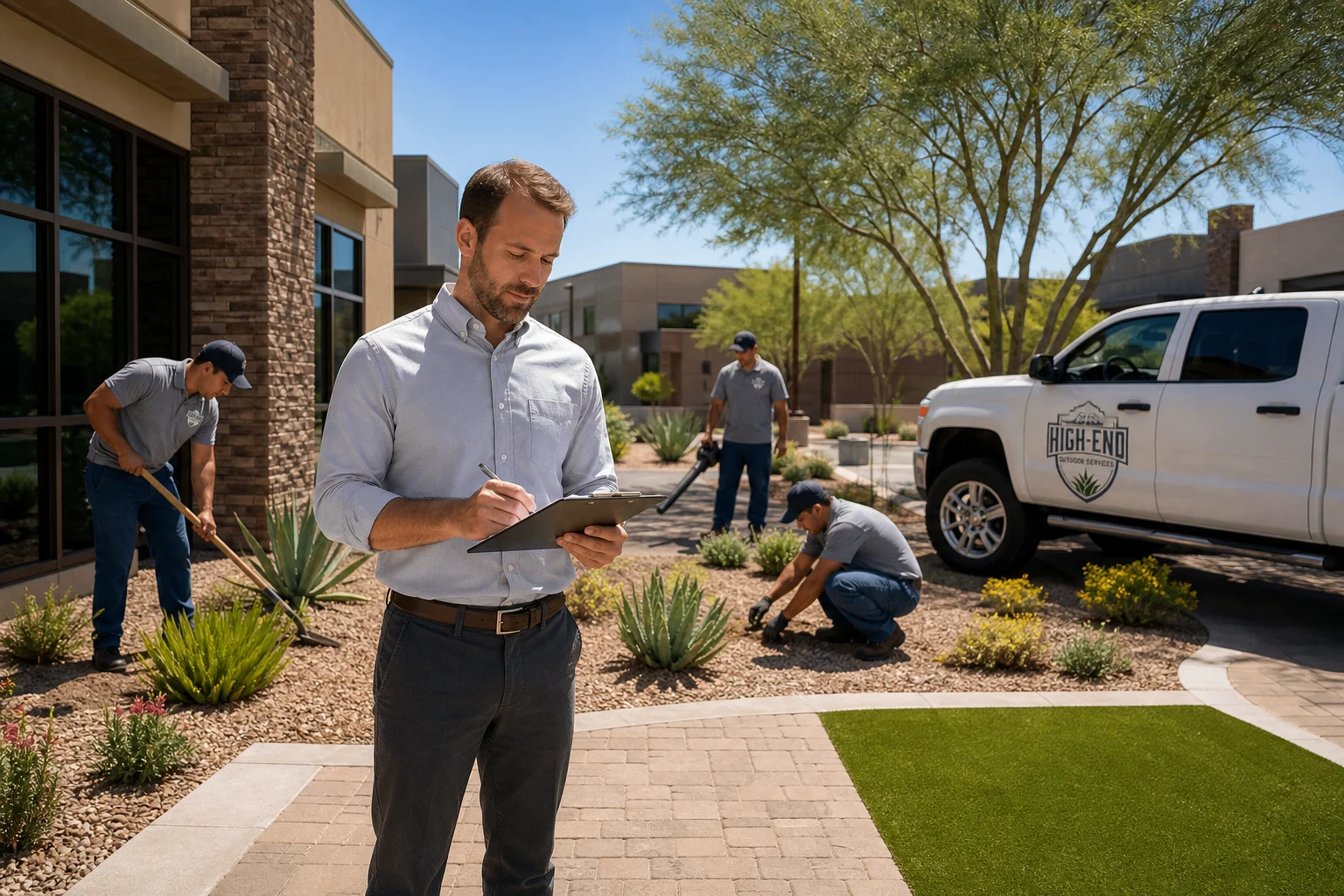
The lowest bid rarely represents the best value for an HOA. Evaluate candidates on years of HOA-specific experience in Arizona, references from comparable communities by acreage and home count, crew certification and supervision ratios, response protocols for irrigation failures, and technology platforms used for service documentation and photo reporting.
Confirm Arizona-Specific Knowledge
A company that understands Phoenix-area heat cycles, desert soil conditions, and water-district requirements will make fewer costly mistakes than one applying generic hoa landscaping standards from cooler climates. Ask candidates to describe how they manage turf stress during sustained high-heat periods and what their protocol is for monsoon season preparation. For a broader look at community-focused landscape work, visit Community Landscaping.
Structuring Your HOA Landscape Maintenance Plan for Arizona
An effective hoa landscape maintenance plan is a seasonal schedule aligned to Arizona's climate realities. Boards that review and approve a written annual plan before the contract year begins have far fewer disputes with their provider and maintain better control over discretionary spending.
Spring Priorities (February through April)
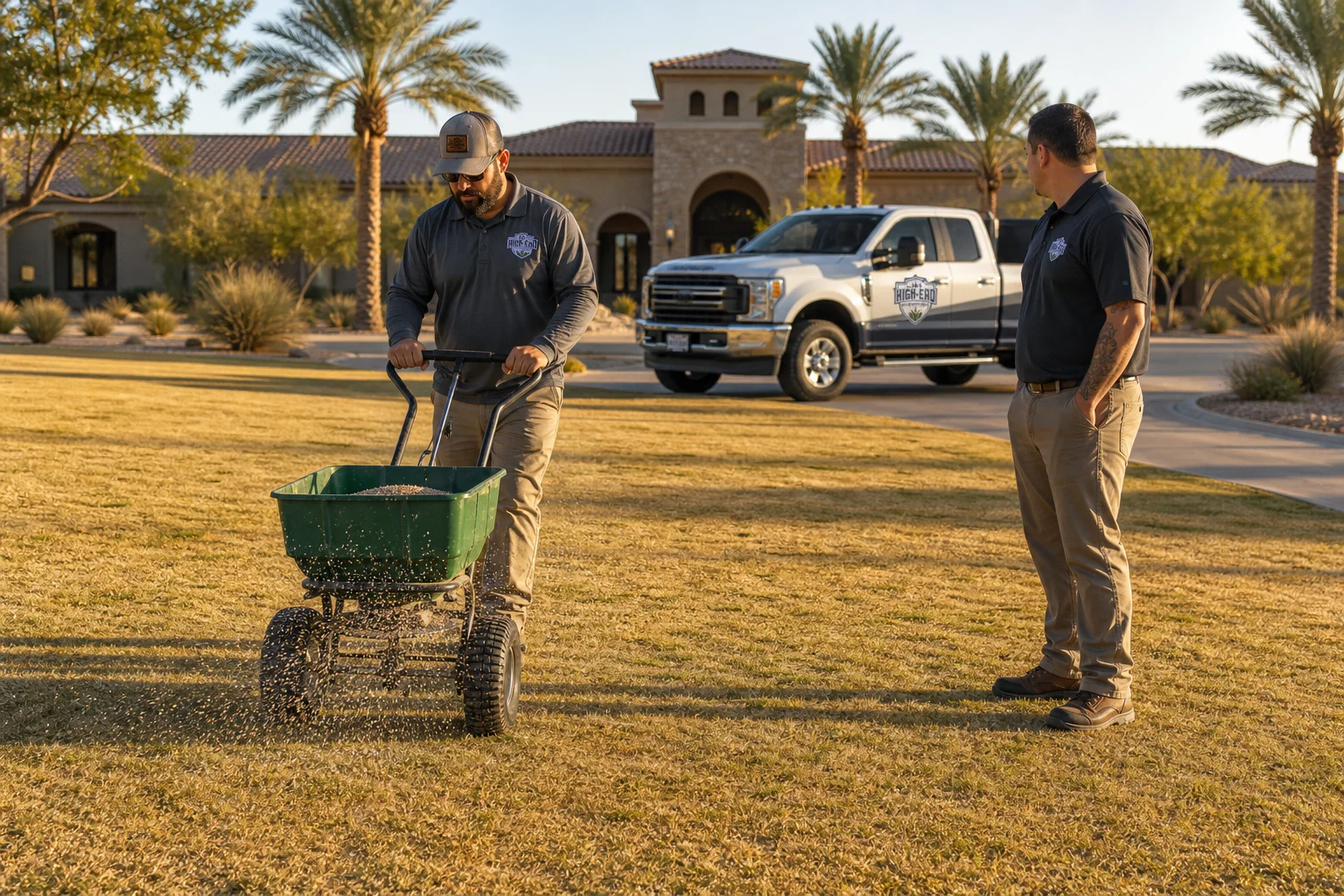
Spring is the right window for pre-emergent weed applications, ryegrass over-seeding, irrigation system audits, and annual color rotations at entry monuments. Tree trimming should begin by late spring to reduce liability from falling limbs during monsoon season.
Summer Management (May through September)
Arizona summers test every component of a landscaping program: turf struggles, irrigation run times extend, and heat accelerates weed growth in common areas. Boards should schedule regular crew check-ins during summer months and confirm that their provider has a documented turf management protocol for extended heat events.
Fall and Winter Maintenance (October through January)
Fall is transition season, when Bermuda grass goes dormant and winter ryegrass is overseeded to keep common areas green. This is also the optimal window for hardscape maintenance, tree work, and large-scale planting projects that would stress plants if undertaken in summer. For a month-by-month breakdown, see our guide to How Often Should Commercial Properties Be Serviced? The Arizona Maintenance Calendar.
Native Plants, Water Management, and Common Area Sustainability
Arizona's water agencies are placing increasing pressure on communities to reduce outdoor irrigation, and HOA boards are directly responsible for compliance. Integrating native plants into common area designs is one of the most reliable long-term strategies for meeting water reduction targets while maintaining attractive grounds.
Why Native Plants Belong in HOA Landscapes
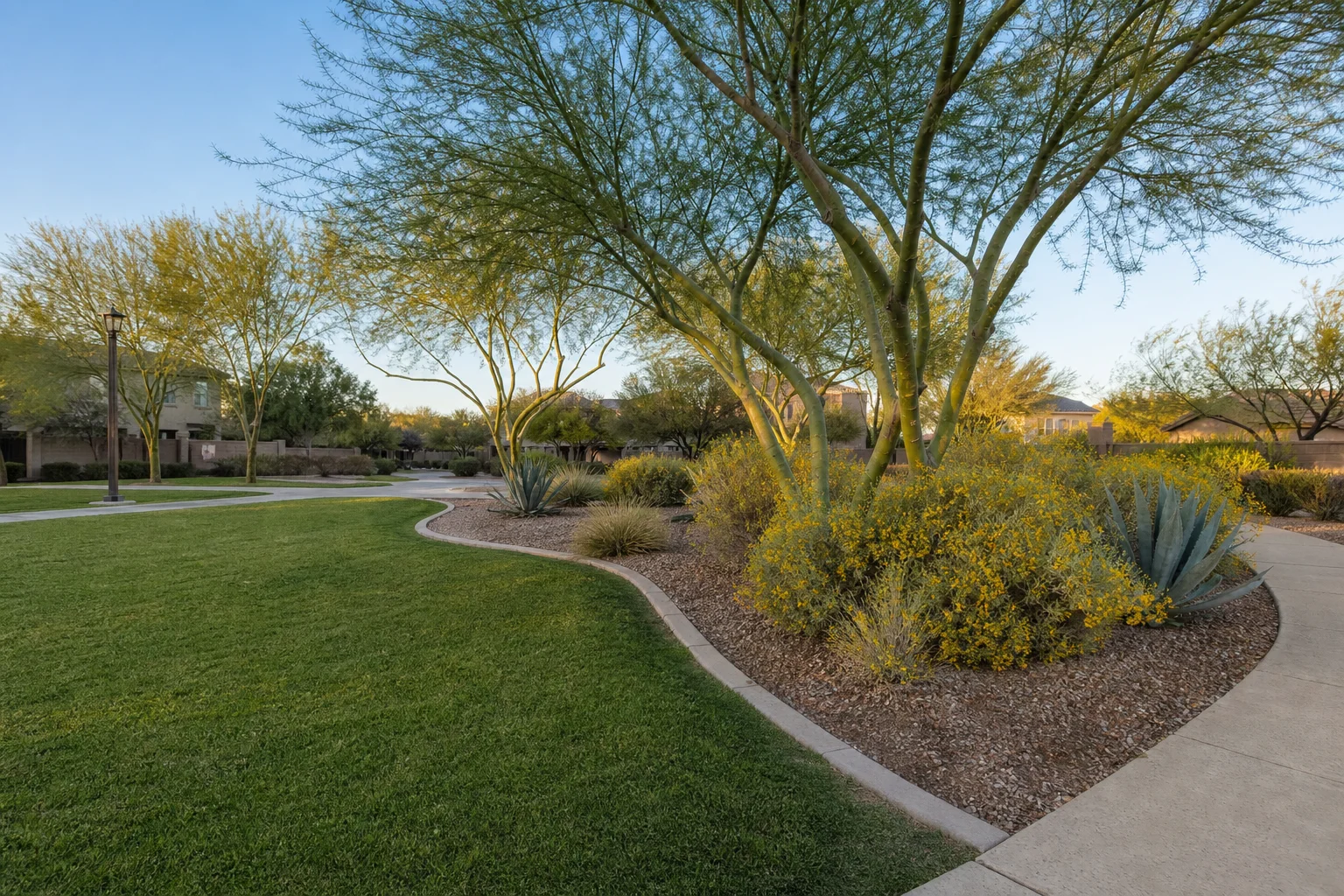
Native plants such as desert willow, palo verde, brittlebush, and agave are adapted to Arizona's heat and require significantly less supplemental irrigation once established. A landscape maintenance program that gradually transitions high-water turf zones to native plant beds reduces monthly water costs, lowers required crew hours, and aligns with sustainability expectations that many homeowners now hold for their association.
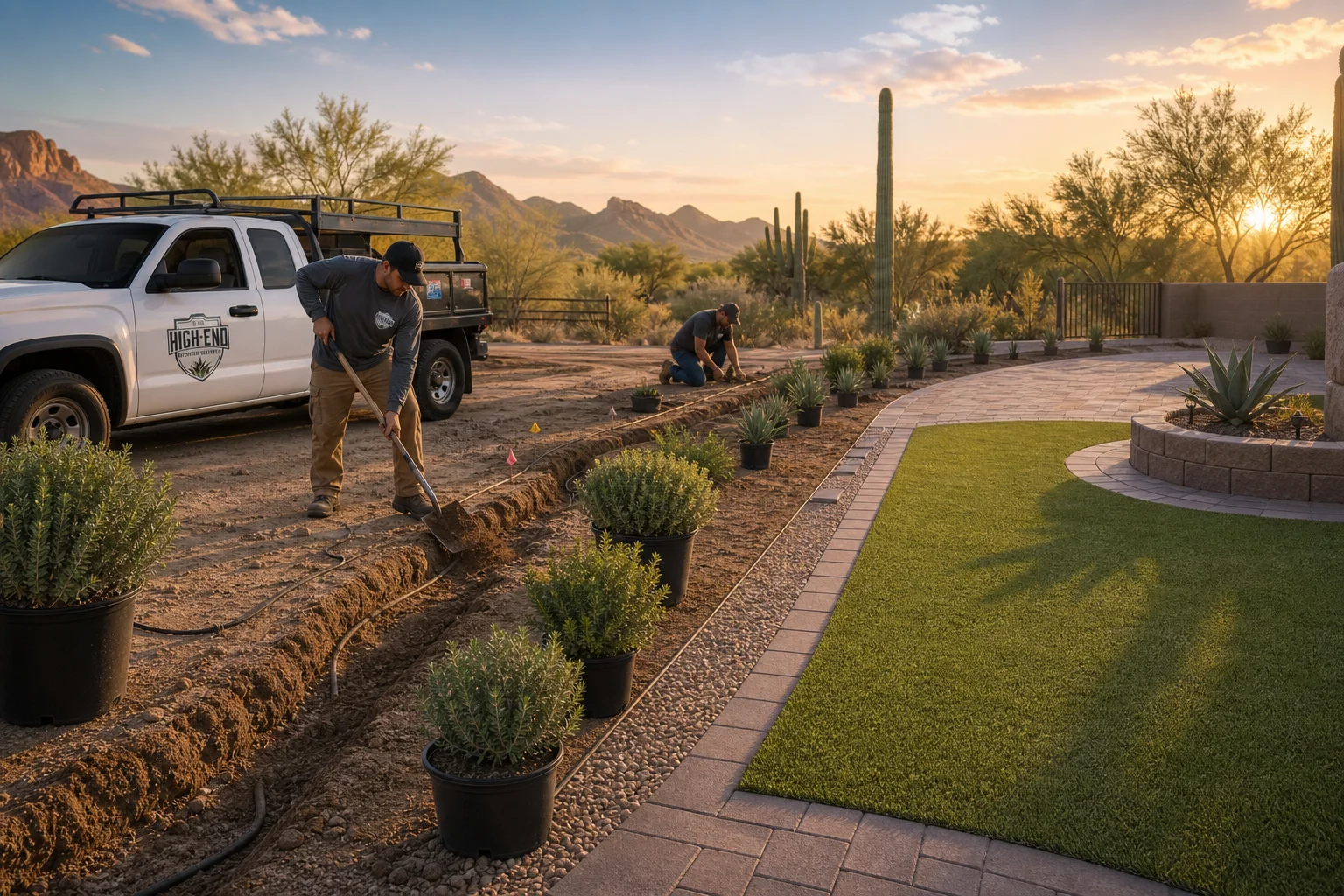
This transition is not undertaken overnight. Boards should work with their landscape maintenance provider to identify phased conversion zones, beginning with lower-visibility perimeter areas before expanding to high-visibility entries.
Irrigation Systems: The Hidden Budget Driver
In most Arizona HOA communities, irrigation is the largest single operating expense within the landscape maintenance budget. Broken heads, controller malfunctions, and evapotranspiration mismatches can add substantial waste per billing cycle. Boards should require quarterly irrigation audits and documented water consumption reports by zone.
A provider that proactively identifies inefficiencies is worth far more than one that only responds to reported breakdowns. Sustainable program strategies are covered in depth in Implementing Effective Landscape Maintenance Programs for Commercial Properties.
Frequently Asked Questions
How often should HOA common areas receive landscape maintenance service?
Most Arizona HOA communities require weekly service from March through October and bi-weekly service from November through February. High-traffic areas such as entry monuments and clubhouse grounds may warrant more frequent attention. The right frequency depends on plant type, irrigation access, and performance standards established in the community's governing documents.
What should an HOA landscape maintenance contract include?
A well-structured contract specifies every maintained zone, service frequencies for each, response time guarantees for irrigation failures, photo documentation requirements, and clear language distinguishing routine maintenance from billable extras. Boards should also review escalation procedures for scope changes and the criteria for triggering additional billing. For a thorough breakdown, see Landscape Maintenance for Gated Communities: Scope, Frequency and Standards.
How do HOA boards evaluate landscaping company performance?
Performance is best measured against the standards defined in the original contract. Boards should conduct monthly site inspections using a standardized scorecard, review service documentation submitted by the provider, and survey homeowners annually. Persistent failures to meet documented standards activate the remediation procedures built into the service agreement.
How should an HOA board approach budgeting for hoa landscape maintenance?
Rather than benchmarking against regional averages, boards should build the budget from documented acreage, plant asset counts, required service frequencies, and known capital replacements. A reputable landscaping company will provide detailed cost breakdowns rather than a single lump-sum figure, giving the board full visibility into every line item.
When should a community consider transitioning common areas to native plants?
The right time to begin planning a native plant transition is during a contract renewal or capital improvement planning cycle. Work with your landscape maintenance provider to identify zones with the highest water consumption. Phased transitions reduce budget impact and give homeowners time to adjust to the new aesthetic in lower-visibility areas before changes reach main entrances.
Start Your Community's Landscape Maintenance Plan with HEOS AZ
Boards that approach hoa landscape maintenance with a defined scope, a seasonal plan, and a provider selected through a structured RFP process consistently deliver stronger community outcomes at a lower total cost. To request a site consultation and learn how HEOS AZ serves HOA communities across Arizona, visit Commercial Maintenance.