Landscape Maintenance for Gated Communities: Scope, Frequency and Standards
Landscape maintenance for gated communities demands a defined scope, consistent scheduling, and standards calibrated to the expectations of residents who invest in premium living. From entry monuments to shared recreational spaces, Community Landscaping sets the visual standard that distinguishes a well-managed community from one that simply gets by.
By HEOS AZ Team, Outdoor Living Specialists
What Landscape Maintenance Scope Covers Inside Gated Communities
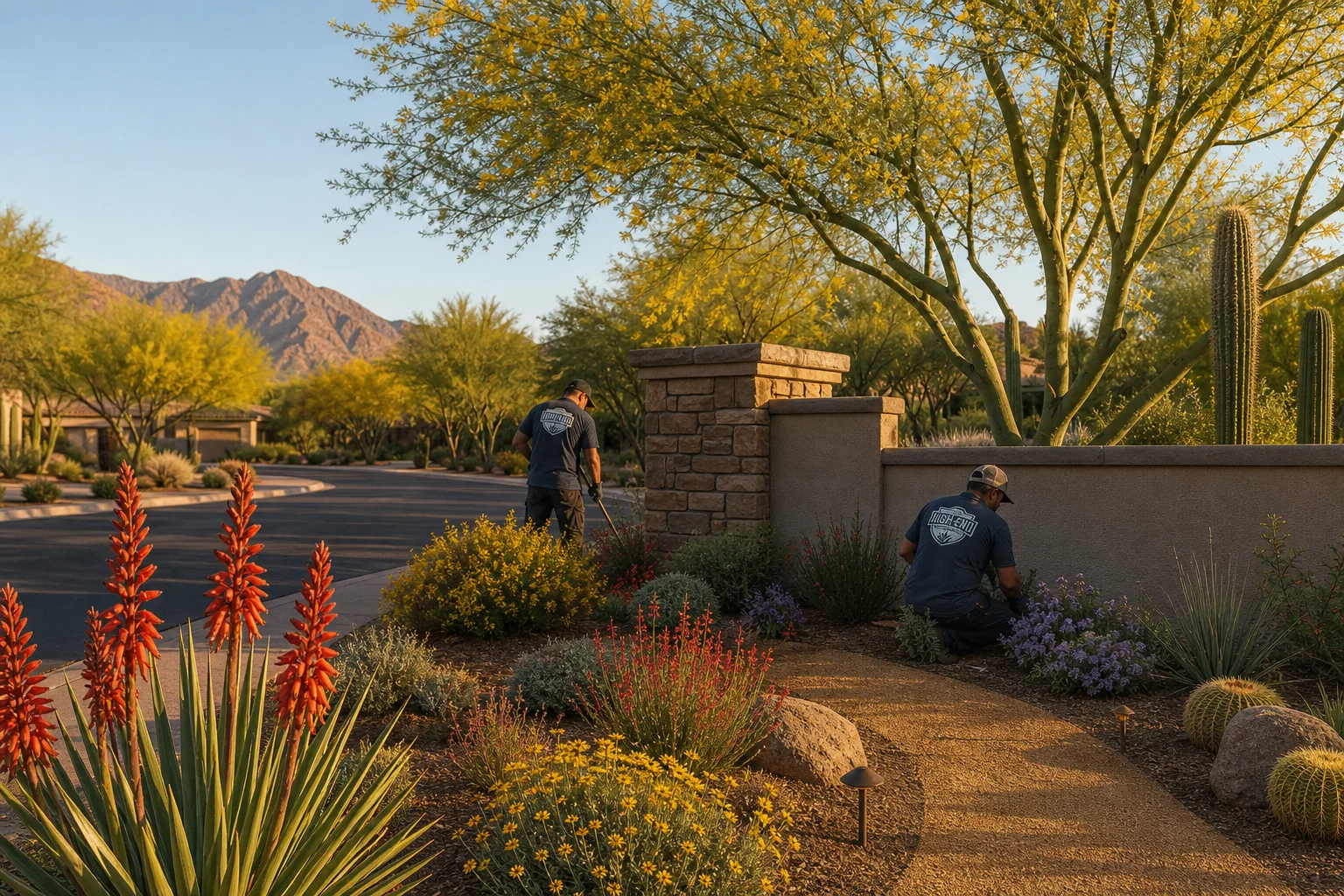
Gated communities present a layered maintenance challenge. Unlike a standalone commercial property or single-family home, these environments include entry monuments, perimeter corridors along security walls, interior roadway medians, retention basins, and shared amenity zones. Each zone carries different maintenance requirements and different visibility to residents.
A professional scope for landscape maintenance for gated communities typically addresses several distinct areas:
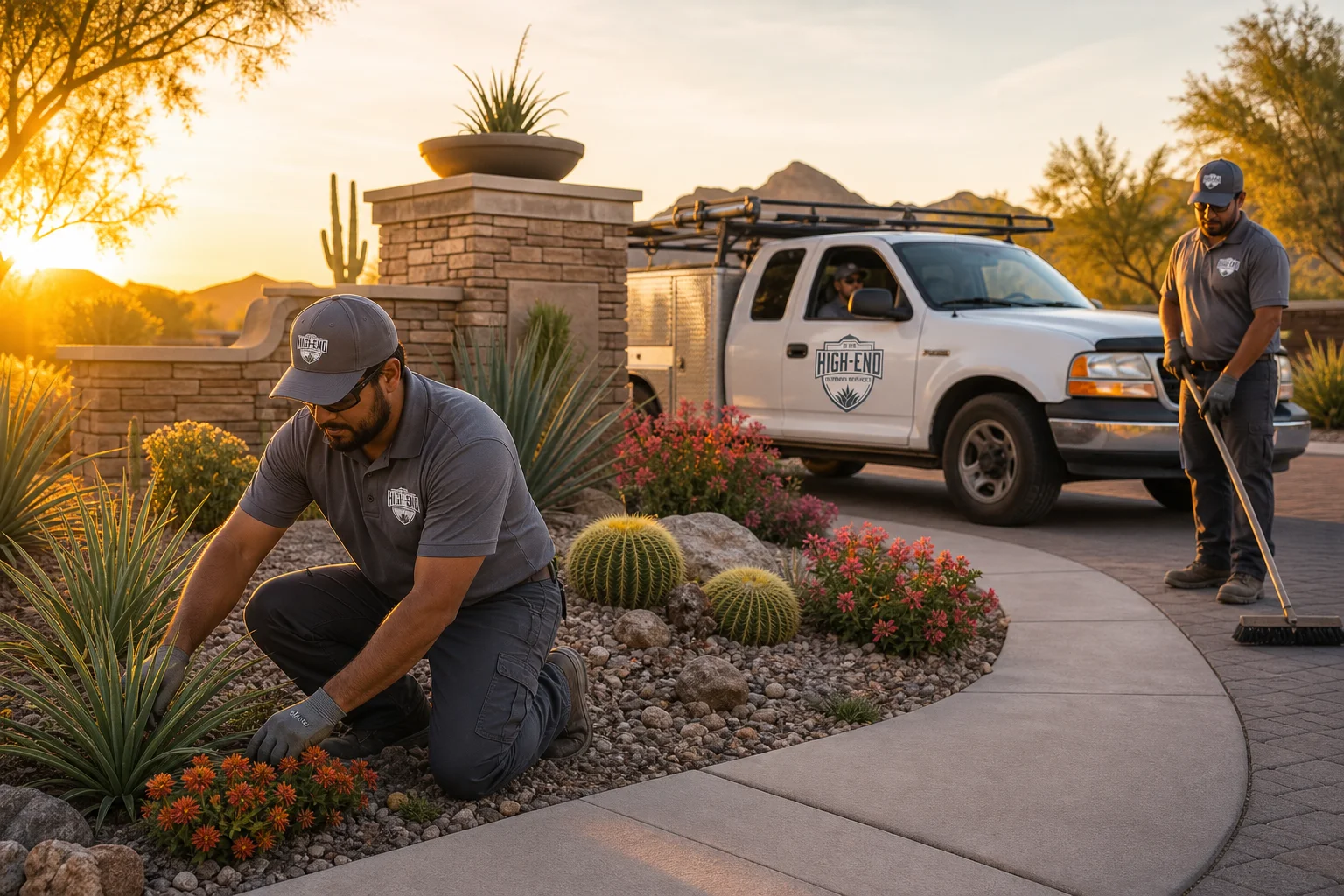
Entry and gate corridors. These are the first impression for everyone who passes through. Flowering annuals, trimmed hedges, and clean paver surfaces must hold a premium standard at every visit.
Interior roadway medians and berms. Desert plantings, turf strips, and groundcover along community roads require regular mowing, edging, and irrigation inspections to stay uniform and healthy.
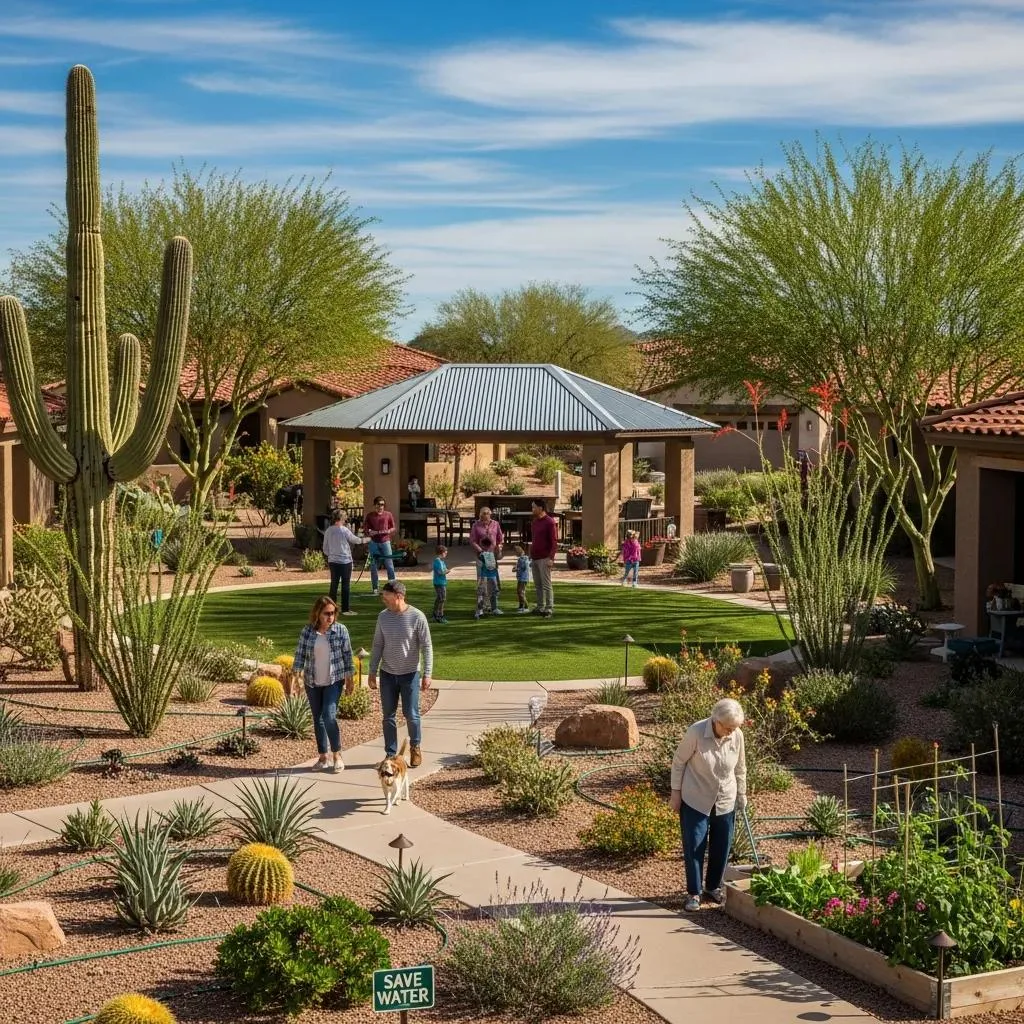
Common areas. Shared spaces including pool decks, clubhouse entries, fitness pavilions, and dog parks experience higher foot traffic and demand more frequent attention than private lots. These spaces define the daily experience of luxury living inside the community.
Perimeter landscaping. The interior edge of security walls must stay clear of overgrowth that disrupts the clean sightlines residents expect from a premium estate setting.
Retention and detention basins. Planted with native grasses or rock mulch, these zones need seasonal debris clearing and erosion monitoring throughout the year.
Our guide to Local Landscape Maintenance Services That Transform Scottsdale Communities details the service patterns that high-end Arizona communities rely on most.
Scheduling Landscape Maintenance for Gated Communities Year-Round
One of the first questions HOA boards and property managers ask is how often maintenance services need to run to maintain consistent standards. The answer depends on season, plant density, turf coverage, and what the community's governing documents specify as the baseline.
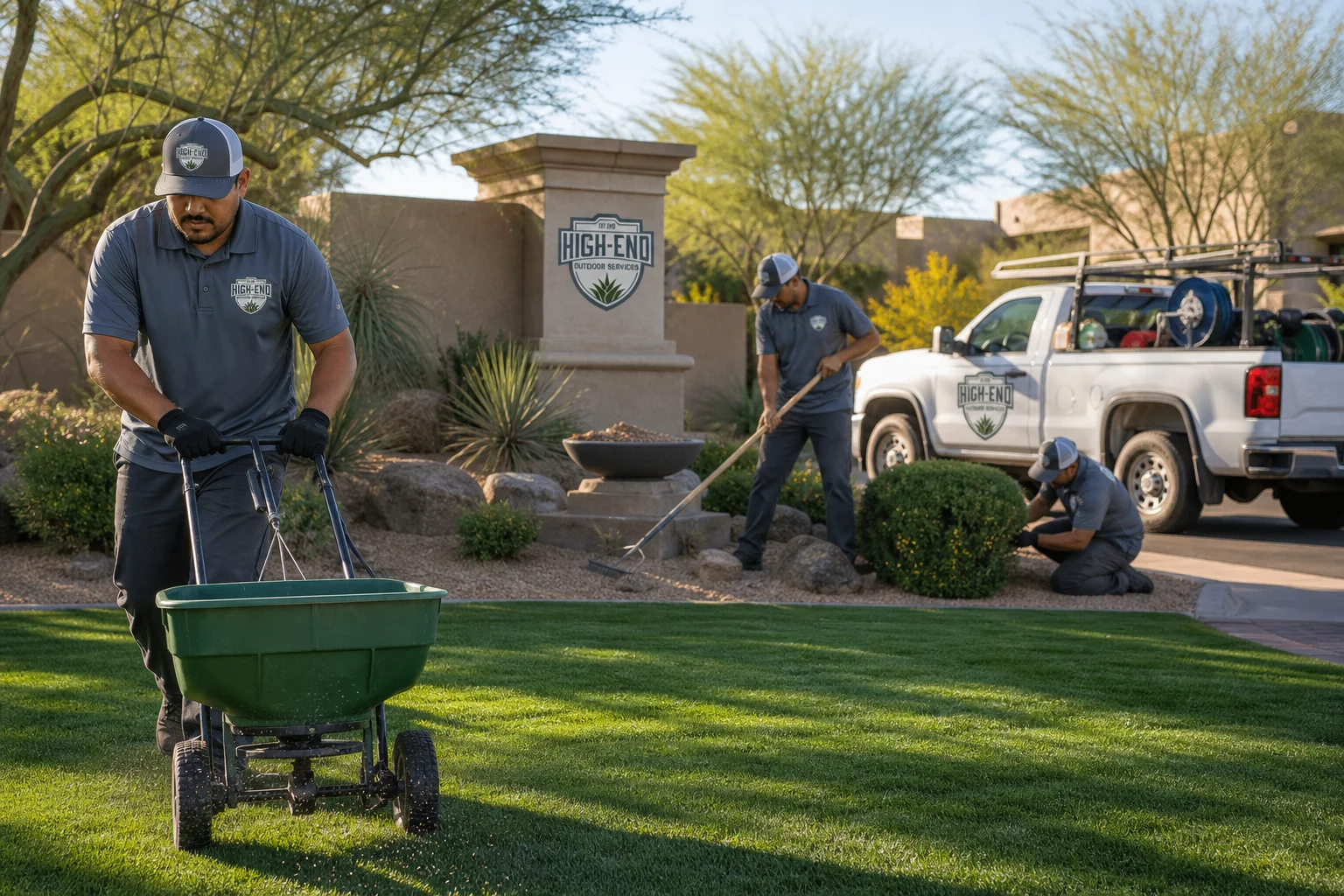
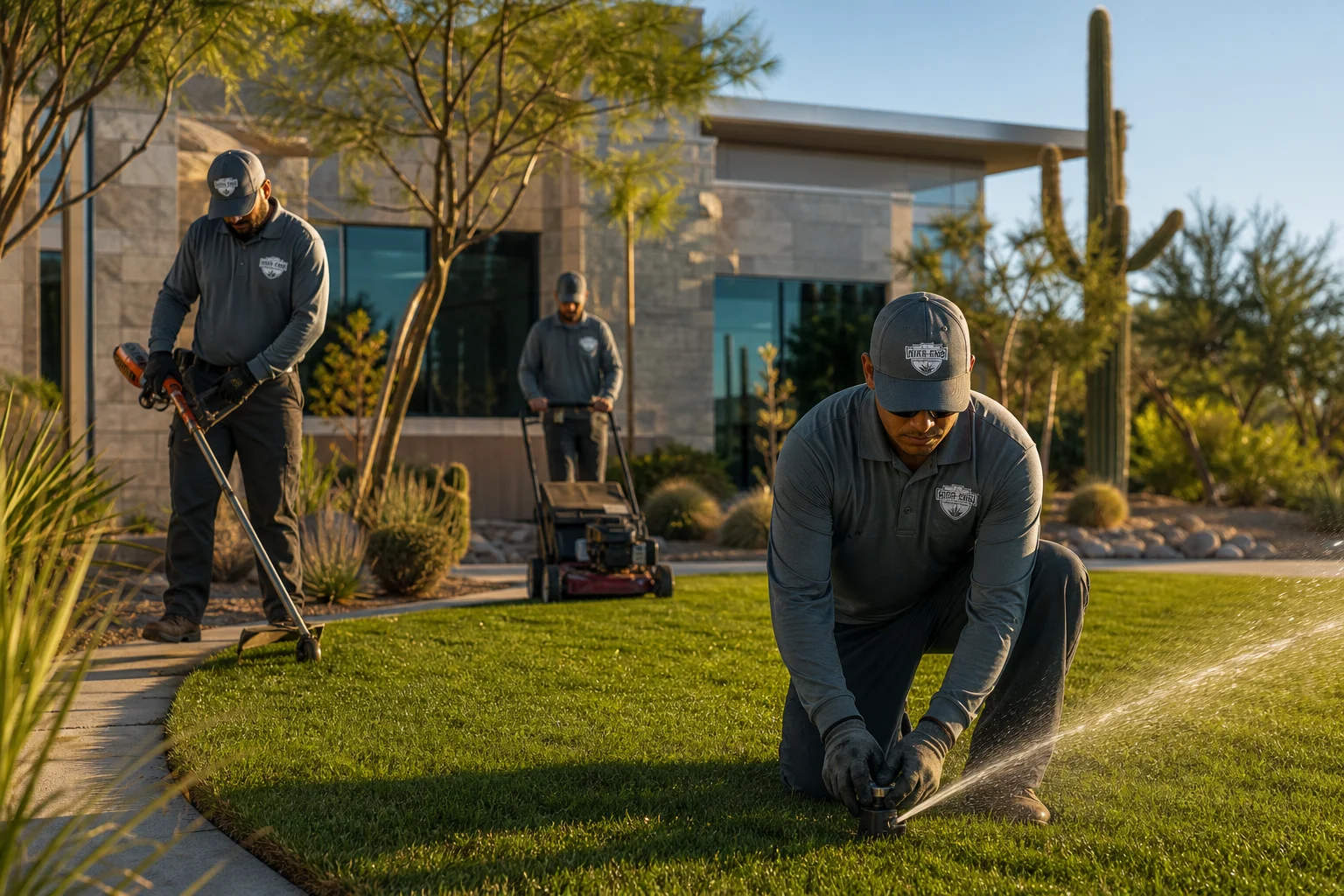
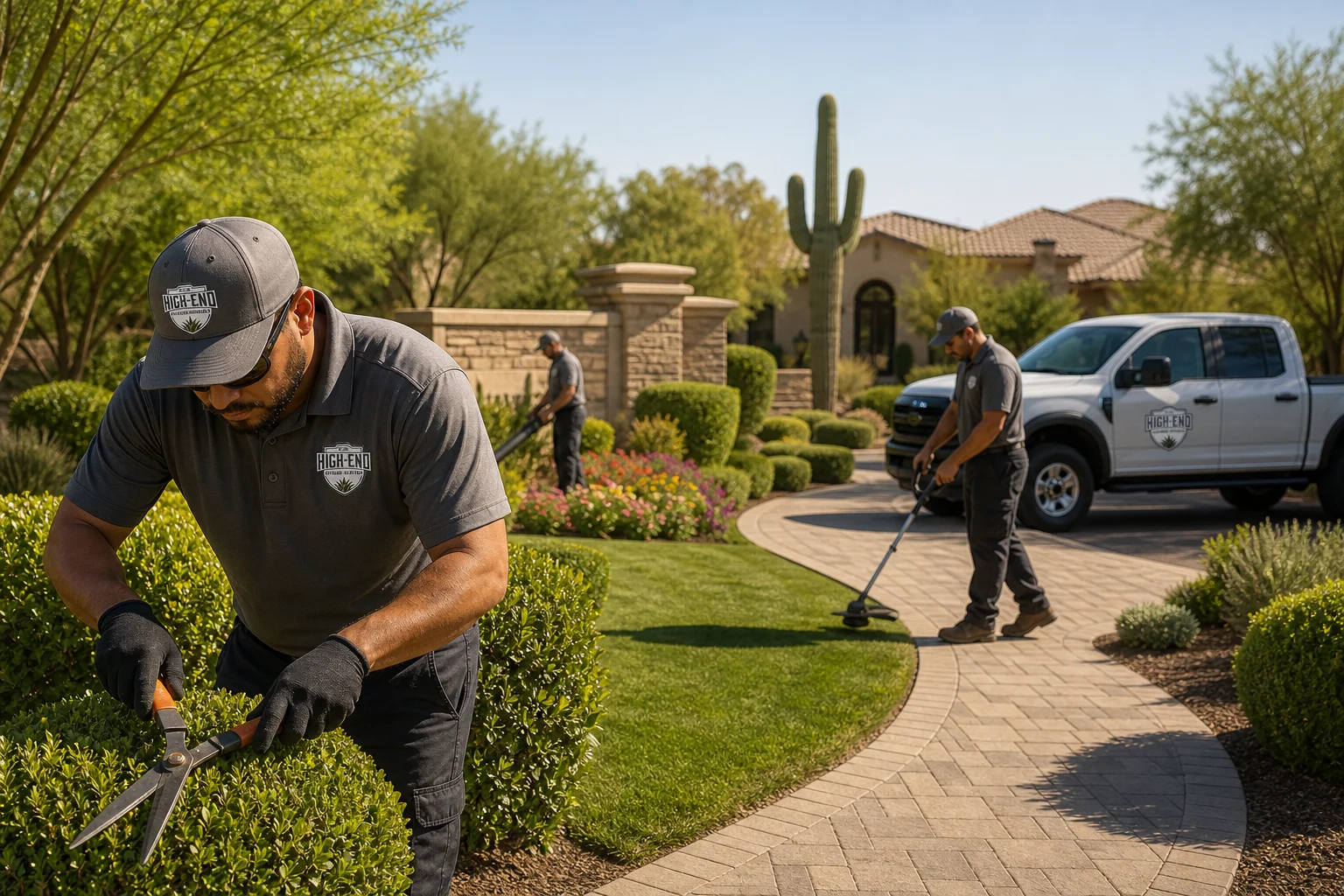
Weekly visits cover mowing and edging of all turf areas, blowing hardscape surfaces clean, litter removal across common areas, and a quick check for obvious irrigation failures.
Bi-weekly or monthly visits handle deeper pruning of shrubs and ornamental grasses, fertilization program applications, pre-emergent weed control in gravel areas, and palm maintenance where applicable.
Quarterly or seasonal visits address larger scope items: tree canopy elevation, seasonal color rotations at entry monuments, irrigation audits before Arizona's summer heat intensifies, and post-monsoon cleanup after heavy storm events.
Arizona's climate compresses this calendar in meaningful ways. Monsoon season, running from late June into September, accelerates weed germination in decomposed granite beds and places added stress on plant health across the property. A professional contractor builds a dedicated monsoon prep visit into the annual schedule rather than treating it as an extension of a routine weekly stop.
For HOA boards comparing their current contract frequency against community needs, HOA Landscaping outlines service scope expectations designed for Arizona residential communities.
Standards That Define Quality in Gated Community Landscaping
The difference between adequate and exceptional landscape maintenance in gated communities becomes visible within seconds of entering the gate. Communities that hold their landscape to a measurable standard share consistent benchmarks.
Zero-tolerance for uneven edges. Turf borders along curbs and planting beds should be crisply cut at every visit. Ragged edges are among the fastest visual signals of maintenance gaps.
Consistent plant form throughout each zone. Shrubs trimmed to matching heights and shapes across a corridor communicate intentional care. Inconsistent trimming reads as neglect even when the plants themselves are healthy.
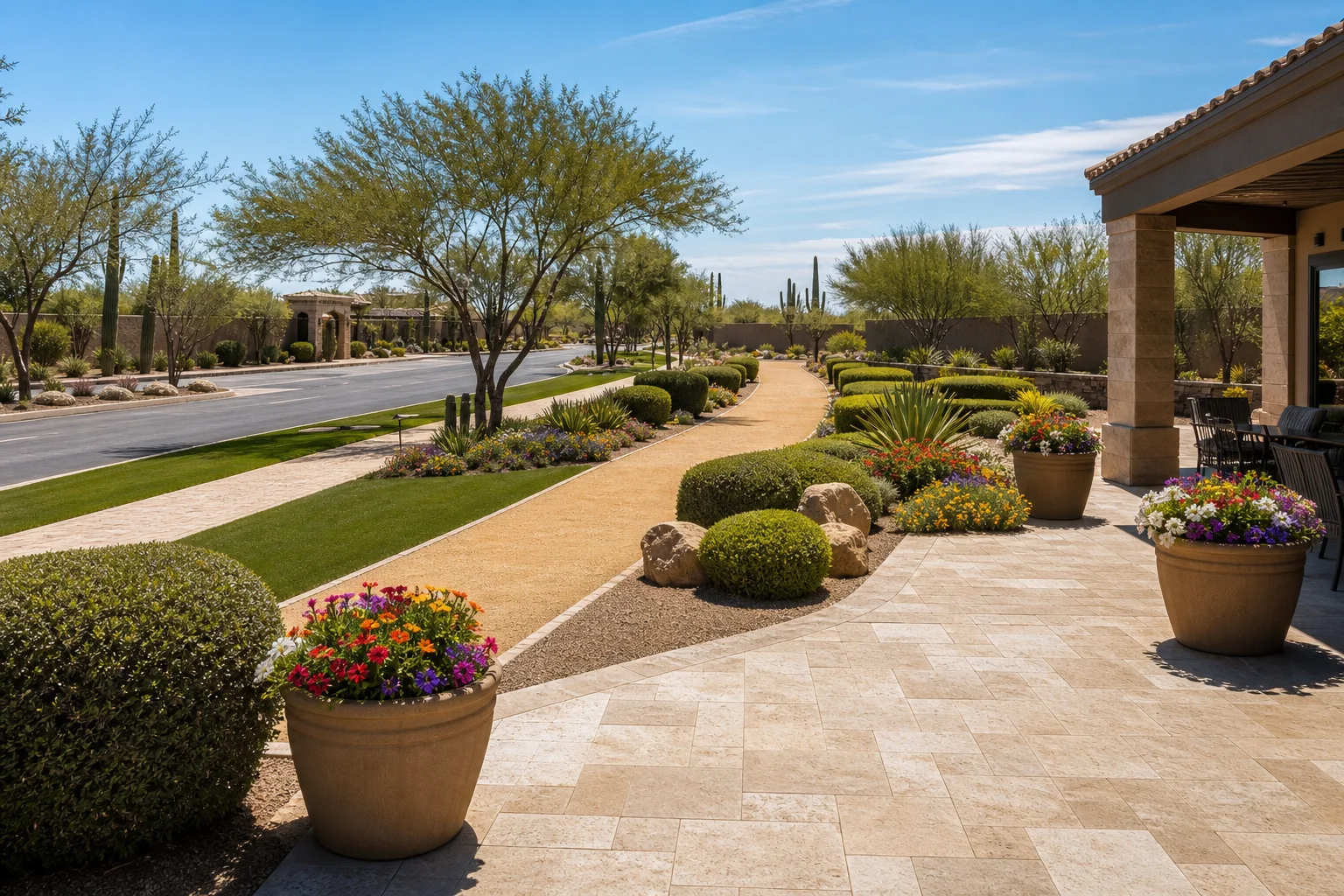
Hardscape kept clear of debris at all times. Blowing pool decks, entry plazas, and pedestrian paths is standard practice at every visit. Accumulated debris or moss buildup on travertine or pavers signals rotation gaps that residents notice quickly.
Functional irrigation throughout every service cycle. A broken head left running across a full billing cycle damages plant health and inflates water costs. Premium maintenance services include irrigation monitoring with same-week repair authorization.
The Importance Of Community Landscape Maintenance For Enhancing Neighborhood Appeal examines how sustained landscape standards directly affect real estate value and resident satisfaction within gated communities.
Protecting Plant Health in Arizona's Desert Climate
Plant health is the foundation of every landscape maintenance program, and in Arizona's desert environment it requires knowledge that general maintenance crews may lack. Extreme summer temperatures, alkaline soil composition, and low ambient humidity create stress conditions that affect ornamental plants, desert natives, and transplanted species in very different ways.
Deep-Root Fertilization Timing
Established trees and large shrubs in common areas benefit from slow-release fertilization applied in late winter and again in early fall. This timing builds root reserves without pushing tender new growth during peak heat months when young tissue burns quickly under Arizona conditions.
Irrigation Scheduling Matched to Plant Type
Grouping plants by water requirement and programming irrigation zones accordingly is a foundational practice that many older community designs fail to follow. A quarterly audit by a licensed technician ensures that drought-tolerant desert species are not being overwatered. Overwatering causes more ornamental decline in Arizona landscapes than drought does, and correcting zone scheduling is among the highest-return adjustments a maintenance program can make.
Pest and Disease Monitoring
Whitefly pressure on lantana, root rot from irrigation overrun, and scale infestations on citrus-type ornamentals recur in gated communities where dense planting creates favorable conditions for spread. Monthly monitoring by an experienced crew catches infestations before they move across a zone and become costly to treat.
The Ultimate Guide To Turf Maintenance Services For Hoa Communities covers both synthetic and natural turf maintenance strategies that preserve the outdoor spaces residents use daily.
Setting Clear Standards in Your Landscape Maintenance Contract
One of the most overlooked factors in sustaining premium gated community landscaping is the specificity of the written maintenance contract. Vague language such as "maintain landscaping in a neat condition" creates interpretation gaps that produce inconsistent results. Communities that achieve consistently high standards document service frequency by zone, target plant heights and forms for key species, irrigation audit frequency with defined response times, seasonal rotation schedules for color beds, and standards for debris clearing at every visit.
When a contractor operates against a documented scope, accountability is built into every service date. For a practical contracting framework that HOA boards can adapt directly, see Implementing Effective Landscape Maintenance Programs for Commercial Properties. A documented scope is the management tool that eliminates ambiguity and protects the community's property investment in design and outdoor spaces year after year.
Frequently Asked Questions
How often should maintenance services run in a gated community?
Most premium Arizona gated communities schedule weekly visits during the active growing season from March through October, and bi-weekly visits during the winter months. Communities with extensive turf coverage or elaborate seasonal color at entry monuments typically maintain weekly service year-round to sustain the consistent standards residents expect from a luxury living environment.
What do maintenance services typically cover in shared common areas?
Common area landscape maintenance services include mowing and edging turf, trimming shrubs and ornamental grasses, blowing hardscape surfaces clear of debris, litter removal, irrigation head inspection, and scheduled seasonal tasks such as pre-emergent weed applications or annual color rotations. The full scope should be documented in writing with clear service frequencies assigned to each zone.
How does Arizona's climate affect plant health in gated communities?
Arizona's summer heat, alkaline soil pH, and low humidity amplify irrigation inefficiencies and disease pressure. Desert-adapted plants tolerate heat well but decline rapidly from overwatering. Ornamental species require intensive monitoring during summer months. A maintenance program built for Arizona adjusts fertilization timing, irrigation scheduling, and pruning calendars to match the local climate rather than a generic national template.
Who is responsible for landscape maintenance inside a gated community?
The HOA or residential association handles all common area landscape maintenance: entry corridors, medians, shared amenity spaces, and perimeter planting. Individual homeowners maintain their private lots within the standards the HOA defines. The board or a contracted property management company oversees contractor performance and enforces the written maintenance scope on behalf of residents.
What distinguishes a premium landscape maintenance contractor from an average one?
Premium contractors provide a documented, measurable scope, assign consistent crews at each visit, communicate proactively about plant health concerns, and resolve irrigation failures within days. They maintain service records by zone so the board can verify what was performed on any given date and demonstrate ongoing care to current and prospective residents.
Bring Professional Standards to Your Community's Outdoor Spaces
Gated communities that sustain exceptional landscape maintenance do so through clear contracts, consistent scheduling, and landscape contractors who understand what premium Arizona property care requires. Reach out via Contact to discuss a maintenance scope built around your community's expectations, and let HEOS AZ deliver the outdoor care your property deserves.