How Often Should Commercial Properties Be Serviced? The Arizona Maintenance Calendar
How often should commercial properties be serviced depends on Arizona's extreme climate, the systems involved, and the property's visibility and use. Commercial Maintenance for most Arizona commercial properties requires weekly grounds visits during peak season, monthly irrigation inspections, quarterly system audits, and semi-annual hardscape checks to protect property value and curb appeal year-round.
By HEOS AZ Team, Outdoor Living Specialists
Why Arizona's Climate Changes Everything for Commercial Property Service
Arizona's environment creates maintenance demands that no standard national property maintenance template can address. Temperatures routinely exceed 110°F through summer, UV exposure accelerates material degradation far faster than in temperate climates, and the monsoon season delivers sudden, intense rainfall that strains drainage systems and stresses landscaping in ways that compound over time.
For property managers and HOA boards operating across the Valley, commercial property maintenance in Arizona must account for three distinct climate phases: extreme heat stress, monsoon disruption, and a mild winter that creates an opportunity for system resets. Each phase carries specific service tasks that protect commercial real estate from preventable damage.
Commercial real estate owners who defer maintenance face compounding repair costs, accelerated replacement cycles, and tenant dissatisfaction that affects occupancy rates. Property management teams that treat service frequency as a strategic decision consistently outperform those that don't.
Preventive maintenance is not a discretionary budget item for Arizona commercial properties. It is the essential mechanism by which property managers protect asset value in a high-stress environment.
How Often Should Commercial Properties Be Serviced: Breaking It Down by Season
Understanding how often should commercial properties be serviced requires viewing the year through four distinct operational phases, each with its own service requirements and recommended frequencies for property managers and owners.
March to May: Pre-Summer Preparation
This window is the most critical preparation period. Property managers should schedule complete irrigation audits and adjust run times before peak heat begins. Hardscape inspections should confirm that winter temperature cycles have not lifted or cracked paving surfaces. Any deferred repairs must be completed now, while ground conditions remain workable. Spring also marks the transition from cool-season overseeding back to warm-season grasses on commercial properties.
June to September: Peak Heat Management
Monthly service visits are the absolute minimum frequency for commercial properties during Arizona's hottest months. Weekly irrigation spot checks are strongly advisable, since a single failed emitter can waste significant water volume before the next scheduled visit. Grounds maintenance for commercial properties with irrigated turf typically remains weekly through this period to ensure presentation standards are met.
October: Post-Monsoon Recovery
October is the single most important service month for commercial property maintenance. Monsoon rains deposit debris, compact soil around plant beds, and expose drainage issues not visible during dry conditions. A thorough October inspection covers irrigation system integrity, hardscape drainage channels, and plant health assessment across all areas of the property.
November to February: Cool-Season Reset
Arizona winters support active landscape work that is difficult during summer heat. Overseeding, new plant installations, hardscape repairs, and irrigation system recalibration all fit into this window. Regular maintenance frequency for grounds visits typically drops to bi-weekly during this period, while system inspection activity increases.
Grounds and Landscape Service Frequency for Commercial Properties
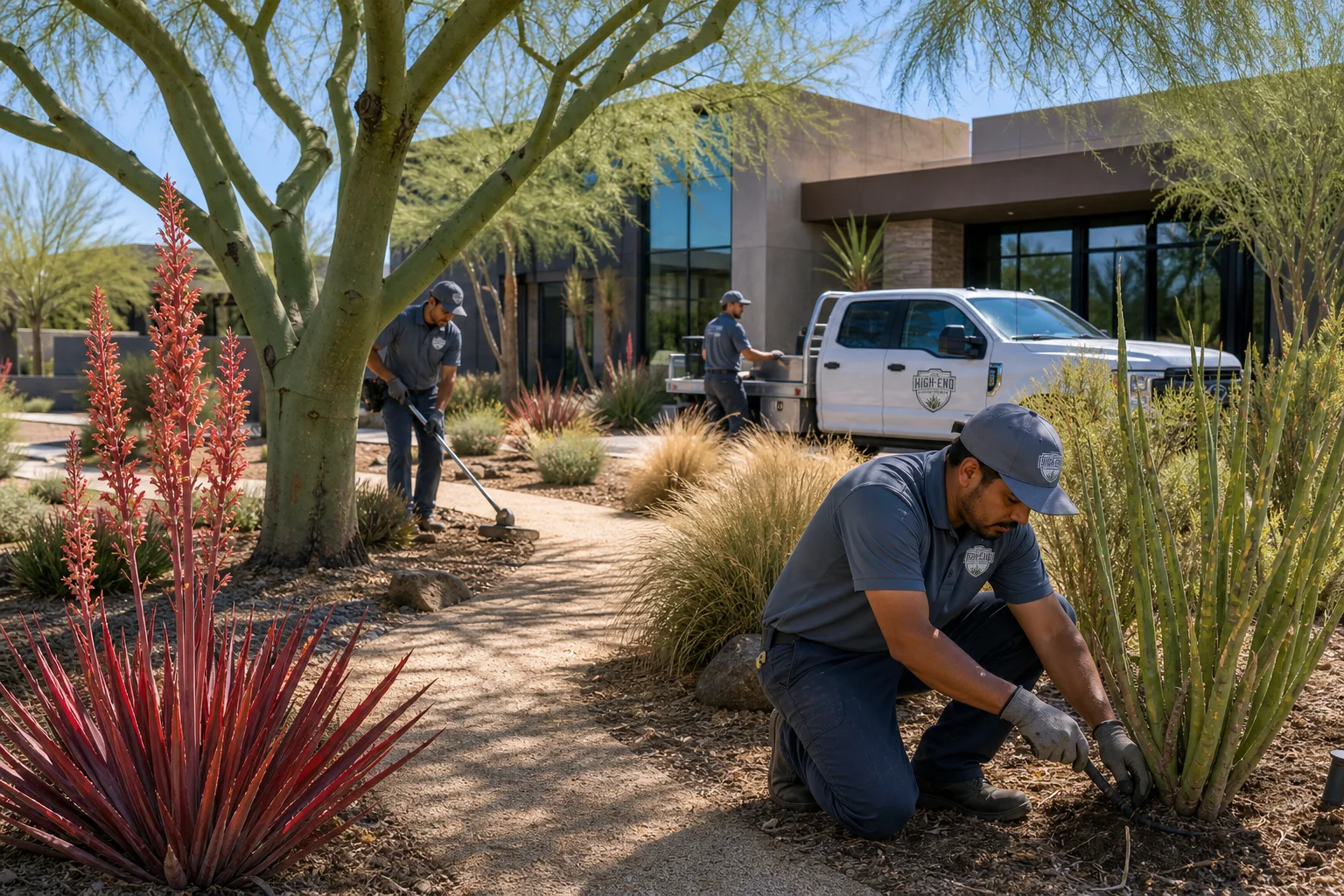
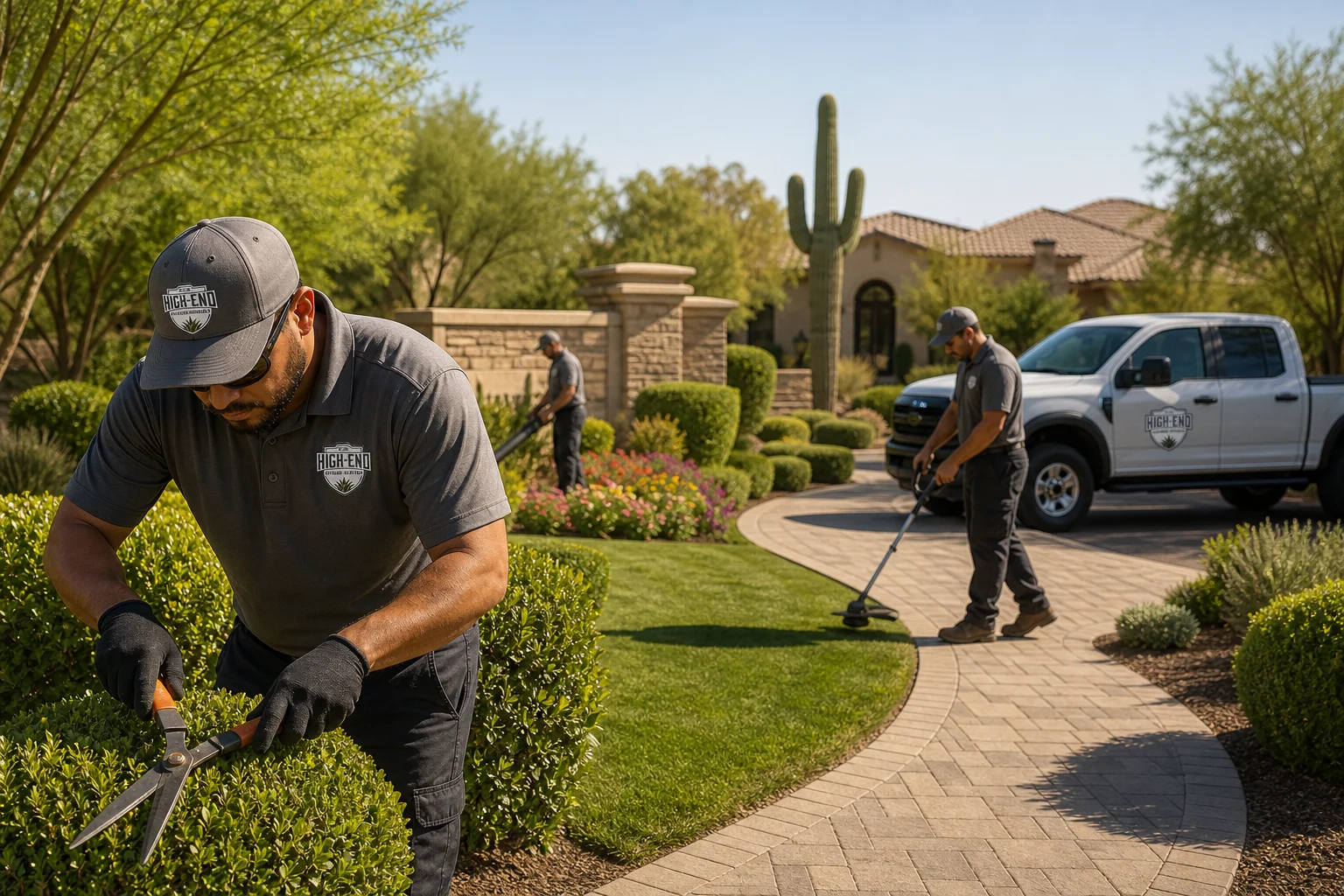
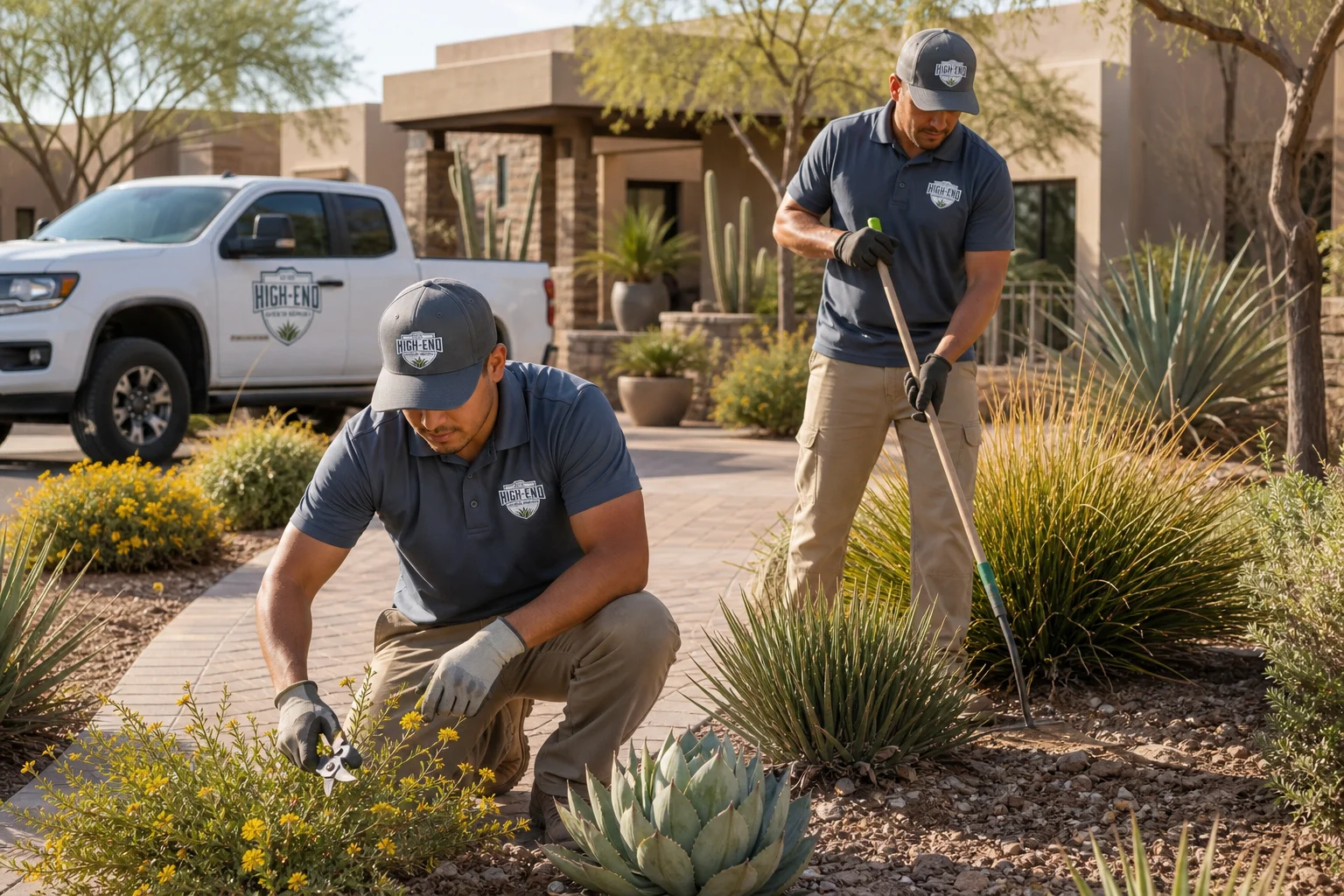
Grounds maintenance is the most visible element of commercial property maintenance and directly shapes how tenants, customers, and visitors perceive a property's management quality. For most Arizona commercial properties, weekly grounds service is standard during the growing season, with bi-weekly visits during cooler months.
A standard weekly service for commercial properties includes mowing and edging, debris removal, weed control in planting beds, and irrigation spot checks. Properties with desert-adapted native plantings may require less mowing frequency but more intensive weed monitoring after monsoon rains, which reliably stimulate weed germination across the Valley.
For HOA communities and larger commercial real estate portfolios, Implementing Effective Landscape Maintenance Programs for Commercial Properties provides a detailed framework for coordinating landscape maintenance services across properties with differing site complexity and seasonal needs.
Tree care requires its own service interval. Structural trimming on Arizona commercial properties typically follows two annual cycles: a spring trim before peak heat and a fall structural trim after monsoon season. Post-storm inspections after significant wind events are advisable given the damage potential on mature trees at commercial properties.
Irrigation System Servicing: Frequency and Priorities
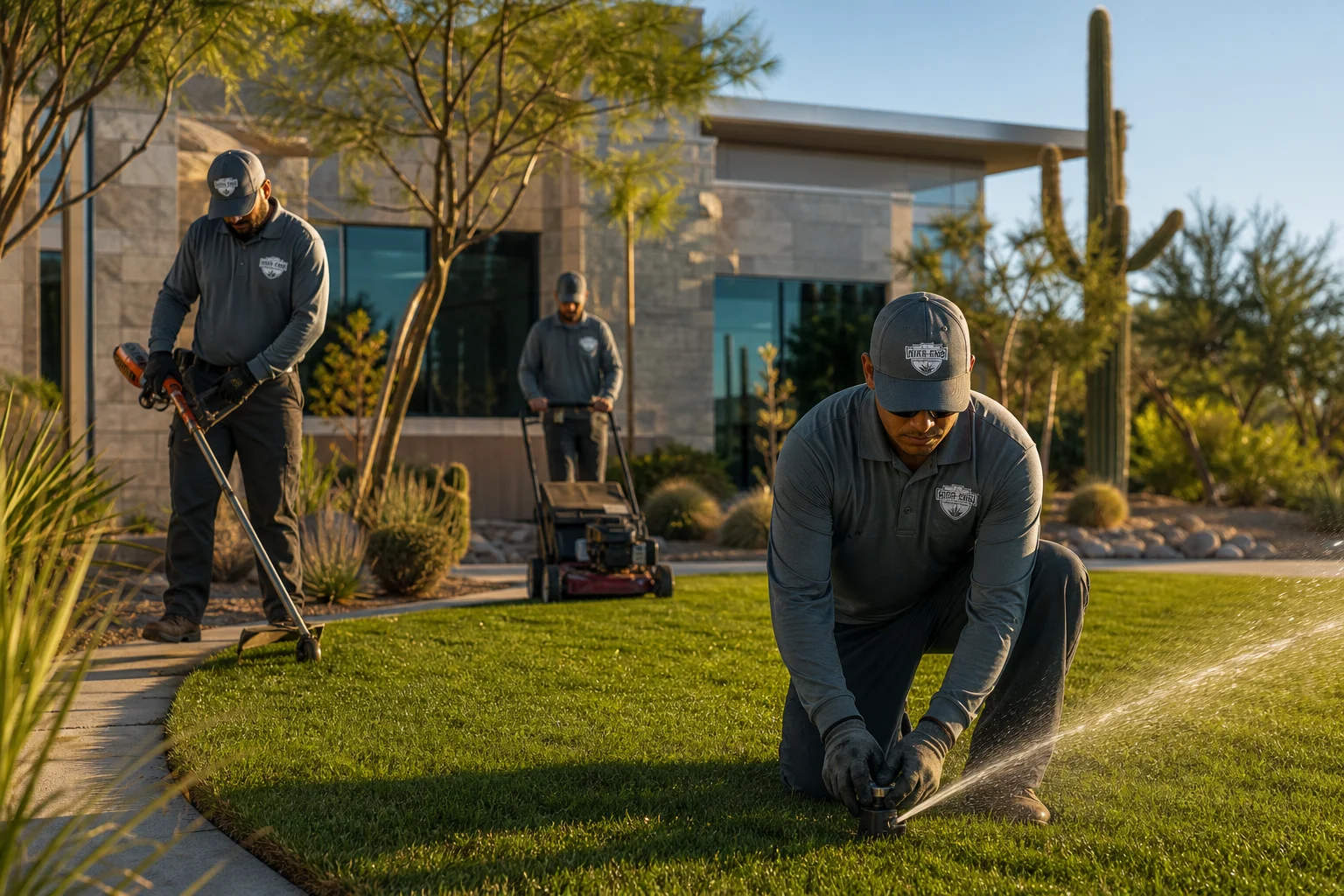
Irrigation is the infrastructure backbone of Arizona commercial properties, and no system carries a higher cost-of-failure profile. A failed irrigation valve or broken main line can damage thousands of square feet of landscape within days during peak heat. Monthly irrigation inspections are the baseline frequency for Arizona commercial real estate.
Each monthly inspection should verify head coverage patterns, identify clogged or broken emitters, confirm valve and controller function, and ensure that runtime schedules match current evapotranspiration rates. Quarterly, a more comprehensive audit should include pressure testing and complete controller programming review.
Our Irrigation Repair team regularly finds that commercial properties lose significant water volume through slow leaks and misaligned heads that accumulate into substantial costs before they become visible. Regular maintenance inspections consistently pay for themselves through water savings alone.
For properties considering synthetic turf as a water-efficiency strategy, the Expert Guide To Commercial Turf Installation In Arizona covers how artificial turf reduces irrigation demands while maintaining professional aesthetics for high-visibility commercial properties.
Hardscape Inspections and Annual Maintenance Planning
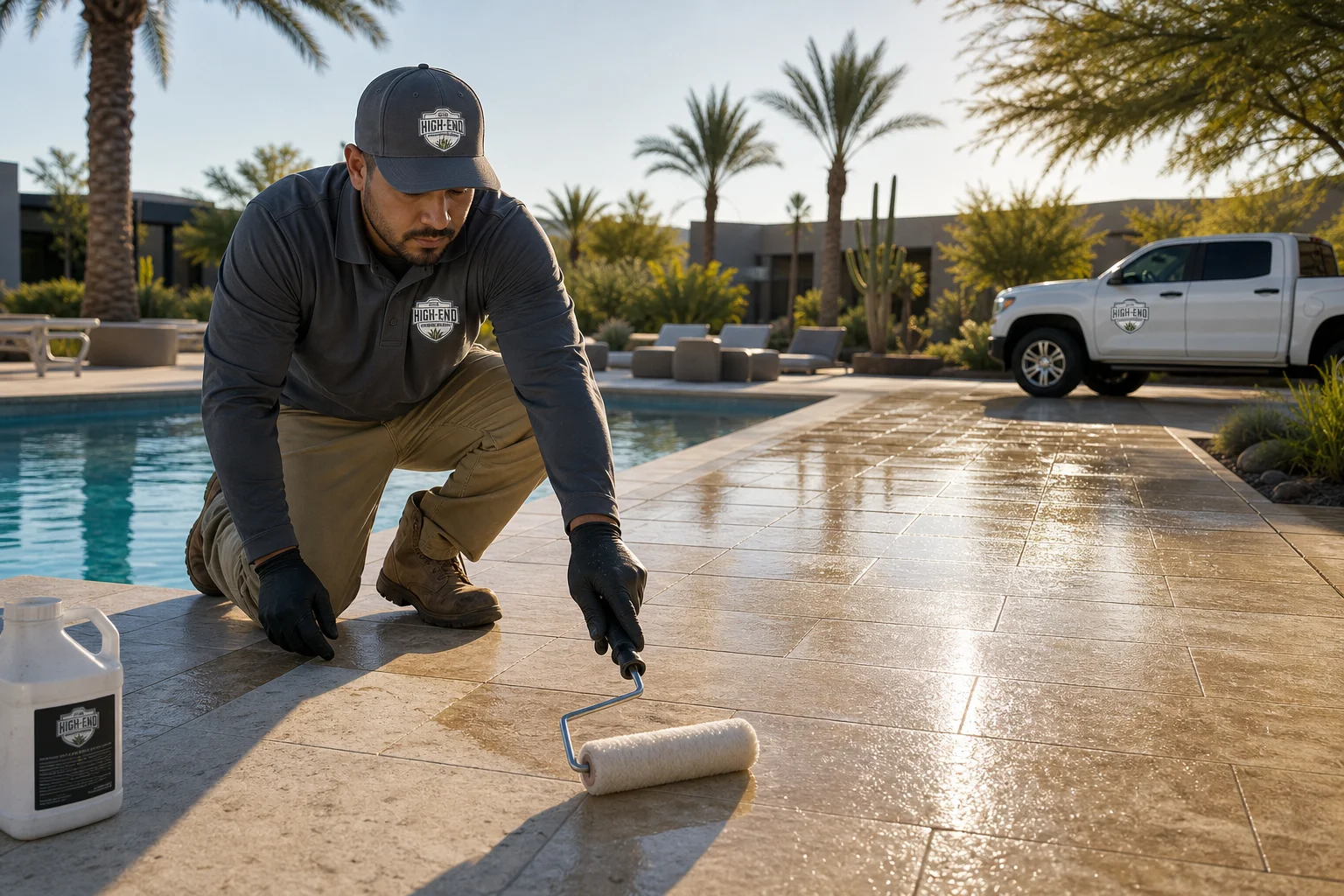
Hardscape surfaces including pavers, concrete, retaining walls, and outdoor structures require a distinct inspection schedule from grounds and irrigation systems. Annual inspections are the minimum standard for most commercial properties, but Arizona's thermal cycling accelerates surface stress considerably. Daily temperature swings of 30 to 50 degrees in some seasons work joints and surfaces in ways that compound over years.
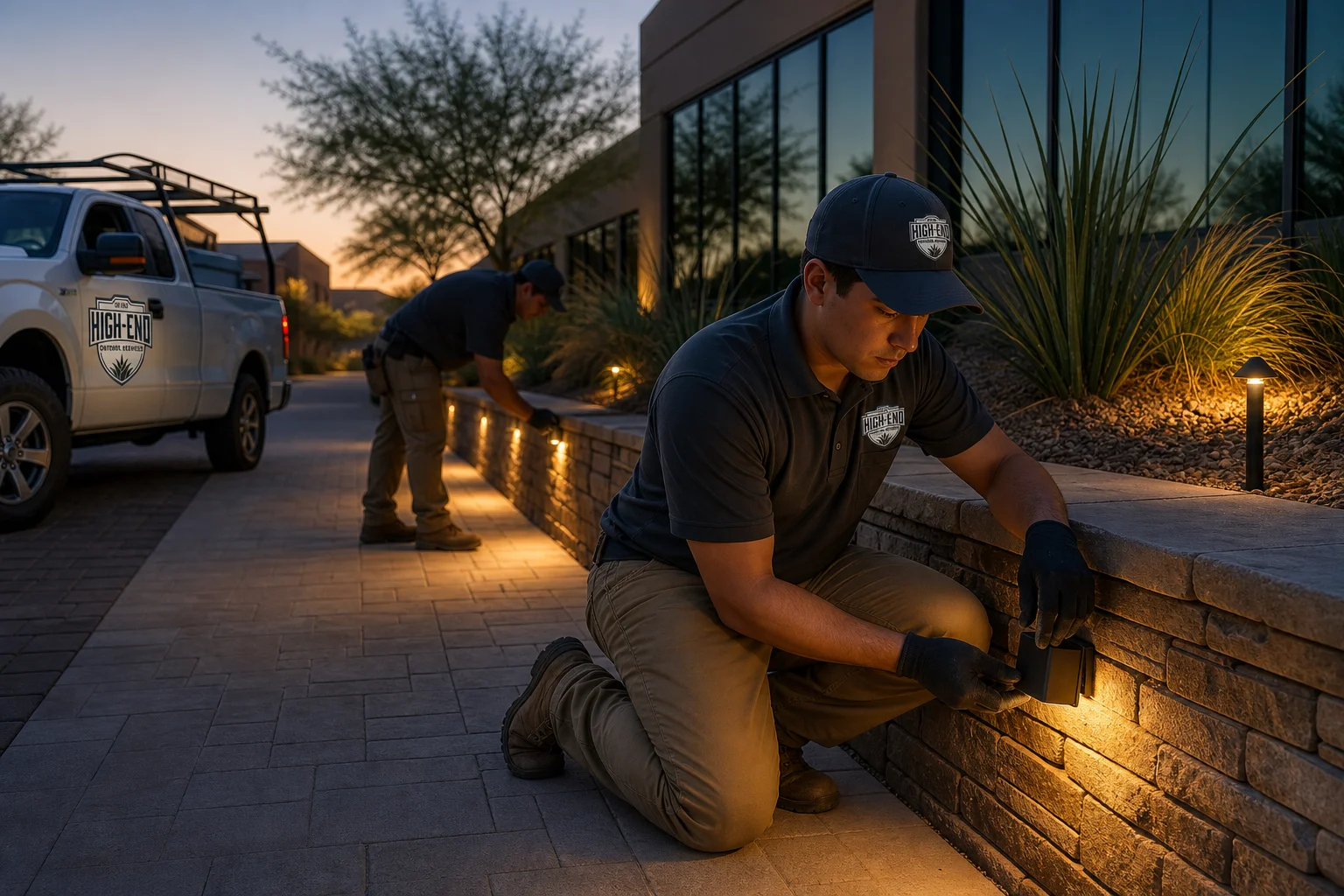
Property owners and property managers should schedule hardscape inspections twice per year: early spring before peak heat and early November after monsoon season concludes. Each inspection should assess joint integrity, surface levelness, drainage slope function, and the condition of any outdoor lighting integrated into hardscape structures.
Preventive maintenance on hardscape catches problems before they require full-scale replacement. A loose paver addressed promptly costs a fraction of the repairs needed after multiple thermal cycles have extended the damage zone across the surrounding area.
For commercial real estate with HOA community amenity areas, consult our guide to landscaping trends 2024 hoa commercial properties for an overview of current outdoor space standards across the Arizona market.
Property management teams that formalize their service schedules in writing consistently deliver better outcomes than those operating reactively. An annual plan tailored to your property's needs should document grounds visit frequency by season, monthly irrigation inspection dates, quarterly system audits, semi-annual hardscape inspections, and annual service events such as overseeding or artificial turf deep-cleaning. For budget-conscious approaches that maintain quality, more on affordable landscaping services covers practical strategies for Phoenix-area commercial property owners and business operators focused on long-term value.
Frequently Asked Questions
How often should commercial properties be serviced for landscaping?
Most Arizona commercial properties require weekly grounds service during growing season (March through October) and bi-weekly service during cooler months. High-visibility commercial real estate such as retail centers, HOA common areas, and medical facilities often maintain weekly service year-round to meet community standards and lease requirements. Property type and occupancy are the primary variables that determine frequency.
What is the difference between regular maintenance and preventive maintenance for commercial properties?
Regular maintenance refers to recurring tasks performed on a set schedule, such as mowing, irrigation checks, and debris removal. Preventive maintenance is inspection-driven, identifying and correcting potential failures before they cause damage or service interruption. Both are essential to a complete commercial property maintenance program. The most effective plans integrate both approaches into a single coordinated annual schedule.
When should property managers schedule irrigation audits for Arizona commercial properties?
Property managers should schedule full irrigation audits in March before peak heat season begins and again in October after monsoon season concludes. Mid-summer spot inspections are also advisable for commercial properties with large irrigated areas. Water loss from undetected irrigation failures is one of the most preventable costs in commercial property management across Arizona.
How does monsoon season affect commercial property maintenance schedules?
Arizona's monsoon season runs June through September and requires additional unscheduled service visits to address storm debris, drainage issues, and irrigation damage. Property managers should budget for two to four post-storm response visits per season in addition to regular maintenance cycles. October is then the most important month for a comprehensive assessment of all property systems.
Do HOA communities require different service frequency than other commercial properties?
HOA communities typically require more frequent service than single-tenant commercial properties because shared outdoor spaces serve more users and face higher aesthetic expectations from residents. Community landscaping areas, entrance features, and common areas often need weekly attention year-round to meet the standards required by HOA governing documents and resident expectations.
Plan Your Commercial Property Service Schedule With HEOS AZ
Arizona commercial property owners who treat maintenance as a planned, proactive discipline preserve asset value more effectively than those who respond only to visible failures. A structured annual calendar built around Arizona's distinct seasonal demands is the most cost-effective approach to commercial real estate ownership. Connect with the Community Landscaping specialists at HEOS AZ to develop a customized annual maintenance plan for your property today.