Healthcare Grounds Maintenance: Safety, Wayfinding and Patient Experience
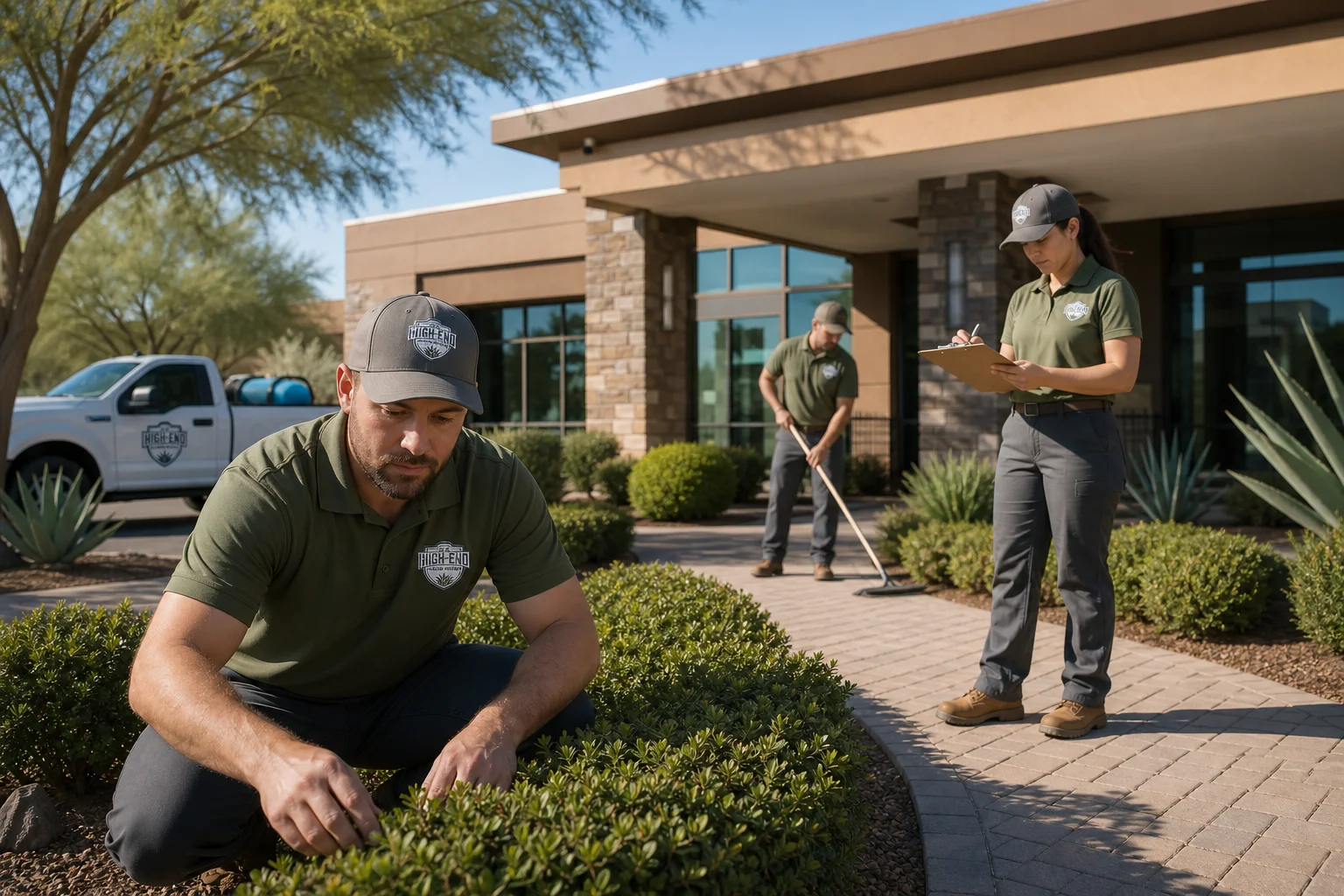
Healthcare grounds maintenance protects more than curb appeal: it protects patients, visitors, and staff moving across parking lots, entries, and courtyards every day. For hospitals, medical offices, and senior care campuses, a coordinated Hospital Landscaping program turns outdoor space into a safer, calmer extension of clinical care.
By HEOS AZ Team, Outdoor Living Specialists
The Stakes Behind Grounds Maintenance at Medical Facilities
Medical office parks, hospital campuses, and senior living communities carry a different risk profile than a typical office park or retail center. A single uneven paver near a drop-off zone, an overgrown sightline at a driveway, or a slick entry mat can slow an ambulance, confuse a family member searching for the right building, or contribute to a fall for someone already managing a health condition. That is why healthcare grounds maintenance treats the outdoor environment as part of the facility's safety system, not simply its curb appeal.
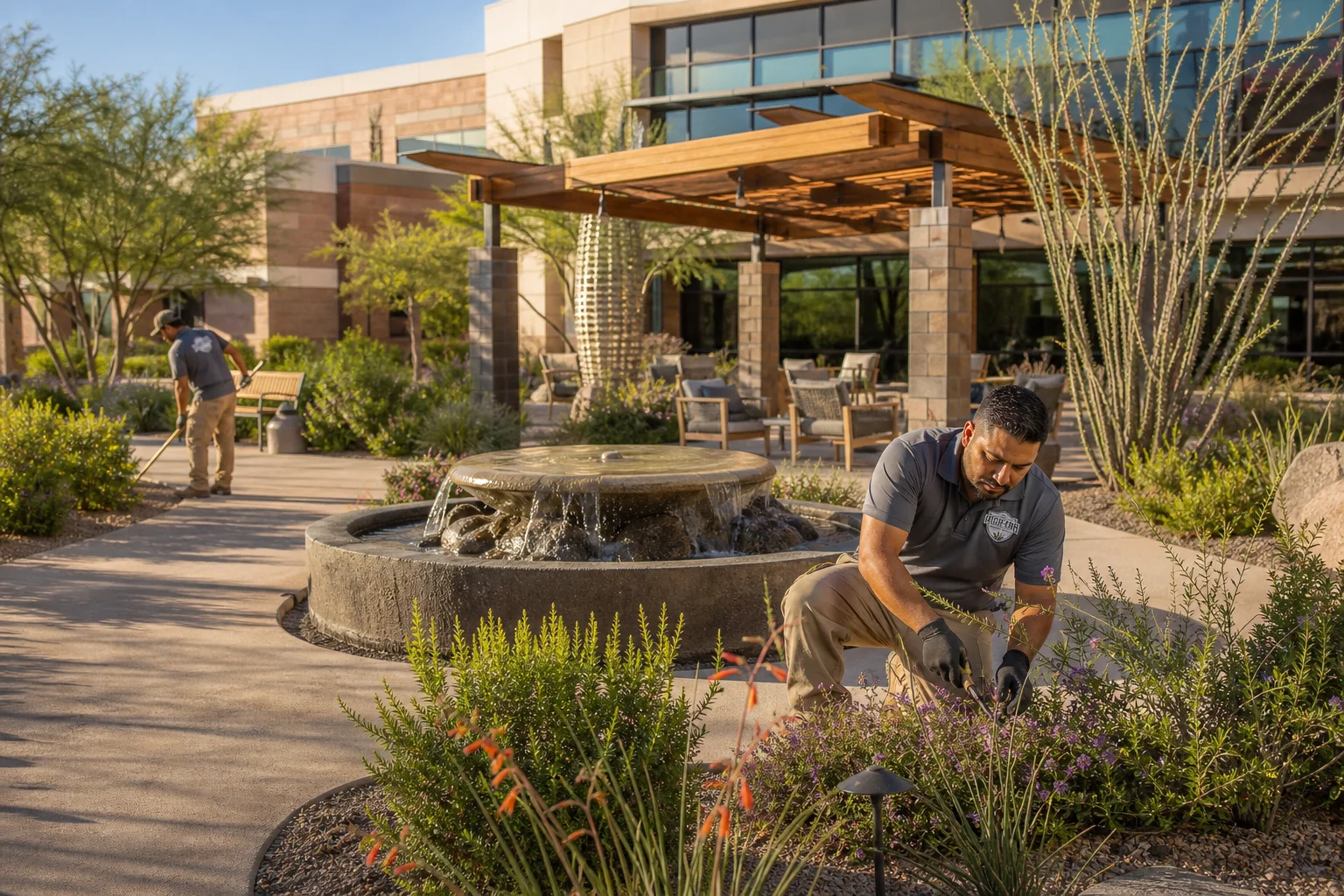
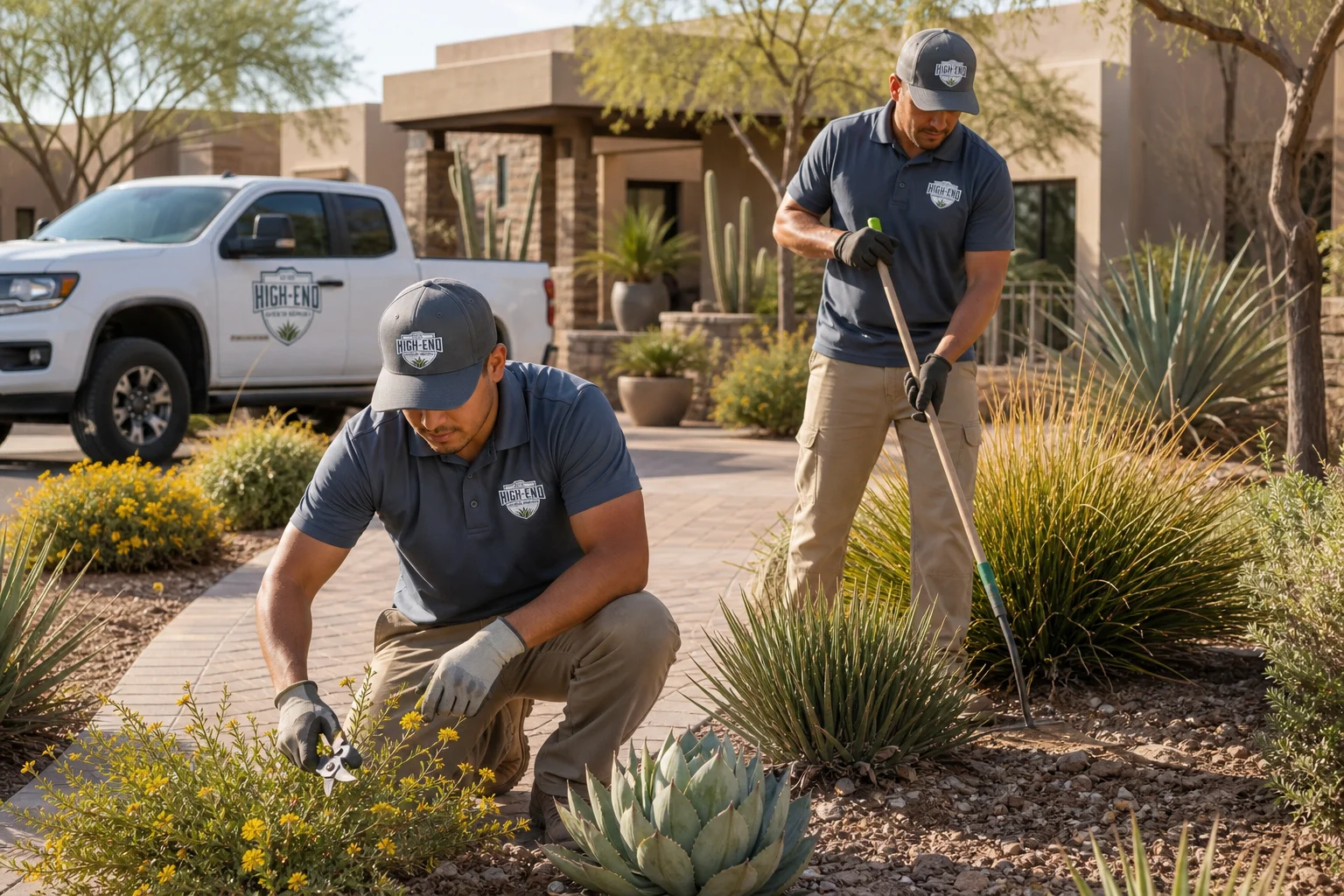
Commercial landscaping crews serving medical facilities and healthcare facilities need training that goes beyond a standard mowing schedule. They need to understand ADA clearance requirements on every path, quiet hours near patient rooms, and the reality that visitors arrive stressed, distracted, or physically limited. The goal is simple: protect patients visitors and staff every time they cross the property, whether they arrive by car, wheelchair, or on foot. Our Commercial Maintenance teams pair routine landscape maintenance with the judgment calls that matter on a health care campus, which shrub blocks a sightline, which walkway floods after irrigation, which entrance needs extra attention during flu season.
Safety and Snow Ice Removal on Walkways, Ramps and Entrances
Safety on a healthcare campus starts at ground level. Walkways, ramps, and parking areas need consistent traction, clear sightlines, and predictable lighting so that everyone moving through the property can do so without hesitation. Grounds crews should walk every entrance daily, checking for cracked pavers, exposed roots, and drainage issues before any of it becomes a liability.
Even in the Arizona desert, winter mornings can leave frost and black ice on shaded walkways and covered drop-off lanes outside medical facilities. A written snow ice removal plan gives crews a clear trigger point, temperature and shade conditions, so those areas get treated before the first arrival rather than after someone has already slipped. That single line item carries outsized liability for any facility open to the public around the clock. Access and traffic control matter here too: gates, bollards, and lighting should work together with the landscape so pedestrians and vehicles never compete for the same path.
Wayfinding: How Landscape Design Guides Patients and Visitors
Landscaping is one of the most underused wayfinding tools on a healthcare campus. Color-coded plant beds, consistent hedge heights, and repeated tree species along a route can point a stressed visitor toward the correct building faster than another sign ever could. A thoughtful Landscape Design plan treats every garden bed, lawn panel, and paved courtyard as part of the wayfinding system, not decoration layered on top of it.
Green space also does quiet work at the edges of a campus. Buffer plantings soften the transition from a busy parking structure to a clinical entrance, while low, uniform hedges keep sightlines open for security and for anyone glancing back to confirm they are headed the right direction. Outdoor spaces near the main entrance should always feel calmer and more open than the spaces around a loading dock or service entrance, a visual cue that helps first-time visitors orient themselves without reading a single sign.
Creating a Calming Outdoor Experience for Patients, Staff and Families
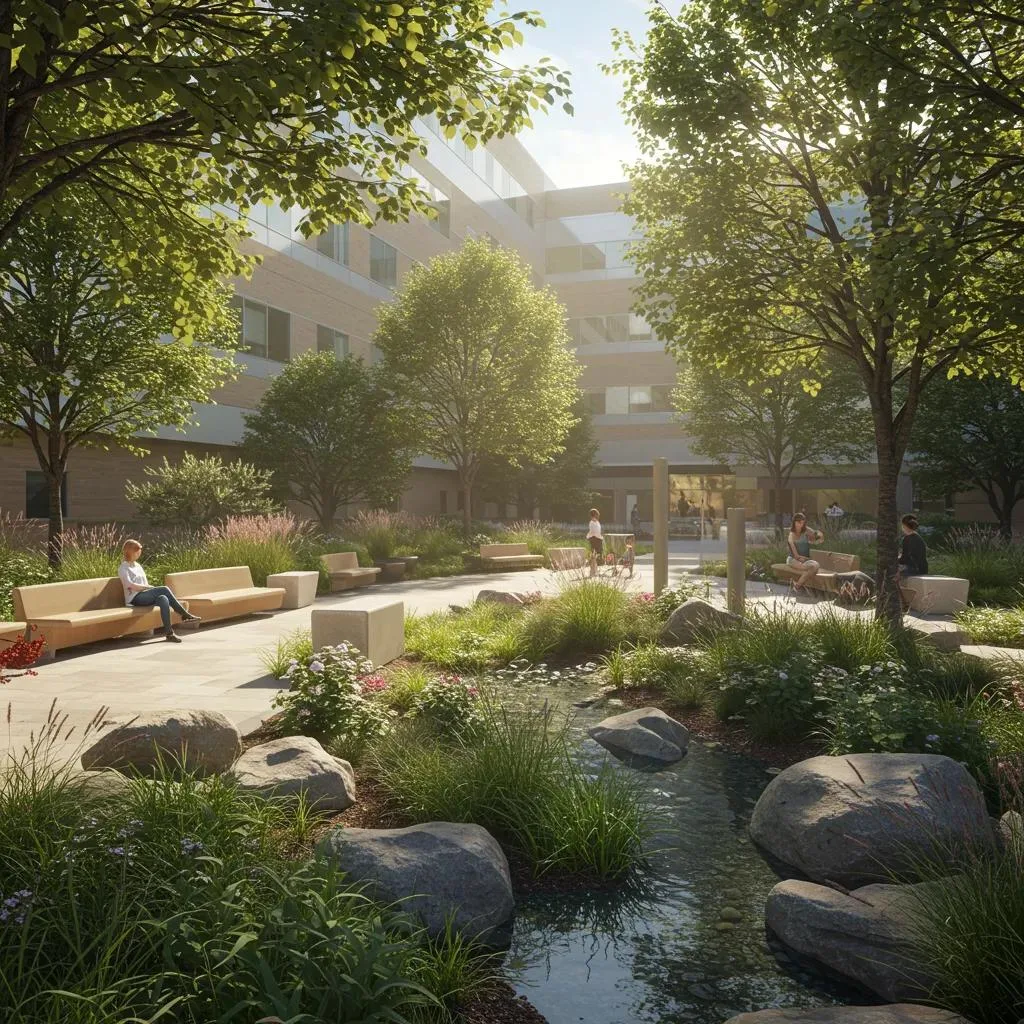
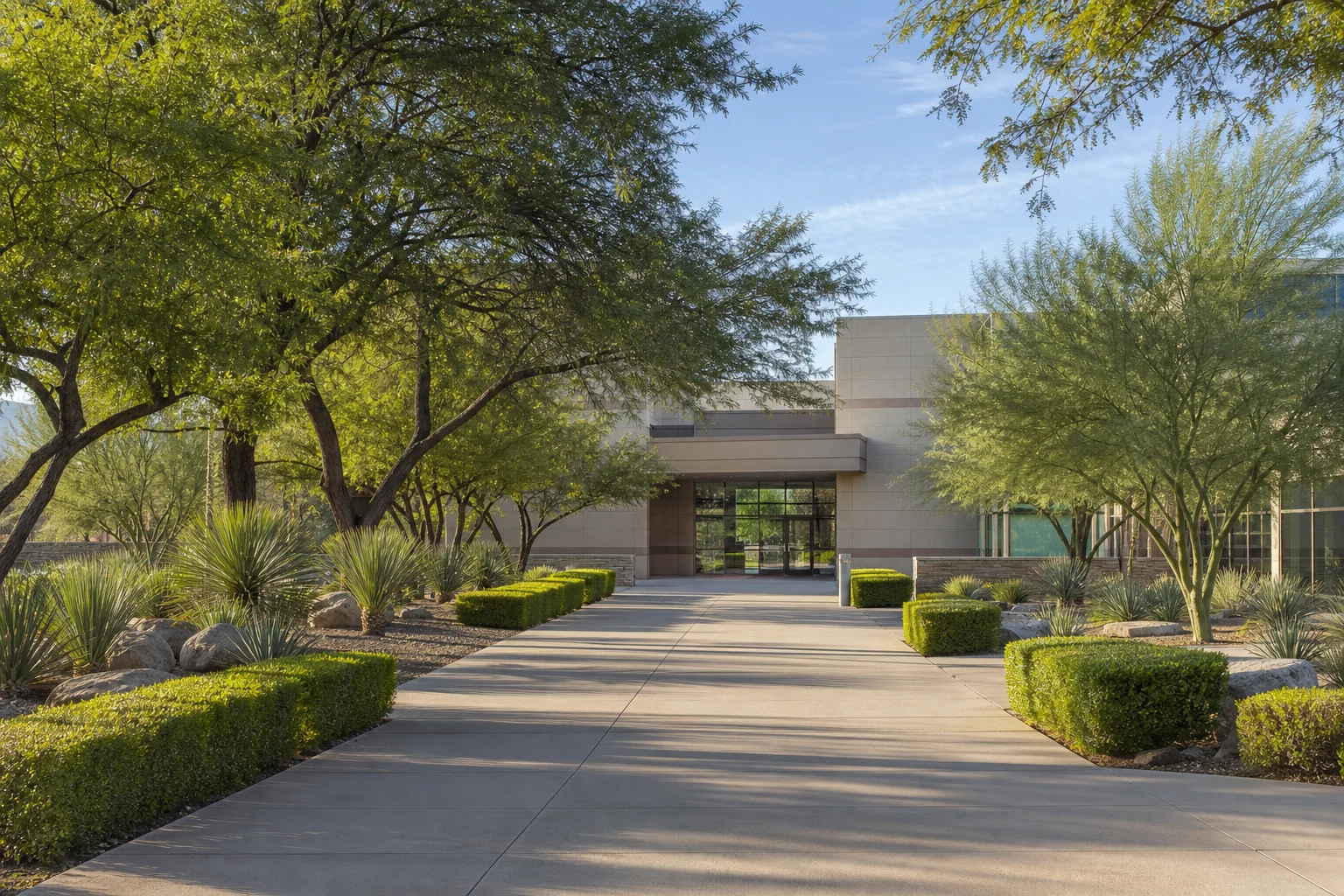
The physical environment around a hospital or clinic shapes how people feel before they ever reach the front desk. Mature shade trees, quiet seating areas, and well-maintained lawn panels give patients staff and their families a place to decompress between appointments, a role that outdoor space plays just as much as any interior waiting room. Facilities that invest in this kind of experience tend to see it reflected in patient satisfaction scores and staff retention alike, since a calmer campus is a less stressful place to work an entire shift.
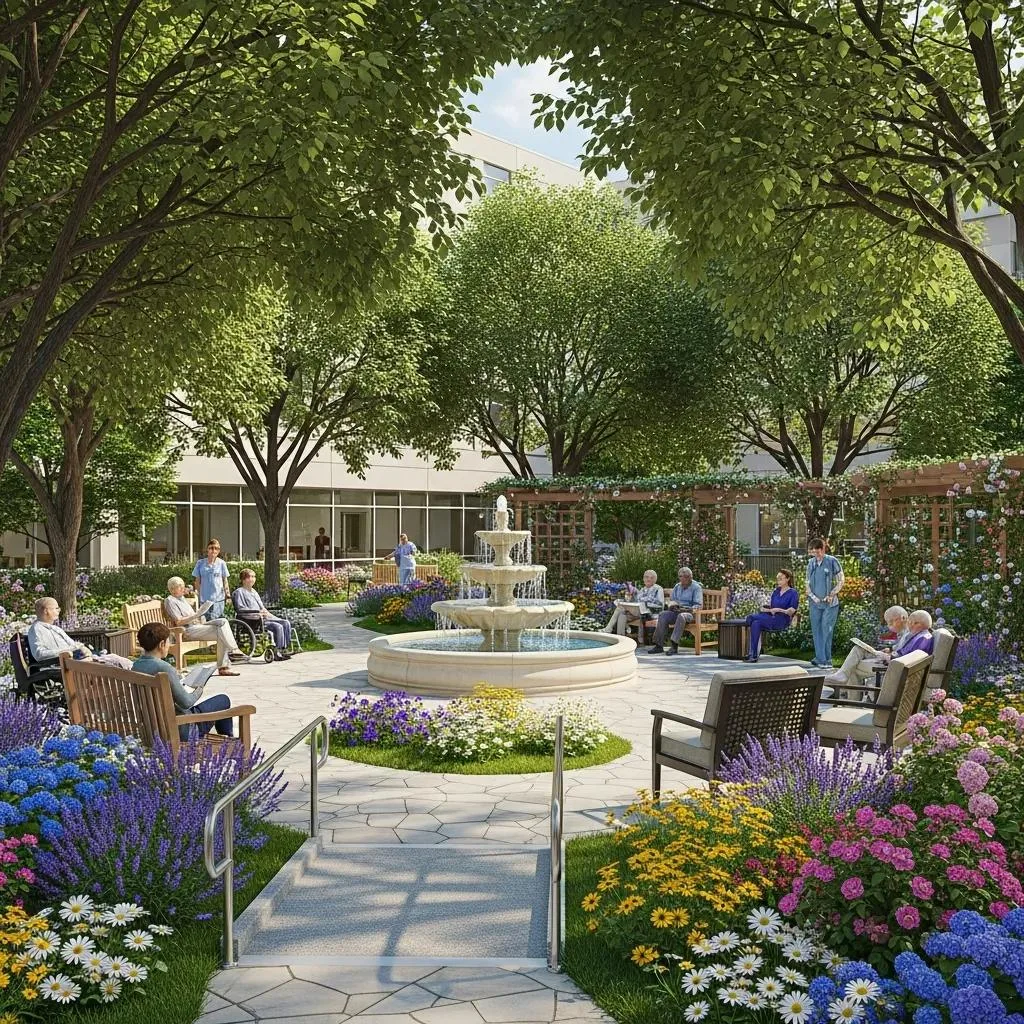
Courtyard seating and sensory gardens are two of the simplest ways to extend that calm outdoors, giving recovering patients a reason to step outside instead of staying confined to a room, an approach explored further in hospital landscaping and patient experience. Quality landscaping is not a luxury line item at a medical facility, it is part of the clinical experience itself.
Building a Comprehensive Healthcare Grounds Maintenance Program
A comprehensive grounds management program for a hospital, clinic, or senior care campus needs more than a mow-and-blow crew. It needs a documented policy covering irrigation scheduling, integrated pest control, tree pruning near roofs and windows, and a defined response time for anything that affects access or safety. Property managers in this industry are increasingly asking vendors for the same reporting rigor they expect from any other facility system: what was serviced, when, and by whom, with service information logged in one place rather than scattered across invoices.
That kind of agreement should spell out response times, service frequency, reporting cadence, and who is accountable when something is missed, the details covered in maintenance contract essentials. Service frequency should also flex with the seasons, typically stepping up during the growing season and easing back in cooler months as plant growth slows. The right group of vendors, working from shared landscaping solutions and a shared set of resources, keeps a healthcare campus looking consistent instead of reactive, ensuring nothing gets missed between one service visit and the next.
Frequently Asked Questions
What does healthcare grounds maintenance actually include? Healthcare grounds maintenance covers routine landscape maintenance such as mowing, irrigation, and pruning, plus safety-specific tasks unique to medical campuses: daily walkway inspections, ice removal during cold mornings, sightline management near entrances, and coordination with facility staff so work never disrupts patient care.
How often should a medical facility service its landscaping? Most hospitals and clinics need weekly attention during the growing season and biweekly service in slower months, with daily safety walks around entrances and parking areas regardless of season. High-traffic zones near ambulance bays or main entrances often warrant more frequent checks than the rest of the property.
Do Arizona healthcare campuses really need a snow ice removal plan? Yes, on a smaller scale. Even without heavy snowfall, shaded walkways and covered drop-off lanes at Valley medical facilities can ice over on cold winter mornings. A written snow ice removal plan with clear trigger points keeps crews proactive instead of reactive.
How does landscape design improve wayfinding at a hospital? Consistent plant groupings, repeated tree species along key routes, and open sightlines near entrances all help visitors navigate a large campus without relying solely on signage. Landscape design should reinforce the same path that wayfinding signage already points toward, not compete with it.
Why does patient experience depend on outdoor spaces? Outdoor spaces give patients, families, and staff a place to step outside stressful clinical settings. Access to green space and natural light is widely linked to lower reported stress in hospital settings, making outdoor maintenance part of the care experience rather than a cosmetic afterthought.
Schedule a Grounds Maintenance Walkthrough With HEOS AZ
Every healthcare property has different traffic patterns, entrances, and risk points, and a walkthrough is the fastest way to see where your grounds maintenance program needs attention. Service needs shift throughout the year, so a walkthrough is also a good time to set a maintenance calendar that fits your campus rather than a generic schedule.