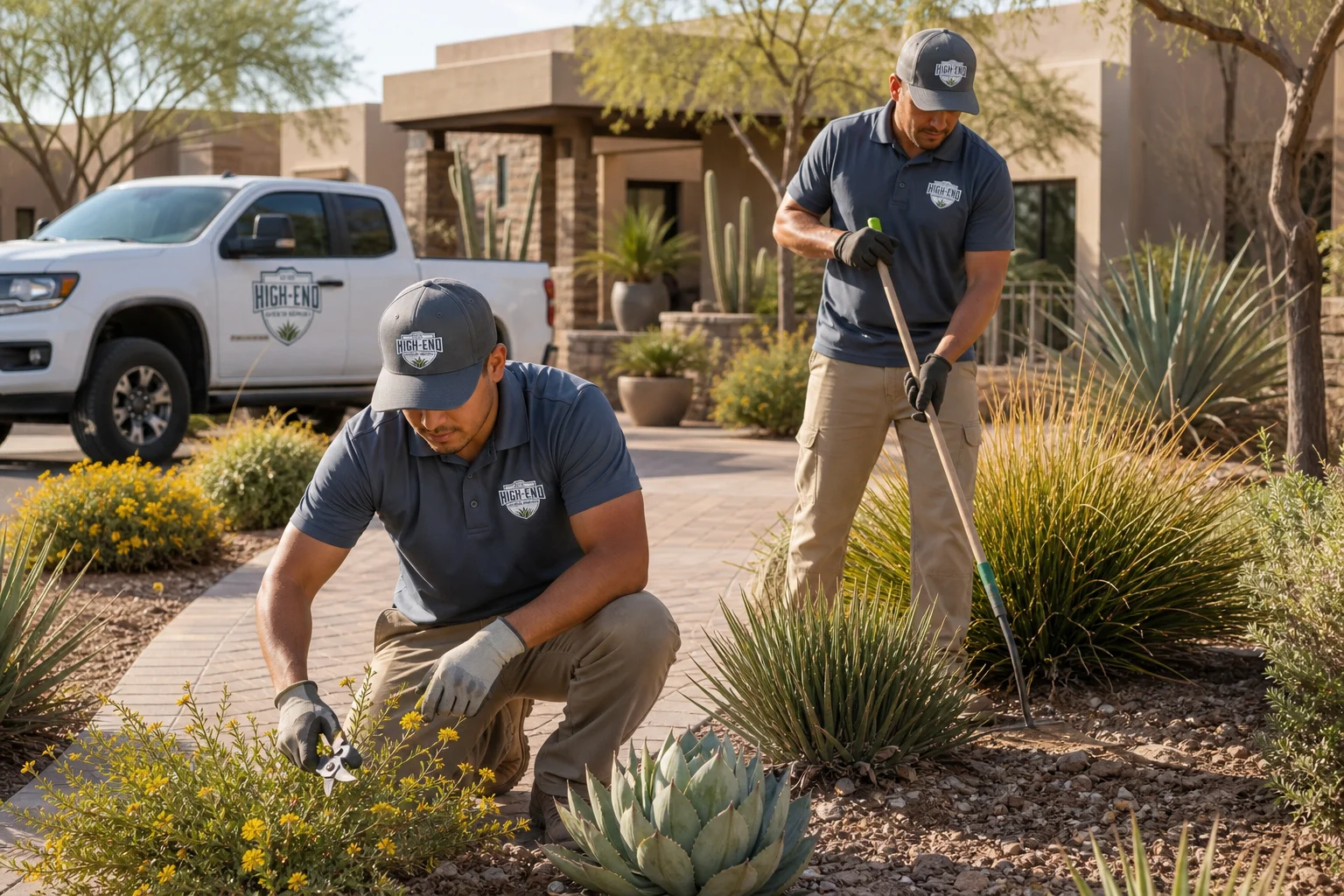
In-House vs Outsourced Grounds Maintenance: A Cost Comparison for Commercial Properties
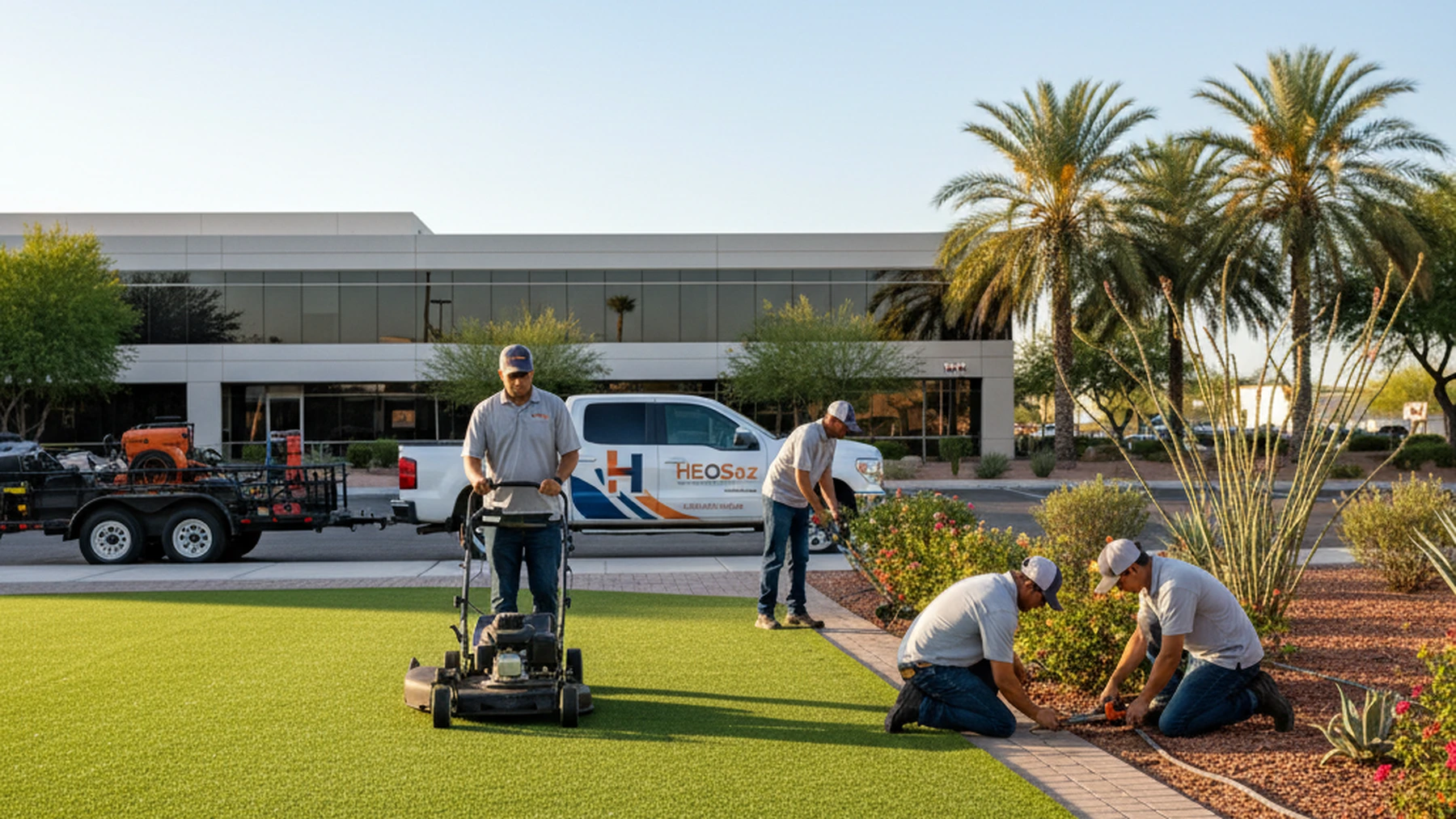
When commercial properties weigh in-house vs outsourced grounds maintenance, the comparison goes deeper than contract fees versus payroll. Total cost of ownership, operational risk, equipment obligations, and service reliability all factor into the decision. Commercial Maintenance programs designed for Arizona properties address each of these variables differently depending on your property type and operational goals.
By HEOS AZ Team, Outdoor Living Specialists
The True Cost of Building an In-House Grounds Maintenance Operation
Building an in-house team to handle grounds maintenance on a commercial property involves far more than base wages. Property managers and HOA boards often underestimate the full labor burden when projecting internal budgets.
Payroll taxes, workers' compensation insurance, health benefits, and paid time off typically add 25 to 40 percent on top of gross wages, according to the U.S. Bureau of Labor Statistics Employer Costs for Employee Compensation report (2023). A landscape technician's posted wage rarely reflects what the employer actually pays once benefits and employer-side taxes are included.
Equipment acquisition adds another substantial layer. Commercial mowers, irrigation tools, edgers, blowers, trailers, and service vehicles require upfront capital, ongoing maintenance, insurance, storage, and eventual replacement cycles. For most commercial campuses and HOA communities, this represents a capital commitment that must be renewed periodically.
Training completes the hidden cost picture. Staff operating in Arizona's climate need ongoing education on desert-adapted plant care, water management regulations, and local permit compliance. When a trained employee leaves, institutional knowledge about your property's irrigation layout, plant inventory, and seasonal schedule departs with them. Replacement and retraining cycles introduce service gaps and direct costs that rarely appear in initial budget projections.
For a structured view of what a professional landscape maintenance program requires, Implementing Effective Landscape Maintenance Programs for Commercial Properties outlines the planning and operational demands that apply to any staffing model.
What Outsourced Grounds Maintenance Actually Delivers
Outsourced grounds maintenance moves costs from fixed overhead into a contracted service fee. Instead of managing payroll, an equipment fleet, and an HR function, the property pays for a defined scope of work performed at agreed intervals.
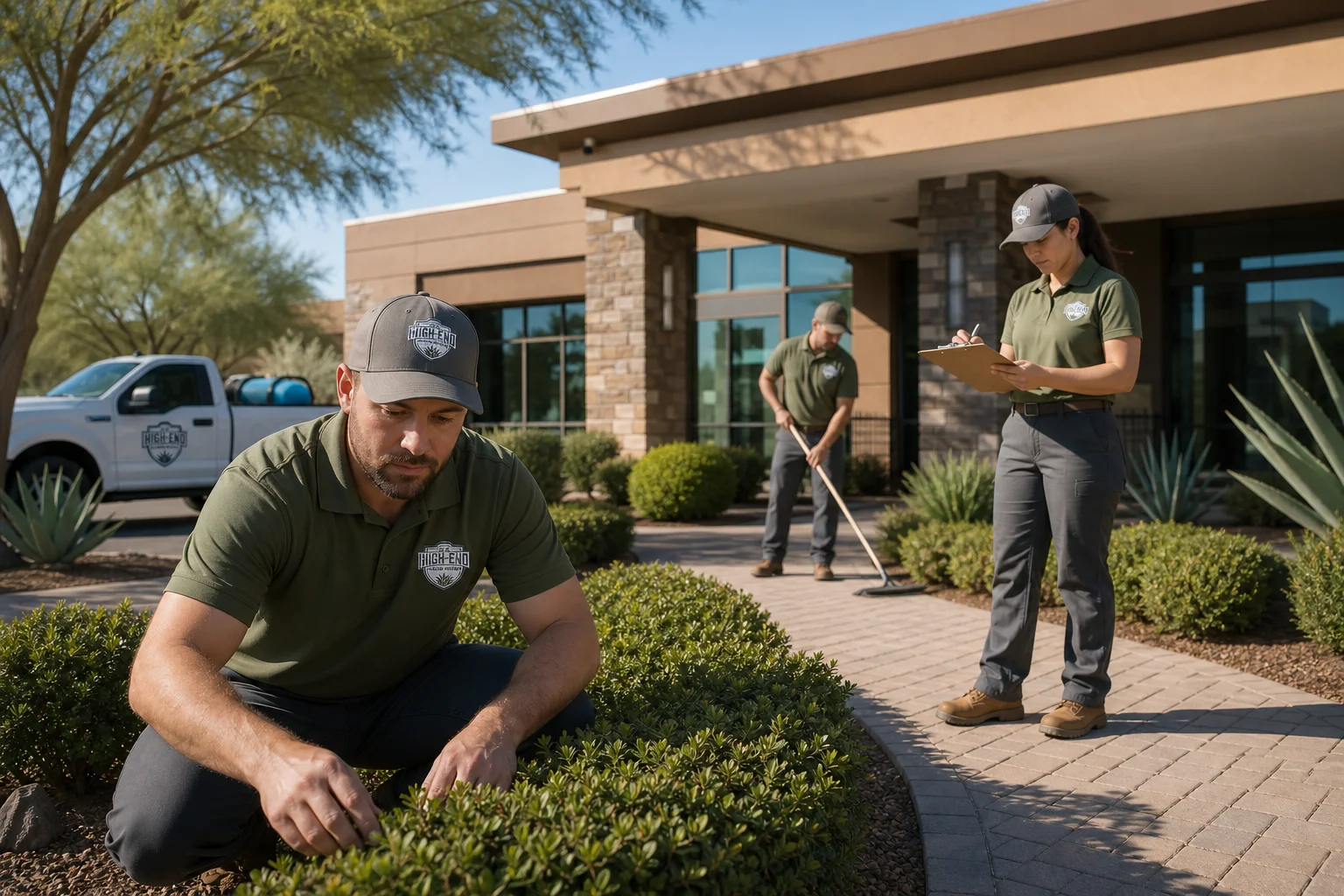
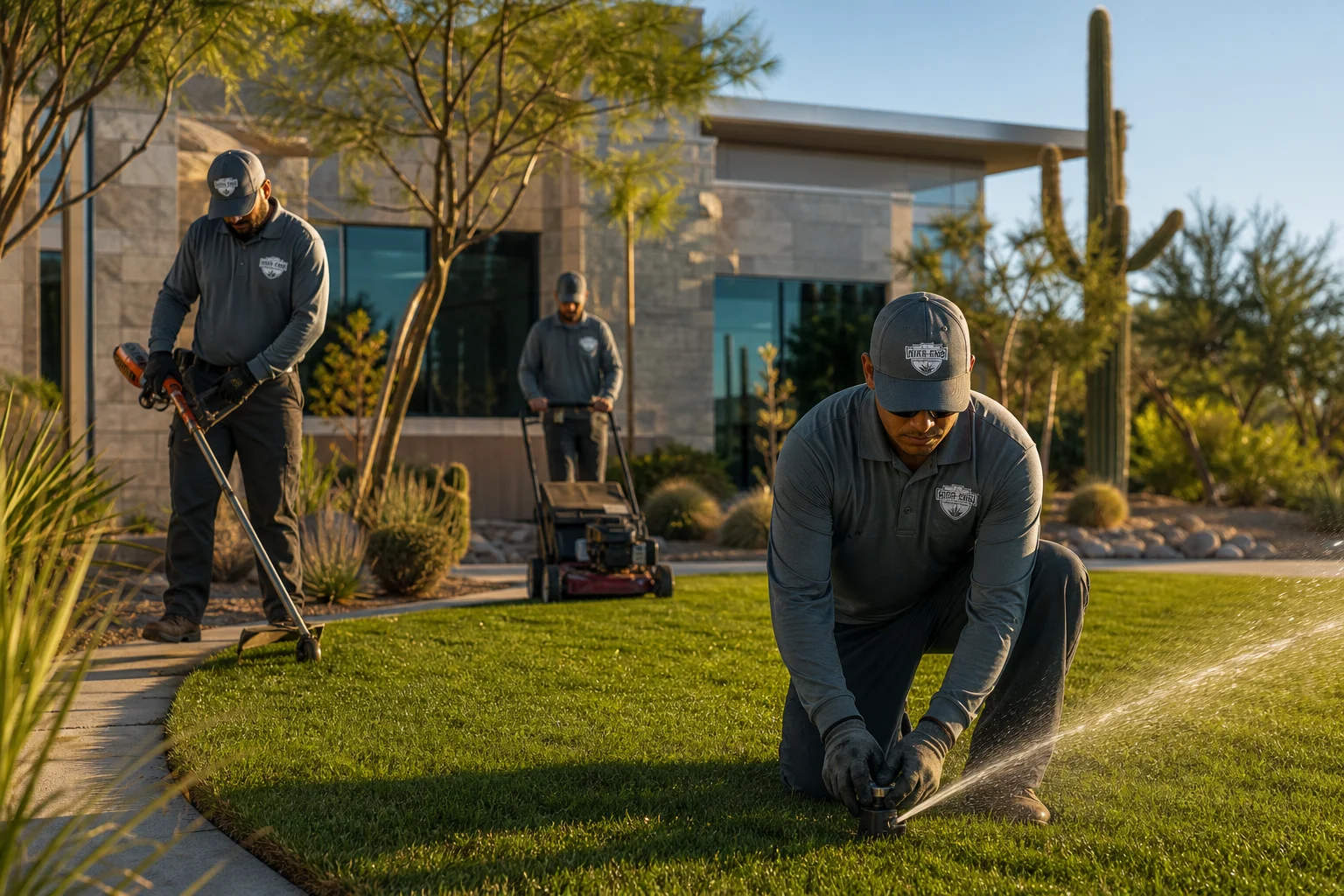
A professional commercial grounds maintenance contractor pools labor, equipment, and management across multiple properties. That scale allows them to deploy trained crews and commercial-grade equipment without the property absorbing the capital or administrative burden. The in-house outsourced comparison also shifts liability: a contractor carries their own workers' compensation and general liability insurance, which reduces the property's direct exposure to grounds-related incidents.
Contract scope definition matters significantly here. Understanding our guide to what a commercial landscape maintenance contract should include is a critical step before entering any outsourced arrangement. A contract that leaves scope gaps will generate add-on invoices that erode the initial cost advantage.
The In-House vs Outsourced Grounds Maintenance Cost Breakdown
A meaningful cost comparison between in-house vs outsourced grounds maintenance requires accounting for categories that frequently go unmodeled.
Labor burden beyond wages: Benefits, employer taxes, and turnover costs are the first adjustment. The Society for Human Resource Management estimates that replacing a single employee costs between 50 and 200 percent of that employee's annual salary when accounting for recruitment, onboarding, and productivity loss (SHRM, 2022). Grounds staff in Arizona face challenging outdoor working conditions that contribute to above-average turnover in this occupational category.
Equipment lifecycle: Capital invested in a grounds equipment fleet is not static. Mowers, blowers, and service vehicles depreciate, require maintenance, and must eventually be replaced. A contractor absorbs these costs across their client base; an in-house team concentrates them on a single property's budget.
Regulatory compliance: Arizona requires pesticide applicator licensing and enforces water use restrictions. In-house teams must obtain and renew permits independently. Professional contractors maintain these credentials as standard operating requirements, keeping the property protected without additional administrative overhead.
Seasonal demand: Arizona's summer heat and monsoon activity create maintenance demand spikes that in-house teams may not be staffed to address without overtime or temporary labor arrangements. Contractors absorb seasonal fluctuations within their service delivery model.
Quality, Control, and Compliance on Commercial Properties
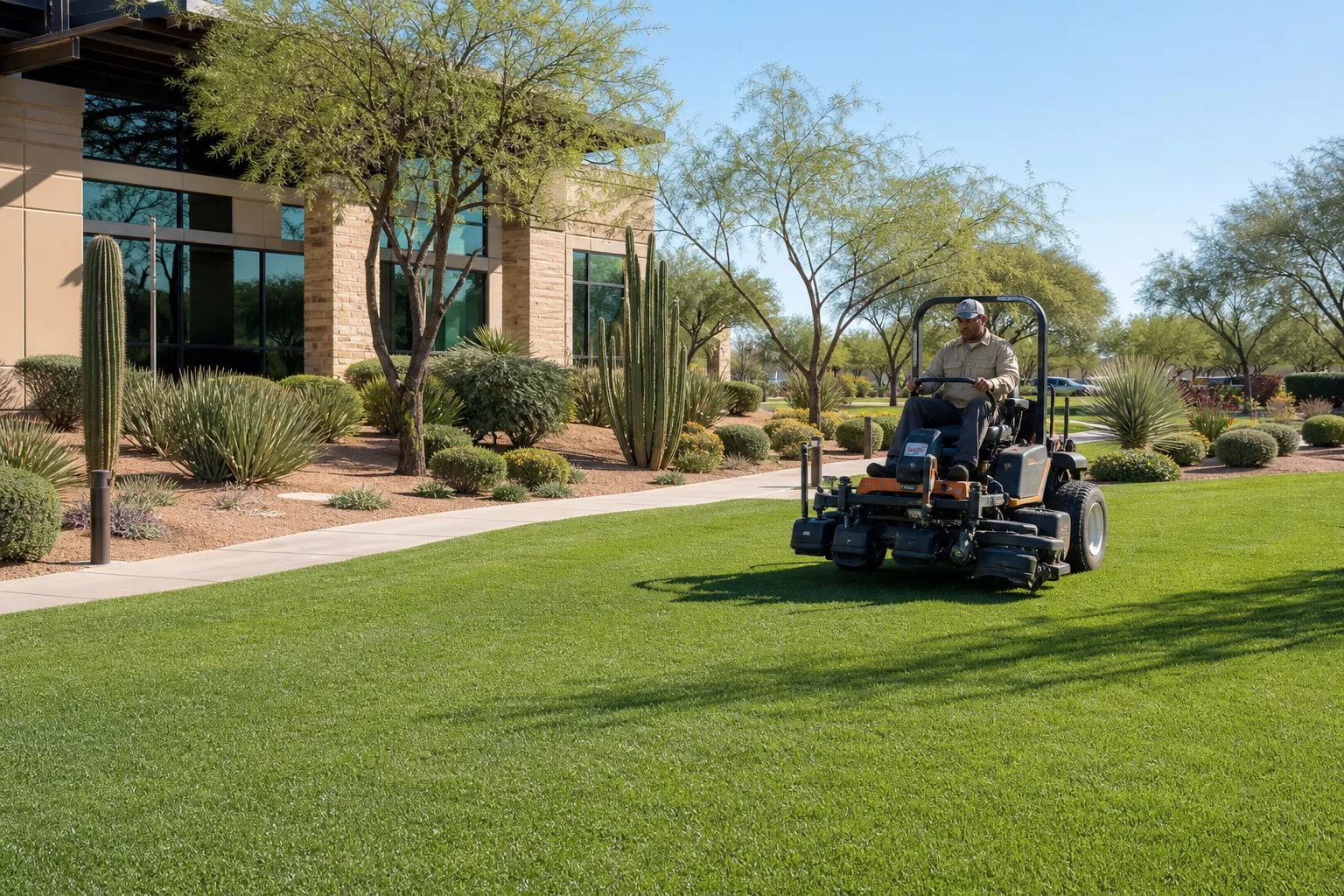
Control over daily grounds operations is one of the strongest arguments for in-house teams. Internal staff can redirect to urgent tasks without formal work orders, respond to board members directly, and are physically present during business hours.
However, professional contractors serving HOA Landscaping accounts operate under contractual service-level agreements that define response windows, task frequencies, and escalation procedures. A well-structured contract provides operational control through defined scope rather than direct employment. Quality accountability is also clearer with an outsourced provider: underperformance triggers contractual remedies rather than internal HR processes, which gives property managers and boards direct recourse.
For communities where grounds quality is tied to property values and resident satisfaction, Landscape Maintenance for Gated Communities: Scope, Frequency and Standards explains how service standards are typically structured for high-expectation properties.
When an In-House Grounds Team Makes the Right Call
In-house teams carry real advantages in specific operational contexts. Properties with security requirements, highly specialized grounds configurations, or long-tenured staff with accumulated property knowledge may find that contractor rotation disrupts service quality more than it saves money.
A large corporate campus with dedicated grounds staff who have maintained the same irrigation infrastructure for years presents a different calculation than an HOA board considering its first internal hire. Institutional continuity has measurable value when it supports tenant retention, brand presentation, or complex operational requirements.
Properties with existing commercial-grade equipment and stable, productive internal teams should model the full transition cost before assuming outsourcing is more economical. The breakeven depends on current team productivity, equipment remaining useful life, and the scope a contractor would cover.
Regardless of staffing model, service frequency drives outcomes on Arizona properties. How Often Should Commercial Properties Be Serviced? The Arizona Maintenance Calendar provides a scheduling framework that applies equally to in-house and outsourced approaches.
Frequently Asked Questions
What are the main cost differences between in-house vs outsourced grounds maintenance?
In-house grounds maintenance carries fixed overhead including wages, benefits, equipment, and training. Outsourced maintenance converts those costs into a predictable service fee. The total comparison depends on property size, service scope, current staffing efficiency, and whether hidden costs such as turnover and equipment depreciation are fully accounted for in the budget model.
Can in-house staff and contractors work together on the same property?
Yes. Many commercial properties use a hybrid model where internal staff handle daily tasks and immediate response while a contractor manages scheduled grounds maintenance cycles, specialized equipment operations, or seasonal service peaks. Defining scope clearly prevents overlap and service gaps between the two approaches.
How do commercial grounds maintenance contractors handle licensing and compliance?
Reputable contractors maintain active pesticide applicator licenses, current liability insurance, and workers' compensation coverage as standard operating requirements. Property managers should request proof of credentials before contracting and verify that coverage remains current at each renewal period.
What makes outsourced grounds maintenance more economical for some properties?
The primary factors are total in-house labor burden including benefits and turnover, equipment lifecycle costs, training expenses, and whether the property has enough maintenance volume to keep internal staff productively deployed year-round. Smaller properties and those without existing equipment infrastructure typically find outsourcing more cost-effective.
How does a grounds maintenance contract protect quality standards for commercial properties?
A well-written contract defines service frequency, task scope, response time requirements, and remedies for underperformance. Contractual accountability provides measurable quality control that can be enforced without internal HR processes, which is a key advantage for HOA boards and commercial property managers.
Make the Grounds Maintenance Decision With Confidence
The right choice between in-house vs outsourced grounds maintenance depends on your property's scale, existing infrastructure, and operational priorities. Contact the HEOS AZ team to review your commercial property's requirements and understand what professional grounds maintenance can deliver compared to your current model.