Commercial Putting Greens: Amenity ROI for Resorts and Corporate Campuses
Commercial putting greens are among the most effective amenity investments available to Arizona resorts, HOA communities, and corporate campuses today. Professionally installed Putting Greens built on premium synthetic turf deliver consistent ball roll, require minimal water, and hold up to heavy daily foot traffic without the maintenance demands of natural grass.
By HEOS AZ Team, Outdoor Living Specialists
Why Commercial Putting Greens Add Measurable Value to Resort and Campus Properties
Golf amenity additions have shifted from luxury status markers to demonstrable revenue and retention tools. Property managers and HOA boards across the Phoenix metro are adding commercial putting greens because the math supports it: a well-designed green creates a differentiating amenity that residents, guests, and tenants actually use, which supports premium pricing and reduces turnover.
Arizona's outdoor-friendly climate is a significant factor. Short game practice is genuinely year-round viable here, unlike most U.S. markets where cold weather limits use to fewer than half the calendar months. A putting green in Scottsdale or Chandler gets twelve months of utility, which directly improves the return on the installation investment.
Corporate campuses have recognized a complementary benefit. When a workplace features outdoor spaces designed for engagement, employees use them during breaks in ways that improve morale and informal collaboration. Commercial golf amenities on corporate properties have become a visible differentiator in talent recruitment within competitive commercial districts, particularly across Paradise Valley and Desert Ridge.
Synthetic Turf vs. Natural Grass: The Commercial Property Case
The practical difference between synthetic turf and natural grass becomes most apparent under the conditions commercial properties operate in: continuous foot traffic, limited maintenance windows, and fixed operating budgets.
Natural grass putting surfaces require precise daily mowing, seasonal irrigation calibrated to Arizona heat, aeration and overseeding cycles, and chemical programs for pest and disease control. In summer, heat stress can force temporary closures or degraded playing conditions, reducing the amenity value at peak season when outdoor spaces are most visible to guests. Watering demands increase substantially from May through September, adding directly to operational costs.
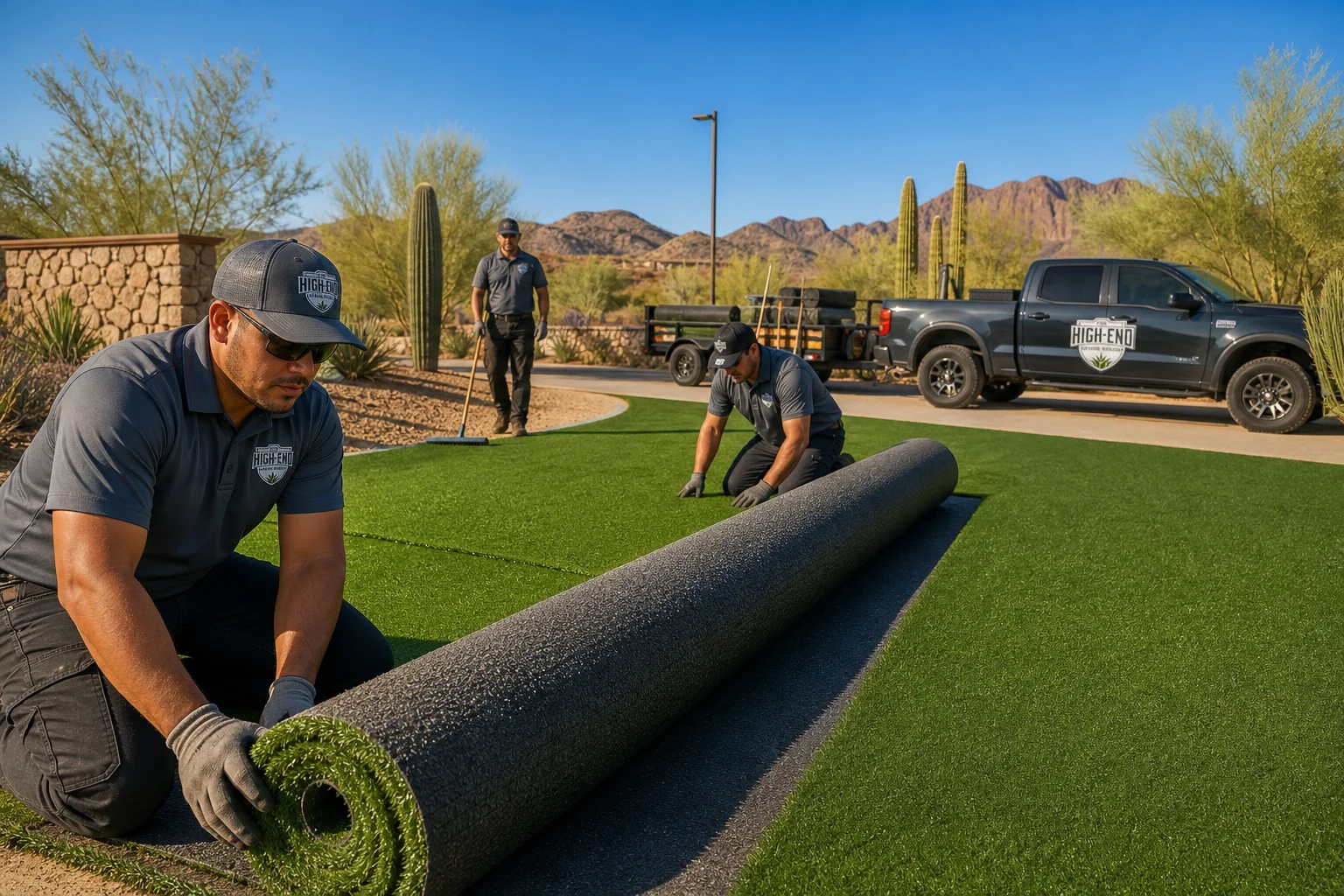
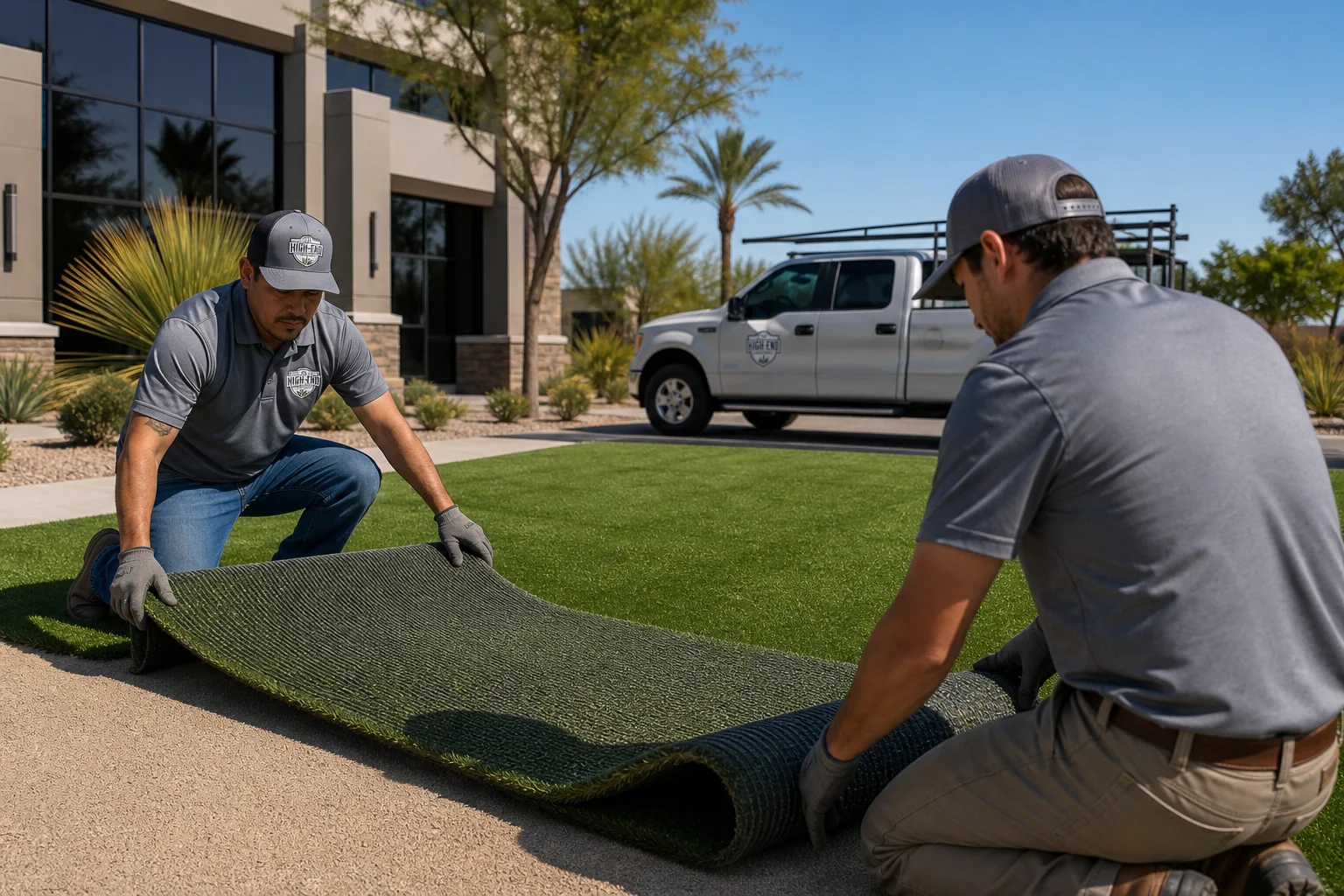
Artificial turf eliminates most of these variables. A commercial-grade artificial grass surface holds its performance characteristics through years of continuous use without watering beyond periodic rinsing, without fertilizers, and without seasonal recovery periods. The consistency of synthetic turf across temperature and weather conditions is what makes it the professional standard for commercial putting green installations.
For properties evaluating cost over time, the long-term ownership calculation generally favors artificial turf over natural grass when water costs, labor, and lost-use periods are all factored in.
Custom Putting Green Design for Resort and Corporate Settings
Every commercial property has a different profile: available footprint, target user demographics, aesthetic standards, and integration with surrounding outdoor spaces. Custom design is what makes a commercial putting green a productive amenity rather than an underused installation.
Professional design begins with a site assessment that accounts for space dimensions, drainage patterns, sun exposure, and the intended use mix. A resort catering to avid golfers needs different surface specifications than a custom putting green installed at a corporate campus where most users are recreational players with limited short game experience.
Turf selection at the design stage sets the performance baseline. Commercial golf turf for resort applications typically uses a shorter, denser pile engineered for accurate ball roll simulation. Recreational commercial applications often use a slightly longer pile that tolerates variable technique without punishing beginners. The right choice requires understanding who will use the space most.
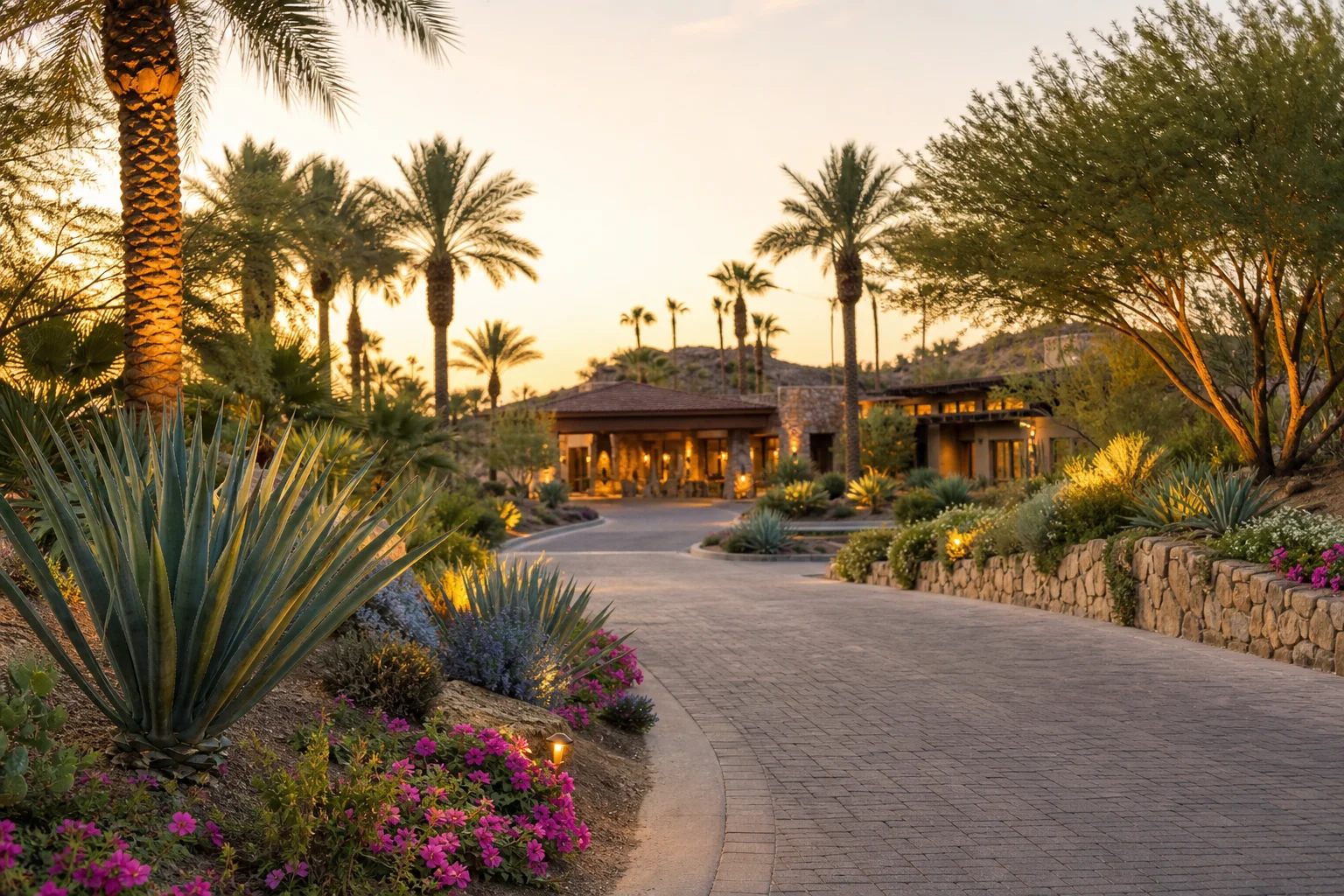
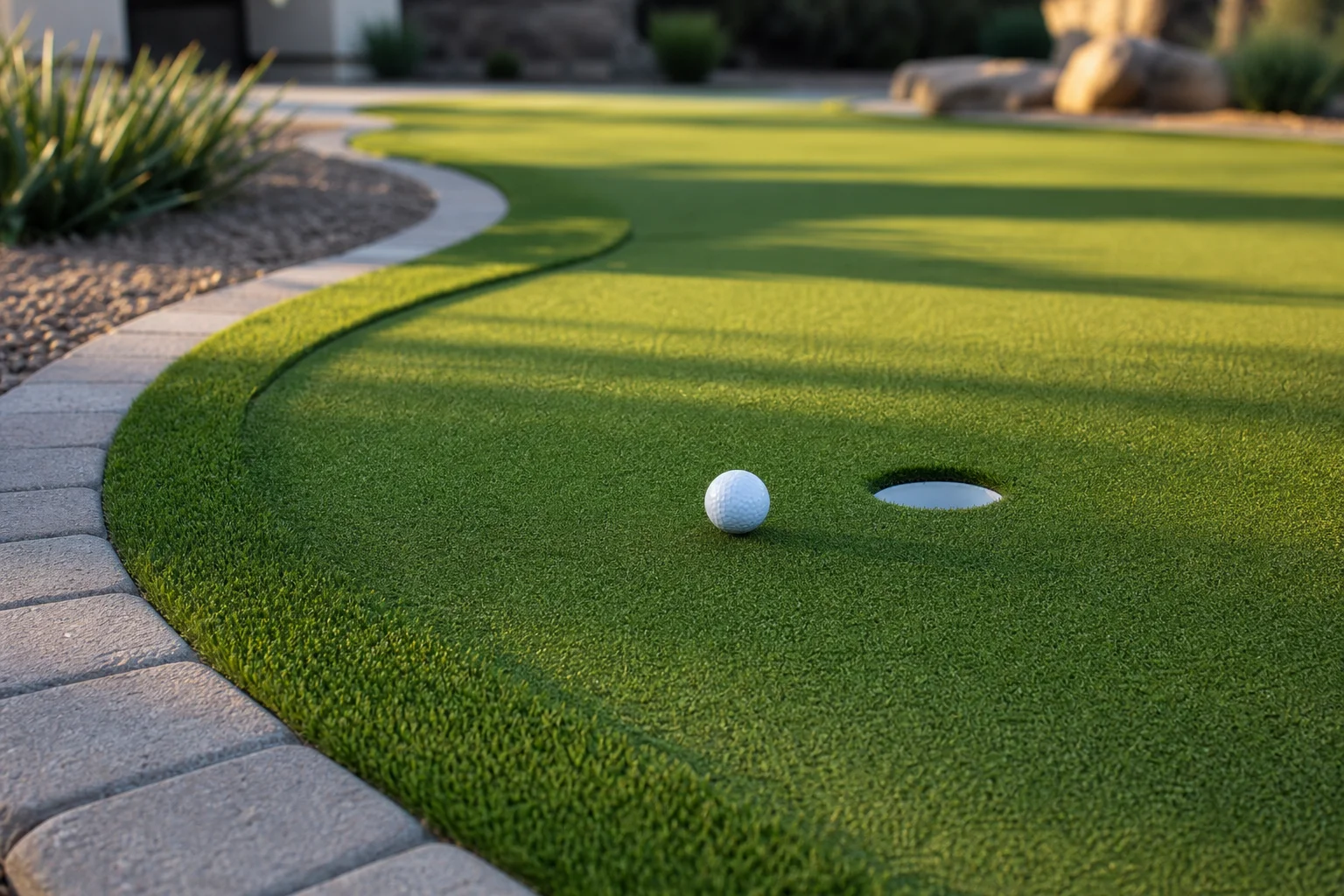
Contour design determines the experience. Flat practice greens work well for short game fundamentals training. Multi-hole layouts with breaks, elevation changes, and pin positions create the engagement level that resort guests and corporate users expect when they encounter a premium outdoor amenity. Surrounding hardscape, seating areas, and lighting complete the space as a destination rather than a mat dropped in a corner.
For broader maintenance planning, our guide to Implementing Effective Landscape Maintenance Programs for Commercial Properties covers how to coordinate putting green care alongside comprehensive property programs.
Performance Standards That Set Commercial Greens Apart
The factors that separate a commercial putting green worth the investment from one that fails to deliver come down to surface speed, ball roll consistency, and drainage engineering.
Surface speed on a commercial green is measured using a Stimpmeter, the standard tool golf course operators use to express green speed. Resort and commercial golf applications typically target a stimp reading between 9 and 11, which replicates a well-maintained course green without demanding the aggressive daily grooming a tour-caliber surface requires. HOA and corporate campus greens often run slightly slower, prioritizing playability for casual users.
Ball roll consistency depends on sub-base preparation beneath the synthetic turf. A poorly graded crushed aggregate base produces uneven rolls that undermine the short game practice value of the surface and frustrate users. Professional installation teams compact and grade to tolerances matched to the turf specification, so the finished surface plays consistently from edge to edge.
Drainage is a factor that commercial operators frequently underestimate until the first monsoon season. Arizona storm events deliver significant water volumes quickly, and a putting green with inadequate drainage holds water for hours, making the surface unusable and accelerating infill breakdown. Premium synthetic grass systems for commercial putting green installations include perforated backings and properly engineered sub-bases that clear storm water efficiently regardless of weather conditions.
For properties managing surface condition after installation, our guide to turf repair services covers how to identify and correct common synthetic lawn problems before they affect performance.
Maintenance Expectations for Commercial Synthetic Putting Greens
One of the operational advantages of artificial turf in commercial settings is a significantly reduced maintenance schedule compared to natural grass. That said, treating a commercial putting green as maintenance-free leads to premature performance decline.
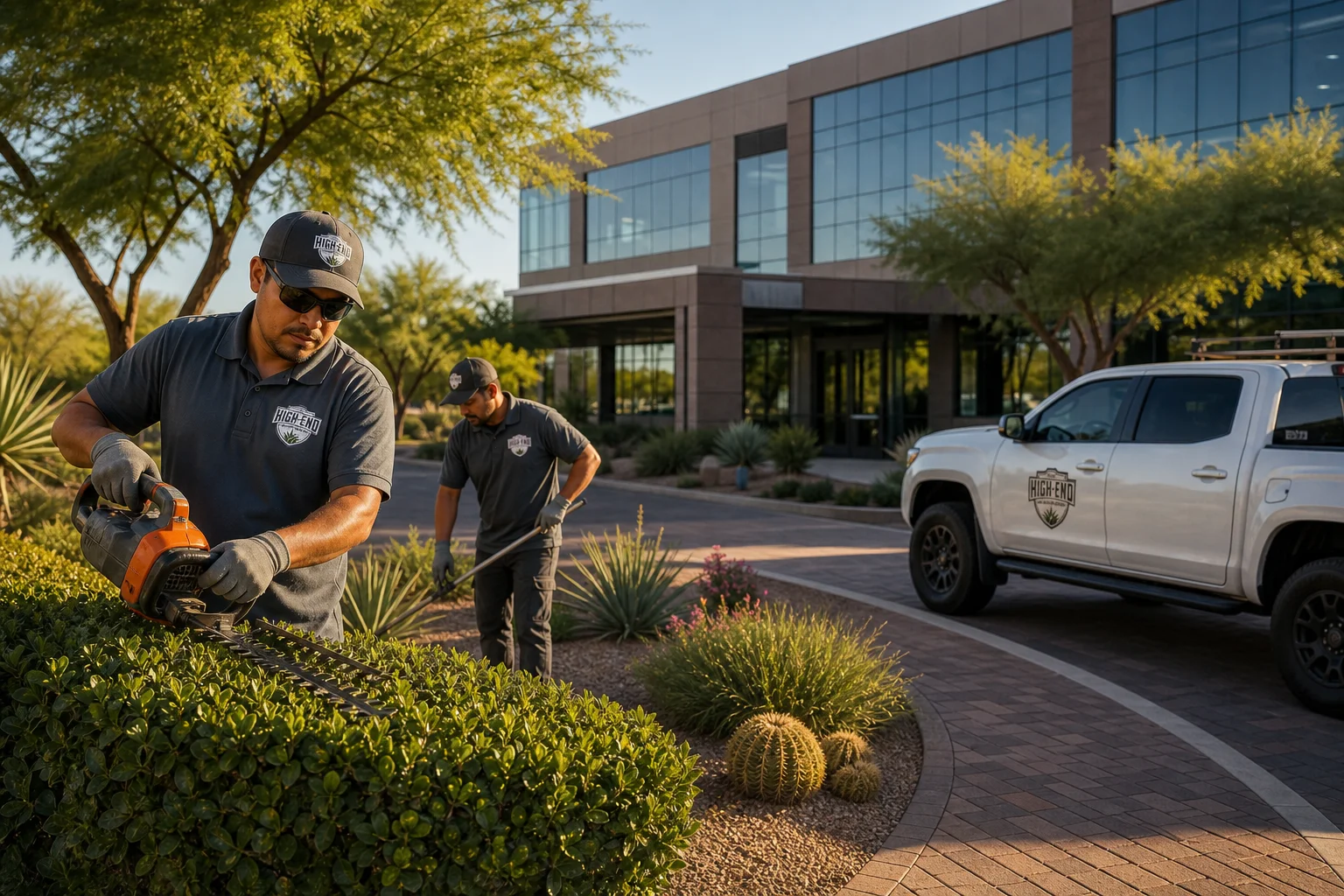
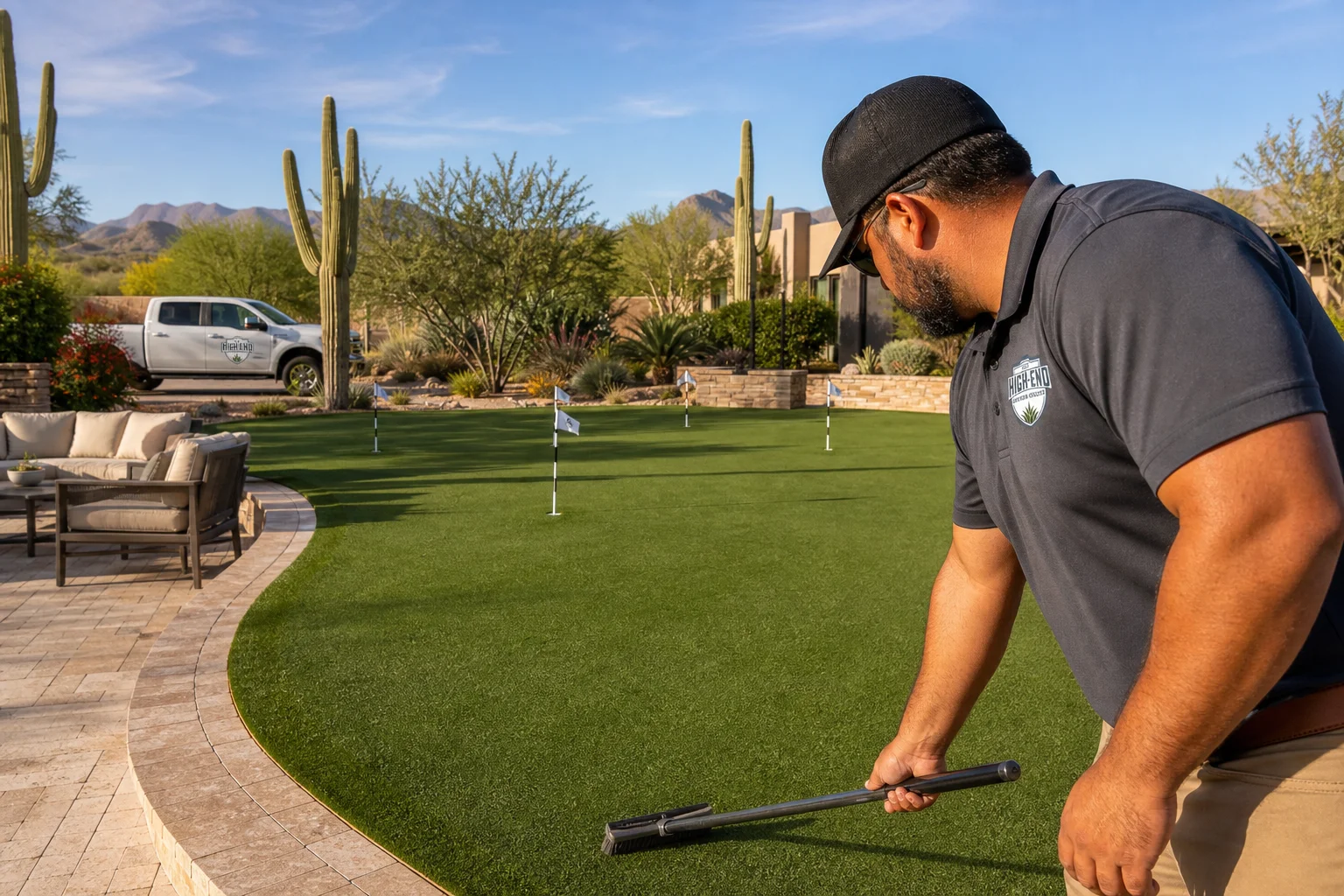
Routine care includes brushing infill to maintain consistent pile height and ball roll, rinsing the surface to manage heat and clear organic debris, and seasonal inspection of seams and perimeter edges for separation or lifting. In Arizona's dust and pollen environment, more frequent rinsing is appropriate after monsoon events or high-wind periods.
Our Turf Installation teams specify the appropriate infill type and density for each commercial putting green at the time of installation, which directly affects the long-term maintenance requirements of the surface.
Professional maintenance visits, handled quarterly for properties with heavy daily use, keep infill evenly distributed and prevent the matting that reduces ball roll performance over time. Properties that invest in scheduled professional care extend the useful life of their commercial putting green significantly.
For context on how Phoenix-area businesses structure outdoor maintenance programs, our guide to affordable landscaping services outlines cost-effective approaches that apply to putting green care and broader property maintenance together.
Frequently Asked Questions
How long does a commercial putting green typically last?
A professionally installed commercial putting green using high-quality synthetic turf generally has a functional life of 15 to 20 years under normal commercial use conditions. The sub-base preparation, infill type, and maintenance frequency are the primary variables that determine where a specific installation falls within that range. Higher foot traffic properties benefit from scheduled professional maintenance to extend surface life.
Does an artificial putting green perform differently in Arizona's heat?
Arizona summer temperatures affect infill surface temperature on synthetic grass, which is why many commercial putting greens here use heat-reducing infill materials such as coated silica or organic infill blends. These materials lower surface temperature by a meaningful margin compared to standard crumb rubber. Ball roll performance remains consistent across temperature ranges because the turf backing and base do not change with heat.
How much space does a commercial putting green require?
Practical commercial putting green installations range from about 500 square feet for a compact single-hole practice surface to several thousand square feet for multi-hole resort or corporate campus layouts. The minimum footprint for a green that allows genuine short game practice across multiple pin positions is roughly 800 to 1,200 square feet, which accommodates varied approach angles and meaningful contour.
Can a commercial putting green be installed alongside other outdoor amenities?
Yes. Commercial putting greens integrate well with patios, seating areas, water features, and shade structures. Combining a putting green with surrounding hardscape and social seating creates a complete outdoor destination that increases use frequency and the perceived value of the amenity. Many resort and HOA properties incorporate the green as the centerpiece of a broader outdoor space.
What is the difference between commercial and residential putting greens?
Commercial putting greens use higher-grade synthetic turf products rated for heavy daily foot traffic, thicker and more durable backing systems, and commercial-specification drainage engineering. The design process also accounts for multi-user layouts, ADA access considerations, and maintenance access pathways that residential greens typically do not require. Commercial installations are priced and engineered to perform under continuous use rather than occasional recreational play.
Bring a Premium Putting Green to Your Arizona Property
Commercial putting greens perform best when designed, installed, and maintained by a team that understands both the performance standards of golf surfaces and the operational realities of commercial property management. Contact HEOS AZ to discuss your property's putting green project and get a site assessment from our outdoor living specialists.