Pool-Surround and Splash-Area Turf for Resorts and HOAs
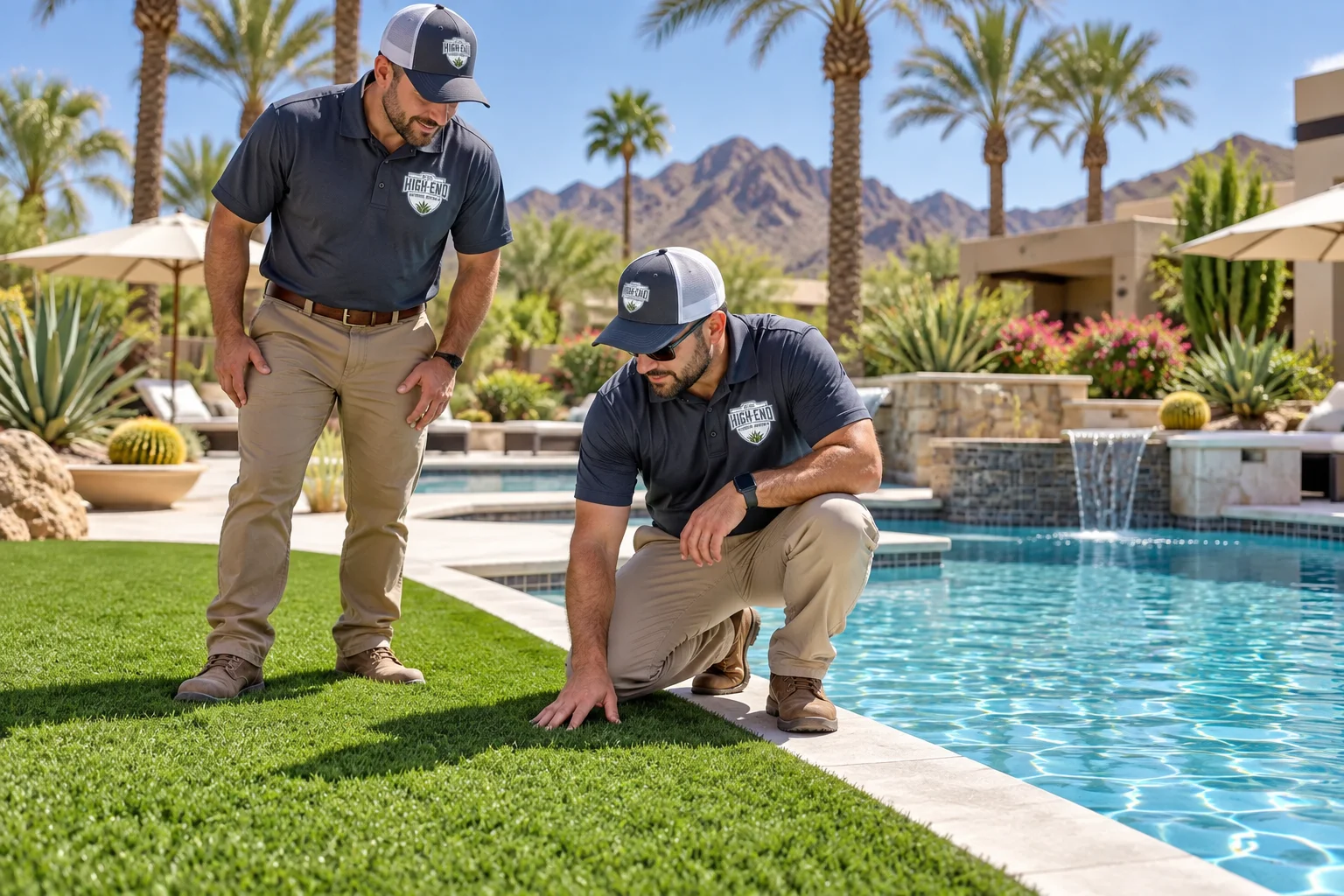
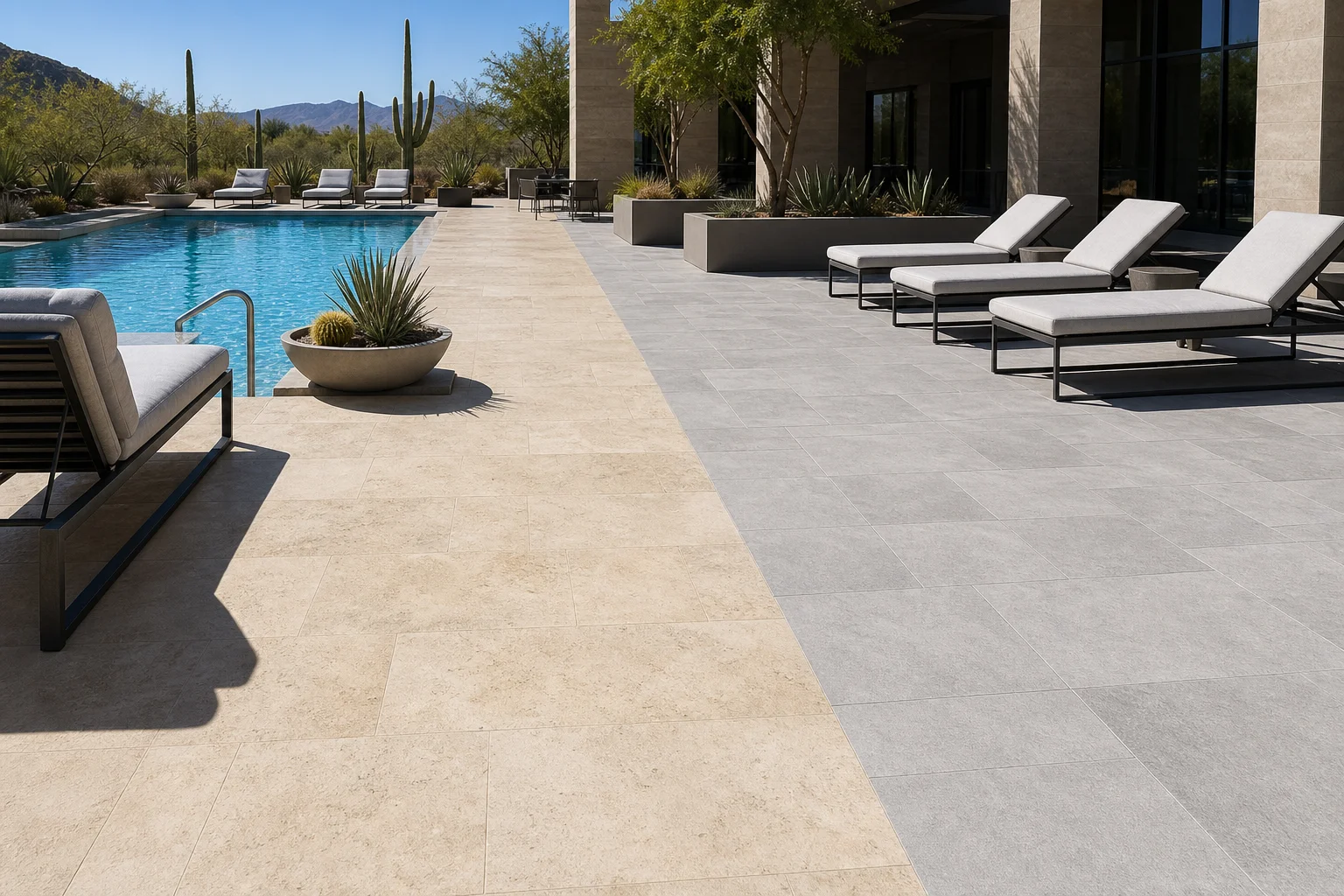
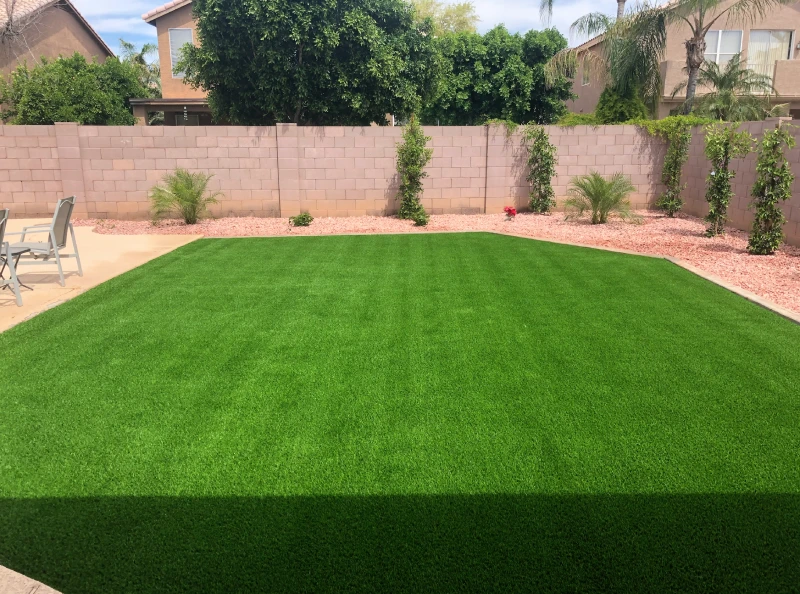
Resorts and HOA communities across Arizona are swapping sun-scorched turf grass and slick decking for pool surround artificial turf that stays cool underfoot, drains fast after a splash, and resists chlorine damage season after season. A properly specified Turf Installation plan turns a high-maintenance pool area into a lush, walkable amenity residents and guests use year-round.
By HEOS AZ Team, Outdoor Living Specialists
Choosing the Best Pool Surround Artificial Turf for Splash Pads
Not every synthetic product belongs near water. The best pool surround artificial turf combines a UV-stabilized polyethylene fiber, a permeable backing that will not trap moisture, and a face weight dense enough to hold its shape under heavy foot traffic without matting down. HOA boards and resort operators should look for turf rated specifically for wet, high-exposure environments rather than a standard residential-grade product pulled off the shelf.
Fiber design matters as much as color. Rounded or diamond-shaped fibers spring back faster after guests walk through wet pool areas, while a tighter stitch rate resists the flattening that comes from lounge chairs and daily use. A well-specified pool surround artificial turf system holds its texture and color for years, even with constant sun exposure and splash-pad runoff.
Does Artificial Turf Get Too Hot to Walk on Barefoot Around a Pool?
Arizona sun raises surface temperatures on any hardscape, and turf is no exception, but the right product and installation choices keep it walkable through most of the day. Lighter-colored fibers reflect more heat than dark green turf, and heat-reflective or cooling infill technology can lower surface temperature several degrees compared to standard sand infill.
Shade structures, misting systems, and placement away from full southern exposure also reduce peak heat around pool decks. For splash pads and pool areas used heavily midday, many resorts pair turf with a cooling infill and position seating and play zones to catch afternoon shade, so bare feet stay comfortable even in July and August.
Is Synthetic Turf Slip-Resistant and Safe on Wet Pool Decks?
Traditional concrete and stamped decking become genuinely hazardous once wet, and that risk drives much of the interest in synthetic turf near water. Textured, non-slip backing and a fiber blend built for wet traction give synthetic turf a meaningfully lower slip risk than polished stone or smooth concrete when it gets splashed.
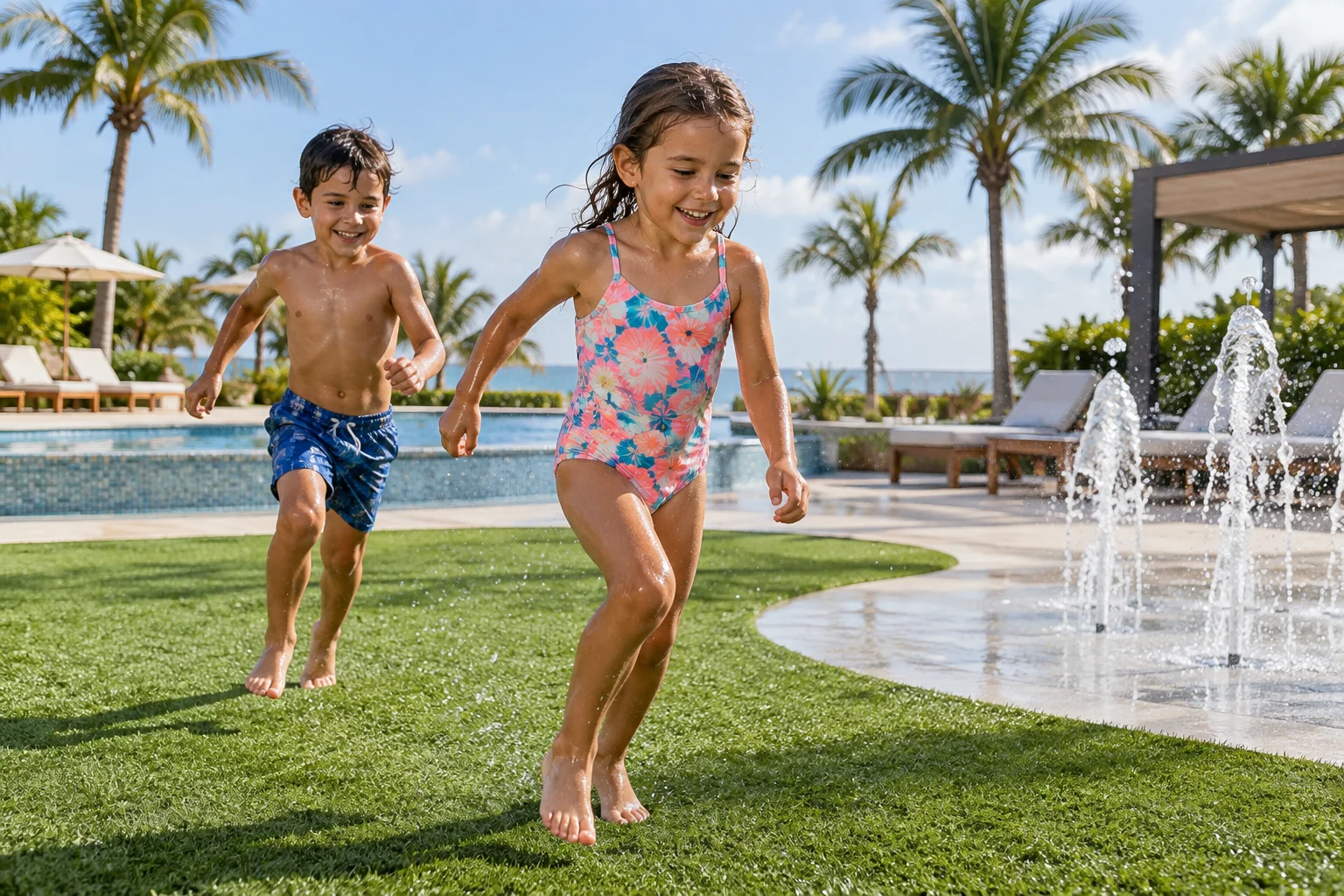
Turf also eliminates the standing puddles that form on flat hardscape, since water moves through the permeable backing instead of sitting on the surface. Property teams evaluating artificial grass around pool decks often find traction is the deciding factor over color or cost. For HOA pool areas and resort splash pads where children and older residents move around pool decks barefoot or in sandals, that drainage advantage is a genuine safety upgrade, not just a comfort one.
Chemical Resistance, Drainage, and Edge Installation for Pool-Area Turf
How Well Does Artificial Turf Hold Up to Chlorine and Pool Chemicals?
Commercial-grade fiber and backing, matched to the synthetic grass specs a pool environment demands, hold color and strength through years of chemical contact, where a lower-grade product yellows or stiffens within a season or two. The backing and adhesives used around pool areas should also be chemical-resistant, since standing puddles of treated water are common near ladders, fountains, and splash pad nozzles.
How Is Turf Installed Around Pools and Splash Pads for Proper Drainage?
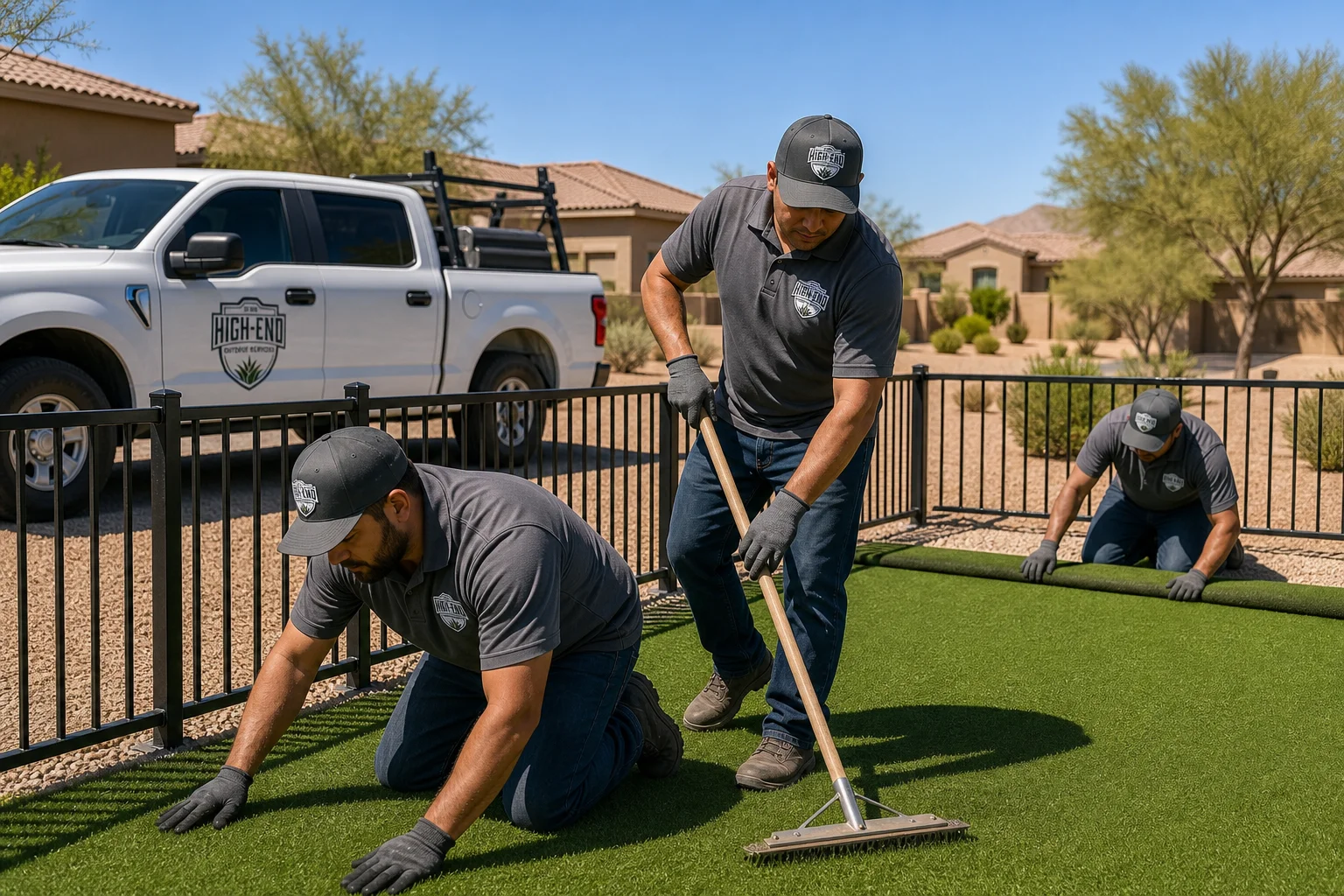
Drainage is engineered into the base, not just the surface. Installers grade a compacted aggregate base away from the pool, add a permeable backing, and often route water to a perimeter drain or the pool deck's existing drainage system so runoff never pools against the coping. Splash pads need an even higher drainage capacity than standard artificial turf around pools, since they discharge water continuously rather than intermittently. Property teams comparing a standard roll-out product against something built for their site typically find that matching turf to actual drainage load, the core idea behind a custom turf solutions approach, keeps water moving even on high-traffic splash pads.
Can Artificial Turf Be Installed Right Up to the Pool Edge?
Yes, turf can be installed flush against the coping for a seamless turf-to-pool transition, though most installers leave a narrow paver, concrete, or rubber border at the edge to protect the fiber from constant saturation and give the installation a clean, finished line where the turf meets the pool deck.
Cost, Maintenance, Lifespan, and Mold Prevention for Pool-Area Turf
What Does Artificial Turf Typically Cost for Resort and HOA Pool Areas?
Pricing for pool-area turf depends on square footage, the drainage and grading work required, fiber quality, and whether the site needs a cooling infill or ADA-compliant surfacing. Because every property's base conditions and access are different, HOA boards and resort managers get the most accurate number from a site walk-through rather than a flat per-square-foot estimate. HOA and resort teams can request a property assessment and written quote through HEOSaz's HOA Landscaping team to compare turf options against their actual square footage and budget.
How Do You Clean and Maintain Artificial Turf Around a Pool or Splash Area?
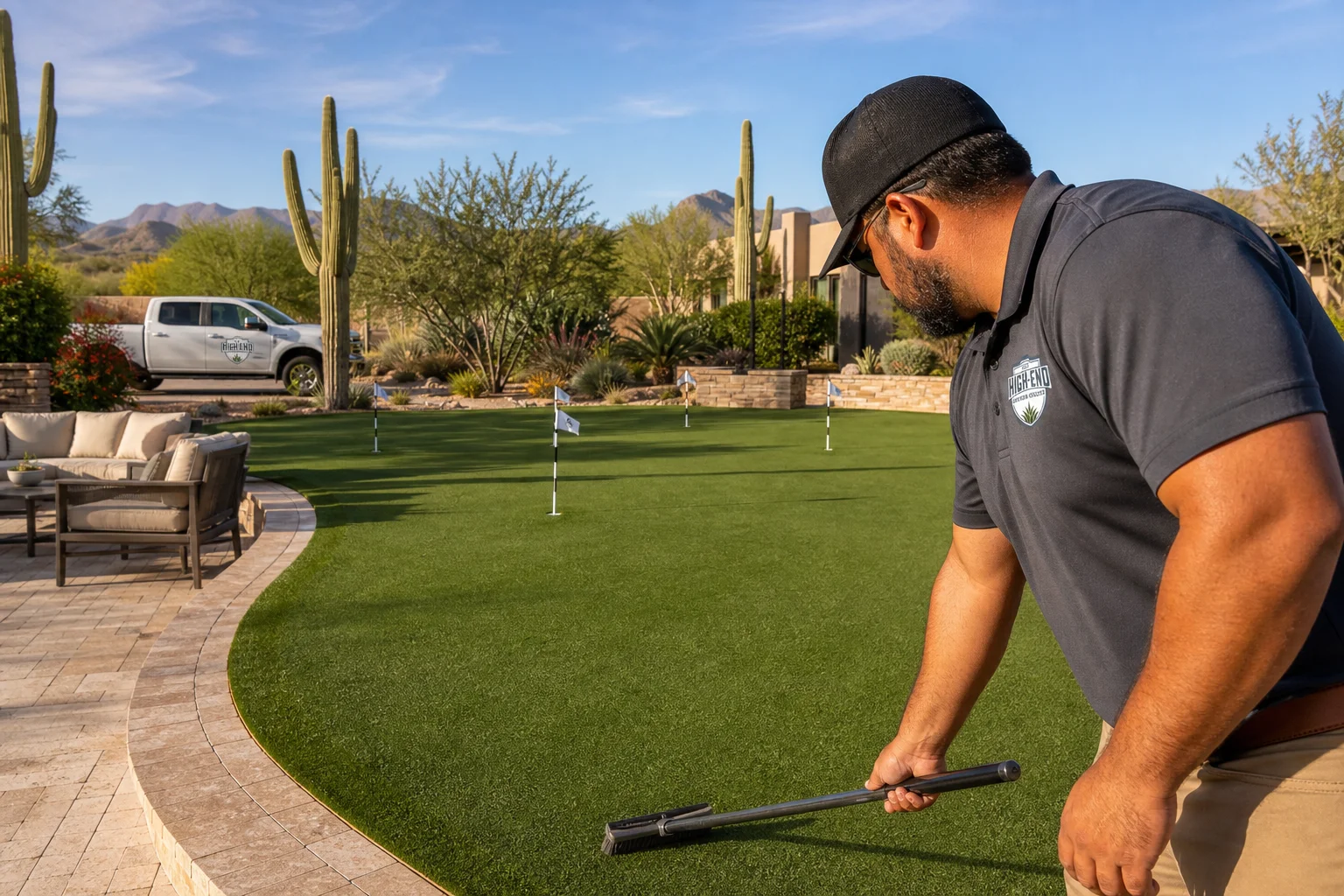
Routine maintenance is light: a regular rinse to clear sunscreen residue, pollen, and debris, an occasional brush to keep fibers standing upright under heavy foot traffic, and a periodic deep clean for high-use commercial and community pool areas. Quick rinse cycles after peak hours keep splash pad turf looking fresh without a major maintenance program.
How Long Does Pool-Area Artificial Turf Typically Last?
With proper installation and regular care, commercial-grade turf around pools and splash pads typically performs well for eight to fifteen years, though heavy chemical exposure, intense sun, and splash-pad-level water volume sit at the more demanding end of that range.
Can Artificial Turf Develop Mold or Mildew Near Water?
Mold and mildew risk comes from trapped moisture, not from the turf fibers themselves, so a permeable backing and a properly graded, well-drained base are the real defense. Turf installed without adequate drainage can trap water beneath the surface and support mold growth over time, which is why drainage engineering matters more for pool-area turf than for a typical lawn installation.
Frequently Asked Questions
Does turf around a pool or splash pad need infill? Most commercial turf systems around pools use infill, often a heat-reflective or antimicrobial type, to help fibers stand upright and add cushioning underfoot. Some low-infill or no-infill systems exist for splash pads specifically to maximize drainage speed, so the right choice depends on the site's water volume and how the space gets used.
Is artificial turf ADA-compliant for splash pad surfaces? Turf can meet ADA surface requirements for accessible routes and play areas when it is installed with the correct firmness, stability, and slip resistance specified for that use, typically verified through an accessibility surface rating. Not every turf product qualifies, so ADA-compliant applications need a system specifically rated for accessible play and pool surfaces.
Is artificial turf safe for children playing barefoot around a pool? Commercial turf built for pool areas uses rounded fibers and a cushioned, heat-managed base specifically so bare feet stay comfortable and children can play safely on wet pool decks. Combined with proper drainage and a lower slip risk than polished concrete, turf around pools and splash pads is generally a safer play surface than traditional hardscape for barefoot use.
Will artificial turf fade or stain from pool chemicals over time? UV-stabilized, chemical-resistant fibers are designed to resist fading from chlorine, saltwater systems, and sun exposure for years, though lower-grade turf can yellow or stiffen faster under heavy chemical contact. Choosing commercial-grade turf rated for pool environments, rather than a standard residential product, is the main factor in how well color and texture hold up long-term.
Get a Pool-Area Turf Quote for Your Property
HOA boards and resort managers ready to replace worn grass or slippery decking can Contact HEOSaz for a site walk-through and a turf plan built around their pool areas, splash pads, and budget.