Hardscape Lighting for Safety and Liability on Commercial Properties
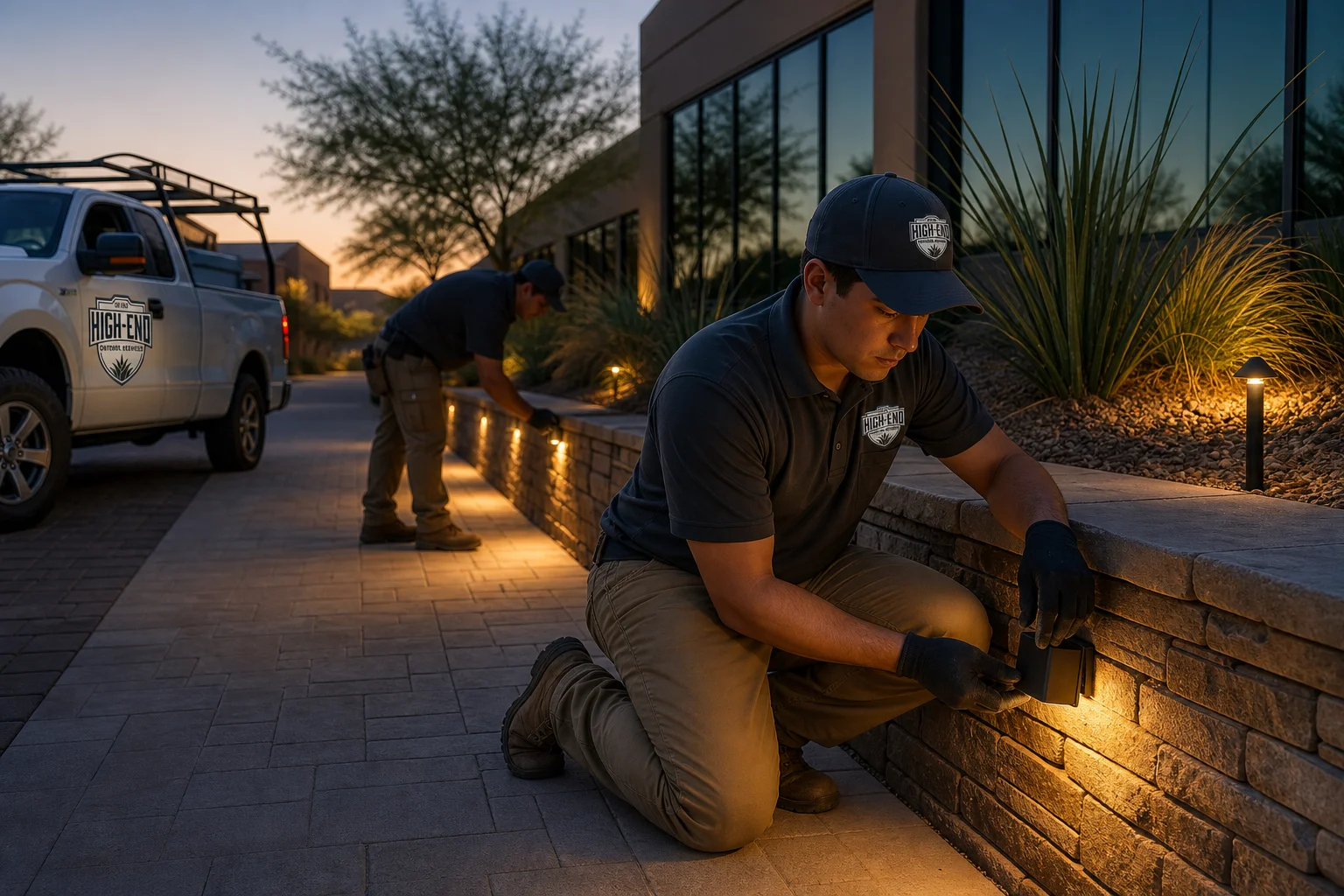
When a tenant or visitor is injured on a dark walkway after sunset, the first thing an attorney or insurance adjuster reviews is whether commercial hardscape lighting was adequate for the space. For property managers and HOA boards, professionally planned Outdoor Lighting is both a safety requirement and a curb appeal upgrade.
By HEOS AZ Team, Outdoor Living Specialists
What Is Commercial Hardscape Lighting and Why Does It Affect Liability?
Commercial hardscape lighting covers fixtures on a property's built structures: walkways, steps, retaining walls, patios, and parking areas, rather than the plants and trees landscape lighting highlights. These surfaces are also where most injury claims originate, since uneven steps, curbs, and pavement become far more dangerous after dark.
Premises liability law generally holds property owners and managers responsible for keeping common areas reasonably safe for tenants, customers, and visitors. Adequate lighting is one of the most straightforward ways to meet that duty, and one of the easiest failures for a plaintiff's attorney to flag after an incident. Most courts and insurers treat a well-designed lighting plan as basic due diligence, not an amenity.
Can Poor Exterior Lighting Make a Business Liable for a Slip-and-Fall Injury?
In most cases, yes. Premises liability claims typically turn on whether a hazard was foreseeable and whether the property owner or manager knew, or should have known, about it. Poor lighting makes it harder to argue a hazard was not reasonably visible, whether that's a parking lot pothole or an unlit step at a building entrance.
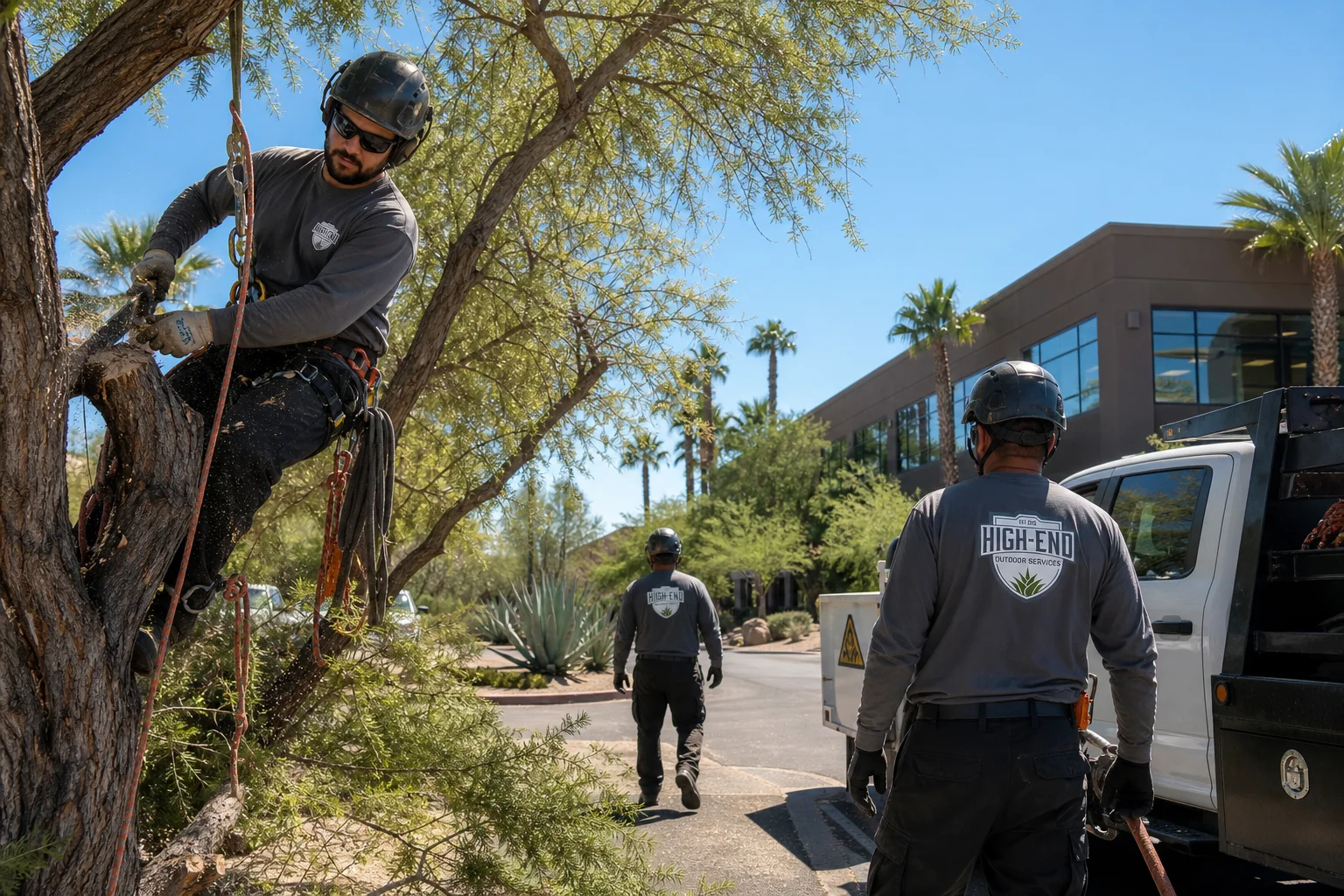
Commercial properties with documented tree-trimming schedules tend to fare better in these disputes, since overgrown branches blocking a fixture is a common cause attorneys flag when tracing why a walkway went dark. Keeping trimming cycles on a fixed schedule closes that gap and strengthens a property manager's record if a claim is ever filed.
Which Areas of a Commercial Property Need Hardscape Lighting for Safety?
Not every square foot needs the same brightness, but a handful of areas carry outsized risk if left dim:
- Parking lots and drive aisles, where vehicle and pedestrian paths cross
- Walkways, ramps, and steps leading to entrances
- Retaining Walls and grade changes, where a drop-off is easy to miss at night
- Patios and other outdoor spaces used after hours
- Building entrances, loading zones, and perimeter paths
A parking lot needs broad, even coverage, while a patio or retaining wall calls for layered, lower-brightness fixtures that still define the edge of a hazard without glare.
Lighting Codes, ADA Requirements, and Foot-Candle Levels for Walkways
Most municipal lighting codes are built around illumination guidelines from the Illuminating Engineering Society (IES), which many jurisdictions reference or adapt into local ordinances. Accessible routes covered by the Americans with Disabilities Act generally need consistent, glare-free light along ramps, curb cuts, and elevation changes.
IES guidance commonly places entrances and primary walkways in a higher brightness range than open parking areas, which need enough light for wayfinding and security without being excessive. Exact requirements vary by municipality, so confirm current code minimums with the local building department.
What Does Commercial Hardscape Lighting Cost to Install?
Cost depends on too many variables for a single honest number: property size, fixture count, whether wiring must be trenched near retaining walls, and whether the property wants smart controls versus simple photocell timers. A small HOA courtyard and a multi-acre corporate campus are not the same project.
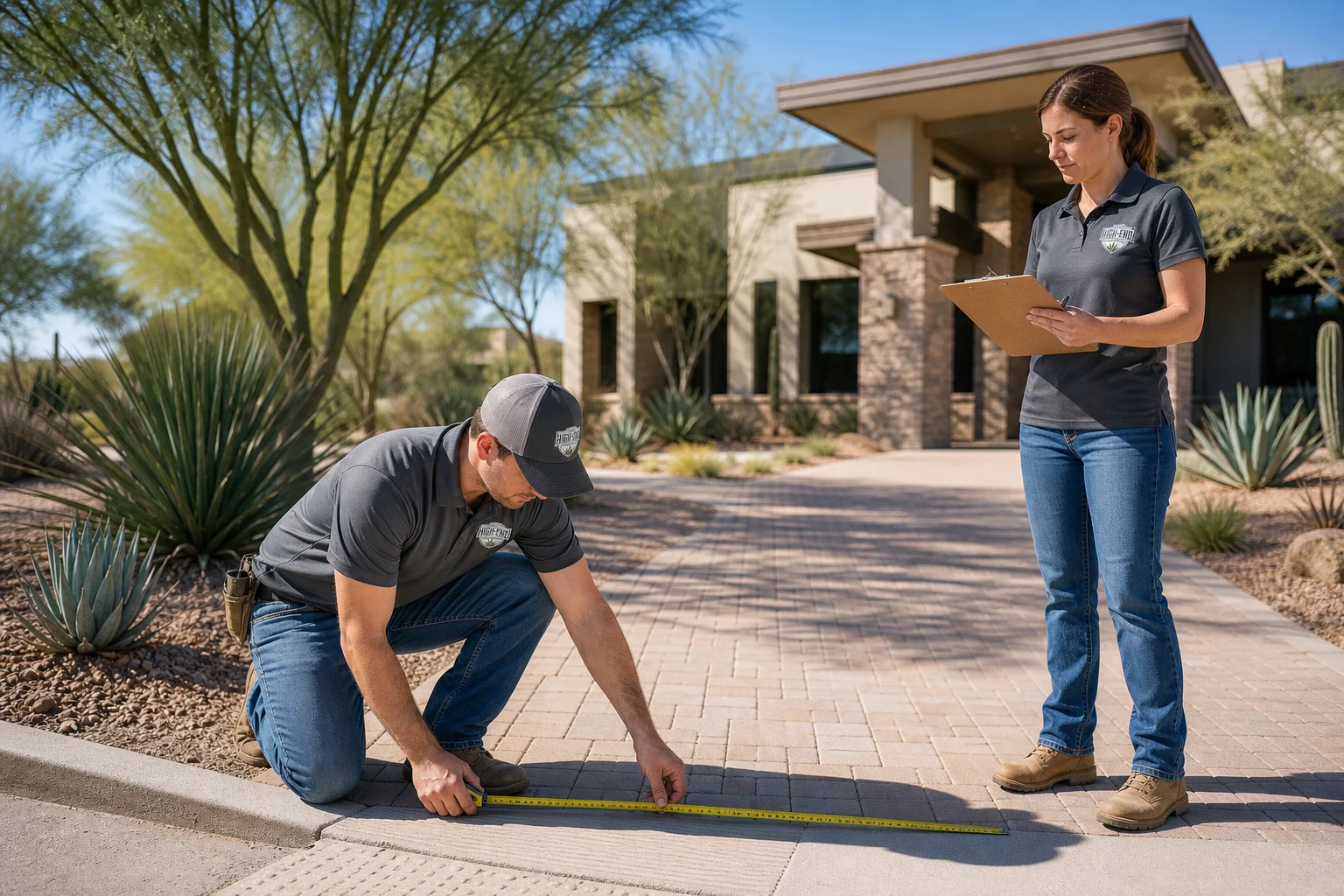
The most reliable way to get an accurate number is a site walk with a design team. Property managers comparing quotes should ask what's included: fixture quality, warranty terms, and whether smart controls are part of the base bid.
How Long Does Hardscape Lighting Installation Take?
Timelines vary with scope. A straightforward walkway and entrance package often wraps up in a few days once the design is finalized. A full retrofit, retaining walls, multiple parking areas, and smart controls, typically takes longer and may be phased to avoid disrupting tenants. Build in time for design and permitting, since that stage usually drives the overall timeline.
What Types of Fixtures Are Used for Safety-Focused Hardscape Lighting?
Safety-focused hardscape lighting relies on a few fixture types, each suited to a different hazard:
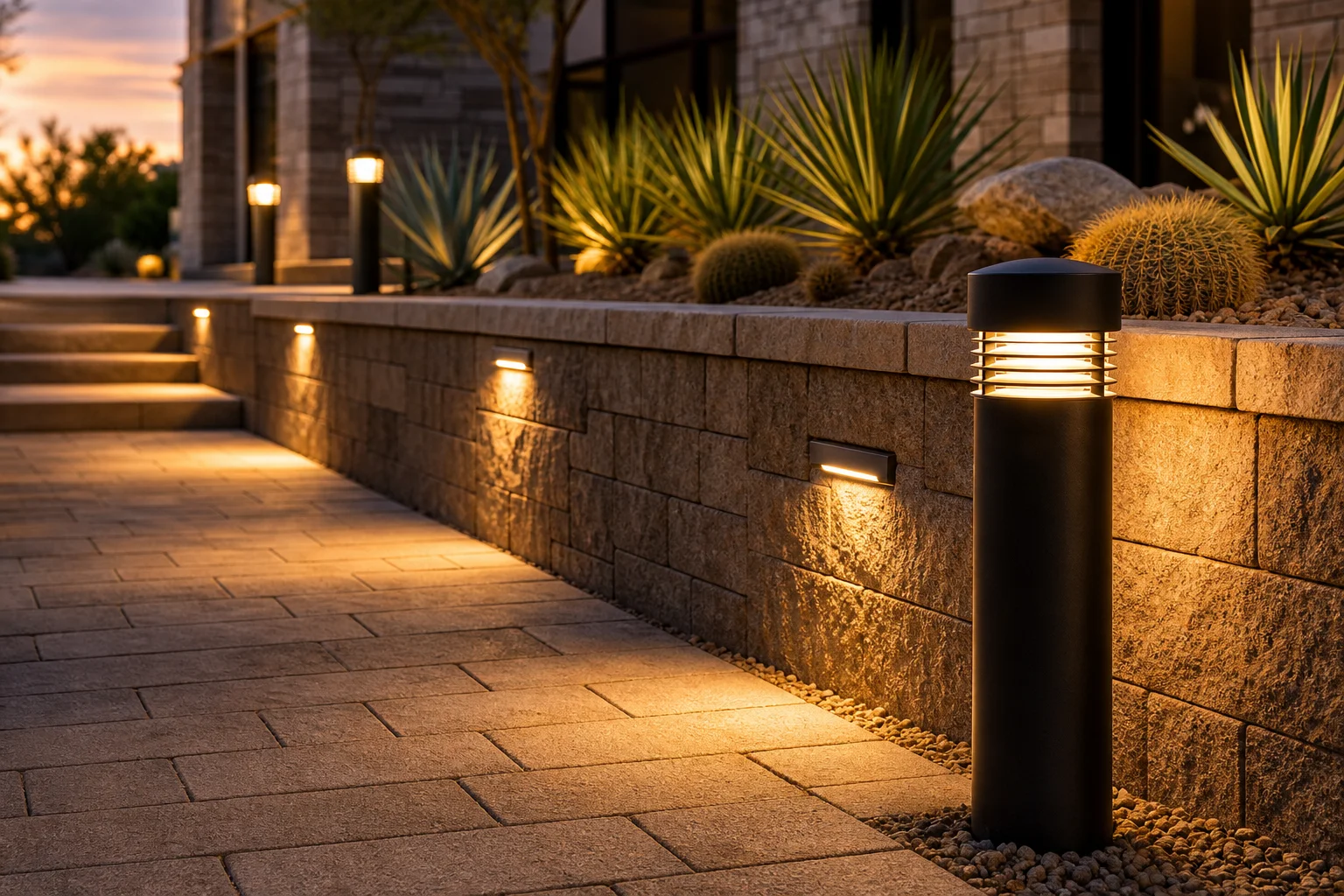
- Step lights and in-grade well lights, recessed into risers or pavement to mark elevation changes without glare
- Bollard lights, which define the edge of a walkway or drive aisle at a consistent height
- Wall-mounted sconces on retaining walls and building facades for broad, even wash lighting
- Accent lighting on columns or seating walls, which helps create color and visual interest while still contributing usable light
- Motion-activated fixtures for lower-traffic areas, which increase brightness only when needed
Most systems now pair these fixtures with smart controls, app-based scheduling, dimming, and zoning, letting a manager brighten a lot for an event or dim path lights after hours, above a baseline that never drops below code.
How Often Does Hardscape Lighting Need Maintenance to Stay Compliant?
Hardscape lighting needs more upkeep than most property managers expect. LED fixtures fail, lenses fog or crack, photocells drift out of calibration, and landscaping can grow enough to block a fixture's throw within a season. A quarterly walk-through, checking bulbs, lenses, and confirming timers fire on schedule, catches most issues before they become a code violation.
Properties that outsource this to a landscaping partner tend to catch problems faster, since a crew is already walking the grounds. Comparing the ongoing cost of an outsourced grounds program against handling repairs reactively in-house is worth doing before deciding who owns that upkeep.
Hardscape Lighting vs. Landscape Lighting: What's the Difference?
The terms get used interchangeably, but they cover different parts of a property. Landscape lighting is built around plants: uplighting a tree, grazing light across shrubs, or moonlighting through a canopy, designed primarily around aesthetics.
Hardscape lighting is built around structure: the patios, retaining walls, steps, and walkways people walk across. Its first job is safety and code compliance; aesthetic value comes second. Most properties need both working together, but hardscape lighting is tied directly to liability and insurance, which makes it the harder one to defer. Treat the hardscape layer as the non-negotiable first phase, with ornamental accents added once the safety baseline is in place.
Frequently Asked Questions
Does adding hardscape lighting lower commercial property insurance costs? It can. Insurers weigh documented safety measures, lighting logs, maintenance records, and code compliance when underwriting liability coverage. Lighting alone rarely triggers an automatic discount, but a well-maintained system paired with other safety upgrades often strengthens a property's risk profile. Ask the carrier directly whether lighting documentation affects premiums.
Who is liable if someone is injured due to poor parking lot lighting at night? Liability usually falls on whoever controls the property, the owner, a management company, or an HOA, depending on the lease and management agreement. Courts generally look at whether the hazard was foreseeable and whether reasonable steps were taken to light the area. Documented maintenance and prompt repairs are among the strongest evidence a property manager can present.
How many foot-candles are recommended for a building entrance versus a parking lot? IES guidance generally recommends higher brightness at entrances and primary walkways than in open parking areas, where even coverage matters more than intensity at any single point. Because exact minimums vary by municipality, confirm current code requirements with the local building department.
Get a Professional Lighting Design for Your Property
A commercial hardscape lighting plan should hold up to both a safety inspection and a liability review, not just look good after dark. Contact HEOS AZ to learn how a professional lighting design can enhance curb appeal while closing the safety gaps that create risk.