Tree Care and Liability on Commercial Properties: Trimming Cycles and Risk
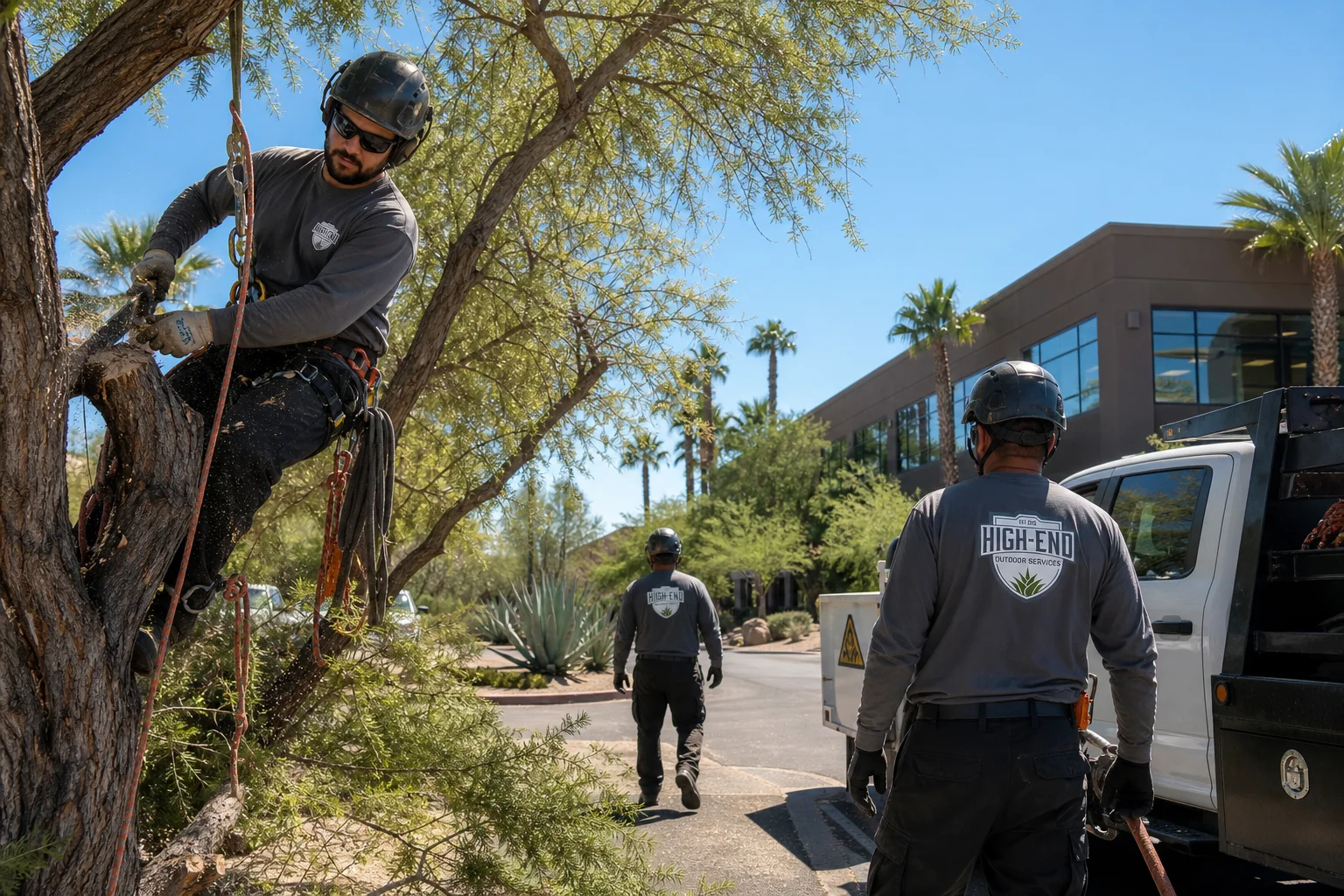
Tree care and liability on commercial properties are directly linked: when trimming cycles lapse and inspections stop, property owners face documented exposure for injuries, property damage, and tree failure claims. Arizona's rapid growth cycles and monsoon storm season make consistent Tree Services programs essential for managing risk year-round.
By HEOS AZ Team, Outdoor Living Specialists
Tree Care and Liability on Commercial Properties: The Legal Framework
Trees are living infrastructure. Unlike a cracked sidewalk or a burned-out light fixture, trees change continuously, and that growth can turn a landscape asset into a serious liability. A mature mesquite overhanging a parking lot, a leaning palm near a walking path, or a dead branch above a building entrance all carry real risk of injury, property damage, and legal action.
Courts and insurance adjusters increasingly apply a "known hazard" standard to tree-related incidents on commercial properties. Property owners can be held liable if evidence shows they were aware of a deteriorating tree, or had reasonable cause to discover it through regular inspections. A lack of documented commercial tree care history does not protect owners. In many cases, absent records strengthen a plaintiff's argument that negligence contributed to the incident.
Commercial properties face heightened scrutiny because of visitor volume. A residential yard sees dozens of people daily; a retail center, HOA community, or medical campus may see thousands. That scale multiplies legal exposure significantly, and courts recognize it.
Trimming Cycles: Matching Commercial Tree Maintenance to Risk
Recommended trimming cycles for Arizona commercial trees vary by species, site conditions, and proximity to high-use areas. Most commercial tree services professionals work from this framework:
- Annual trimming is appropriate for fast-growing and desert-adapted species including mesquite, palo verde, and non-native shade trees.
- Biannual trimming suits slower-growing specimen trees in lower-traffic zones, provided visual inspections confirm no new hazard development.
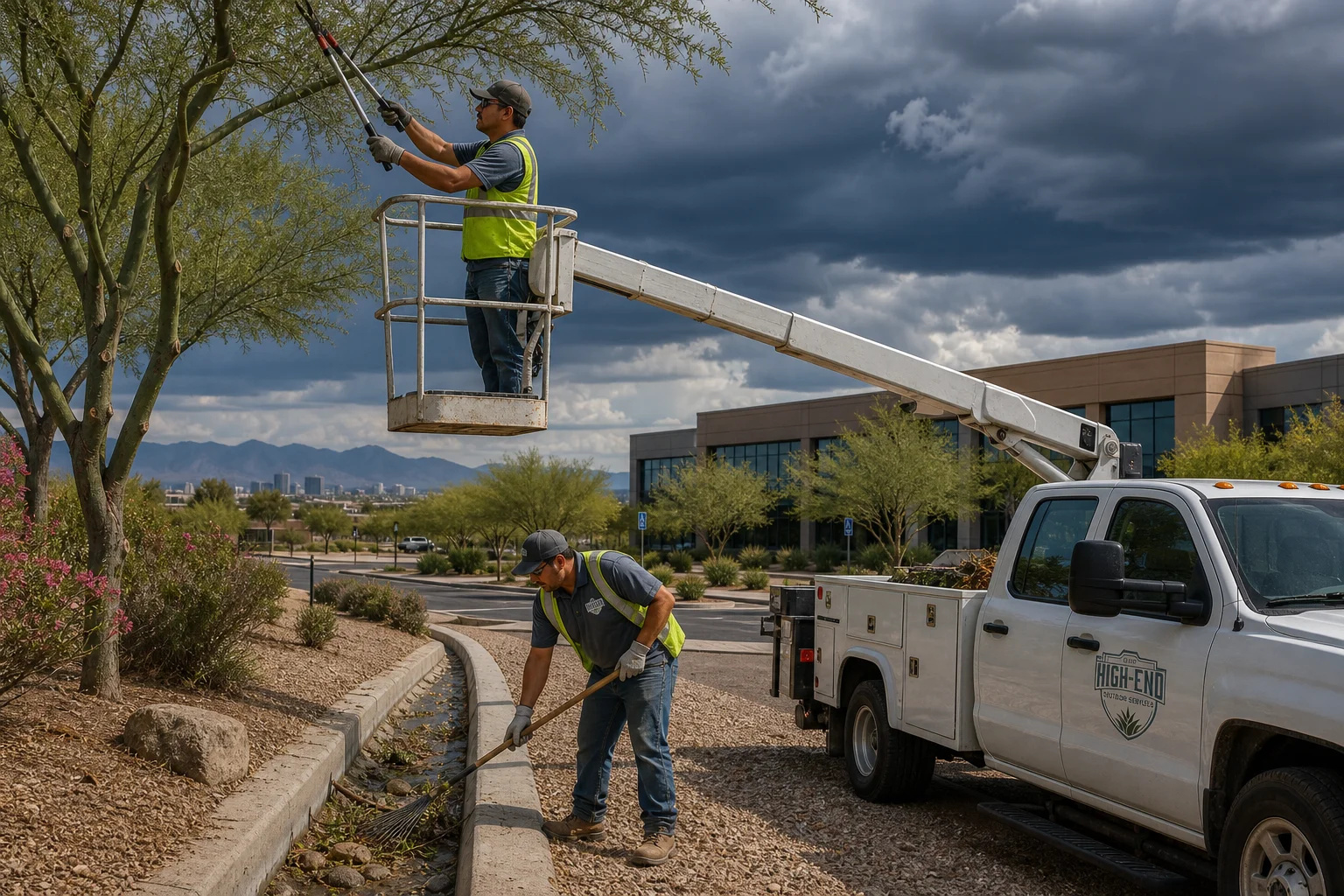
- Storm response pruning is required after significant weather events. Arizona's monsoon season generates branch failures, debris accumulation, and root erosion that require prompt professional attention.
- Pre-season canopy elevation reduces wind-load during monsoons and improves sight lines across commercial parking areas, protecting vehicles from falling branches.
The driving principle in any trimming cycle is documentation. Trimming logs without dated records, inspection reports, and crew sign-offs provide no legal protection. Licensed commercial tree services contractors should deliver written documentation after every visit, including notation of identified hazards and recommended follow-up actions.
Our detailed breakdown of What a Commercial Landscape Maintenance Contract Should Include covers the specific contract language that governs trimming schedules for HOA and commercial clients.
Insurance, Workers Compensation, and Contractor Verification
Tree work ranks among the most hazardous categories in commercial landscaping. Any contractor performing commercial tree care on your property must carry both general liability insurance and workers compensation coverage at appropriate policy limits. This protects the contractor's crew and insulates the property owner from secondary liability if an incident occurs on site.
Workers compensation is not optional for tree crews. Falls, chainsaw injuries, and equipment-related accidents are documented risks in the industry. A commercial property owner who hires an uninsured contractor can face direct liability if a crew member is injured during tree removal or trimming. Before any commercial tree services work begins, request a current certificate of insurance and confirm the policy specifically covers both trimming and tree removal. Some general contractor policies exclude tree work outright.
From a claims perspective, tree failure incidents on commercial properties tend to cluster around the same root causes: no documented inspection history, a prior written report of a hazard that was not acted on, or contractor work that introduced structural damage. The International Society of Arboriculture's Best Management Practices for Tree Risk Assessment (ISA, 2011) identifies regular professional inspection as the primary control measure for reducing tree failure risk on managed commercial properties.
Commercial Maintenance programs that pair trimming services with formal inspection reports give commercial property owners both the documentation and the defensible records to address insurance and claims issues proactively.
Tree Removal: When Risk on Commercial Properties Exceeds Maintenance Value
Tree removal should be treated as a last resort within a structured commercial tree care program, but there are conditions where it is the correct risk management decision. Dead or visibly deteriorating trees are obvious candidates, but other removal triggers are less apparent:
- Large cavities, co-dominant stems, or crack patterns through the trunk that signal structural compromise.
- Root zone loss from construction activity, irrigation trenching, or pavement removal that has destabilized the tree's foundation.
- Location conflicts where canopy or root growth creates unresolvable friction with structures, utilities, or pedestrian clearances.
- Disease or pest progression that has advanced beyond treatment viability.
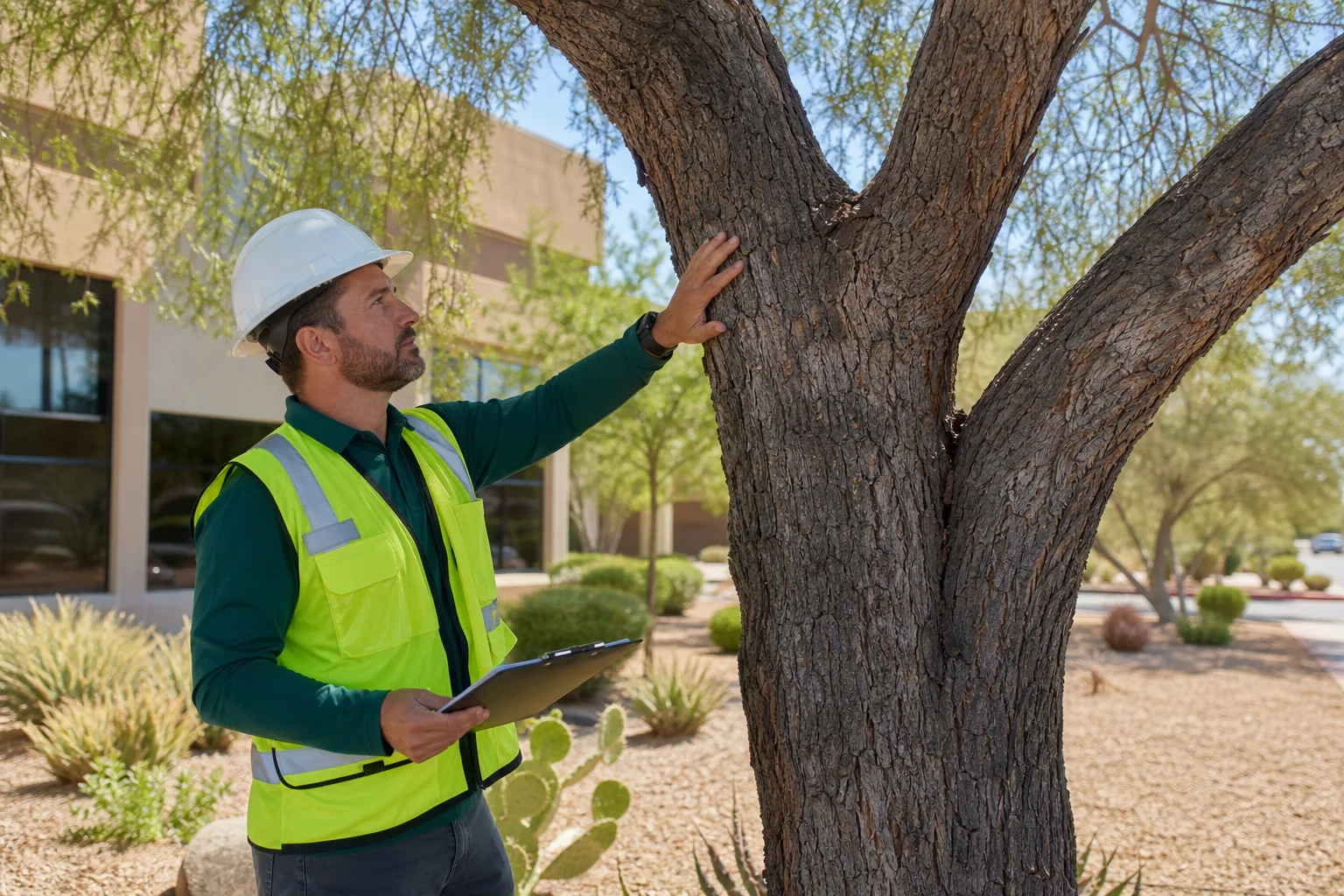
On commercial properties, the decision to proceed with tree removal should follow a documented arborist assessment, not a unilateral call by grounds crews. A third-party written assessment protects commercial property owners if the removal is questioned and establishes that the decision was grounded in professional evaluation.
For properties planning replacement plantings after tree removal, Landscaping Trends 2024 Hoa Commercial Properties covers climate-appropriate species for Arizona commercial and HOA settings.
Broader planning resources are available in Implementing Effective Landscape Maintenance Programs for Commercial Properties.
The Financial Case for Consistent Commercial Tree Care
Preventive pruning costs a fraction of what emergency tree removal or post-incident legal defense requires. Root intrusion into irrigation systems, pavement lifts near commercial building entrances, and utility conflicts all start as minor issues and scale quickly without intervention.
Property damage claims tied to tree failures can directly affect commercial property insurance premiums. Documented incidents on a property's record, particularly those with evidence of prior notice and no corrective action taken, create risk profiles that increase renewal costs and trigger coverage exclusions. Consistent commercial tree care is an insurance cost management strategy as much as a landscape maintenance line item.
HOA boards face particular pressure in this area. Member-facing liability, community aesthetics, and insurance obligations converge at tree management more visibly than at nearly any other landscape element. The scheduling guidance in How Often Should Commercial Properties Be Serviced? The Arizona Maintenance Calendar provides a timeline structure HOA managers can use to set predictable trimming cycles and communicate them to boards and property owners.
Frequently Asked Questions
How often should commercial trees be trimmed to manage liability?
Most commercial tree care professionals recommend annual trimming for fast-growing species in Arizona, with biannual cycles for slower-growing varieties in lower-traffic areas. The legal protection comes from documentation more than frequency: dated records showing trimming scope, hazards observed, and contractor credentials are what create a defensible record if a tree-related claim arises on your commercial property.
Does commercial property insurance cover tree failure incidents?
Coverage varies by policy. Many commercial property insurance plans cover sudden tree failures but exclude situations where the owner had prior documented notice of a hazard and failed to act. Without inspection records, a property owner is in a weaker position when a claim is contested. Review your specific policy with your broker and confirm the language around tree-related exclusions.
What insurance should a commercial tree services contractor carry?
Confirm current general liability coverage and workers compensation insurance that specifically covers tree trimming and tree removal operations. Some general contractor policies exclude tree work. Request a certificate of insurance before work begins and verify coverage limits are appropriate for the scale of your property and the trees involved.
When is tree removal the right decision for a commercial property?
Tree removal is warranted when structural defects cannot be managed through pruning, when root zone damage has destabilized the tree's foundation, when disease has advanced beyond treatment viability, or when location conflicts with structures or utilities cannot be resolved. A licensed arborist assessment documenting these conditions is advisable before proceeding with tree removal on commercial properties.
Can root growth damage be managed before tree removal becomes necessary?
Root barriers, selective root pruning, and soil aeration can redirect growth away from pavement and utility infrastructure when applied early. Commercial tree care professionals assess root zone conditions during regular inspections and identify early-stage intrusion before it reaches a threshold requiring tree removal. Early intervention is consistently less costly than addressing structural damage after it occurs.
Protect Your Property with Professional Commercial Tree Care
Managing tree care and liability on commercial properties requires consistent trimming cycles, thorough documentation, and contractors who carry proper liability insurance and workers compensation coverage. Contact our team to schedule a professional tree assessment and build the records that protect your investment.