Travertine vs Porcelain Pavers for Arizona Heat: A Commercial Comparison
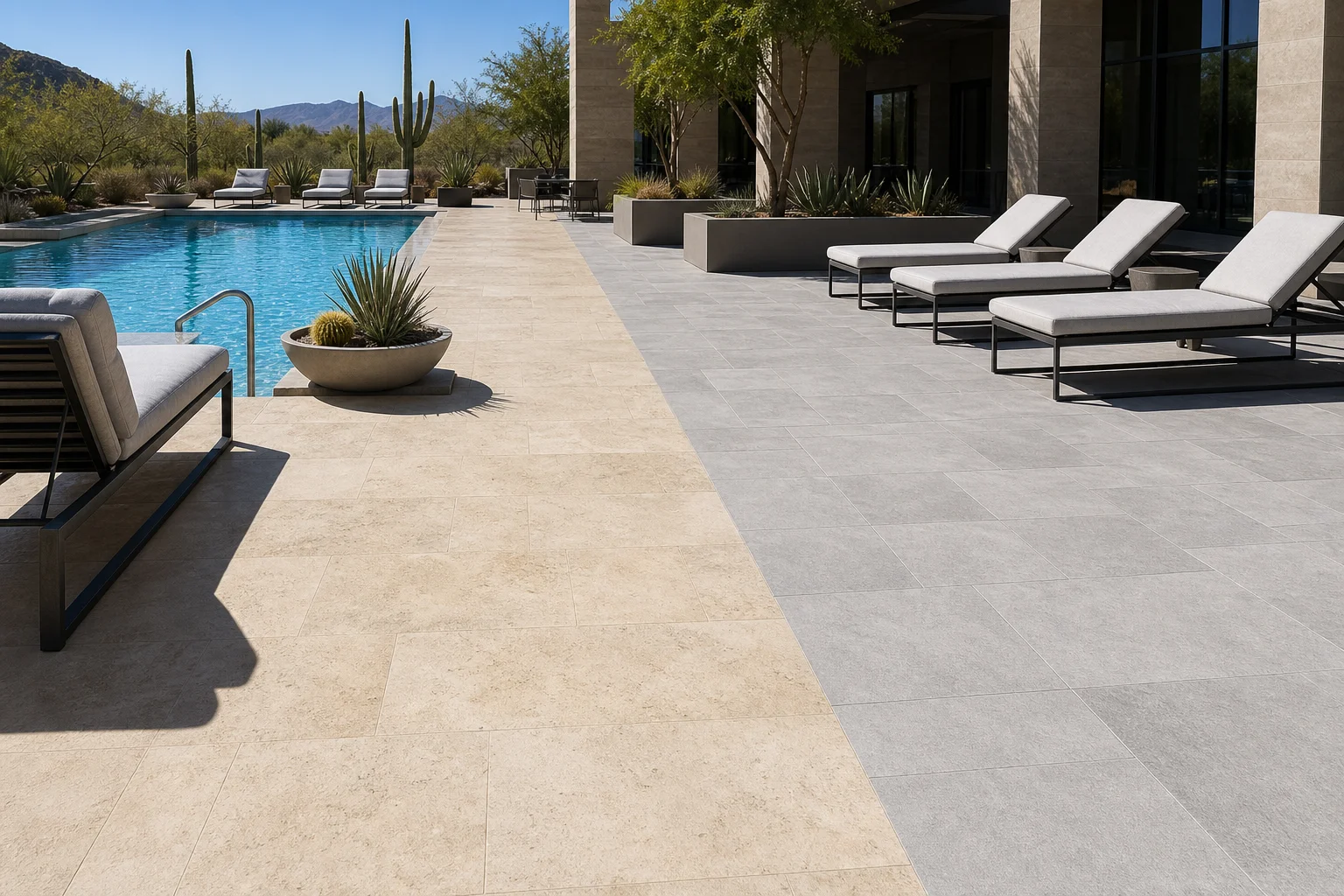
For Arizona property managers choosing between travertine vs. porcelain pavers, the decision comes down to heat performance, upkeep, and long-term durability under intense desert sun. Both materials handle commercial traffic well, but they behave differently once summer temperatures climb, which is why our Hardscape team walks every commercial client through the tradeoffs before installation.
By HEOS AZ Team, Outdoor Living Specialists
Which Paver Gets Hotter Under Arizona's Sun?
Surface temperature is usually the first question commercial clients ask, and it is the right one. Travertine, a natural stone quarried from mineral deposits, has a porous surface that reflects more solar radiation than dense, vitrified porcelain. In direct sun, travertine typically stays noticeably cooler underfoot than a comparably colored porcelain paver, which is why many pool decks and outdoor walkways in Phoenix lean toward lighter travertine tones.
Porcelain pavers are manufactured under intense heat and pressure, which gives them a dense, low-porosity surface that absorbs and holds heat more readily in direct Arizona sun, especially in darker colors. Lighter porcelain colors close some of that gap, but travertine still tends to stay cooler in Arizona heat, particularly on surfaces with no shade at midday. For any property where people walk barefoot near water, that comfort difference matters more than most spec sheets suggest.
Durability and Lifespan for High-Traffic Commercial Properties
Load-Bearing Durability
Commercial properties do not get the luxury of babying a paved surface. HOA common areas, hospital walkways, and retail parking courts take steady foot traffic, and many also see occasional vehicle loads from maintenance carts or delivery trucks. Porcelain pavers, properly rated and installed over the right base, rank among the most durable installation materials available, resisting chipping and rutting under wheel loads better than most natural stone options.
Travertine can hold up to commercial foot traffic and moderate vehicle loads when installed correctly, but performance depends heavily on the grade of stone and the quality of the sealing and base preparation. Lower grades are more prone to surface pitting, while filled, honed commercial-grade travertine performs much closer to porcelain.
Expected Lifespan
Porcelain pavers commonly outlast travertine in raw material life because the surface will not erode, etch, or absorb stains the way stone can. Travertine, properly sealed on a routine schedule, still delivers decades of service and develops a natural, weathered character many HOA boards prefer over the uniform look of manufactured tile. Porcelain requires less intervention to reach its full service life, while travertine reaches a comparable lifespan only with consistent maintenance.
Travertine vs. Porcelain Pavers: Cost Comparison Per Square Foot
Pricing for both materials varies by grade, thickness, color, and site complexity, so we will not quote a blanket figure here. As a general rule, porcelain pavers carry a higher material cost per square foot than standard travertine, largely because of the manufacturing process and rectified edges that make tight, uniform joints possible. Travertine's material cost is often lower, though pricing climbs quickly with higher grades or tumbled finishes needing more hand labor.
The number that actually matters for a commercial budget is total cost of ownership, not the sticker price per pallet. Porcelain's lower sealing and replacement needs can offset its higher upfront material cost over a multi-year cycle, while travertine's lower material cost can be offset by ongoing sealing labor. Run any comparison against your property's traffic, climate exposure, and maintenance budget.
Maintenance and Sealing Requirements
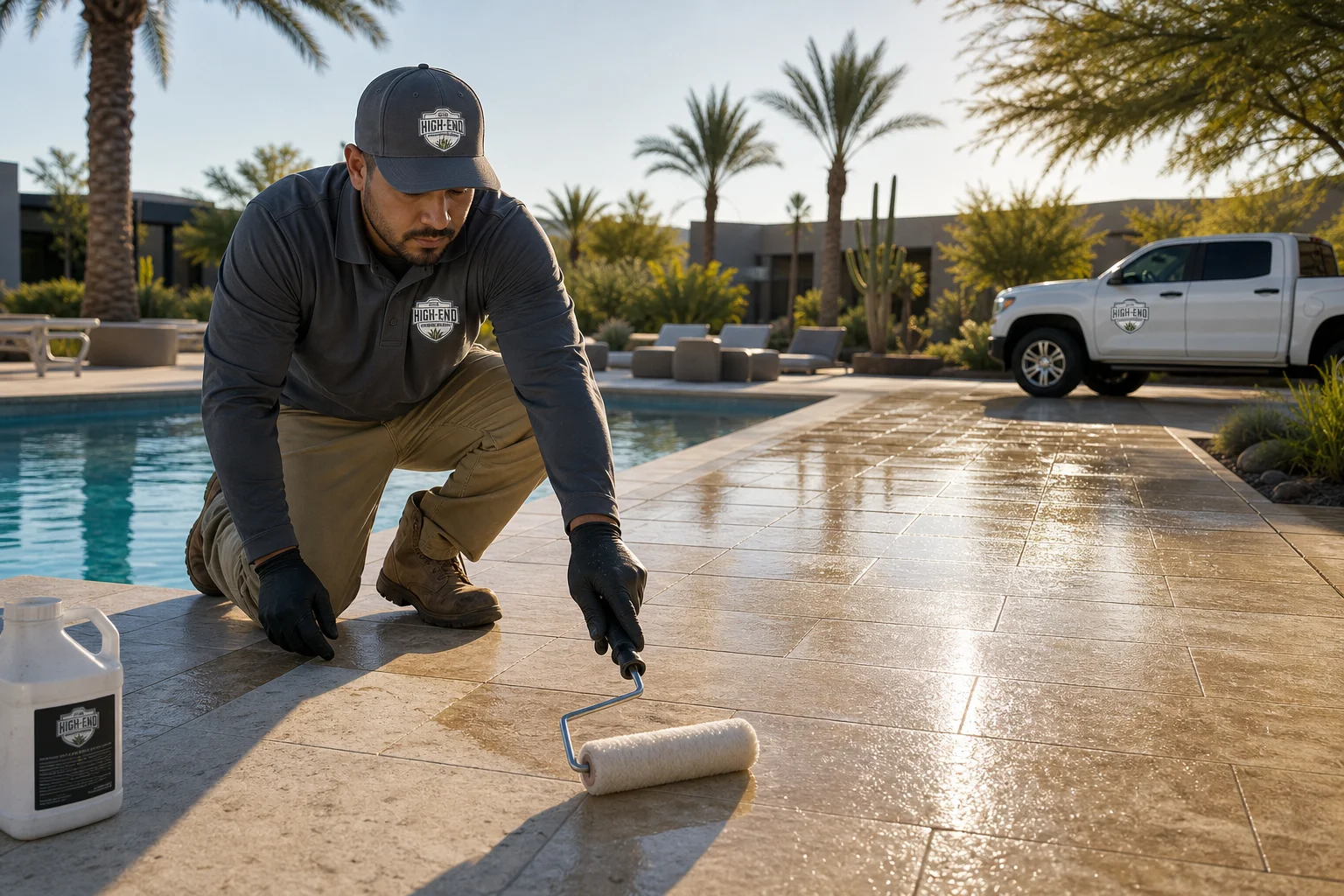
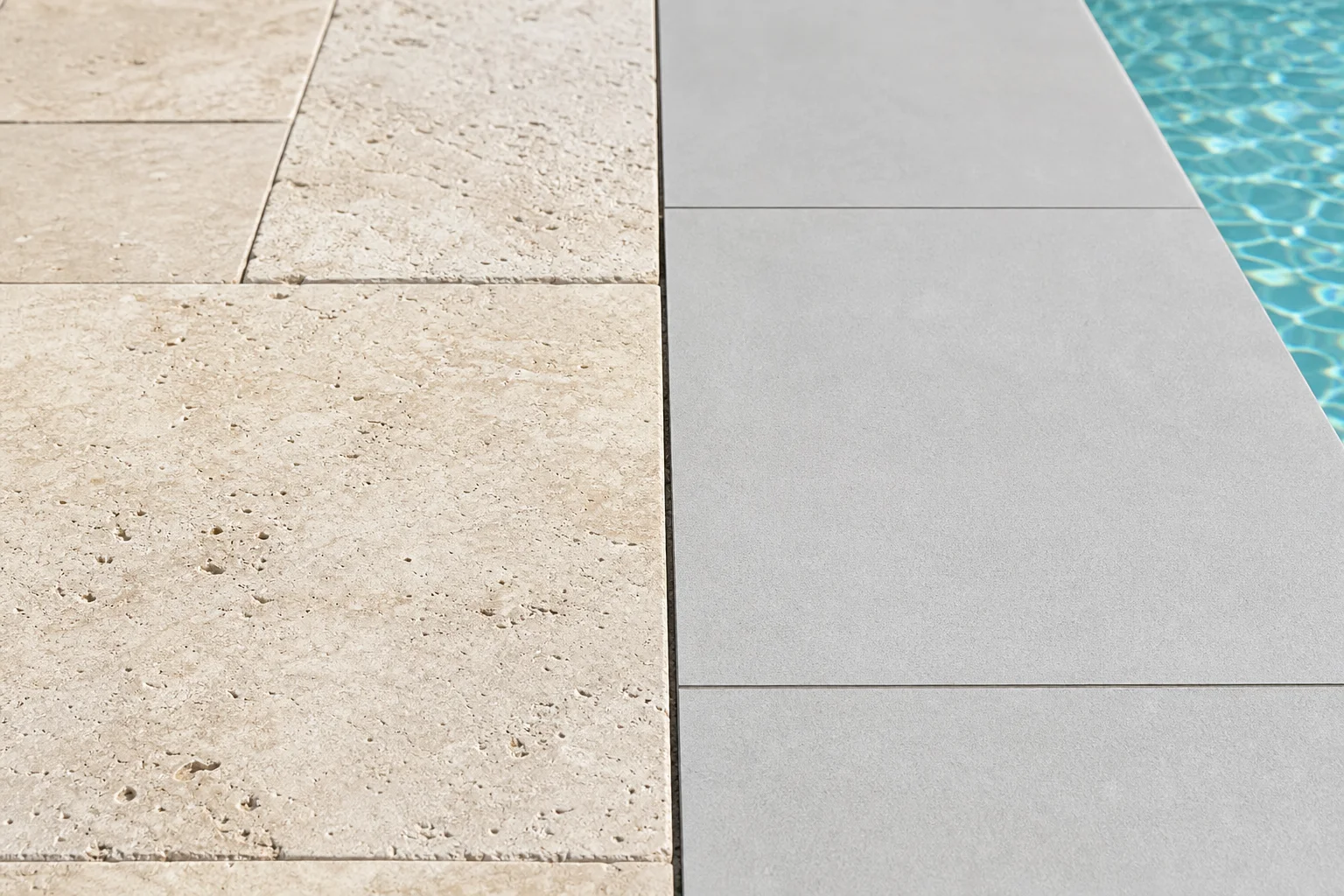
This is where the two materials diverge most. Travertine is a porous natural stone, so it needs periodic sealing to resist staining, water absorption, and mineral buildup from irrigation or pool splash-out. Most commercial properties in the Phoenix area should plan on resealing travertine on a regular schedule, more often in high-splash zones around a pool deck or fountain, to keep the surface protected from sun exposure and hard water.
Porcelain pavers are essentially non-porous once fired, so they do not require sealing in most cases. Routine maintenance is limited to regular cleaning to keep grout lines and joints free of debris. For an HOA board comparing ongoing labor costs, porcelain's lower maintenance demand is one of its strongest selling points, even though its higher material cost changes the math on the front end.
Pool Decks and Slip Resistance
Slip resistance is a liability issue as much as a comfort one, and both materials can be finished to meet commercial pool deck safety standards. Tumbled or honed travertine has a naturally textured surface that provides solid traction even when wet, part of why it has been a standard pool deck material for decades. Porcelain pavers rated for exterior and pool use come with a textured, slip-resistant finish engineered for wet areas, and reputable manufacturers publish a coefficient of friction rating.
The safer choice is whichever product is correctly rated for wet, barefoot traffic, not the material itself. A polished or smooth-finish version of either travertine or porcelain has no place around a commercial pool deck. When we spec pavers for pool decks and community amenity areas, we confirm the exact finish and slip rating before it ever gets ordered.
Does Porcelain Crack or Fade in Arizona's Heat?
Quality porcelain pavers for Arizona heat are fired at extremely high temperatures, which makes them highly resistant to fading from UV exposure. Color pigments are fused throughout the tile rather than applied as a surface coating, so years of sun exposure do not bleach or wash out the finish the way it can with lower-grade concrete pavers.
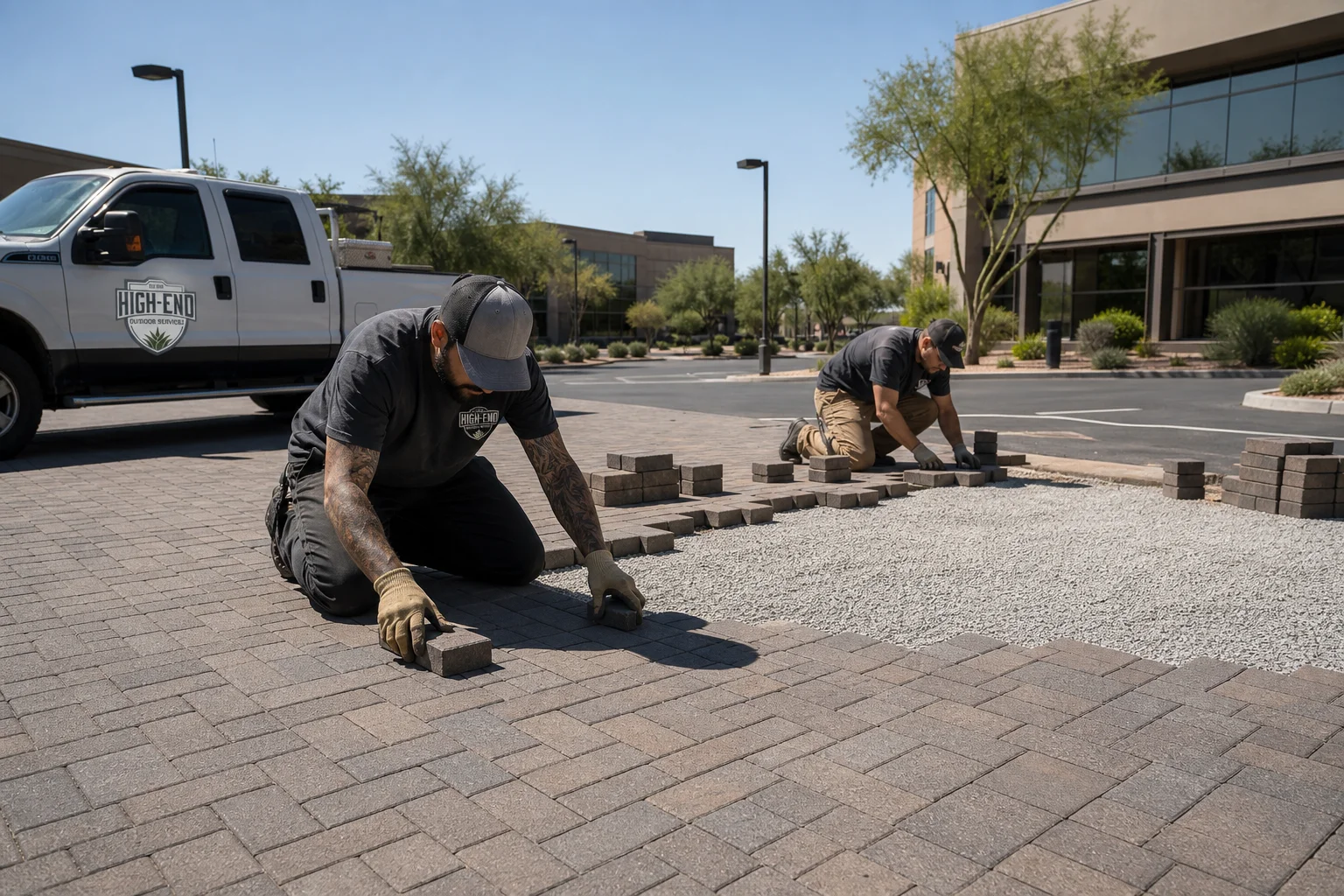
Cracking usually comes down to installation quality, not the material itself. Porcelain is more rigid than natural stone, so it depends on a properly compacted base and correct joint spacing to absorb ground movement and thermal expansion. Installed over a soft or uneven base, even a high-quality porcelain paver can crack under vehicle loads or seasonal soil shifts, which is why base preparation is non-negotiable on every commercial installation.
Which Paver Is the Better Choice for Arizona Commercial Properties?
There is no universal winner in the travertine vs. porcelain pavers decision. The better choice depends on your property's traffic pattern, budget, and how much ongoing maintenance your team or HOA can manage. Properties that want the lowest long-term maintenance and the most consistent color performance under direct sun tend to do best with porcelain. Properties that want the classic, natural stone look of a resort pool deck, and are prepared to keep up with periodic sealing, often prefer travertine.
For most commercial and HOA properties across Phoenix, Scottsdale, and the surrounding Valley, we recommend basing the decision on maintenance capacity first and aesthetic second, since a beautiful surface a maintenance team cannot keep up with becomes a liability. Our Porcelain Pavers installations use rectified, exterior-rated tile matched to the property's traffic load and climate exposure.
Frequently Asked Questions
Which paver material is better for Arizona commercial properties, travertine or porcelain? Neither material is universally better. Porcelain pavers generally require less sealing and hold color more consistently in Arizona heat, while travertine offers a natural stone look and stays cooler underfoot in direct sun. Choose based on available maintenance labor and desired aesthetic, then match the paver grade and finish to the property's actual traffic and exposure.
Do porcelain pavers get too hot to walk on in Phoenix? Porcelain pavers can get hot in direct summer sun, especially in darker colors, though light and mid-tone finishes perform reasonably well. Travertine typically stays noticeably cooler underfoot in the same conditions because of its porous surface. For pool decks and barefoot areas, we usually recommend lighter porcelain tones or travertine.
How often do travertine pavers need to be sealed? Most commercial travertine installations in the Phoenix area benefit from resealing on a routine cycle, with high-splash zones around pools or fountains needing more frequent attention. The right interval depends on the stone's finish, traffic level, and sun exposure, so build a sealing schedule into your property's regular maintenance plan rather than waiting until wear becomes visible.
Are porcelain pavers slippery around a pool deck? Not when the right product is specified. Porcelain pavers manufactured for pool decks and other wet areas come with textured, slip-resistant finishes rated for barefoot traffic, and manufacturers publish a coefficient of friction for their outdoor lines. A smooth, polished porcelain tile meant for interior use should never be installed around a commercial pool deck.
Get a Paver Recommendation for Your Property
The right paver for your commercial property depends on details a blog post cannot see: traffic patterns, budget, and climate exposure. Contact our team to walk your site and get a straight recommendation between travertine and porcelain pavers.