Permeable Pavers and Drainage Compliance for Commercial Properties
Arizona's monsoon storms and expanding pavement footprint have pushed cities across the Valley to tighten stormwater rules, and permeable pavers for commercial properties are now one of the most reliable ways to meet them. Combined with professional Paver Installation, they let water pass through the surface instead of pooling across a parking lot or driveway.
By HEOS AZ Team, Outdoor Living Specialists
Permeable Pavers for Commercial Properties and Drainage Compliance
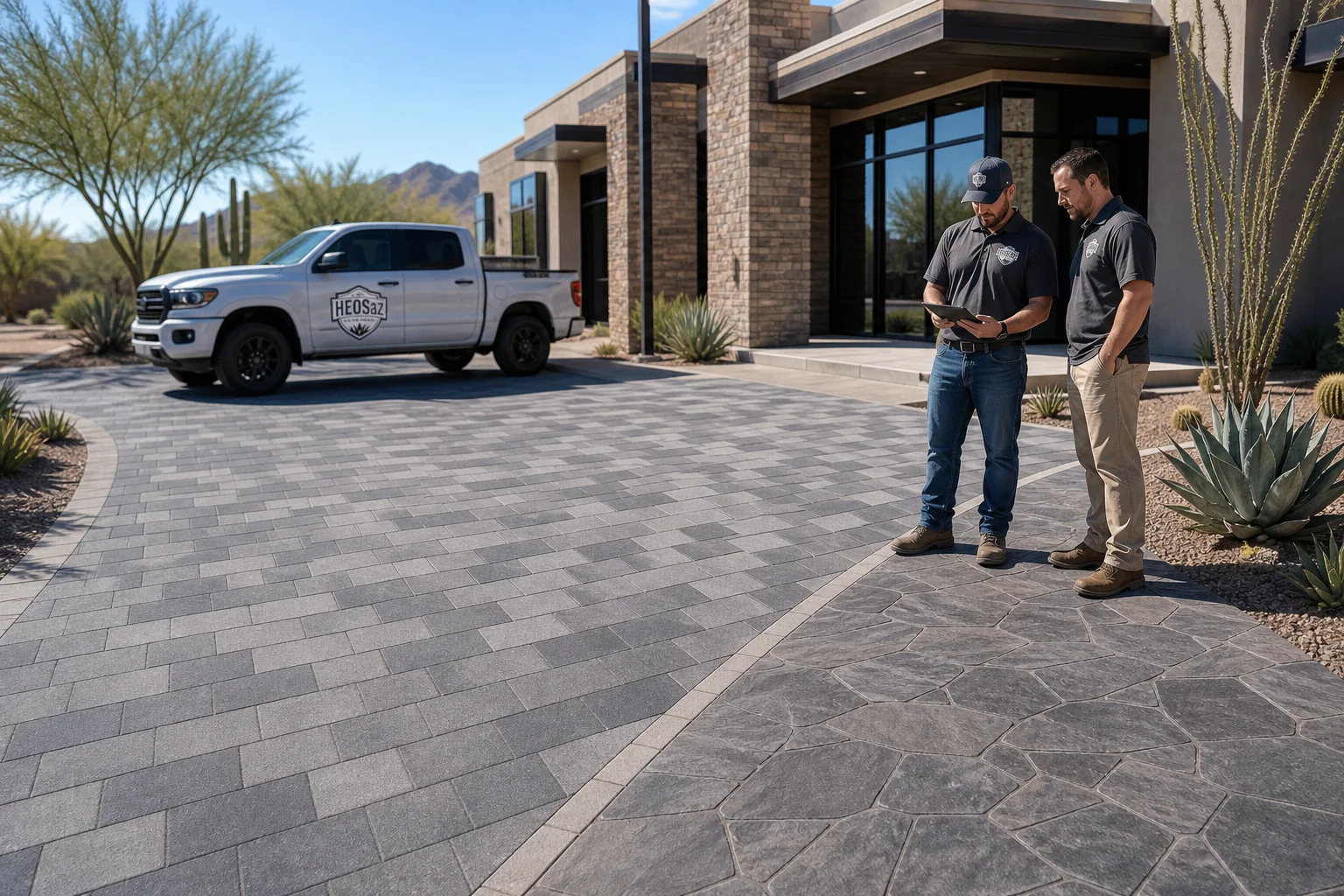
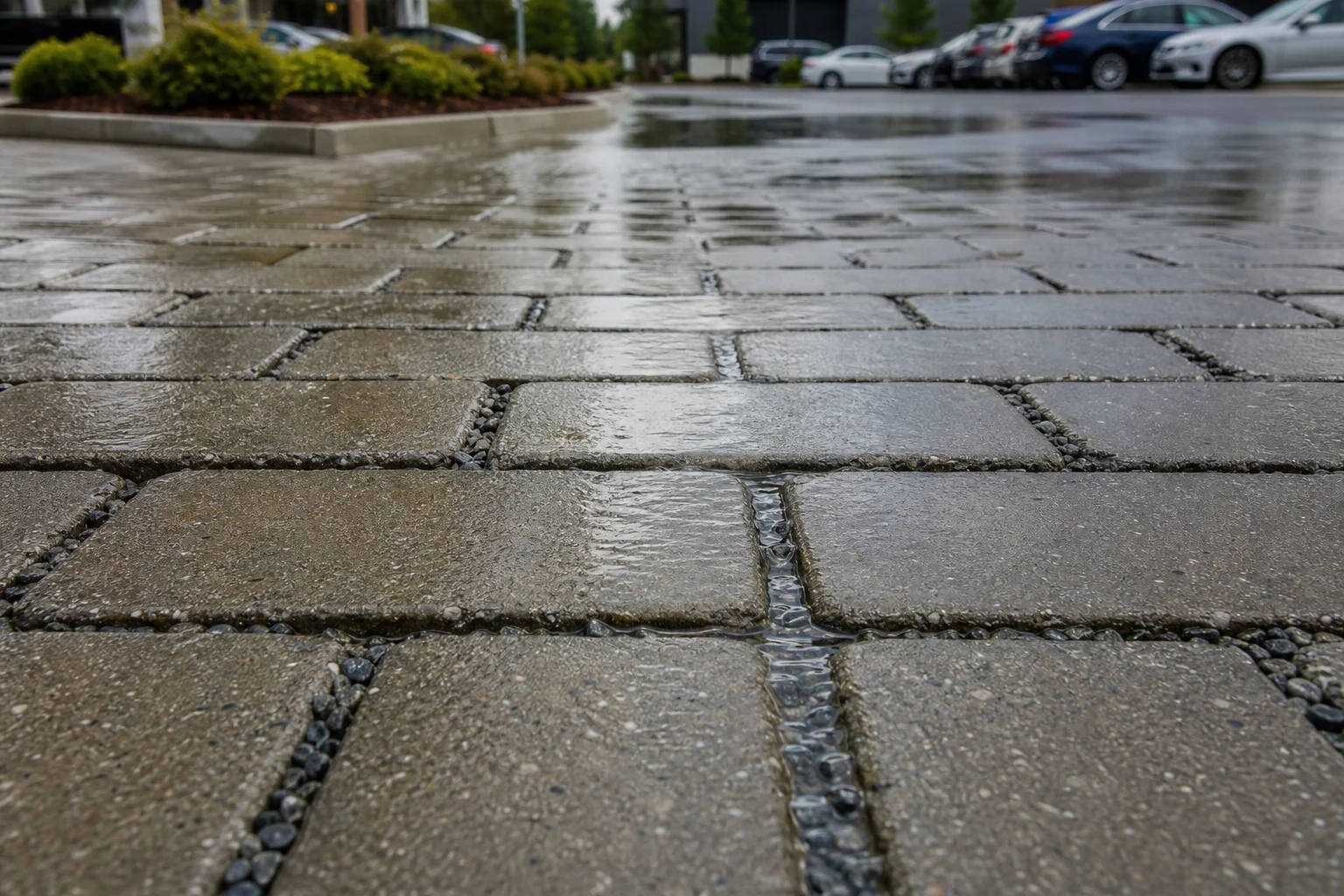
Permeable pavers are concrete pavers or interlocking units set with open joints over a layered base of crushed stone, sand, and geotextile fabric. Instead of shedding water like asphalt, the gaps between units allow water to drain straight down through the surface, into the base, and back into the soil, restoring the site's natural drainage pattern. Porous asphalt and pervious concrete work on the same principle with a continuous surface, but pavers give property owners more control over pattern and color, since a single damaged unit can be lifted and replaced without cutting into the whole lot.
Every layer, from the wearing surface down to the subgrade, moves water through rather than across the property, separating a parking lot that floods during a monsoon downpour from one that drains within minutes.
Do Commercial Properties in Arizona Need These Systems for Stormwater Compliance
Most Arizona municipalities do not mandate permeable pavers by name, but they regulate how much stormwater a developed site can send into public drainage systems, and that requirement pushes many projects toward permeable paving. Phoenix, Scottsdale, Mesa, and Chandler require new and redeveloped commercial sites to retain a set volume of runoff on-site rather than releasing it into streets or storm drains, which is why permeable pavers for commercial properties increasingly appear in site plans submitted for drainage review.
So the answer is conditional: permeable pavers are not required by law on every commercial property, but for a site short on room for traditional detention, they are often the most practical way to hit a municipality's stormwater targets. A civil engineer or the municipal drainage department is the right source for the exact retention number that applies to a specific parcel.
Local Stormwater and Drainage Codes for Commercial Paver Installations
Local codes generally fall into three buckets: a maximum runoff rate, a minimum on-site retention volume, and a water quality requirement tied to the Clean Water Act's National Pollutant Discharge Elimination System permit program most Arizona cities operate under. Commercial paver installations using an open-graded base can often count toward the retention volume, reducing the need for a separate detention basin. Requirements vary by jurisdiction, so we coordinate with each city's drainage review desk before finalizing a design.
How Permeable Pavers Compare to Asphalt and Concrete for Parking Lot Drainage
Traditional asphalt and standard concrete are impervious: water hits the surface and has nowhere to go except toward a drain, a curb cut, or the lowest point on the property. On a large commercial lot, that runoff arrives fast and concentrated, which overwhelms municipal storm drains during a monsoon cell. Pairing permeable paving with a seasonal monsoon drainage and debris plan keeps catch basins and swales clear so the water that reaches them can actually move.
The goal is simple: reduce stormwater leaving the site before it becomes someone else's problem downstream. Unlike impervious surfaces, permeable pavers spread rainfall across the entire surface and let it soak through gradually, slowing the peak flow rate that reaches public infrastructure. They also help prevent the standing puddles that accelerate pavement damage and erosion.
Cost, Installation Timeline, and Lifespan for Commercial Permeable Paver Projects
Cost for a Commercial Parking Lot or Driveway
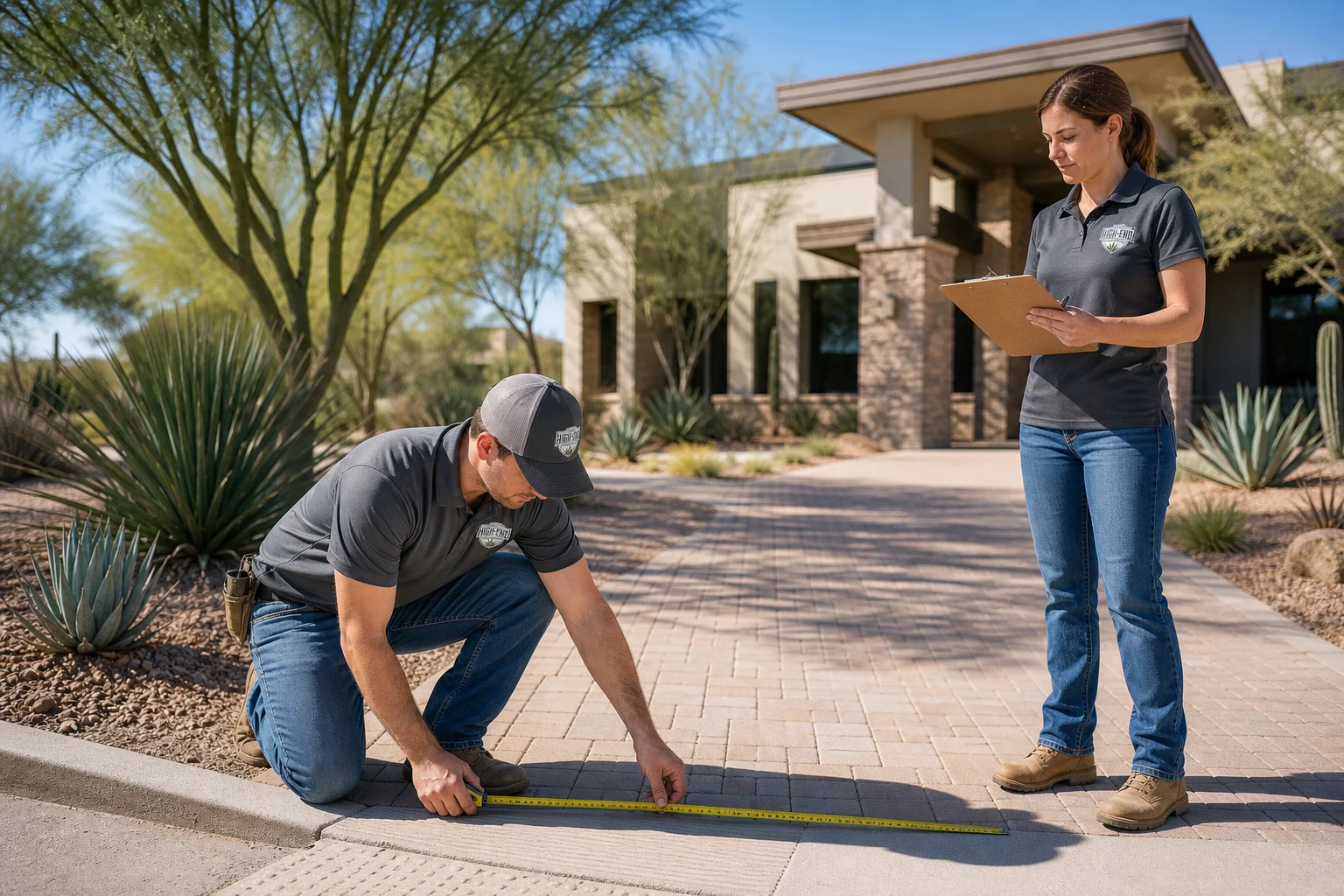
Permeable paver costs vary by lot size, base depth, drainage design, and paver product, so a reliable number only comes from a site-specific estimate. Price drivers include how much excavation the base requires, whether the subgrade needs amendment to allow water to infiltrate, and how much of the lot is heavy-traffic drive lanes versus standard stalls. Property owners planning a new lot or driveway replacement should request a walkthrough so the estimate reflects actual soil and drainage conditions on-site.
How Long Installation Takes
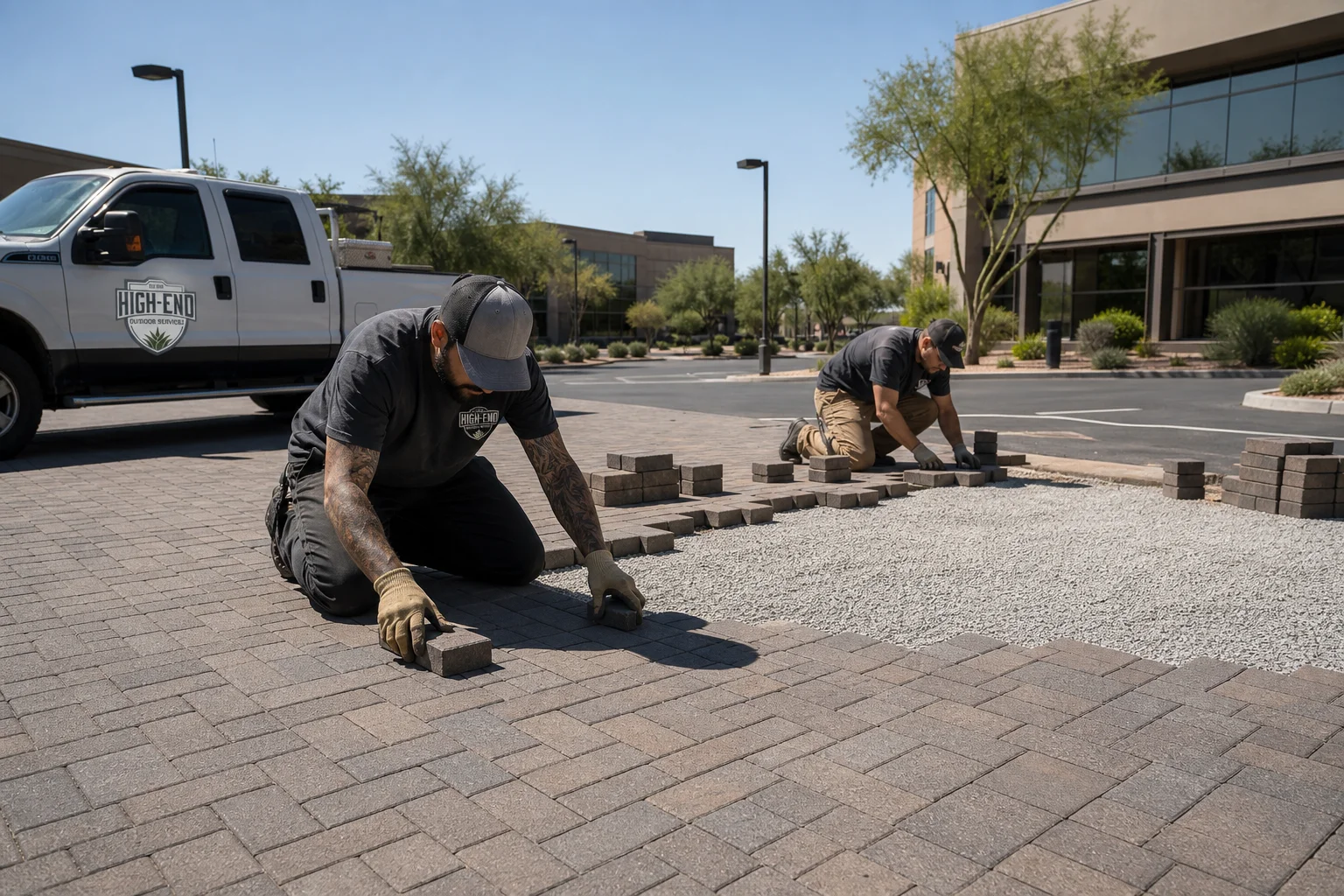
Timelines depend heavily on lot size and base preparation, but a typical commercial project moves through excavation, base compaction, edge restraint, paver placement, and joint fill in stages that can usually be sequenced to keep part of a lot open. Larger sites or full parking lot replacements take longer than a single driveway. We build a phased schedule for active commercial properties, especially retail centers and HOA common areas, so operations are not shut down for the full duration.
Lifespan Before Replacement
A well-installed permeable paver system, properly maintained, typically lasts several decades before individual units need replacement, and because the pavers are modular, normal wear usually means swapping a section rather than repaving the entire lot. The base layer's condition matters as much as the pavers on top: a base that stays graded and free of fine sediment extends the system's working life.
Maintenance and Heavy Traffic Performance for Commercial Properties
Maintenance to Stay Compliant Over Time
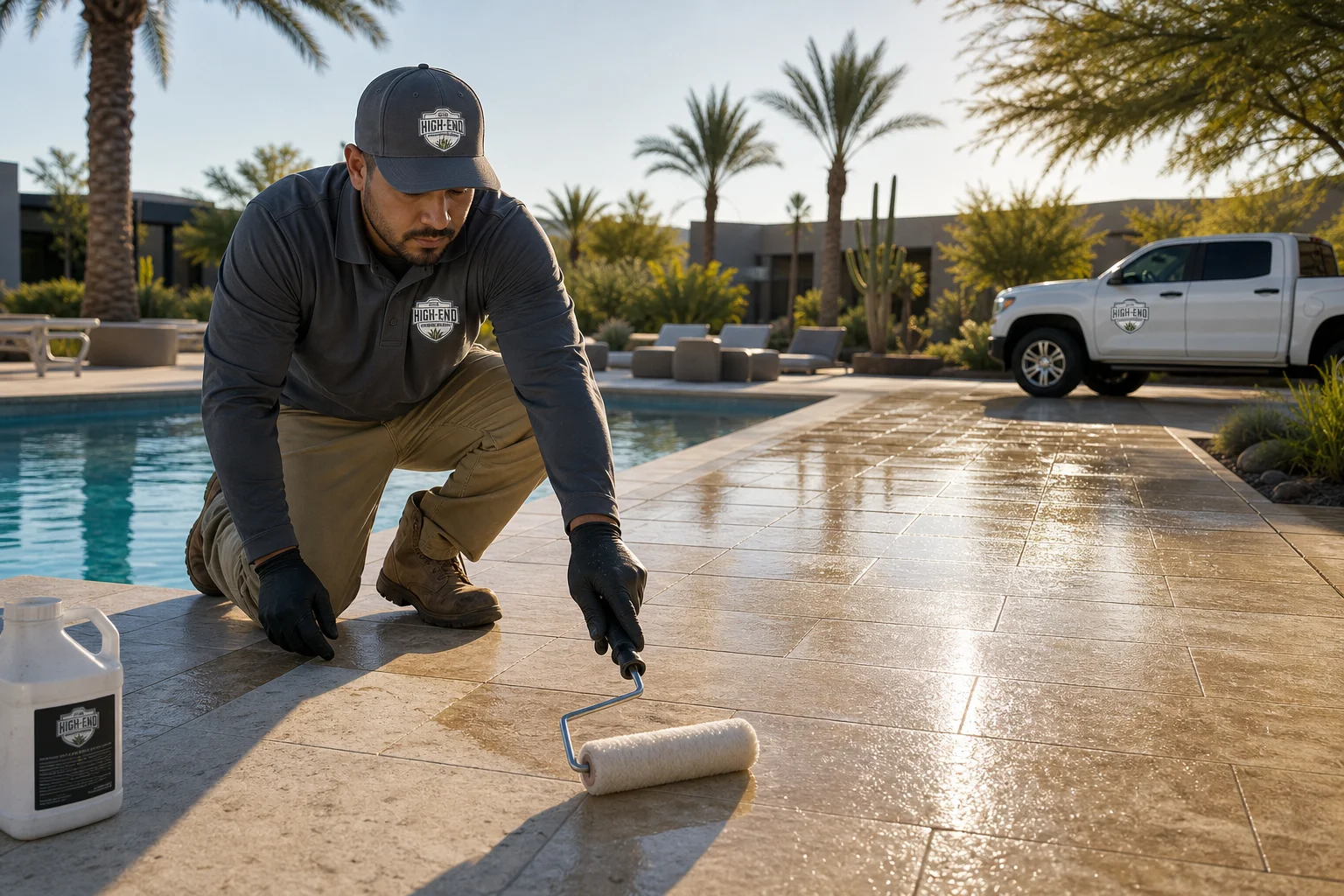
Permeable pavers need periodic vacuum sweeping or pressure washing to keep the joints between units clear, since fine sediment, leaves, and landscaping debris will gradually clog the gaps that let water drain through. Most commercial sites do well with this every three to twelve months. Skipping it does not damage the pavers, but it reduces their infiltration rate and can push a site out of the retention performance a drainage permit assumed. Regular Commercial Maintenance visits keep joint surfaces clear without an extra vendor on a property's calendar.
Handling Heavy Vehicle Traffic
Commercial-grade permeable pavers are rated for the same vehicle loads as standard concrete pavers when installed with a properly engineered base, so they handle daily car and truck traffic in parking lots, drive aisles, and loading areas. Sites expecting frequent heavy trucks need a base depth and paver class matched to that load, confirmed during design.
Tax Incentives and Rebates for Permeable Paving
Incentive programs for permeable paving change from year to year and vary by city and utility provider, so property owners should check current stormwater utility fee credits with their local municipality. Several Valley cities offer a reduced stormwater utility fee for sites that demonstrate on-site retention, functioning as an ongoing credit rather than a one-time rebate.
Stormwater retention credits are separate from irrigation-based water conservation rules. Arizona's AMWUA water use rules govern landscape irrigation on their own schedule across Valley cities, so a paving rebate and a water-restriction requirement need to be checked independently. Confirm current eligibility with the city's stormwater or engineering department during project planning rather than relying on last year's rate.
Frequently Asked Questions
Do permeable pavers actually reduce flooding on a commercial property? Yes, when the base is designed correctly. Permeable pavers let stormwater soak into a graded stone reservoir instead of sheeting across the surface, reducing runoff reaching storm drains during a monsoon storm. They will not eliminate flooding caused by undersized municipal infrastructure downstream, but they cut the water a property itself contributes.
Do permeable pavers cost more to maintain than traditional asphalt? Permeable pavers need periodic sweeping to keep joints clear, which asphalt does not require, but they typically avoid the seal-coating and resurfacing asphalt needs every several years. Over the life of the pavement, many property owners find the routines average out, while permeable pavers add drainage compliance benefits standard asphalt cannot offer.
Can permeable pavers go over an existing commercial parking lot without a full teardown? In most cases, no. Permeable pavement depends on a graded, open stone base beneath the surface to store and infiltrate water, so overlaying pavers on existing asphalt or concrete will not function correctly. A retrofit generally requires removing the old surface and rebuilding the base, though scope can sometimes be limited to the areas that need it most.
Do permeable pavers work in Arizona's caliche and clay soil? Yes, but the base design has to account for it. Caliche and dense clay drain slowly on their own, so a permeable paver system built over that soil typically needs a deeper aggregate reservoir, and sometimes an underdrain, to store water long enough to infiltrate safely. A geotechnical evaluation before installation confirms what a specific site needs.
Get a Drainage-Compliant Paver Plan for Your Property
Every property's drainage requirements are different, and the right permeable pavers for commercial properties depend on soil, lot size, and municipality. Contact HEOS AZ to schedule a site walkthrough and get a stormwater-compliant paving plan built for your site.