Monsoon and Storm Prep for Commercial Properties: Tree, Drainage and Debris Plans
Monsoon and storm prep for commercial properties in Arizona begins before the first storm cloud forms over the Valley. The right tree, drainage, and debris plans protect structures, reduce liability, and keep outdoor spaces functional through the season. Tree Services from a professional crew are the critical first step for every property manager.
By HEOS AZ Team, Outdoor Living Specialists
Why Monsoon and Storm Prep for Commercial Properties Starts Before July
Arizona's monsoon season runs from June 15 through September 30, bringing sudden heavy rainfall, intense wind gusts, and debris loads that overwhelm unprepared commercial properties. A commercial property that lacks a documented storm prep plan faces compounding issues: pooled water damaging foundations, fallen trees blocking access routes, and debris clogging roofing drains that were never cleared.
The liability exposure for HOA boards and property managers during monsoon season is real. Wet soils loosen tree root systems rapidly, and trees that appear healthy in dry months can topple under the lateral wind load of a haboob or microburst. Understanding which trees on your commercial property represent the greatest risk is the first step in a responsible storm prep program.
Tree Risk Assessment and Pre-Season Pruning
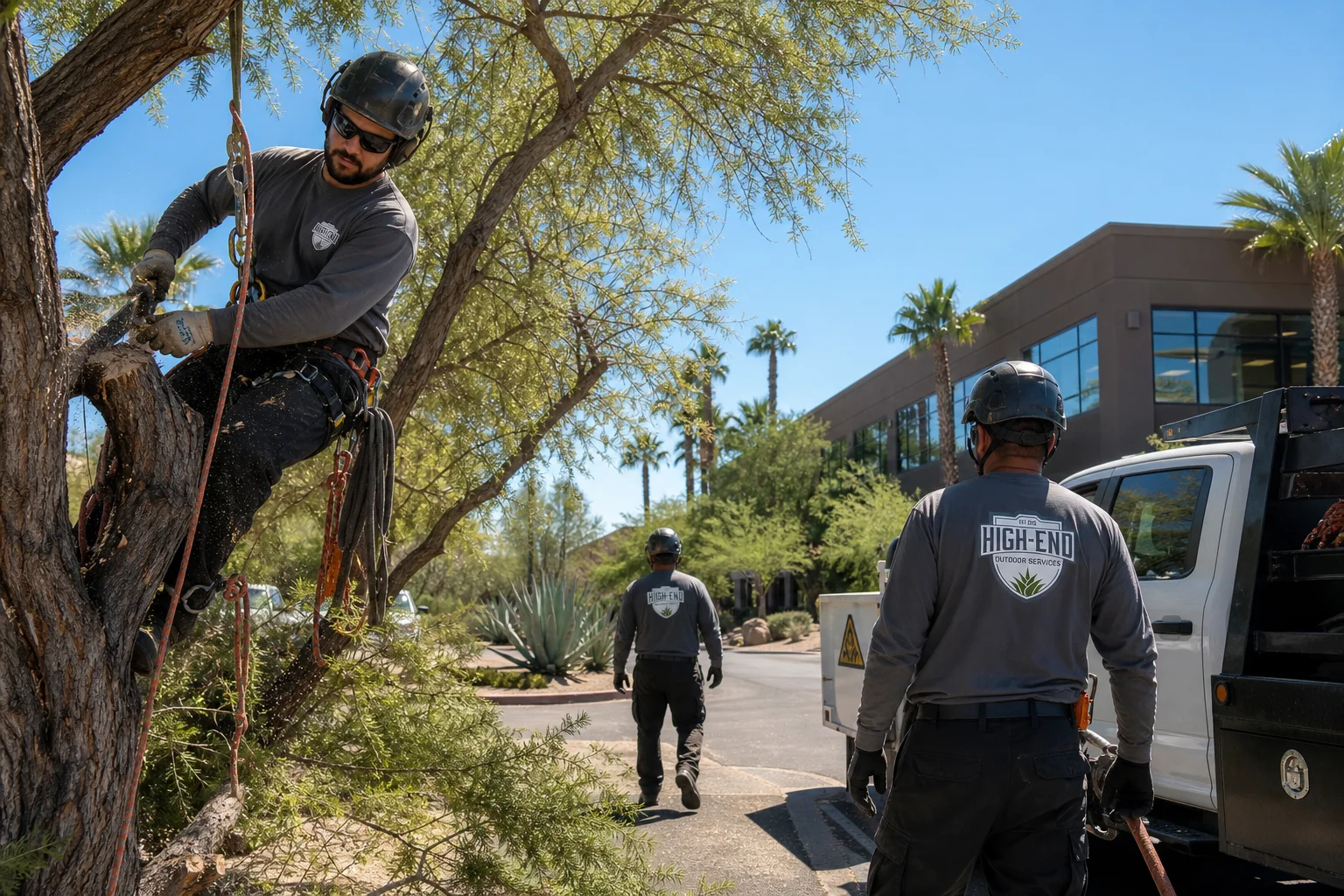
Not every tree is equally vulnerable during heavy storms. Species like Aleppo pine, eucalyptus, and overgrown mesquite often present the highest risk on commercial properties because of their top-heavy canopies and shallow root systems in compacted soil. A professional inspection before monsoon season should evaluate canopy density, proximity to structures and roofing, visible trunk damage, and signs of root compromise.
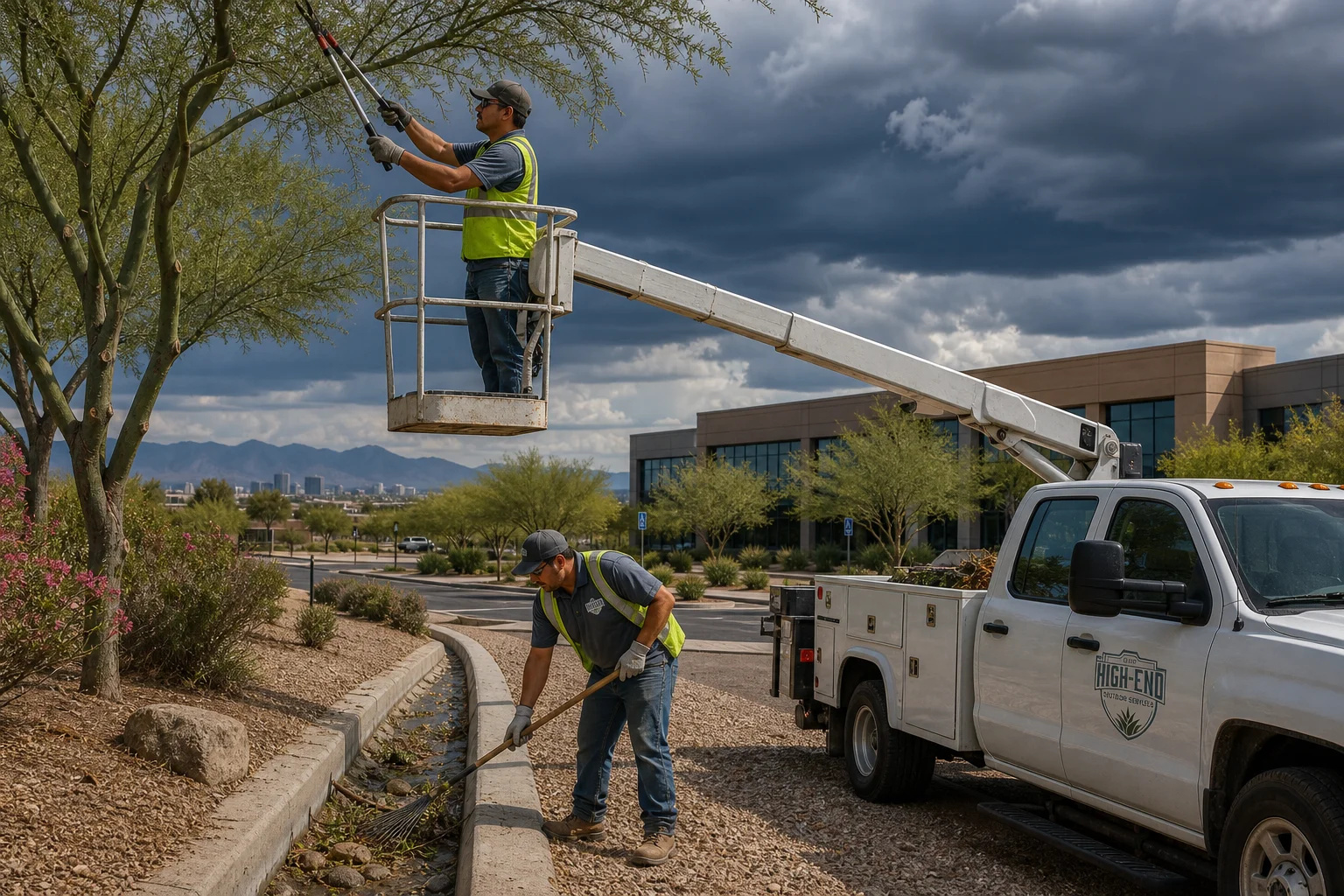
Structural pruning reduces wind resistance without harming the long-term health of the tree. The goal is not to strip a tree bare, but to create a canopy that moves with wind rather than catching it. Proper canopy reduction also limits the amount of debris shed during storms, which directly reduces cleanup costs and the risk of damage to paving, vehicles, and building facades.
For commercial properties with mature trees near parking structures, buildings, or pedestrian areas, a certified arborist visit in May or June is a sound annual investment. Properties that defer tree services until after storm damage occurs typically face higher emergency costs and longer recovery timelines.
Drainage Systems: Inspecting the Areas That Collect Water
Arizona soil does not absorb heavy rain efficiently. In many commercial and HOA-managed areas, compacted decomposed granite, concrete hardscape, and low-permeability clay subsoils mean that even moderate rainfall creates significant runoff. When drainage systems are blocked or undersized, water finds the path of least resistance, often directly into building foundations, underground parking, or landscaped areas with inadequate grading.
A pre-monsoon drainage inspection for any commercial property should include:
- Roof drains and gutters: Clear all debris, leaves, and organic buildup. Blocked roofing drains are among the leading causes of interior water damage during heavy rain events.
- Surface drainage channels and swales: Verify that graded channels are clear and that slope has not shifted from settling or irrigation erosion.
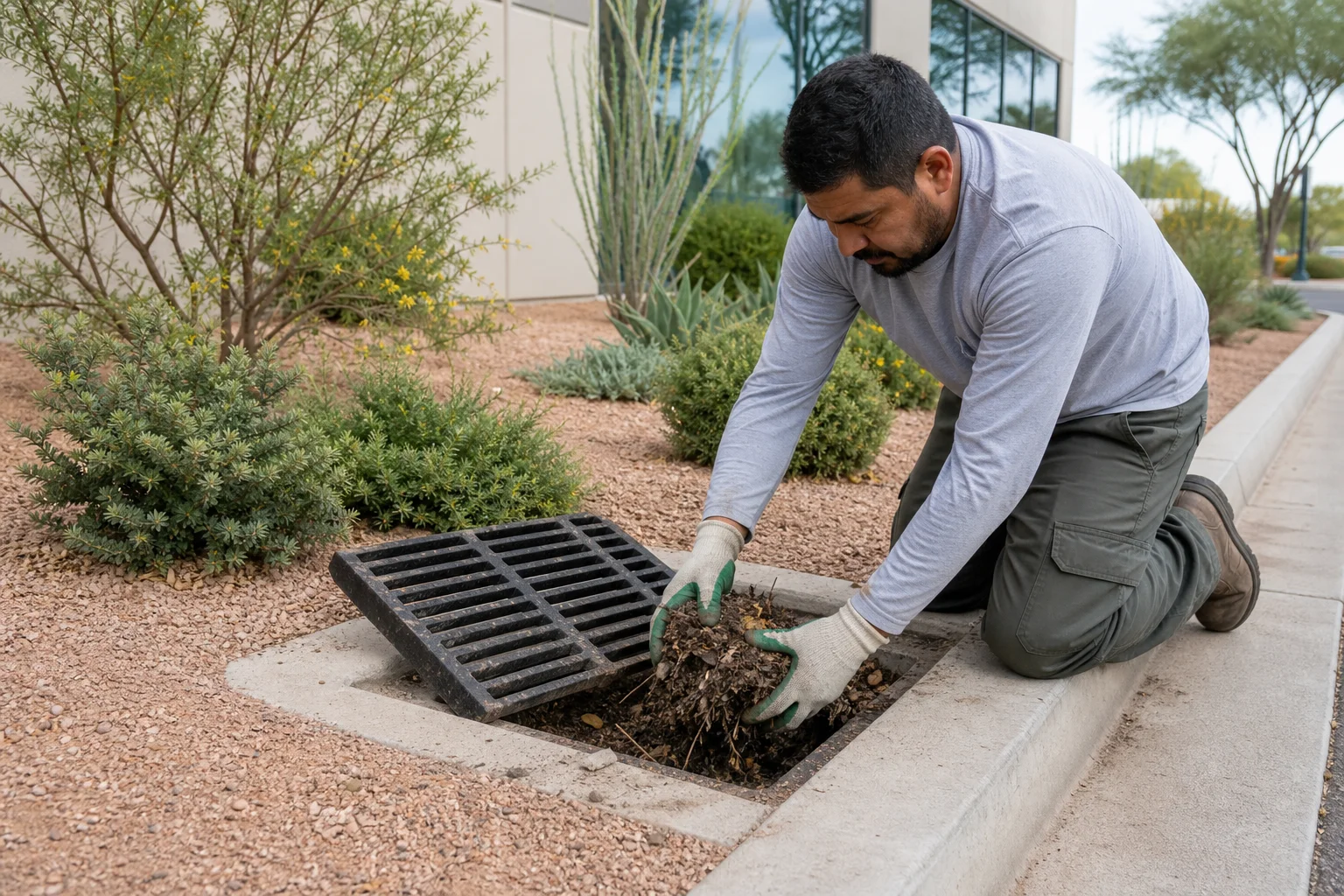
- Catch basins and area drains: Check for root intrusion, sediment accumulation, and grate integrity.
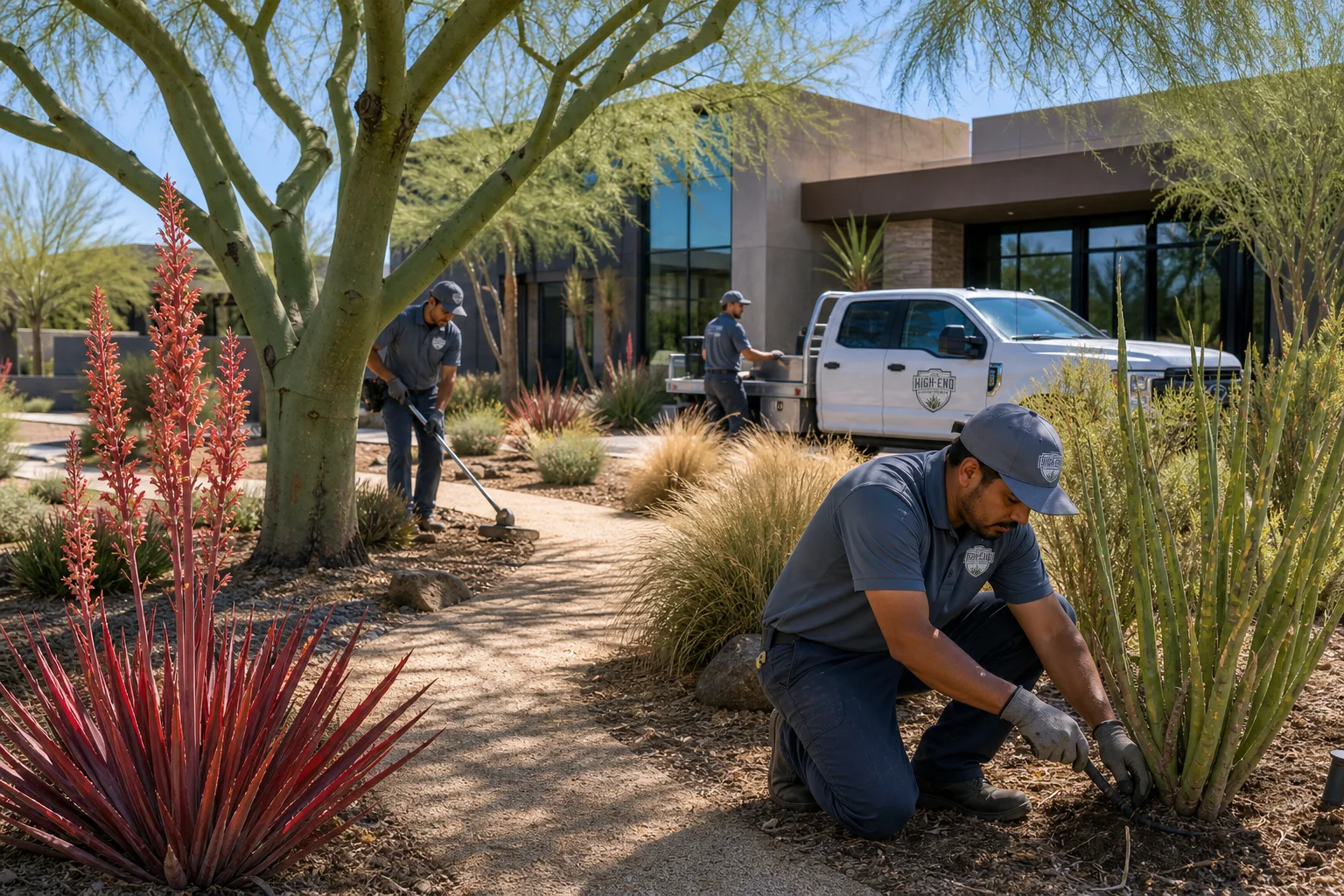
- Irrigation infrastructure: Confirm that irrigation systems have not created oversaturated zones adjacent to tree root balls or slopes. Our team provides Irrigation Repair services that identify leak points and pressure issues before storms arrive.
For HOA communities and multifamily commercial properties across the Phoenix metro, our guide to How Often Should Commercial Properties Be Serviced? The Arizona Maintenance Calendar outlines a maintenance timeline built around the Arizona climate calendar.
Debris Management Plans Before and After Storms
Effective debris management for a commercial property involves planning across three windows: pre-storm removal, securing loose items, and post-storm clean-up.
Pre-storm (48 to 72 hours before predicted weather): Walk the property and remove or secure loose materials. Decorative rock borders, potted plants, exterior furniture, and lightweight signage become projectiles in monsoon winds exceeding 60 miles per hour. Confirm that trash enclosures are latched and that any maintenance materials on site are stored or removed.
During the storm: No exterior activity should occur. Commercial properties should have an emergency contact protocol established so that tenants, residents, or staff know who to notify if structural damage or tree failure occurs.
Post-storm (within 24 hours): A systematic walk of the entire property is essential before resuming normal operations. Look for downed tree limbs, shifted paving, blocked drains, standing water, and any damage to roofing edges or exterior lighting. Document everything with photographs before cleanup begins. This documentation is critical for insurance purposes and for prioritizing repairs.
For facilities that manage multiple commercial properties, see Implementing Effective Landscape Maintenance Programs for Commercial Properties to build a replicable post-storm protocol across your portfolio.
Emergency Response and Post-Storm Repairs
After a significant monsoon event, the priority on any commercial property is to identify and address conditions that pose immediate safety or liability risk. Assess the property in zones: first, any tree that has uprooted or split; second, roofing and building envelope integrity; third, hardscape damage and trip hazards in pedestrian areas.
Emergency tree removal should never be a DIY task on commercial properties. Large trees under tension after storm failure are unpredictable. Professional crews with the right equipment can remove debris safely while minimizing further damage to irrigation systems, paving, and underground utilities.
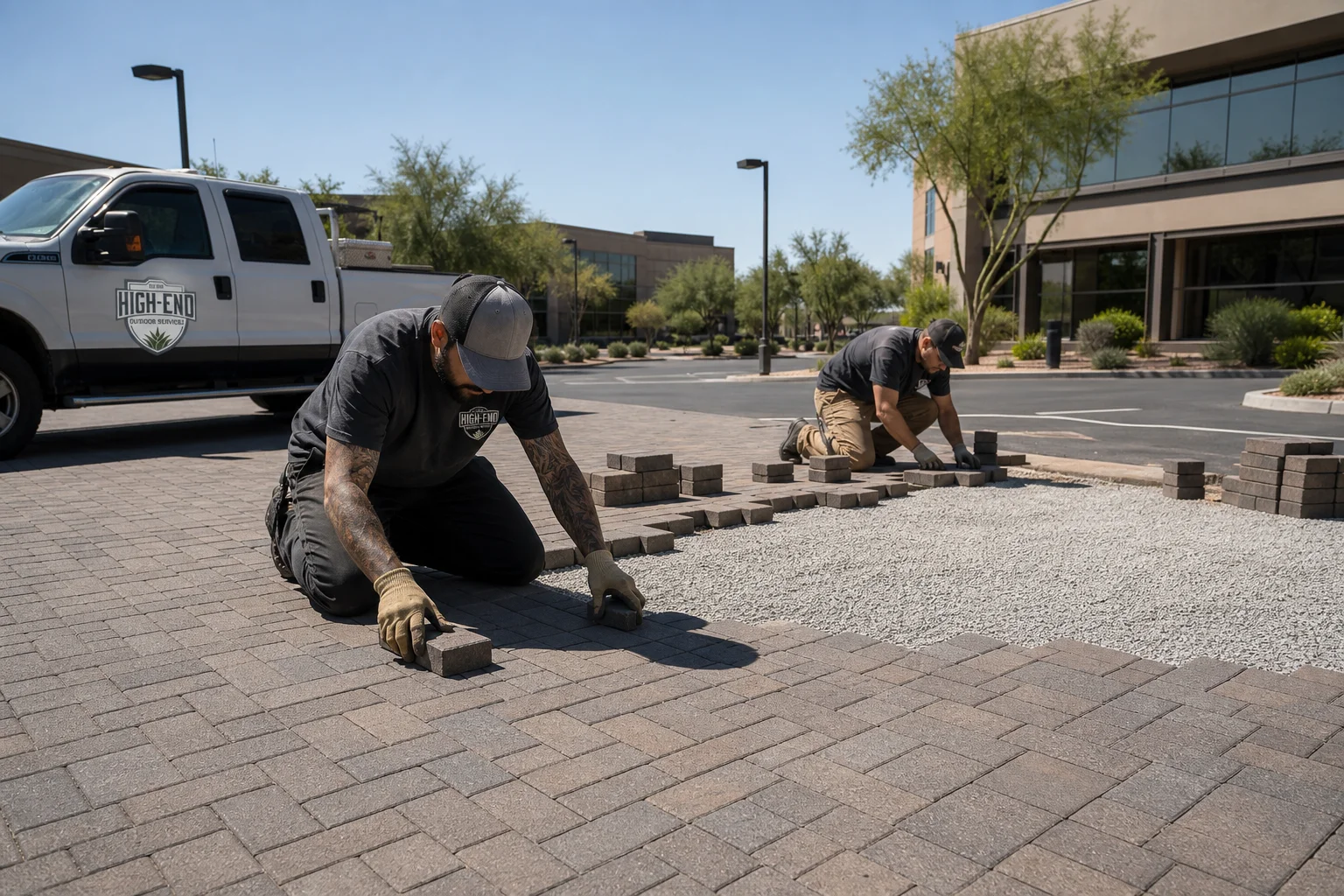
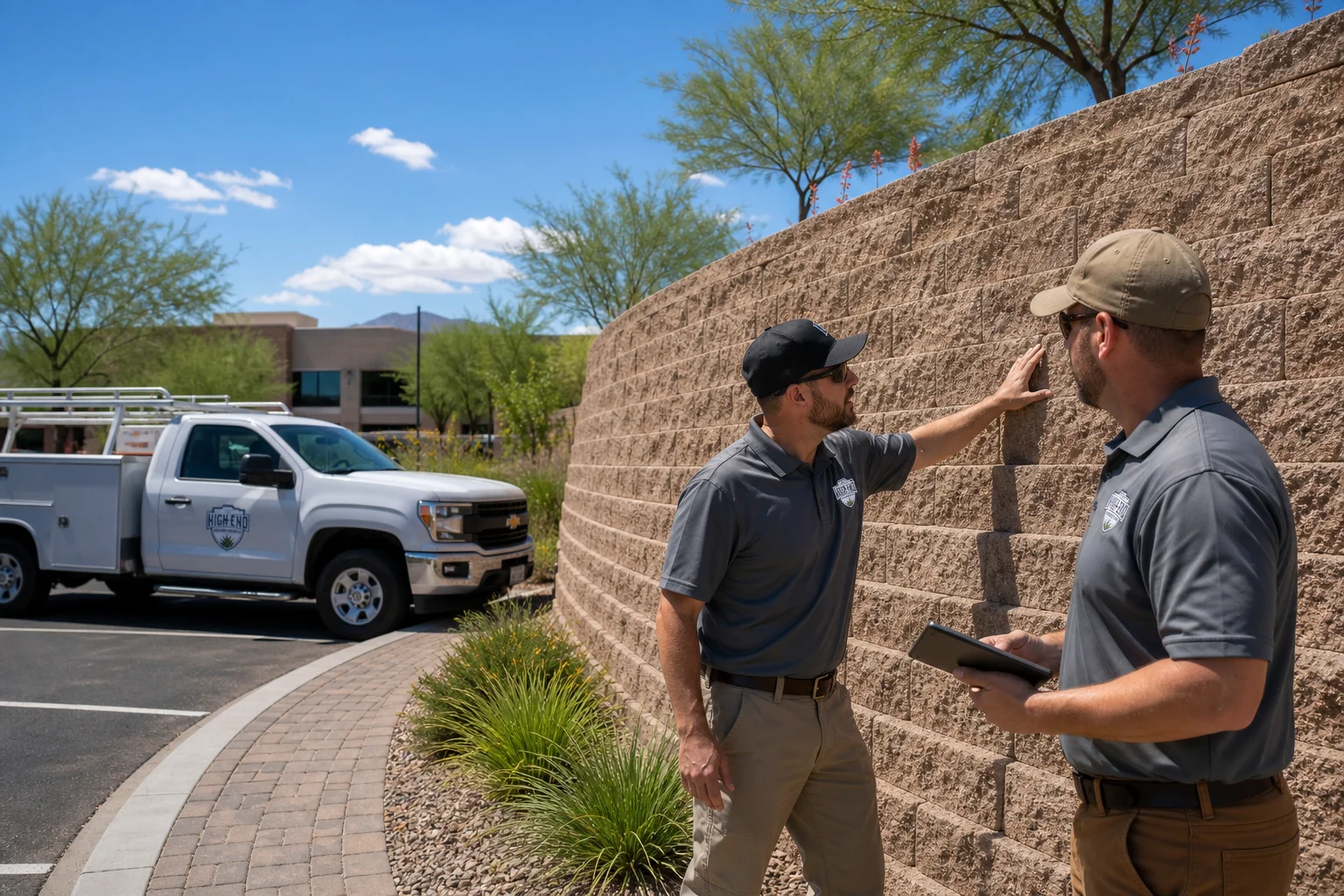
If damage to pavement, retaining walls, or outdoor structures is identified during a post-storm inspection, schedule those repairs before the next storm event rather than deferring them to end of season. Year-round commercial maintenance services that keep crews familiar with your property can respond faster and more effectively than a team encountering the site for the first time. For guidance on structuring your service agreement, see What a Commercial Landscape Maintenance Contract Should Include to ensure storm prep responsibilities are clearly defined.
To understand how Arizona commercial properties are approaching outdoor improvements beyond storm prep, see our guide to Landscaping Trends 2024 Hoa Commercial Properties for the current planning priorities of HOA boards and property managers today.
Frequently Asked Questions
When should commercial properties begin monsoon prep?
The optimal window for monsoon and storm prep on commercial properties is late April through mid-June, before the official monsoon season start of June 15. This timing allows for tree inspections, structural pruning, drainage clearing, and irrigation repairs to be completed before storm loads arrive, and gives pruned trees time to recover before heavy weather begins.
How do I know if a tree on my commercial property needs removal before monsoon season?
Signs that a tree may need removal rather than pruning include hollow or decayed trunk sections, significant lean toward structures, large dead limbs throughout the upper canopy, and visible soil heaving at the base indicating root compromise. A certified arborist inspection is the safest way to assess risk. Never rely on visual inspection alone when a tree is near a building, roof, or high-traffic pedestrian area.
What drainage issues are most common after Arizona monsoon storms?
Clogged roofing drains, sediment-blocked catch basins, and erosion in turf or gravel areas adjacent to slopes are the most frequent issues seen on commercial properties after heavy rain events. Irrigation leak points that were minor before a storm can expand significantly when soil becomes saturated, so a post-storm irrigation check is advisable on any property with automated watering systems.
Are property managers liable for storm-related tree damage on commercial properties?
Liability varies by jurisdiction, but commercial property managers generally carry a duty of care to maintain trees in a reasonably safe condition. Documented pre-season inspections, professional tree services, and written maintenance records provide evidence that reasonable steps were taken to prevent foreseeable damage. Always consult legal counsel specific to your state and county regarding premises liability.
How quickly can HEOS AZ respond after a monsoon event?
HEOS AZ provides emergency response services for commercial properties in the greater Phoenix area following significant storm events. Properties with active maintenance agreements receive priority scheduling. Contact our team before monsoon season to ensure your property is on our active service roster and that a pre-storm assessment is completed well in advance.
Schedule Your Pre-Monsoon Property Assessment Today
Monsoon and storm prep for commercial properties is not a reactive exercise, it is a planned, seasonal commitment that protects your investment, reduces liability, and keeps outdoor spaces safe and functional through Arizona's most demanding weather season. Contact the HEOS AZ team today to schedule a pre-monsoon assessment and build a storm prep plan tailored to your specific site.