Pet-Facility and Dog Park Turf: Drainage, Odor Control and Sanitation Systems
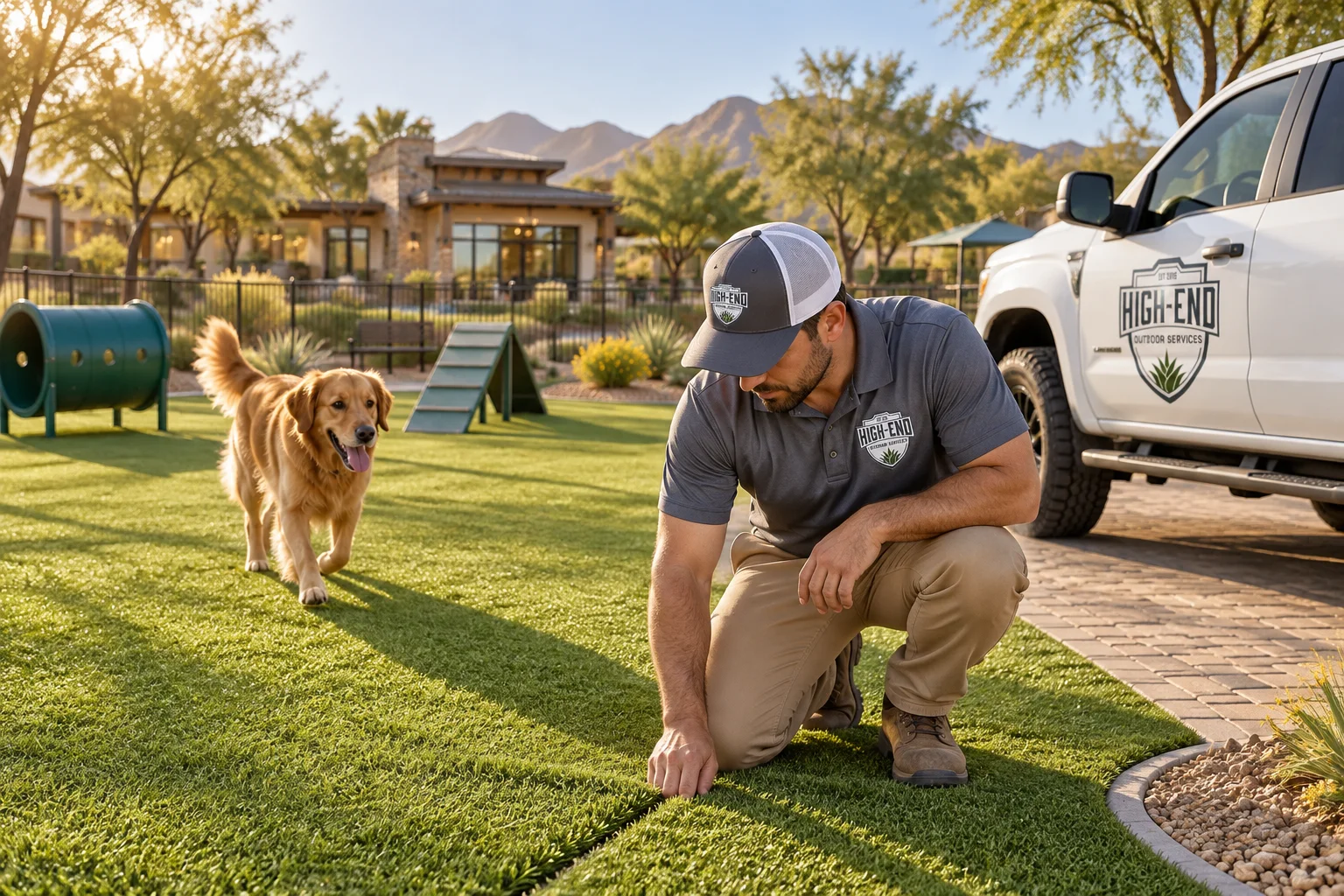
Dog park artificial turf only performs when drainage, odor control, and sanitation work as one engineered system, not separate afterthoughts. Property managers and HOA boards who plan around proper base prep and a real cleaning routine avoid the ammonia smell and soggy footing that plague poorly built pet areas, protecting a Turf Installation.
By HEOS AZ Team, Outdoor Living Specialists
What Is the Best Artificial Turf for a Dog Park or Pet Facility?
The best artificial turf for a dog park, dog run, or pet facility is a purpose-built pet turf product, not standard landscape-grade artificial grass repurposed for heavy paw traffic. Pet turf uses a permeable, non-absorbent backing that lets liquid pass straight through instead of pooling on the surface, along with fibers engineered to resist matting under constant digging, running, and rolling. Standard artificial grass built for a backyard lawn often uses a solid or lightly perforated backing never designed for concentrated urine volume from dozens of dogs a day: ordinary synthetic turf traps moisture and starts to smell within months, while a true pet turf system stays functional season after season.
How Does Drainage Work in Dog Park Artificial Turf?
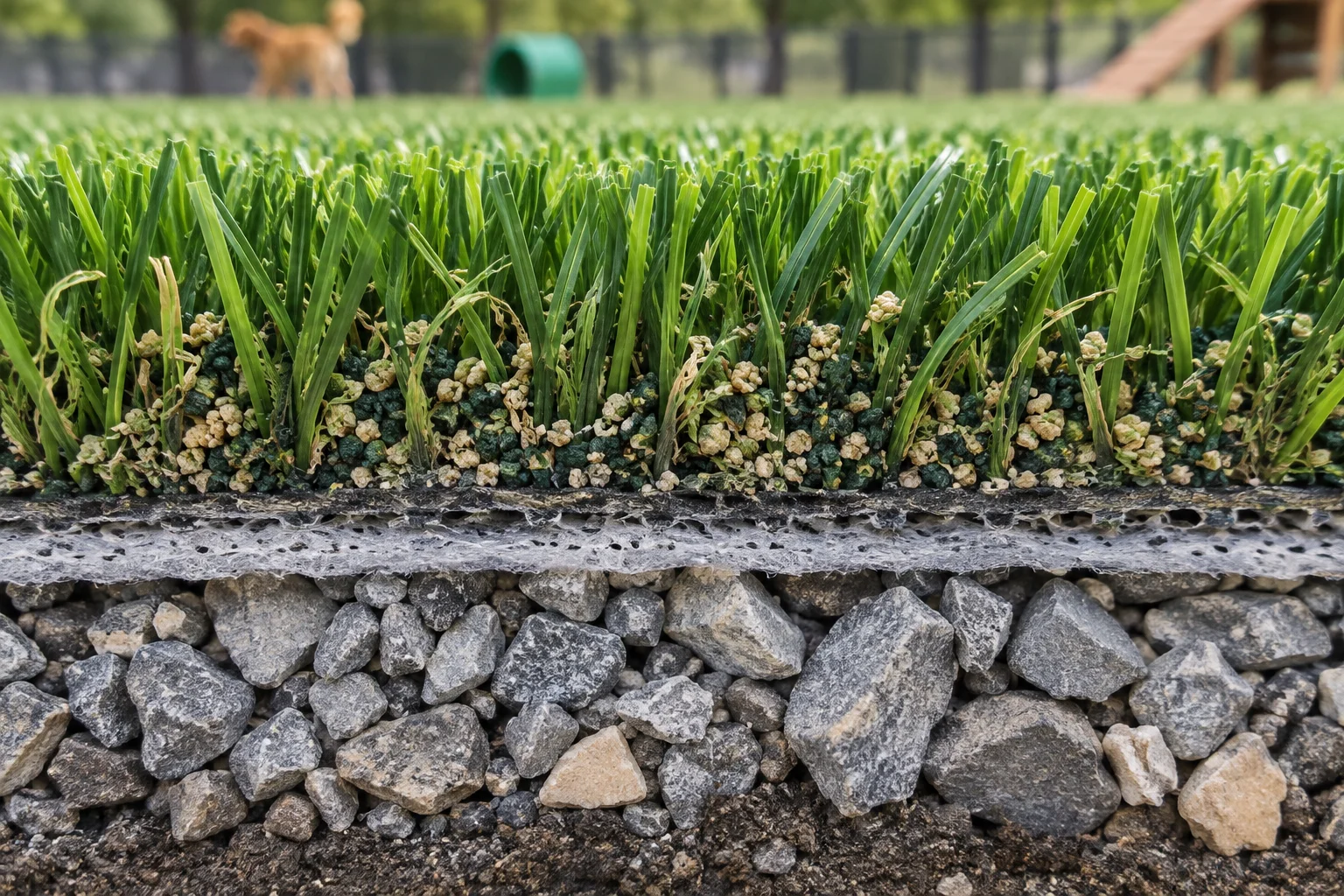
Drainage happens in two layers working together: the turf backing, and the base beneath it. The backing is punched with drainage holes engineered for a specific percolation rate, measured in inches of water per hour, so urine moves through the fibers immediately rather than sitting on the surface where bacteria multiply. Below that, a compacted aggregate base, typically a permeable mix of crushed stone, gives the liquid somewhere to go once it clears the backing.
Does Dog Park Turf Need a Special Base for Proper Drainage?
Yes. A dog park needs a base built for drainage, not a standard landscape base compacted primarily for stability, usually a deeper layer of open-graded aggregate than a residential lawn would use, sometimes paired with a drainage pipe network on larger sites. Skipping this step is the most common reason a new installation smells within its first summer: the turf may drain perfectly, but if the base underneath holds water, odor and bacteria have nowhere to go.
How Do You Stop Artificial Turf From Smelling Like Dog Urine?
Odor control comes down to three things working at once: a backing and base that actually drain, an infill that neutralizes ammonia instead of trapping it, and a cleaning schedule that keeps waste from accumulating between visits. Skipping any one of them will eventually bring the smell back.
How Do You Get Rid of Dog Urine and Poop Odor From Artificial Turf?
For turf that already smells, the fix starts with a full rinse to flush residual urine and bacteria out of the infill and backing, followed by an enzymatic turf cleaner that breaks down the organic compounds causing the odor rather than masking them with fragrance, which only covers the smell until it wears off. On heavily soiled sections, a second treatment after 24 to 48 hours usually finishes the job.
What Infill Helps Control Odor in Dog Park Turf?
Zeolite and antimicrobial-treated infill are the two products most commonly used to control odor in dog park turf. Zeolite is a naturally porous mineral that absorbs and traps ammonia molecules from urine, reducing the smell at the source. Antimicrobial infill takes a different approach, using a coating that inhibits the bacteria and mold that produce odor as they break down organic waste. Many commercial systems combine both, along with a synthetic turf product that already carries the right pile height and face weight specs for heavy foot and paw traffic. Buyers weighing a fully custom-engineered turf system against an off-the-shelf roll should factor infill compatibility into that decision.
Is Antimicrobial Infill Worth It for a Pet Facility?
For any pet facility handling more than a handful of dogs a day, antimicrobial infill is generally worth the added cost. The coating slows bacterial growth between cleanings, which matters most in Arizona's heat, when moisture and warmth accelerate odor buildup faster than in cooler climates.
What Sanitation and Disinfection Routine Keeps Dog Park Turf Clean?
A working sanitation routine layers three habits: daily waste removal, a weekly rinse of high-traffic zones, and a deeper enzymatic or disinfectant treatment on a set schedule rather than only when odor becomes noticeable. Waiting for a complaint means bacteria and ammonia have already built up, so keeping the surface odor-free takes a standing schedule, not a reactive one.
How Often Should Dog Park Turf Be Sanitized or Disinfected?
Most commercial dog parks need a full disinfection treatment monthly, with lighter rinsing and spot cleaning happening weekly or daily depending on traffic volume. A property with heavy daily use, like an HOA amenity serving hundreds of units, may need that schedule tightened during peak summer months.
Can You Pressure Wash Dog Park Artificial Turf?
Yes, when done correctly, using a fan tip nozzle and moderate pressure rather than a narrow, high-pressure stream that can tear fibers or displace infill. It works best as a scheduled deep clean, not a daily habit, since over-washing wears down infill faster than normal use. Property managers who want a maintenance plan built around their turf's real traffic can request a site walkthrough and a customized upkeep plan through HEOS AZ's Turf Cleaning service before the next peak season starts.
How Much Does Dog Park Artificial Turf Cost to Install?
Installation costs vary based on square footage, the depth of base preparation required, and whether the project includes antimicrobial infill or a drainage pipe network tied into existing stormwater lines. A small HOA pet area costs less per square foot than a large commercial dog park, since base work and drainage infrastructure make up a bigger share of the cost on larger footprints. Property managers comparing bids should ask each vendor to itemize base depth, infill type, and drainage components separately, since a lower price often means a shallower base or standard infill instead of the antimicrobial and zeolite blends built for heavy pet use. A site-specific quote is the clearest way to compare options.
How Long Does Dog Park Artificial Turf Hold Up Under Heavy Daily Use?
Commercial-grade dog park artificial turf typically holds up for eight to fifteen years, though the actual lifespan depends on traffic volume, climate exposure, and how consistently the sanitation routine gets followed. Arizona's UV exposure and heat put more stress on fibers and backing than a shaded climate would, so heat-stabilized fiber and UV-resistant backing matter more here than in most regions. Turf that gets its scheduled cleanings and avoids standing water reaches the higher end of that range; turf left to accumulate waste and moisture wears out years sooner.
Frequently Asked Questions
Is dog park artificial turf safe for large and small breeds sharing the same area? Yes, when the turf is sized and rated for mixed use. Commercial pet turf handles sustained digging, running, and body weight from dogs of any size, and a properly drained base keeps the surface stable underfoot.
Can dog park turf be installed over existing grass or dirt? Existing grass and topsoil generally need to be removed rather than built over, since organic material underneath the turf breaks down over time and creates uneven settling and drainage problems. A proper installation excavates down to a stable subgrade, then builds up the aggregate base and drainage layer before the turf goes down.
What is the difference between pet turf and standard artificial turf? Pet turf uses a more permeable backing, higher drainage rates, and fiber and infill choices selected to resist urine buildup and bacterial growth. Standard artificial turf, often used for lawns or putting greens, is not built to handle concentrated pet waste and traps odor faster under the same traffic.
Does dog park turf attract fleas, ticks, or other pests? Properly maintained synthetic turf gives fleas and ticks a much harder environment to survive in than natural grass, since there is no soil or living plant matter for eggs and larvae to take hold in. Regular cleaning further reduces pest risk.
Get a Turf Plan Built for Your Property's Pet Traffic
Every dog park and pet facility carries a different mix of traffic volume, climate exposure, and drainage needs, so the right system comes from a site visit, not a generic package. HEOS AZ can evaluate an existing HOA amenity or new development site and recommend a drainage, infill, and maintenance plan sized to keep pets and the property protected, through HOA Landscaping.